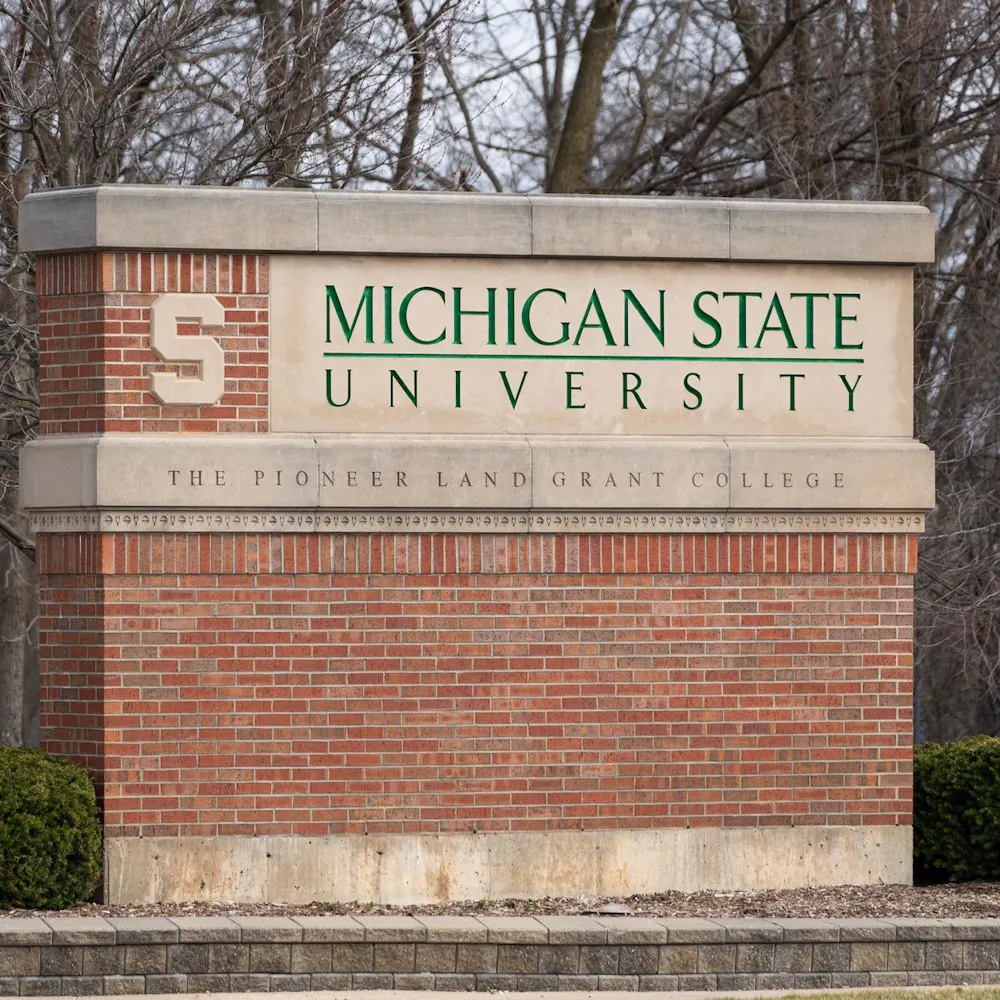
Michigan State’s Office of Institutional Equity is located in Olds Hall on campus.
Michigan State University released the results of its latest "Know More" survey Thursday, providing new data on campus sexual misconduct and the university’s handling of it.
Overall, the results suggest that students are experiencing less sexual violence while disclosing their experiences to friends and family more often. Broad measures of trust and confidence in MSU are rising as well, though the portion of students who choose to report incidents to the university has not increased.
The bleakest findings can be found among MSU’s transgender and nonbinary students, faculty and staff. Across almost every category, they report far higher rates of victimization and less trust in the university than other groups.
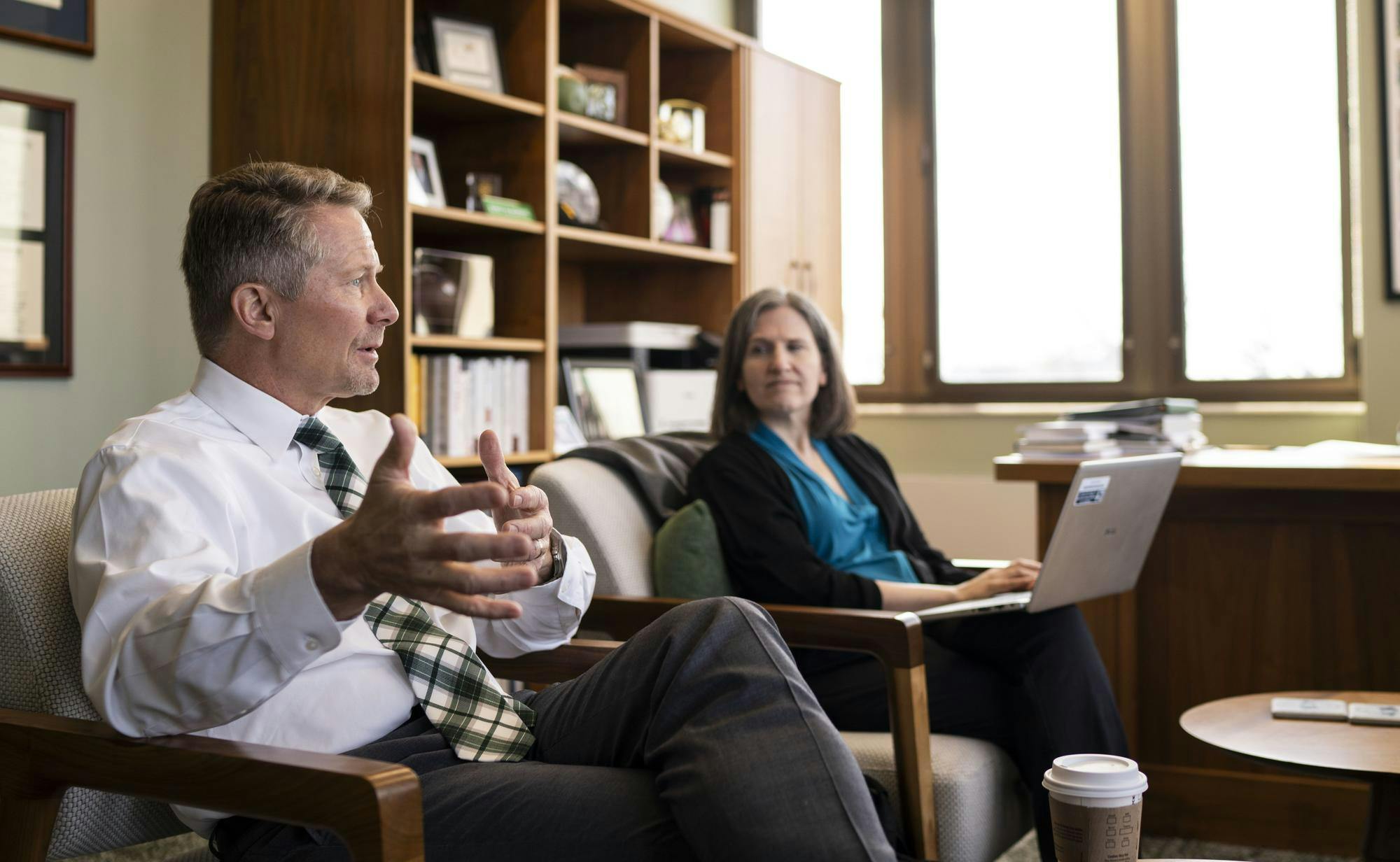
"We’ve got to learn from these data," President Kevin Guskiewicz said in an interview with The State News, speaking broadly about the survey. "Even though we’re seeing positive trends here, we’re not spiking the football. Because, there’s still more work to be done."
The findings will play a role in an upcoming assessment of MSU’s sexual misconduct policies, he said, promising that the long-debated review will start soon, following months of delays.
MSU started conducting the "Know More" survey after it was recommended in the law firm Husch Blackwell’s 2018 review of the university’s Title IX program. The first one was conducted in 2019 and another was completed in 2022.
This year’s survey was administered during the spring semester of 2025 and garnered over 10,500 responses. It was conducted by the independent research organization RTI International.
The findings suggest that rates of partner violence, sexual assault, and sexual harassment are largely trending down for students, both during their time at MSU and during their lifetimes overall.
There is evidence that MSU’s prevention programs played a role in that shift, said Carrie Moylan, who managed the survey and is the chair of MSU’s Expert Advisory Workgroup on relationship violence and sexual misconduct. But, at the same time, she said the same trend is also being observed at other universities that conduct similar surveys.
"I do think there are potentially some societal shifts that are happening," she said, pointing to the MeToo movement as an example.
Harassment is prevalent
The most common form of victimization was sexual harassment among undergraduate students. Over half of cisgender women, about 30% of cisgender men, and about 70% of trans and nonbinary students reported experiencing it during the 2024-2025 academic year.
RTI’s report calls those rates "quite prevalent" and says they "suggest the need for prevention programming targeting the specific behaviors that students experienced with some frequency."
The chance that these students disclose sexual harassment to MSU is quite low, around 2% in most contexts.
The top reason for not reporting? Students thought their experiences were not serious enough to report.
Moylan said that was troubling, given how many students said sexual harassment had impacted their mental health.
"I think there’s a conflict there," she said. "To say, ‘it’s not that serious’ but then also say ‘it’s affecting my mental health’."
Guskiewicz said he wants to avoid students thinking MSU will not take their reports seriously, and is considering more education for students on the subject.
Assault and disclosure rates
Support student media!
Please consider donating to The State News and help fund the future of journalism.
The survey also offers data on the campus’ experiences with sexual assault.
In undergraduates, about 30% of cisgender women, 9% of cisgender men, and 48% of trans and nonbinary students said they had experienced sexual assault in their lifetime.
In the last academic year, sexual assault was reported by about 6% of undergraduate women, 2% of cisgender men, and 8% of trans and nonbinary students.
The rates were higher for undergrad cisgender women involved in Greek Life. About 22% said they had been sexually assaulted since enrolling at MSU, compared to 16% of women who were not in Greek Life.
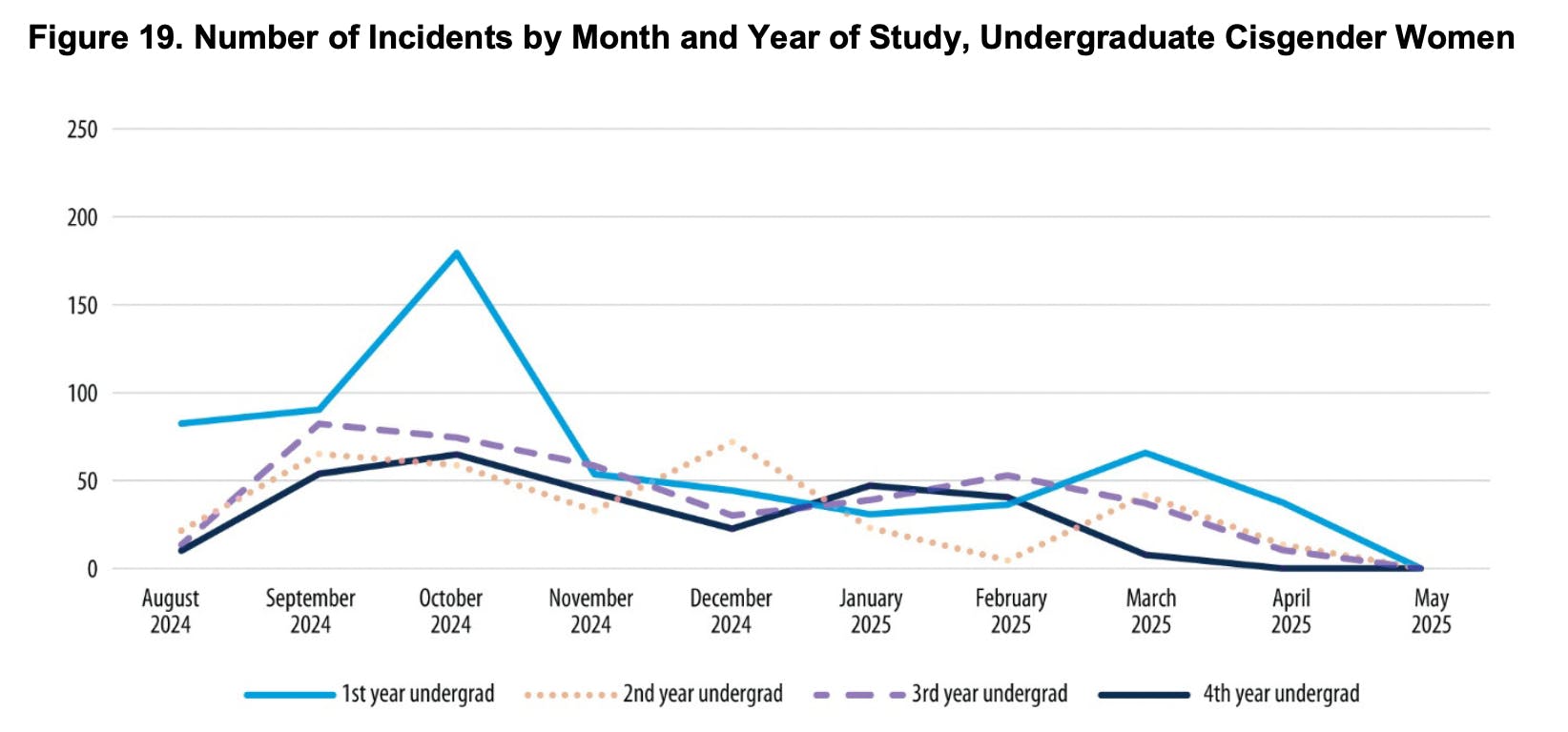
The data also suggests that sexual assault of undergrad women peaks during the early months of the academic year. It’s a well-studied phenomenon – often dubbed “the red zone” – in which researchers believe students are most vulnerable during their adjustment to college life.
Those who were raped or assaulted said the most common effect was on schoolwork and grades. Many also said they considered making life changes, like dropping out (25%), altering their schedule (19%), or moving (20%). Few actually made those changes, though the study notes that it would be hard to know about those who did drop out, because the survey was given to enrolled students.
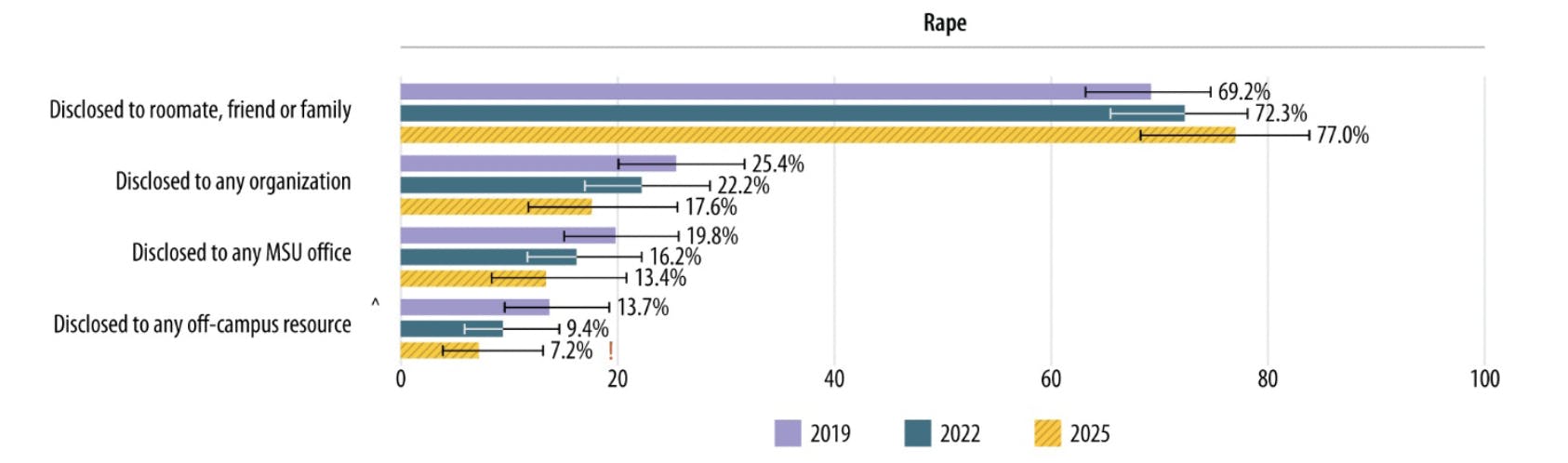
Overall rates of disclosure have grown since previous surveys. Nearly 80% rape and sexual battery experienced by undergraduate cisgender women was disclosed to roommates, friends, or family. Cisgender men disclosed about 70%.
At the same time, rates of disclosure to MSU have not increased. Cisgender women reported only about 13% of rapes and 6% of sexual battery to an MSU office. That’s a small drop from previous surveys, though Moylan said the difference of a few percent points is not statistically significant.
The top reasons for not reporting sexual assault included concerns that they would be treated poorly, feeling that the conduct wasn’t serious enough to report or that they did not want action taken, and fears that it would not be kept confidential. (MSU is currently involved in a high-profile lawsuit with the woman harassed by a former football coach, who claims that the university leaked her name to the media amid the investigation.)
Still, most students did say they believe that MSU would treat them with respect. 89% of cisgender women, 92% of cisgender men, and 68% of trans and nonbinary students agreed with the following statement: "If I Were to Experience Sexual Misconduct, MSU Would Treat Me with Dignity and Respect."
Of the reporting percentages, Moylan said that she "would like to see that number a bit higher.” But, she also said that "not all survivors need to tell MSU in order to get their needs met," pointing to the number of students who tell friends and family, or seek support services outside the university’s formal reporting process.
Some of the fears around speaking out could also be "some of the unintended consequences of mandatory reporting policies," she said.
Under more flexible rules during the first Trump Administration, some universities adopted policies of "mandatory supporting," in which staff members were required to explain options and resources to students who disclosed victimization, but weren’t always required to formally report it.
That ended under new, stricter Biden Administration rules which required policies of traditional mandatory reporting of sexual violence.
Guskiewicz declined to say what MSU would do if the current Trump Administration were to reinstate its laxer rule, saying, "We’re always looking at the changes and what needs to be put in place here."
The survey also asked respondents about their sexual orientation, and found that students, faculty and staff who identified as gay, lesbian, bisexual, pansexual, or queer faced a disproportionate amount of victimization. Those who identified as disabled also experienced higher rates.
RTI’s report recommends that the university pursues "additional or increased funding and support for prevention programming to help these subgroups," as well as "efforts to ensure that MSU's support services and victim responses are tailored and appropriate."
The report further recommends that similar attention be paid to trans and nonbinary students, faculty, and staff, who had more negative perceptions of campus climate than other groups.
In an email to campus about the results, Guskiewicz acknowledged the figures for LGBTQ and disabled students, saying the findings "underscore the importance of remaining vigilant and continuing to provide the resources, guidance and support that every Spartan deserves."
Independent Assessment
The findings of the survey will play a key role in an upcoming independent assessment of MSU’s policies on and handling of sexual misconduct, Guskiewicz said.
The review, called an "Institutional Assessment and Responsive Action," aims to uncover the "root causes" of the university’s handling of Larry Nassar — who sexually abused hundreds as a university physician — and analyze the reforms implemented since the scandal unfolded nearly a decade ago.
It will also generally evaluate the university’s "culture, structure and policies," according to a document seeking bids.
The university is choosing between three proposals. Two bidders are relatively small consulting firms pitching projects that would cost less than $300,000. A third, more comprehensive bid comes from a global firm and is projected to cost nearly $3 million.
MSU had originally said it would pick a firm by last September, then pushed that announcement back to November. Still, a firm has not been announced.
"I’m a little disappointed that we haven’t launched," Guskiewicz said. "My goal was to launch on January 1, but we’re a little bit behind. We’re just fine-tuning the contract."
Once the contract is finalized and the assessment begins, Guskiewicz said the university will not set a specific timeline for its completion. He wants to leave that up to the firm, because "I really want it to be done independently," he said.
One thing he is sure of: the firm is conducting an assessment, not an investigation.
"I’ve been very clear: this is not an investigation," he said. "People begin to retreat when they hear that there’s an investigation."
"I want people to actively participate, roll up their sleeves, elbows on the table. When you call something an investigation, which this is not, everybody will not be as excited about doing what I just described."
The firm’s findings will be made public, according to university spokesperson Emily Guerrant.
Discussion
Share and discuss “MSU releases sexual misconduct survey” on social media.