In the two years since the Feb. 13, 2023 campus shooting that killed three students and injured five, Michigan State University has embarked on numerous security upgrades in an attempt to make campus more safe.
Most of the projects — including adding more locks to classroom doors, installing a centralized security center and refining the university’s emergency notification system — are now complete.
But their implementation hasn’t always gone smoothly. The university disregarded a consultant’s recommendation for what type of lock to install on classroom doors, has yet to fully deliver on a promise to make its emergency procedures more accessible and alarmed experts and student activists with its new AI-powered surveillance system.
Here’s a look at changes MSU has made since the shooting.
Locks
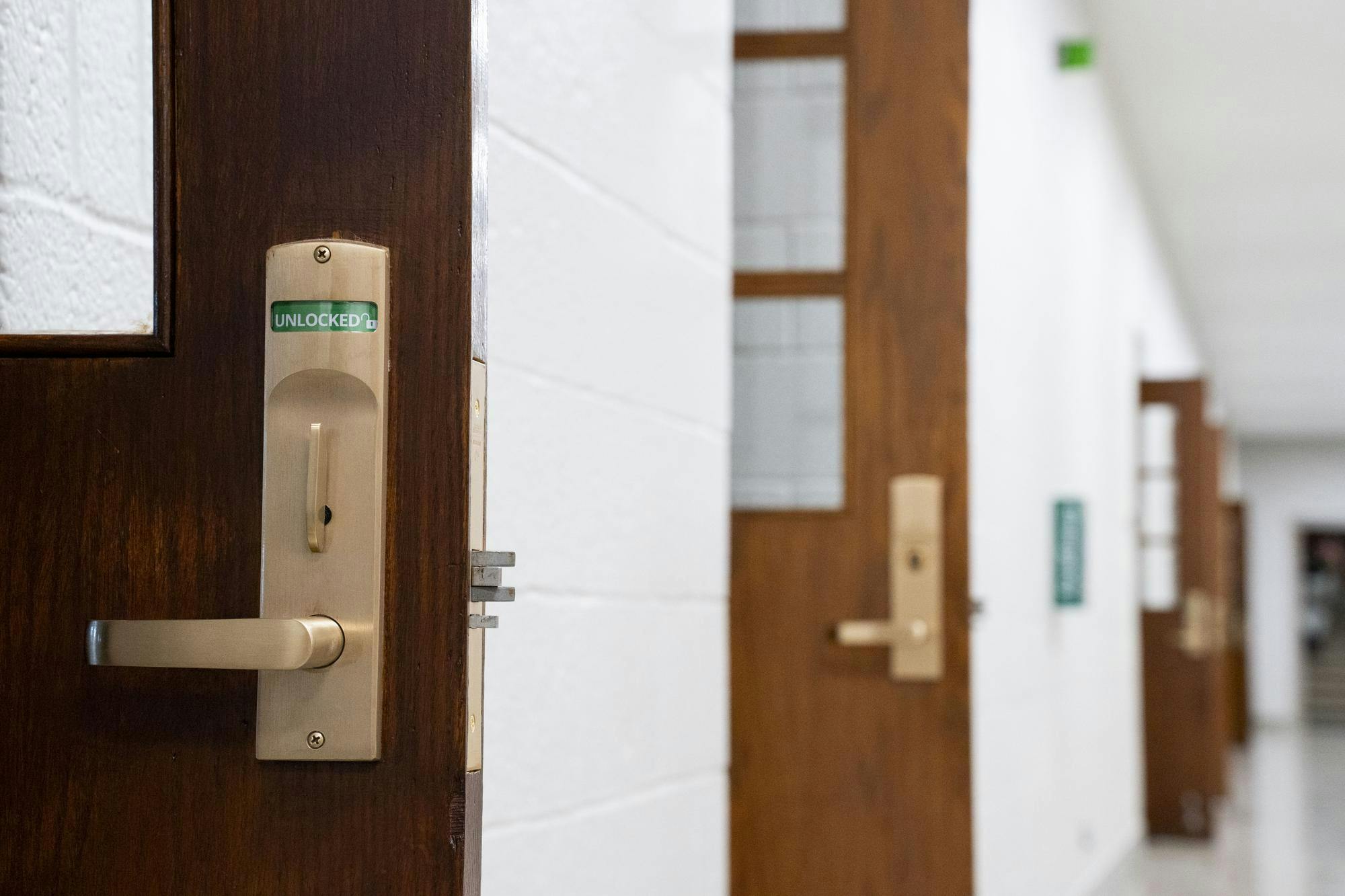
MSU’s infrastructure team finished installing new locks or upgrading existing locks on over 700 classroom doors in October 2024, a year and a half after the shooting.
Though outside consultants recommended installing locks that automatically lock doors, the university mainly installed locks that have to be manually locked from the inside in order to speed up the process.
Locks were a subject of concern after the shooting, since Berkey Hall — where two students were killed — didn’t have any the night of the shooting. Faculty had raised concerns about the lack of lockable doors five months before the shooting, Bridge Michigan reported.
Cameras
MSU has worked to expand its security camera coverage since 2021, after the disappearance of GVSU student Brendan Santo went unrecorded due to a faulty camera.
Two years later, the shooting reinforced the need for additional cameras and a centralized system that can manage them, MSU spokesperson Emily Guerrant said.
That has taken the form of MSU’s Security Operations Center, a room where police monitor and control campus’s 2,200 security cameras, 551 motion detectors and 5,400 electronic door locks on an array of video screens. While some cameras are still being integrated into the system, the $10 million project has been running since 2023.
The system uses an AI-powered software capable of tracking a person or vehicle, counting the people in a crowd, or scanning for cars parked without a permit. Police can remotely lock and unlock doors or control elevators inside campus buildings.
Security experts and student activists told The State News in April 2024 that they worried the technology’s questionable benefits weren’t worth risking their privacy and civil liberties.
While the system may help track a shooter, it can't prevent a shooting from happening, Odis Johnson Jr., a professor at Johns Hopkins University who has researched school shootings, said at the time.
Building access
Most buildings on the university’s East Lansing campus now require MSU ID card access between 6 p.m. and 7:30 a.m.
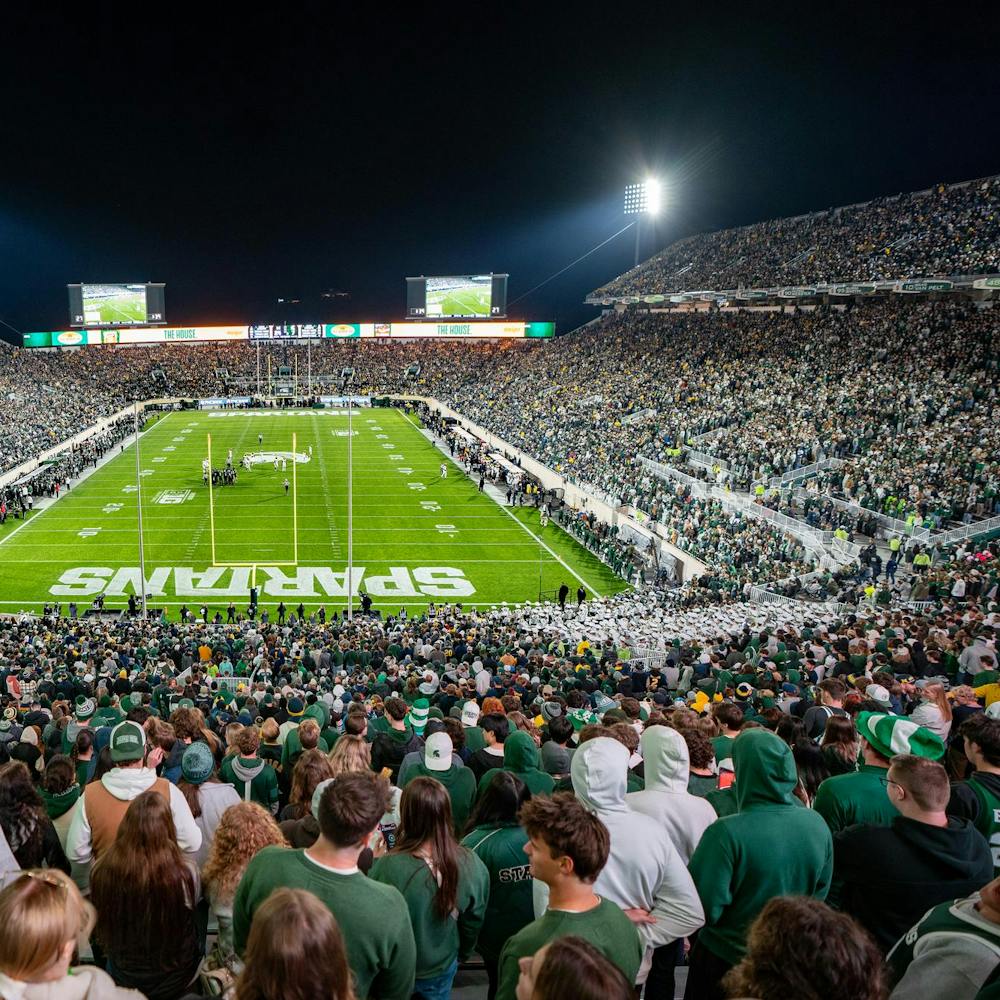
Metal detectors were also installed at the Spartan Stadium, Munn Ice Arena and the MSU Tennis Center.
Emergency procedure training
Nearly a year after the shooting, MSU released optional but "strongly recommended" active violence training for students, faculty and staff. It details run-hide-fight and avoid-barricade-confront protocols.
Support student media!
Please consider donating to The State News and help fund the future of journalism.
When the training was first announced, weeks after the shooting, it was mandatory. Since then, training became optional after MSU DPPS received feedback from the community concerned with the emotional impact the training could have on traumatized individuals.
MSU’s emergency protocols have been criticized by students with disabilities, who felt unprotected during the shooting by instructions that some couldn’t follow, like to barricade doors and use the stairs instead of elevators.
DPPS promised in April 2023 that the department would work on more inclusive procedures.
MSU is still working on refining its safety procedures, with the help of the Resource Center for Persons with Disabilities (RCPD), said MSU DPPS spokesperson Nadia Vizueta.
RCPD approved the university’s run-hide-fight and avoid-barricade-confront protocols that were distributed to classrooms last fall, Vizueta said.
The university has also updated its emergency notification system to display notifications through multiple modalities, including announcements dispersed via text, email, the SafeMSU app, outdoor sirens and screens in some buildings, according to Vizueta and Guerrant.
"These measures are part of a broader commitment by MSU to foster a safe and inclusive environment for all students, addressing both immediate safety concerns and long-term accessibility improvements," Vizueta wrote in an email to The State News.
MSU’s Board of Trustees and vice-presidents underwent emergency protocol training of their own in April 2024 and December 2023, respectively. A lack of formal guidance for what to do during a campus crisis caused MSU’s top leadership to interfere with the university’s shooting response and disrupt the healing processes of victims and their families in an attempt to help.
Firearm policy
In September 2023, MSU’s board voted to ban all firearms — even those carried with a license — from all of campus. Previously, firearms were allowed in MSU’s open spaces but not in buildings. Police officers are exempt from the rule.
Two trustees voted against the change, sharing concerns over whether officers would show bias in how the policy is enforced.
Discussion
Share and discuss “Tracking MSU's security upgrades two years since the shooting” on social media.