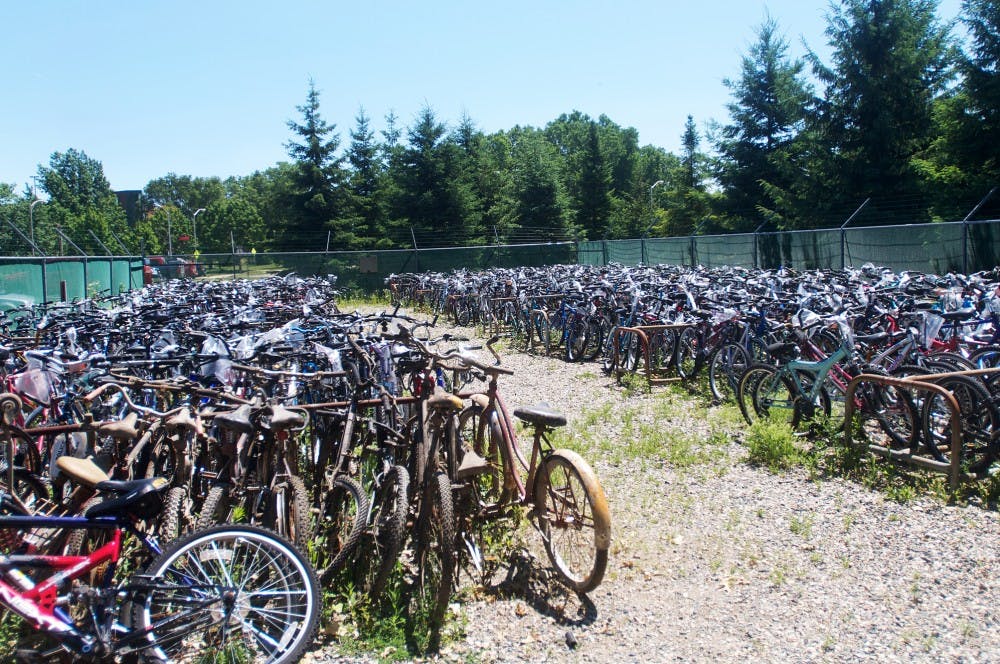
When microbiology junior Chuck Ternes returned to the same bicycle rack outside the Chemistry Building where he’d left his roommate’s bike just three hours earlier to find it missing, he could only think one thing: Thank you, MSU parking patrol.
Ternes experienced firsthand MSU’s Department of Police & Public Safety annual bike cleanup. Each spring, the department sweeps campus for unregistered bikes, along with those that are in disrepair and attached to objects that are not bike racks.
With an average enrollment of nearly 47,000 students during the fall and spring semesters, between 1,000 and 1,500 bikes are abandoned on campus as students head off to summer jobs, internships or weeks of sunbathing, and the MSU parking staff is left to clean up what’s been left behind.
“We have a beautiful campus and if we’re (impounding) that many bikes a year, imagine what it would look like in just a couple of years,” said Dawn Mazur, parking appeals coordinator. “Aesthetically, it’s just not attractive.”
The process
Parking Operations Supervisor Lynnette Forman said the cleanup, which takes place between May 14 and July 31 this spring, is done per university ordinance number 33 Section 06.
So far this summer, she said the office has collected about 1,200 bicycles.
A team of parking enforcement workers head off to various campus buildings and residence halls in their trucks with trailers to carry the impounded bikes in tow.
Mazur said the group is headed by a lead supervisor who checks each bike completely over for a permit and to see whether or not the bike is operable.
“It’s not just five or six people going off in different directions (saying) ‘Let’s just cut this or let’s take this.,’” she said. “(The lead supervisor is) looking for my guidelines — him specifically — and then instructing the crew what bikes to cut.”
The parking enforcement employees take the unregistered bikes to the impound lot behind the MSU Police station. The lot is surrounded by a gate, with extra (fencing) at the top to prevent students from hopping the fence, which Forman said has happened before.
Getting it back
Ternes said because he was borrowing a friend’s bicycle, he didn’t think to ensure it was registered. After finding the bike had been taken, he said he knew where to go and found he wasn’t the only student entering the MSU police station in a huff.
“It was real crowded because everyone got their bikes taken — like, everyone,” he said. “The station closed at four and it was 3:30, so all the people working there were freaking out.”
Mazur said encountering flustered students isn’t out of the ordinary, but the office does the best job possible to explain that so many bikes are abandoned they have to impound them and that registering their bicycle doesn’t cost a cent.
“It’s a free permit — we’re not trying to charge and extort money,” she said.
Despite his irritation from paying an $8 fine to retrieve his bike, Ternes said the employees responding to the wave of frustrated students did so effectively.
“I think they handled it pretty well,” he said.
“It was really hectic though.”
Forman said last summer, about 1,500 bikes were impounded and only about 200 were claimed.
If a concerned bicycle owner does not claim their bike in 30 days, it is transported to the Surplus Store and Recycling Center, 468 Green Way, to be sold or given to the MSU Bike Project, which will revamp the bicycles and rent them to other students.
Lesson learned
Although he understood why his roommate’s unregistered bicycle was impounded, Ternes said he had one qualm with the system.
“It would make more sense if they were (just impounding bikes) from dorms … but most of the bikes (at the Chemistry Building) were probably from students there working,” he said.
Support student media!
Please consider donating to The State News and help fund the future of journalism.
MSU police Sgt. Florene McGlothian-Taylor said registering a bike not only would prevent it from being impounded but it could help a student find a missing or stolen bike.
She said the police can enter a bicycle’s serial numbers into the Law Enforcement Information Network, or LEIN, and track the whereabouts of a missing bike.
Last year, Forman said she received a phone call from a business owner in Oregon about a bike that had been parked outside his store for days with an MSU permit. The owner asked Forman to contact the owner of the bicycle and when she did, she discovered the bike had been stolen from the student and he was thrilled to be united with his missing bike.
“I tried to stay happy because I didn’t want it to ruin my day,” he said. “But you should have your bike registered on campus. Otherwise, they’re going to come take them.”
Discussion
Share and discuss “Land of the lost bikes” on social media.