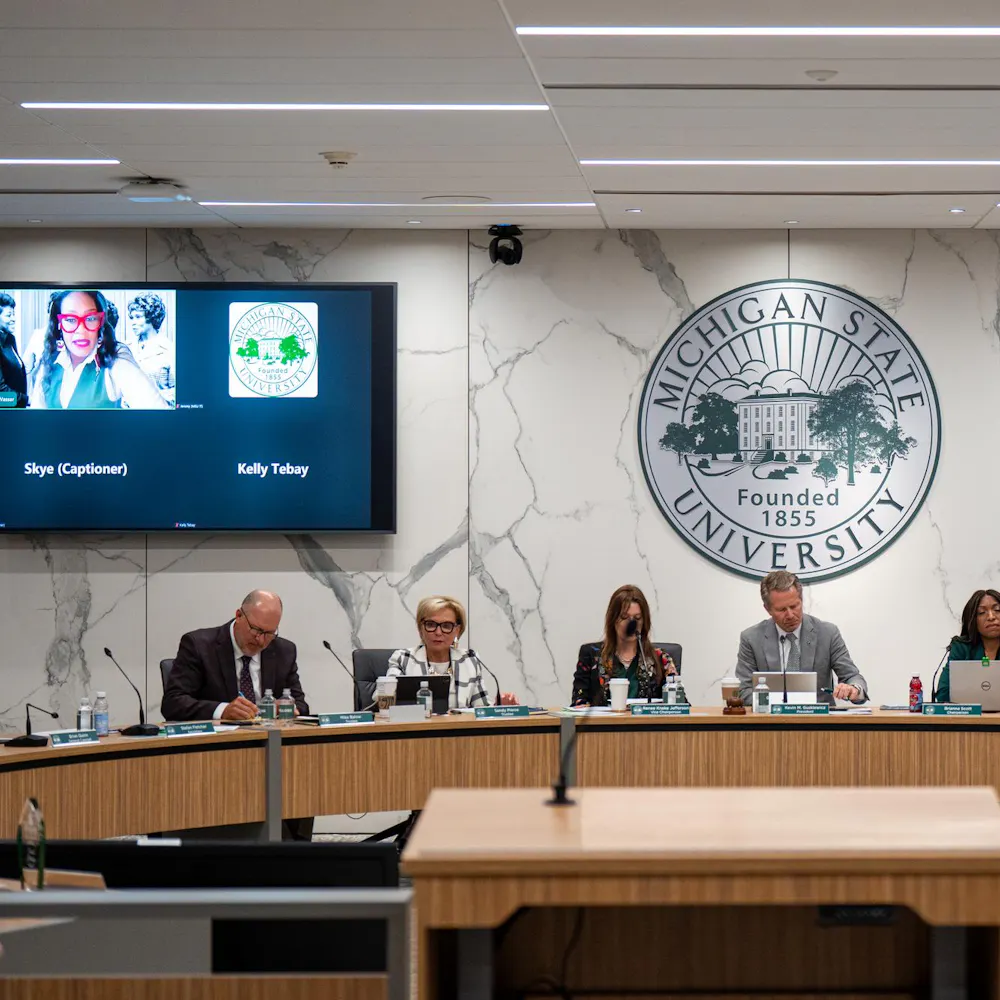
The Residence Halls Association will eliminate its campus recycling program at the end of the spring semester, after a unanimous vote on Wednesday.
It is not known who would pick up the recycling responsibility, and some students say they're concerned about its continuation.
RHA Director of Recycling Clark Llamzon said the association just does not have the capability to provide the services that MSU students need.
"We are a student group. We don't have the resources, the time or the continuity of services," Llamzon said.
The decision to phase out the program came more than a month after discussions about the recycling program began. Association members voted 19-0 in favor of the elimination with three members abstaining.
Although there is no formal plan laid out in the amendment for who would be responsible for the services, Llamzon said he has discussed the issue with University Housing officials in hopes they could pick up the program.
RHA does not have a good track record running the program because there is a new director every year, Llamzon said.
On Wednesday, RHA members expressed concern about what would happen to the program if RHA phased it out.
"We want a better recycling program by making (University Housing) pick it up," RHA member Will Holloway said. "But there is no method in this bill to make anyone pick this up."
MSU is the only university in the Big Ten with a student-run recycling program, rather than handled by the university. RHA member Thomas Edwards said a student organization should not be responsible for footing the recycling bill.
"We're not ditching recycling so much as we are trying to have the correct people handling it," Edwards said. "This does not belong in our hands any longer."
Robert Ellerhorst, the director of Utilities and Waste Management, said RHA's decision will impact only the recycling program in the residence halls.
"The recycling programs in academic buildings are paid for through a general fund - completely independent from RHA," Ellerhorst said. "There will still be office paper and newspaper recycling in academics buildings."
RHA has a contract with the MSU Office of Recycling and Waste Management for its collection services. MSU has had the RHA recycling contract since fall 2003, Recycling and Waste Management office manager Pete Pasterz said.
Now, the office plans to discuss the future of recycling with University Housing.
"Housing is one of our biggest customers, anyway," Pasterz said. "We sit down and talk to them annually regarding the program for the year and the proposed budget, so we will be doing that again within the next few weeks."
University Housing Director Angela Brown would not comment on the decision or how the housing department would react until after she had spoken with RHA leaders.
In 1998 and 1999, the Office of Recycling and Waste Management planned the future of the recycling program in the residence halls. Pasterz said the planning process began with the idea of an on-campus recycling facility in mind, but an opportunity with the city of Lansing shifted the focus.
"We were invited to partner with Lansing and use one of their buildings for the facility," Pasterz said. "We shelved our plan and explored that possibility, but we realized it wouldn't work for us. Now, we are re-exploring a facility that would sort recycling materials here on campus."
Michael Mignano, a member of the student environmental group Eco, said RHA did a good job with the recycling program considering the resources it had.
"The problem is that we don't have a large recycling center in the area," Mignano said. "What they did, in the framework that they had, was reasonable. But as a community, we need to get a recycling center on campus.
"I have concerns about RHA's portion of the program being picked up by another organization."