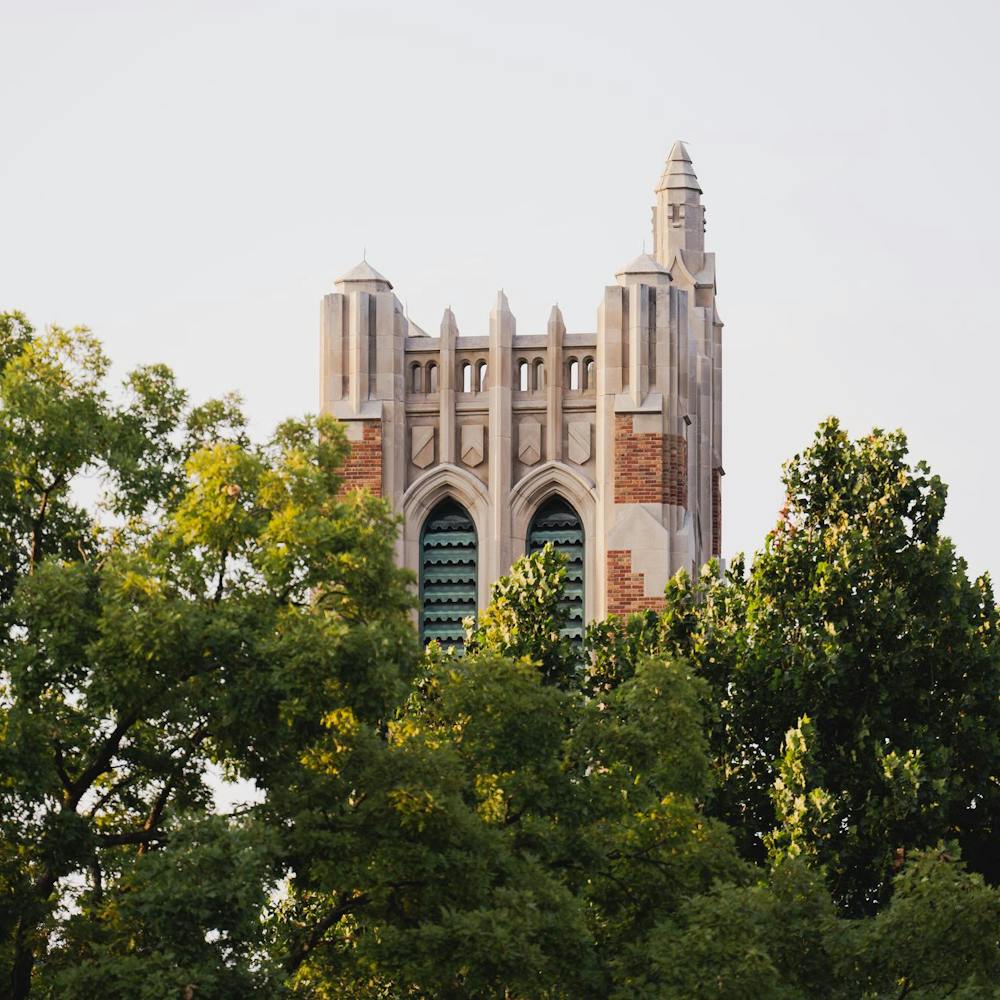
When looking up into the night sky, the black canvas is usually filled with an array of lights and patterns.
To an ordinary person, these patterns may not seem too intriguing or even garner a second look.
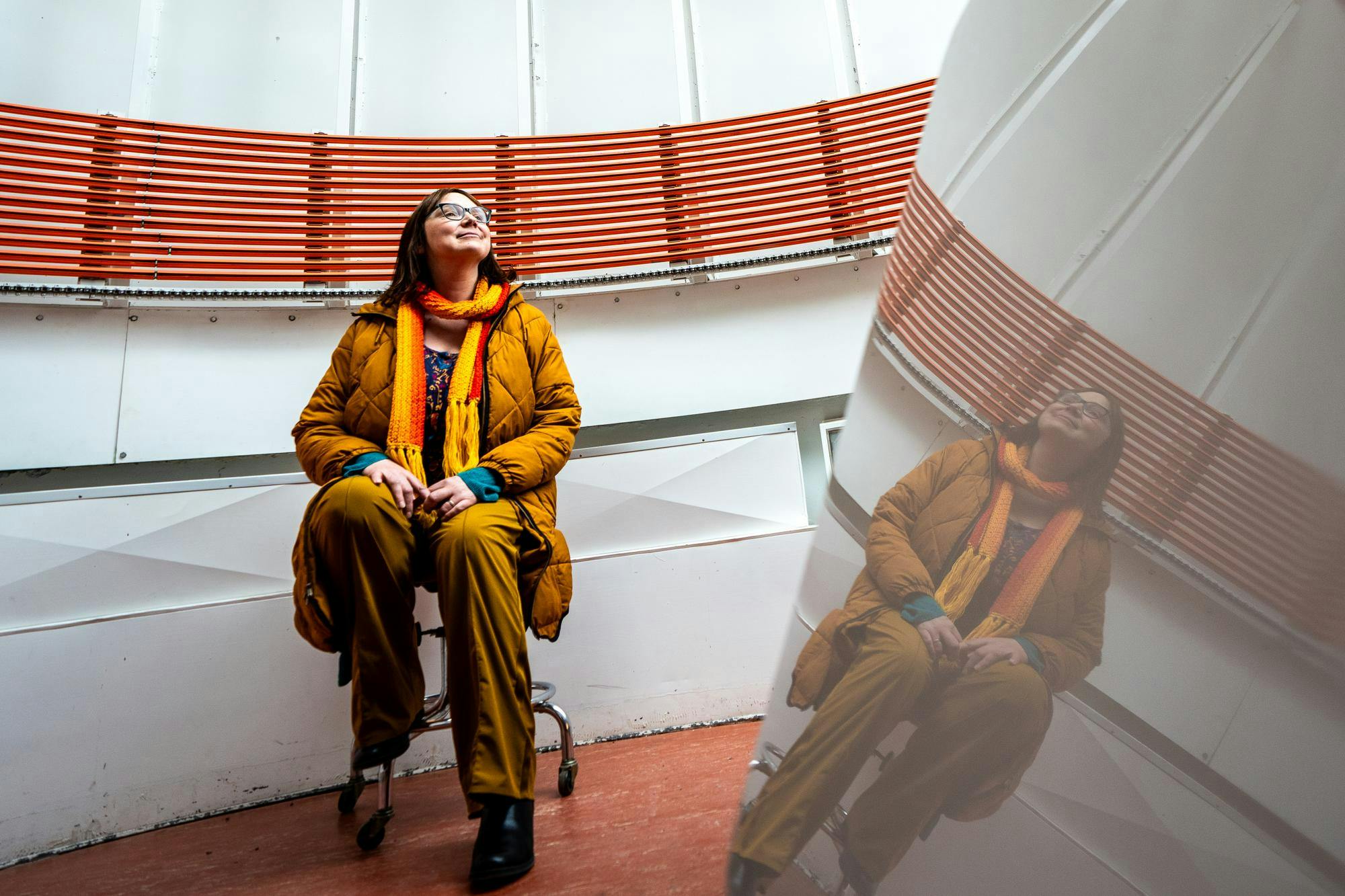
When looking up into the night sky, the black canvas is usually filled with an array of lights and patterns.
To an ordinary person, these patterns may not seem too intriguing or even garner a second look.
But for professor in the Department of Physics and Astronomy Laura Chomiuk, these lights, and astrophysics as a whole, make up her entire life.
“It is very central to my life. It's how I spend my time, it's how I get my paycheck, it's how I met my husband, it's how I've made a lot of my friends, it's often what I choose to do with my free time,” Chomiuk said. “It's very central to my life, and I think it also is very central to my worldview like that, trying to remember how lucky we are to have such a nice planet, and how we need to take good care of it, and how amazing it is that like life evolved at all, like those kinds of perspectives, I try to hold in my memory.”
After first gaining interest in astronomy in high school, Chomiuk said she was able to continue exploring this topic in college.
“...I put on my college application, I was like, ‘Maybe I’m interested in astronomy’, and I got hooked up with this really cool research opportunity through this nice scholarship I had at Wesleyan, which is where I went,” Chomiuk said. “And so I got to do extra galactic research, basically from the time I was a freshman, and I really liked it.”
After joining the Michigan State University faculty in 2013, Chomiuk spends her time researching nova explosions, teaching classes and co-running the MSU Observatory.
“I work mostly on nova explosions, which are pretty low energy, common explosions. We see something like 10 every year in our galaxy, and they are really rich in terms of the kinds of physical processes that they show, and also they're really bright,” Chomiuk said. “And so you can observe them across all the different wavelengths, from radio to gamma rays. So you can get these, like, really exquisite, high-resolution pictures of them at all the wavelengths to piece together what is going on in a way that you can't do for like supernovae or like other more distant, exotic explosions. So they're kind of like our laboratories for explosions in our galactic backyard.”
However, Chomiuk said she never expected to be in this position as an accomplished researcher and an MSU professor. During her years as a postdoctoral researcher, Chomiuk said she felt the effects of imposter syndrome.
“I think, I definitely felt the most insecure as a postdoc, like in the few years between graduate school and the faculty job. Just like not having any idea where life was going to take you, also, like exploring totally new science projects,” Chomiuk said. “Like that, (I) was very insecure, and I think, like, yeah, unsettling.”
At MSU, teaching the next generation of astrophysicists and those who want to follow in her footsteps, Chomiuk said, makes her feel “proud”.
“I'm very proud that I feel like we have a good culture here where the students support one another, and we try to, like, have a culture where students feel welcome to study astronomy, but it's not expected that they continue on into a Ph.D. in grad school,” Chomiuk said. “We try to embrace all the different life paths students take after Michigan State, and it's really fun being able to be part of that and watch the students, kind of, like, develop their own really positive culture and support one another. And, yeah, I mean, just working with young people and seeing all the amazing things they go on to do after is really, it's like, endlessly inspiring, right?”
For astrophysics and computational applied mathematics senior and research assistant Grace Showerman, she first started working with Chomiuk through an MSU-based program.
“She was the faculty sponsor for this program called the Physics and Astronomy Outreach Group, which I got involved in as a freshman. It was a way to connect undergraduates, like underclassmen, with outreach opportunities, like at the planetarium, at the observatory, at the museum on campus, and a bunch of various other things,” Showerman said. “I was just really struck by her dedication to outreach and the responsibility she felt to share science with everyone. And then I heard about an open call for her research group that summer, and I applied.”
Showerman said that since collaborating with Chomiuk, she views herself in a different light.
“It's really a privilege to work with her,” Showerman said. “She's very well known (and) I've made a lot of, like, really incredible connections, just people she's friends with, people she's worked with, and I really feel like she's shaped the way that I view myself as a scientist and the type of scientist that I want to be, so it's really amazing.”
Similarly, postdoctoral astrophysics researcher Peter Craig said Chomiuk helped him solidify his future career path.
“I had, kind of, mixed feelings about where I was going to end up after I left my Ph.D. You know, a postdoc like this is a kind of a short term position. I was originally hired to be here for two to three years, and I'm coming into the end of that now,” Craig said. “Working with Laura has really helped, kind of, shape my picture of where I want to be in five years, and what are the things that I think are important for me to be thinking about, to stay in the field or not stay in the field.”
Since working with Chomiuk, Showerman said, her interest has increased in the astrophysics world, not only in the research sector, but also in the outreach sector.
“...The biggest thing that I think I get specifically from her is that I feel like I've inherited that responsibility that she feels she has to share science with the community, and this idea that, like, science is kind of like a group project,” Showerman said. “And I mean, a lot of it's really, it's publicly funded. We get a lot of money from the government, from the NSF, to do our work, so we have, like, a responsibility to give back and make our research accessible for people. Because a lot of people find astro really interesting, but just like, don't (understand) the math or haven't had the ability to study it in school, that makes it easy to understand.”
Support student media! Please consider donating to The State News and help fund the future of journalism.
Outreach, Craig said, is another area he is interested in, and Chomiuk helped him develop an understanding of it.
“Laura, I would say, is a really wonderful mentor. It's been both great being a mentee of hers, and also she's really helped me develop my own program to mentor other students. So I've had the chance to, like, mentor summer students here at MSU every summer, and that's been pretty meaningful for me, and impactful,” Craig said. “It's kind of like changed the way that I'm thinking about, you know, what's important for me to be focusing on what I want to be doing in the next stage of my career. It's been pretty huge.”
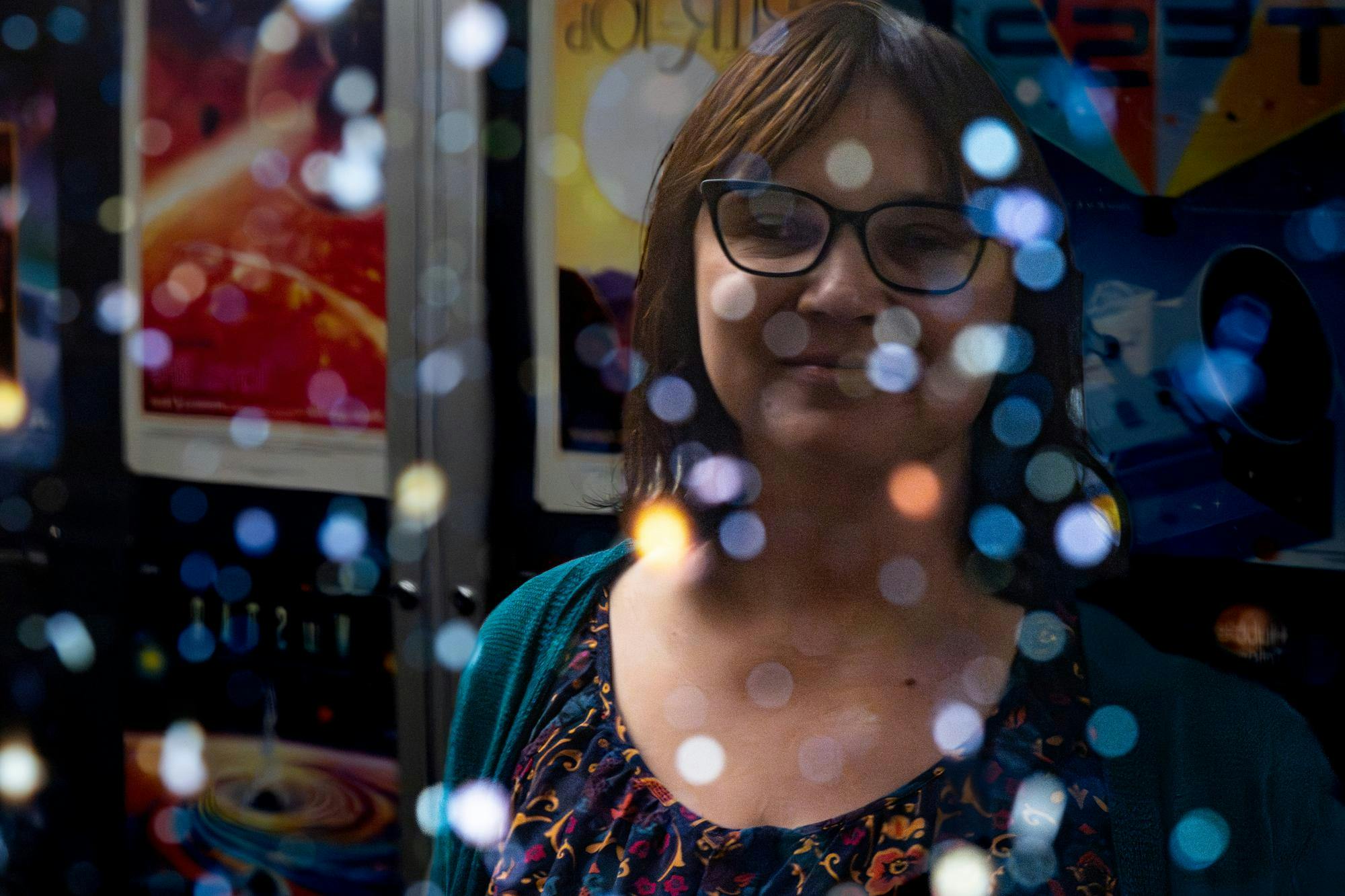
At the MSU Observatory, Chomiuk hosts public observation nights, where members of the public are encouraged to attend and learn more about astronomy and astrophysics.
This type of community outreach, driven by Chomiuk, is what astrophysics graduate student Isabella Molina is drawn to.
“Every outreach event I've ever done has been so much fun,” Molina said. “Through that community engagement, I've like learned that about myself. That's something I enjoy, that science outreach, and so I know now, after I graduate and I'm looking for careers, that those are things I value. I want to work more with students and with the community, doing outreach stuff.”
Molina said since working with her, she has grown in “a lot of different areas.”
“I think she's just really pushed me to grow in a lot of different areas,” Molina said. “Even when it comes to like, when I first joined, public speaking was terrifying to me, and she was always encouraging us to go to conferences and give talks and just giving so much feedback in that process, so it's not like I'm just thrown out there and I have no idea what I'm doing. Like, she helps every step of the way, and I feel like I owe a lot of my personal growth to the time spent working with her.”
For individuals wanting to jump into the field of astrophysics and astronomy, Chomiuk said making the most out of opportunities is important.
“I think my biggest advice is take advantage of the opportunities that you have as a student, and by that, I'm most specifically thinking of the summers, like if you can try to line up a research position, or an internship (in the) industry is also amazing, (and) like, those are things that you can't do after you graduate,” Chomiuk said. “I understand financial hardship. But like, if you can, if there's any way you can make it financially work, try to do something in the summers that is uniquely enabled by Michigan State, because you're not gonna have the opportunity in a few years.”
In the near future, Chomiuk hopes to finish up projects she is working on, such as radio imaging of Andromeda.
“Right now, I am working on this big radio image of the nearest spiral galaxy to us, Andromeda. It's gonna be, like, a big mosaic, and it's gonna be… it's, like, really computationally intensive, with the Very Large Array, which is (a) radio telescope in New Mexico,” Chomiuk said. “So that's kind of entirely different science from the nova stuff. So me and a graduate student are working on that right now, and we're putting a bunch of, like, we're using the MSU High Performance Computing Center. I'm putting a lot of time and effort into that. So I really want to get that image, kind of, completed, and that's like a big project for the next year.”