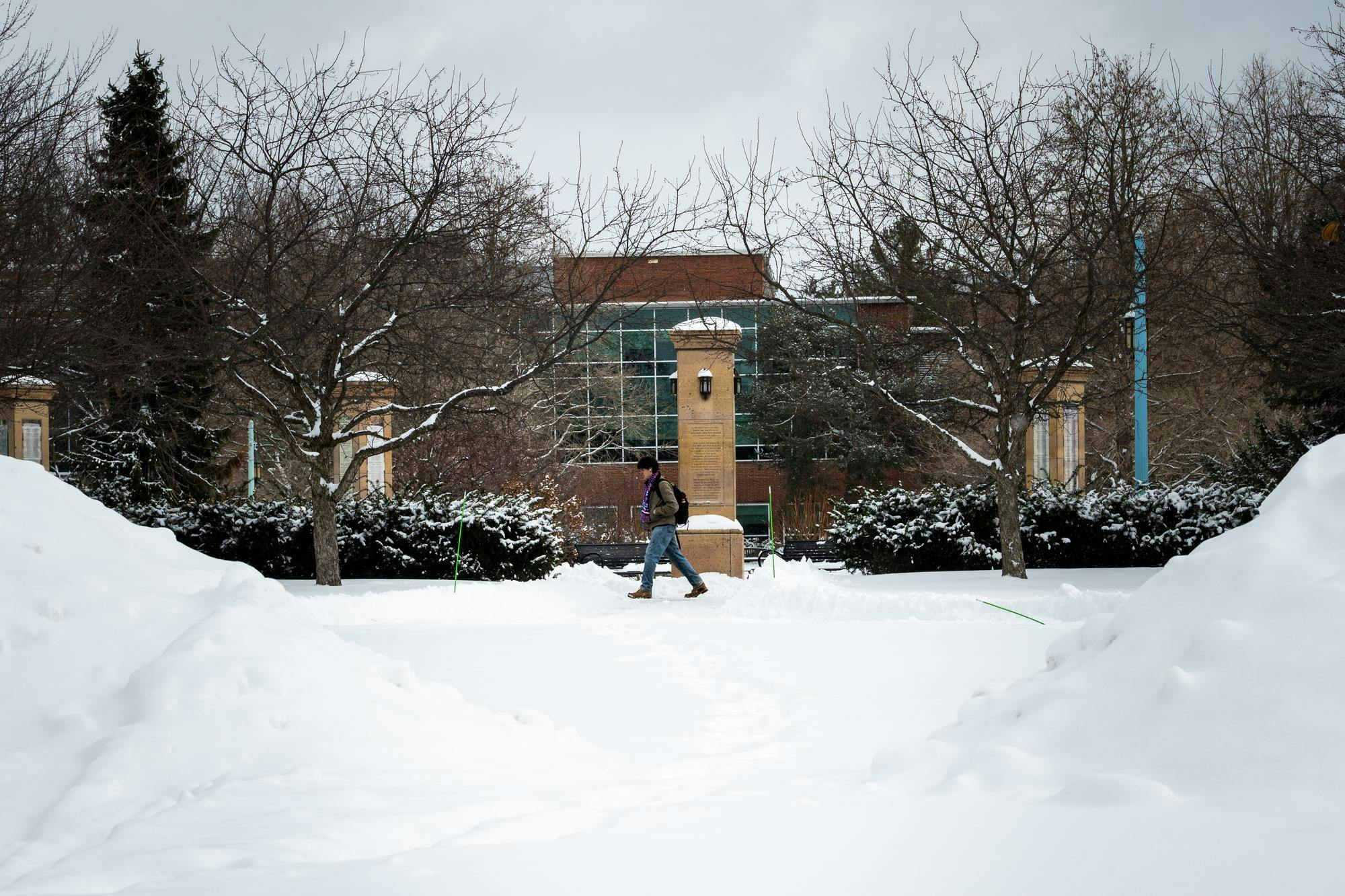
From the twinkling lights on Beaumont Tower to rallies around March Madness, winter is one of the best seasons at Michigan State University.
But Midwest winters are cold. These conditions create unique safety risks around alcohol use. Understanding them can help you make informed choices about your health and celebrations.
Alcohol impairs judgment in any season. In the winter, that can translate to reduced awareness of how severe the cold is.
As explained by Cleveland Clinic, drinking may make you feel warm as it causes your blood vessels to dilate, rushing blood to the surface of your skin. That warmth is misleading. As you feel the heat, you lose it faster from your core. This leads your real body temperature to drop.
When body temperature declines, the risk of hypothermia rises. Hypothermia is a medical emergency in which the body can no longer maintain a safe temperature.
If you choose to drink alcohol, a few simple habits can reduce your hypothermia risk and help you stay warm and in control.
Plan ahead to get home safely. Nine out of 10 Spartans do the same.
Many Spartans use a designated driver, a rideshare service like Uber or Lyft, or ASMSU Safe Ride. Others choose to walk home with friends they know and trust.
In addition to planning your trip home, make sure to eat before, during, and after drinking alcohol.
Whether you bring snacks or stop for a quick meal, having food in your system helps keep you energized and slows the absorption of alcohol.
It can be difficult to keep track of how many drinks you have had if you are not the one making them. Mixing your own drinks or using measured pours can help you monitor your intake and stick to your limits. If you are drinking from cans or bottles, keep count by holding onto the tabs and caps.
Alternating alcoholic beverages with water or other nonalcoholic drinks is another simple strategy. Staying hydrated slows the rate at which alcohol enters the bloodstream. It also gives your body a better chance to manage its effects.
If you are out with friends, stay together and look out for one another. At MSU, 92% of Spartans look out for their friends to keep them safe when they drink. Sticking with your group creates accountability and is one of the best ways to avoid risky situations.
Even with planning, there are always risks related to overconsumption. Alcohol poisoning risks are highest for those who binge drink, mix alcohol with other substances, or drink on an empty stomach.
You can help save someone’s life by recognizing the key warning signs of alcohol poisoning. These signs include confusion, vomiting while unconscious, slow or irregular breathing, seizures, a weak or erratic pulse and cold or pale skin.
As a Spartan, there is no reason not to seek medical help during a medical emergency. Medical amnesty, a university policy and state law, protects you from disciplinary action or criminal prosecution if you seek medical assistance for health concerns related to alcohol or drug use. Visit the Office of Student Support and Accountability’s Frequently Asked Questions page to learn more about Medical Amnesty.
If you are worried about a friend who has had too much to drink or overdosed on drugs, call 911 if you can, or text if you cannot, and stay until help arrives. Spartans will thank you — 97 percent of MSU students approve of getting medical help for a friend who has had too much to drink.
If you have concerns about your substance use, help is available.
eCHECKUP TO GO, a tool offered by University Health and Wellbeing, provides personalized feedback and helps identify risk factors associated with alcohol use.
For Spartans needing additional support, University Health and Wellbeing offers counseling and peer support.
Support student media!
Please consider donating to The State News and help fund the future of journalism.
Students can connect with Counseling and Psychiatric Services to receive support from a clinician who specializes in alcohol and other drug counseling. The Employee Assistance Program offers similar support for MSU employees and their benefits-eligible dependents. The Collegiate Recovery Community supports students who are in or seeking recovery from substance use disorder, as well as their allies.
Understanding how alcohol affects the body in cold weather, making safer choices, and knowing how to respond to medical emergencies can reduce harm and support your community.
Celebrate the season with care for yourself and others.
Hailey Gosen, MSW is the Alcohol and Other Drugs Program Coordinator at University Health and Wellbeing. In her role, she provides education and proactive outreach to help Spartans make informed decisions about substance use. The views in this article are her own and independent of The State News.
Have an opinion or expertise you want to share with the MSU community? The State News welcomes guest commentaries from students, faculty, staff, alumni and community members. If there’s an issue you care about or a perspective you think others should hear, we encourage you to submit a piece for consideration. To learn more, visit the portal for information.
Discussion
Share and discuss “GUEST COMMENTARY: Feel warm when drinking? That warmth is misleading” on social media.