From food recipes to get-ready-with-mes, TikTok and Instagram provide a home for every trend that catches users’ eyes.
However, the nature of some trends may stir disagreement among users.
From food recipes to get-ready-with-mes, TikTok and Instagram provide a home for every trend that catches users’ eyes.
However, the nature of some trends may stir disagreement among users.
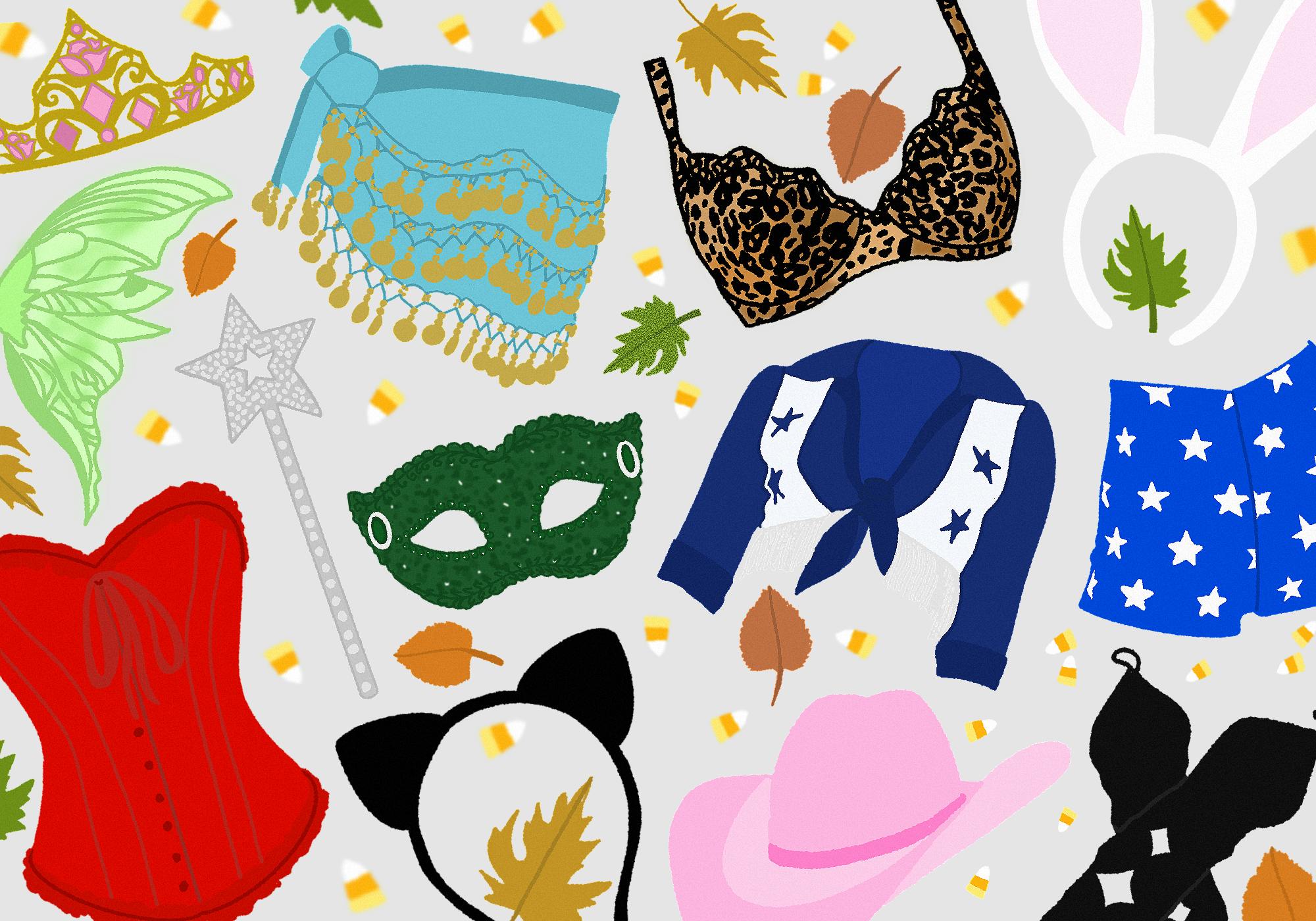
In the weeks leading up to Halloween, one trend was prevalent on many users’ "For You" pages. It consisted of videos primarily uploaded by men, stating, "my future wife won’t be going out half naked for Halloween," taking a jab at women who choose to go out and celebrate the holiday in costumes.
Advisor and Instructor in Women’s and Gender Studies Pat Arnold said the trend, although it may seem harmless, harbors a deeper societal meaning.
"I think the trend highlights the way in which contestation over who has the power to control women's bodies and sexuality is still as present and pressing a social, political and cultural issue as ever," Arnold said. "You could say we've made progress in certain ways. After all, you can wear whatever you want for Halloween. So that might feel like a degree of progress that, like, well, women can just wear whatever they want, just like in the context they choose to go out, but the debates and the stigma is still a way of trying to control that and trying to shame that."
Stigma, Arnold said, is the foundation of this trend.
"...The reason why stigma is such a powerful tool of social control is that when it's ever present in a society like ours, like social media, you can't, you almost can't help but be influenced by it," Arnold said. "That's why I think in the past or in other spheres, one way to control women's bodies is like directly by force (or) by political will. But the broader, and maybe more pervasive, and in some ways more powerful, way to control people's bodies and sexuality is by shame and stigma. So I think regardless of your political views or how well you already love and are positive about your own body or mental health or sexuality, it's hard not to be influenced by these kinds of trends."
But, if this trend carries deeper meanings behind it, how did it even become one in the first place?
Communication junior Brenna Paul said this trend may be a result of the rise in one particular societal value.
"I think lately there's just been a bunch of people just trying to, like…be more conservative with people's clothing, which is okay, totally, if that's something that they choose," Paul said. "But I feel like there's been a big push on other people forcing them."
Arnold said the way the content is presented on social media could be responsible for it becoming a trend.
"…So much of it elicits underlying political, social contestation over who has power over women's bodies and sexuality, even in the very framing of the, kind of, meme-like trend…," Arnold said. "In this case, even before there's a relationship or marriage, the mere symbol of a future husband is a powerful enough social position to already have influence and control over your body and sexuality…that's what caught my eye in the framing immediately, was like, that is how powerful men's historic role is over women's body and sexuality, that you don't even have to be in a current relationship to be presumed to be under his power and control and authority…"
When it comes to the trend itself, advertising management junior Mead Briggs said he doesn’t necessarily agree with it.
"...For my girlfriend, I couldn't care what she was doing, really. Like, it's always good to have trust, but like, obviously these people who are posting it don't seem to have like, trust in their sense," Briggs said.
But the trend doesn’t stop there. Some women have also jumped aboard, agreeing with the men posting these videos, stating things like, "I’m someone’s future wife, so I won’t be partying half naked for Halloween."
Arnold said this may be due to a couple of different factors.
"You know, it's more than just, 'I'm going to go in a different direction than what I see other young women doing during events like Halloween,'" Arnold said. "It's saying something deeply, deeply related to which women have value because implicit in the message is this idea that how you use your body and sexuality, particularly in relation to your current or future husband, is determining your value and worth as a woman, as a person."
Additionally, Arnold said race also plays a role in this trend, with mostly white, younger individuals living in the U.S. who are posting this type of content.
"They're really fundamentally about racial domination as well, because part of what this messaging and trend is highlighting is that there's a certain type of man who is presumed to have rightful power over women's bodies and sexuality," Arnold said. "...What it's highlighting is an interesting level of complicated privilege that whiteness plays, where whiteness gives you the ability to be complicit in the broader power structures. For instance, when white women have posted this trend, it's really interesting to ask, 'Why are they so keen on playing into this?' And part of the reason in relation to patriarchy as a racial power structure, highlights that there's a lot of potential privilege in being second in the privileged system. Like, to be second to white men and to play into what they want and what they deem of value, provides a lot of social privilege."
With this trend attracting many different viewers, Arnold said the trend itself is problematic.
Support student media! Please consider donating to The State News and help fund the future of journalism.
"I think the trend highlights how inherently problematic our politics of gender, sexuality and race continue to be. It’s kind of symbolic of everything that's still at odds with how we view privileges assigned to sexuality, body, race, gender, even marriage and relationships, like, because there's also a reaffirmation that traditional structures of hetero normative marriage are also key to those social privileges," Arnold said.
Similarly, Paul said the trend could potentially be concerning.
"I think it can be problematic. I mean, it's just other people saying what you, kind of, cannot wear, which is, like, fine, whatever, but it has nothing to do with the other person, so there's not really much to say about it," Paul said.
However, Briggs disagrees.
"I don't think it's anything that will, like, uprise anyone, like, make a big thing," Briggs said. "But, you know, it's definitely like, (I) see it all the time on Instagram, TikTok, and I don't think it'll be a problem over time."
For most trends, the content usually tends to die down after a period of time on these social media platforms. But, Arnold said some, like this one, may not just be a trend after all.
"...It's a repeating or a reframing of prior trends that basically said the same thing, like whatever is currently trending in terms of visible images of how women express themselves and express their, in a way, like, well-earned freedoms to determine how to present and love their own bodies," Arnold said.
But Briggs said the trend will "just disappear in maybe a couple months."
However, Paul said she understands both sides.
"I think a lot of people said this during Halloween, but of course, there's gonna be a few remarks throughout the year, typically, but Halloween is just a big time where they say, like, 'Oh, people can dress inappropriately' as an excuse," Paul said.
A variation includes other users, typically who are also men, responding to the initial trending videos that their current partners, or future partners, can wear whatever they please, but they prefer to be with them, should their partners choose to wear revealing clothes or costumes.
This variation, Arnold said, is still very similar to the original trend.
"...It really showcases the degree to which the presumption is that a man controls your body and worth, and the freedom you get is tailored to the man you're with. A lot of the counter trends are still framing the same system of power. It's like, 'Oh, the counter trend could be that women have more freedom,' but it's only in virtue of the fact that they have a more progressively minded, quote, unquote, future husband," Arnold said. "But it's still the same system of power, that is a guy is determining your worth and what value you have based on what you're wearing or who you're out with ... Like, you can be praised wearing different things, but your worth is still being determined by a man."
But, Briggs said he personally agrees with this variation of the original trend.
"I think that's a hundred percent valid, like, as long as you're out with her, like if you're with her the whole time, I don't see the issue with it," Briggs said. "But also, if they don't, you know, want them dressing like that, then that's their own take on it. But if you're with them, I don't see the problem with it at all."
Paul said that whether or not this variation is appropriate or not is up to the couple.
"I think it just comes down to them and their relationships…I mean, I can't speak for every relationship," Paul said. "So, I think whatever their boundaries are, like, if it is something that they've talked about, where it's like-minded or something like that, then that's none of my business. But if it's just some random saying that, then it's kind of a little weird."
With this trend mostly centered around male users’ thoughts on this topic, would the trend have stirred the same amount of attention if the roles were reversed?
Arnold said they don’t think it would have.
"...It's highlighted in a lot of the comments on these trends that are so funny, because it's so easy to see how pervasive these sexual double standards are when you just consider what the equal or equivalent would be if men face them at all," Arnold said. "It's more like there are systems of judgment and evaluation that negatively apply to both (women and men), but they pull in different gender directions, mostly owing to the different ways in which the gendered and racialized nature of power works in our society."
Similarly, Paul agrees that the response would not be the same if the roles were reversed.
"I think just, women don't really, like, speak up on things that little," Paul said. "I mean, like, it's very normalized for (men) even if it's like, at the beach or something, for a guy to be shirtless. Like, that's not any different in a different environment."