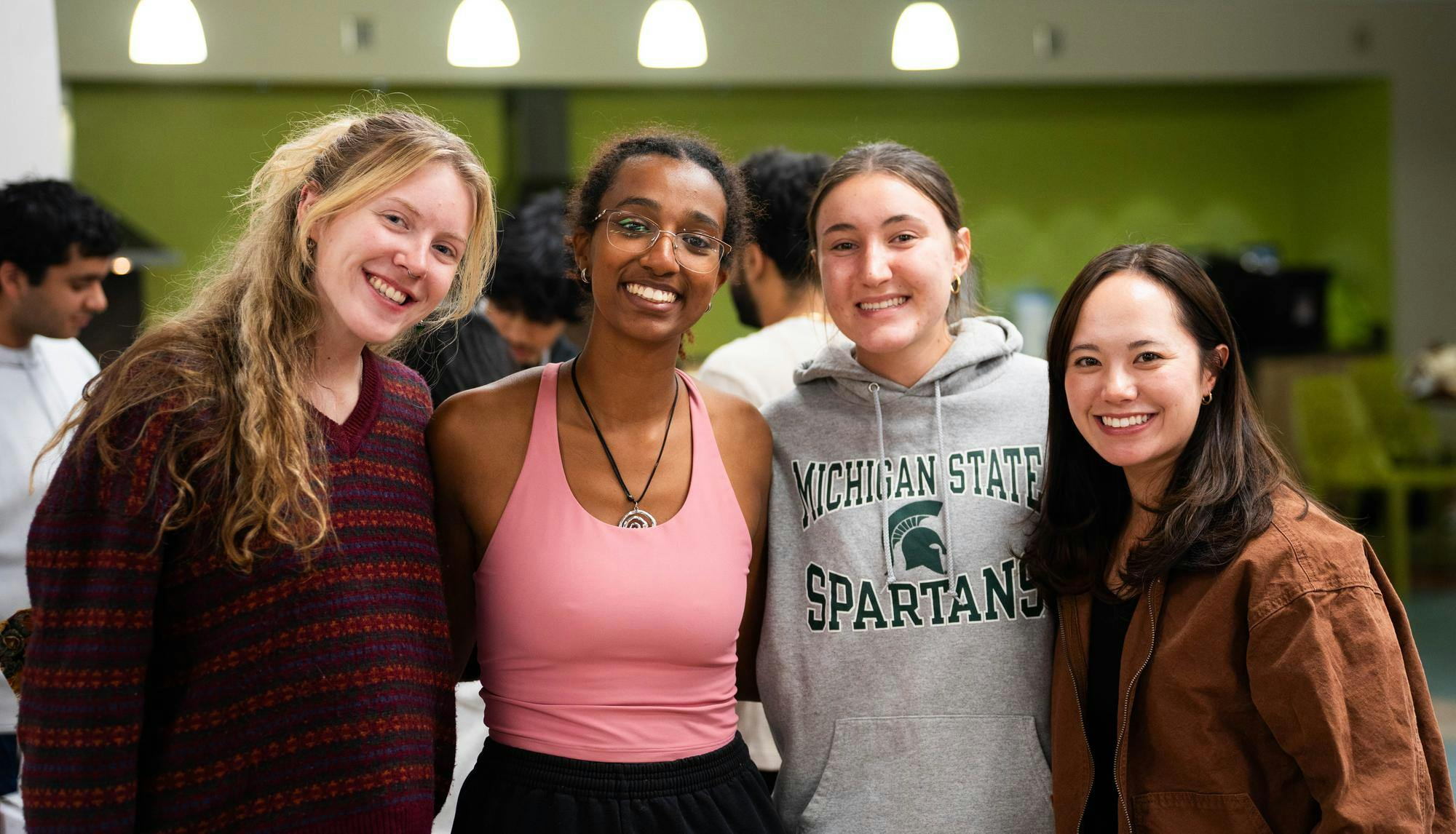
After several years, MSU’s chapter of Slow Food, an organization designed to promote good, clean, and fair food, has finally returned.
With the reinstallation of the club spearheaded by president and environmental studies and sustainability junior TJ Teshome, Slow Food MSU has already started its bi-weekly meetings.
Teshome said they first heard about the club through a class they took last year.
"Basically, it promotes growing your own food and sustainable agriculture and biodiversity, and food traditions," Teshome said. "I figured it was really cool and I was looking for a club to be a part of, and I have a sustainable agriculture and food systems minor, and I figured it'd be really cool to be in a club like that, but I couldn't find one because it shut down so I figured I'd restart it."
Similarly, treasurer and environmental economics and management senior Emika Bowman said the club aims to create a "connection between producers and consumers."
Upon the club’s return, vice president and crop and soil sciences junior Sophia Moceri said the club has also aimed to bring awareness to local hunger problems.
"...Sometimes, we think about like world hunger or stuff like that as something that's really far away and like (it) doesn't really impact locally, but it's everywhere, especially (in) Lansing (and) stuff like that," Moceri said. "Thinking about where our food comes from, and how to go about it in a more sustainable way and educate our community about where our food comes from, and also help people get food, I think is very important and I think this club reaches to bring that to MSU."
Additionally, Teshome said the club hopes to support consumers in many different ways.
"It's important because it supports healthy and culturally appropriate food, and it ensures fair prices for consumers and fair conditions for producers, which can definitely be problems on campus, especially with consumers being students who may not be have an income at the moment and things like that, (and) who are struggling with foods,” Teshome said.
Once it was decided to reestablish the club, Moceri said she and the other e-board members were eager to get started.
"...We really just wanted to start it, like, as soon as possible, just like, why wait? You know, because no club existed for it. So, it just worked for our schedule, so we just said, ‘Go for it,’ you know?"
However, restarting the club didn’t come without any challenges for the e-board members.
Teshome said there were multiple steps to complete in order to get the club back up.
"I just had to find people who were interested as well, and finding an advisor, (but) it wasn't necessarily difficult. Just having to work around scheduling and things was kind of rough, getting up and starting," Teshome said. "And then also figuring out funding and what we necessarily would do to fund our activities, and then also figuring out certain activities in advance so that we could just go into meetings without any stress."
Additionally, Moceri said a big ongoing obstacle is finding members.
"I think, just the first thing, it's not really an established club, so just like getting people to join, I think, is and will be, probably, our biggest challenge," Moceri said.
However, restarting Slow Food MSU wasn’t just a check off the e-board members’ bucket lists.
For Teshome, creating a change in their community was a driving force.
"It's important to me because I'm just very passionate about food injustice," Teshome said. "I took a class spring semester (of) my freshman year… and I realized that like food access is so important, and it's a human right, and everybody deserves it, so the idea that not everybody is getting fair access to food is like crazy to me. So, I wanted to make a change, and I know I can't do that much as a busy college student, but this is, like, my personal impact, (that) is what I like to think of it as."
For Bowman, the club shares similarities with her internship this past summer.
Support student media!
Please consider donating to The State News and help fund the future of journalism.
"...I think through the process, I learned how important it is to support local farmers, get fresh food, and just kind of learning what's what's growing in your local area, and I think it's also (a) nice opportunity to have a direct interaction with producer," Bowman said. "I think these days, it's really hard to, you know, connect with the producer. Like, if you go to the supermarkets, you're not gonna see the producer, like there's a lot of product that goes (through) a lot of process."
For Moceri, the club aligns with her personal interests.
"...It's kind of what I want to do, like, career wise. I'm with Crop and Soil Science, (and) I do want to go more into the research side of things and how to grow food, you know, as that becomes more difficult with climate change and whatnot," So it's personal to me, because I just, I care about food, I guess. I know that's kind of vague, but I want to make a difference with food, and helping people have access to food, educating people about where it comes from, stuff like that."
For more information on Slow Food MSU, visit their Instagram page here.
Discussion
Share and discuss “Slow Food MSU returns to campus after hiatus” on social media.