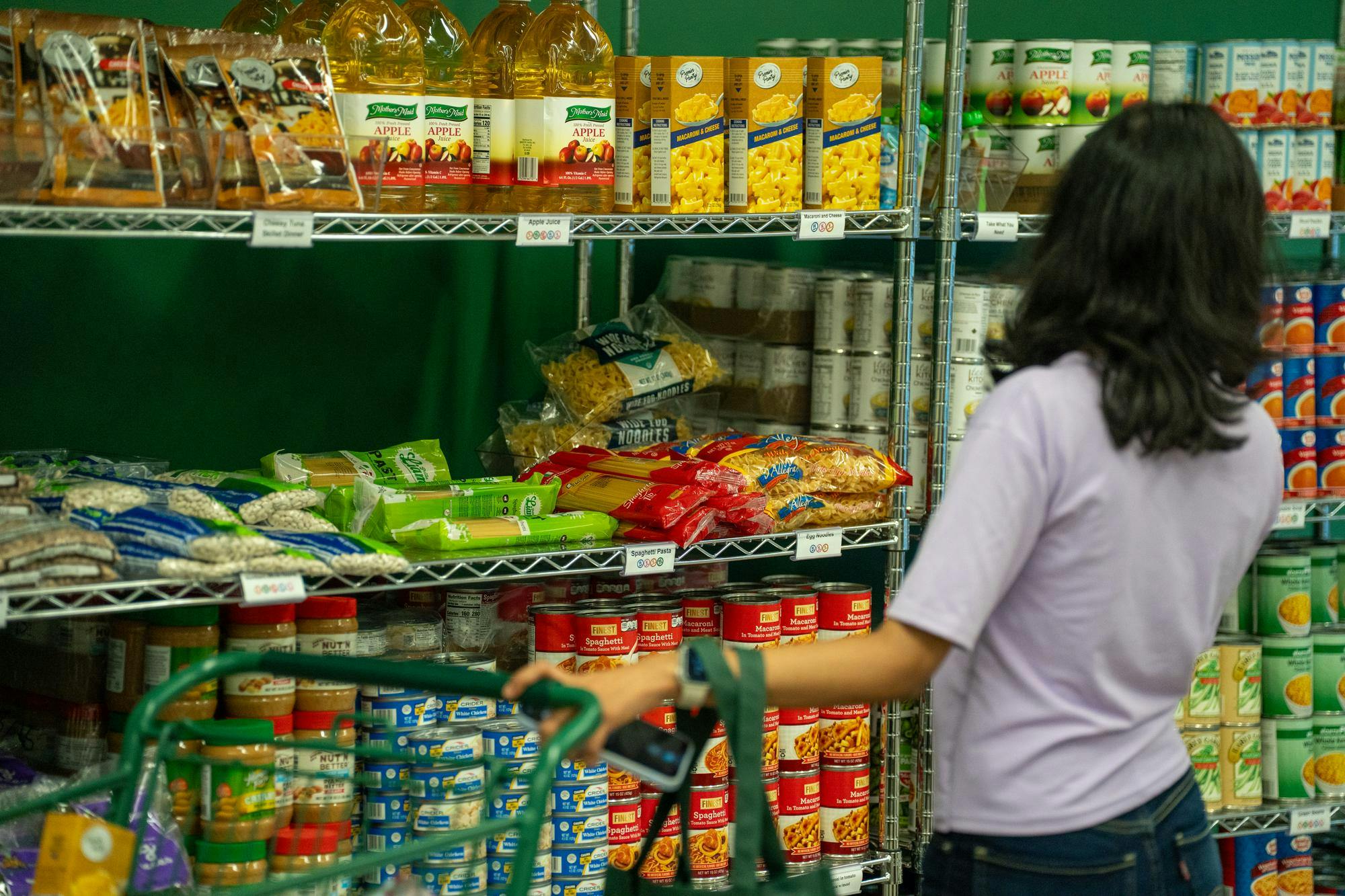
With funding for food stamps expected to run out this weekend, Michigan State University officials and student advocates are preparing to assist students who rely on it, stocking food bank shelves and coordinating with local partners.
Amid the federal government shutdown, which has now extended over a month, money from the Supplemental Nutrition Assistance Program (SNAP) has thus far flowed. That's because, before the shutdown began, funding had already been allocated to states for October. But come Nov. 1, it will dry up.
MSU University Health and Wellbeing (UHW) Associate Director of Engagement Jaimie Hutchison said her unit is partnering with the Greater Lansing Food Bank and student volunteers to keep pantry shelves stocked and food appointments available.
"There is support here at MSU and in the broader community, and we want students to use them and know they’re not alone in the process," she said.
Hutchison's unit got notice of the potential for SNAP funding to run out from state officials and local food banks on Oct. 23, she said. It started preparing immediately. This has meant coordinating with the Greater Lansing Food Bank to plan for possible increases in demand, while also working to keep the Spartan Food Bank and its two “Spartan Shelf” locations — in Olin Health Center and the MSU Union — fully stocked and flexible in their hours.
Students visit the Spartan Shelf locations by scheduling an appointment slot online. Hutchison said UHW is prepared to add more slots and extend operating hours if needed to meet higher demand.
While campus food pantries can’t replace the support SNAP provides, Hutchison said, programs like Spartan Shelf can help bridge short-term gaps by providing groceries, hygiene essentials and guidance on community resources available to students. She added that students experiencing food insecurity can also visit 211 online or by phone to locate other food and basic-needs assistance in the Lansing area.
Students are also preparing for the looming funding lapse.
The Spartan Food Security Council, which is student-run, has been working closely with UHW to spread information and prepare peers who may be affected by the potential pause, said Co-President Madison Mogg, a junior in James Madison College who also interns for UHW. She added that the issue is expected to disproportionately affect commuter, international, and first-generation students, as well as those without meal plans.
"Food insecurity is a very broad spectrum," Mogg said. "It can look like skipping meals, relying on cheaper processed foods, or eating less to make groceries stretch."
Since the Spartan Shelf in the MSU Union opened in September, Mogg said, more than 1,000 orders have been filled. She expects that number to rise markedly in November if SNAP benefits are not renewed.
The council is also planning a SNAP Resource Fair during Hunger and Homelessness Awareness Week, scheduled for Nov. 16–22. Hosted off-campus in collaboration with the MSU Food Bank and UHW, the event will explain SNAP eligibility requirements, help students navigate application barriers, and now include information on the new federal guidelines and their campus-level impacts.
Both Mogg and Hutchison stressed that there are residual effects from food insecurity.
"When people don't have their basic needs met, when they're hungry and have to worry where their next meal comes from, there's a much higher prevalence of mental health concerns for those who are also facing food insecurity," Hutchison said.
To address this, UHW offers counseling, psychiatric care and nutrition consultations in addition to its food programs.
Community members can get involved in the efforts, too, Hutchison said, pointing to upcoming volunteer opportunities for individuals and groups and training sessions for those interested in assisting upcoming food drives. She added that UHW is accepting donations, which can be dropped off at the Olin Health Center’s Spartan Shelf between 8 a.m. and 5 p.m., Monday through Friday, or during scheduled drives at local partners like Kroger.
As they seek to expand resources in anticipation of SNAP benefits running out, Mogg and Hutchison said there's a need to de-stigmatize the need some have to seek help.
"People think that if you’re in college, you must be well off — that your parents are helping you or that you don’t really need assistance," Mogg said. "But that’s not the reality for many students here. There are first-generation students, international students, working students — people just trying to make it through the semester."
Hutchison echoed that sentiment, adding that using food or wellness resources should be seen as a sign of self-care, not shame.
"We all need help sometimes," she said. "It’s important to normalize that and create an environment where students feel safe and supported when they reach out."
Support student media!
Please consider donating to The State News and help fund the future of journalism.
Discussion
Share and discuss “As SNAP benefits dry up, MSU food pantries preparing to fill gap” on social media.