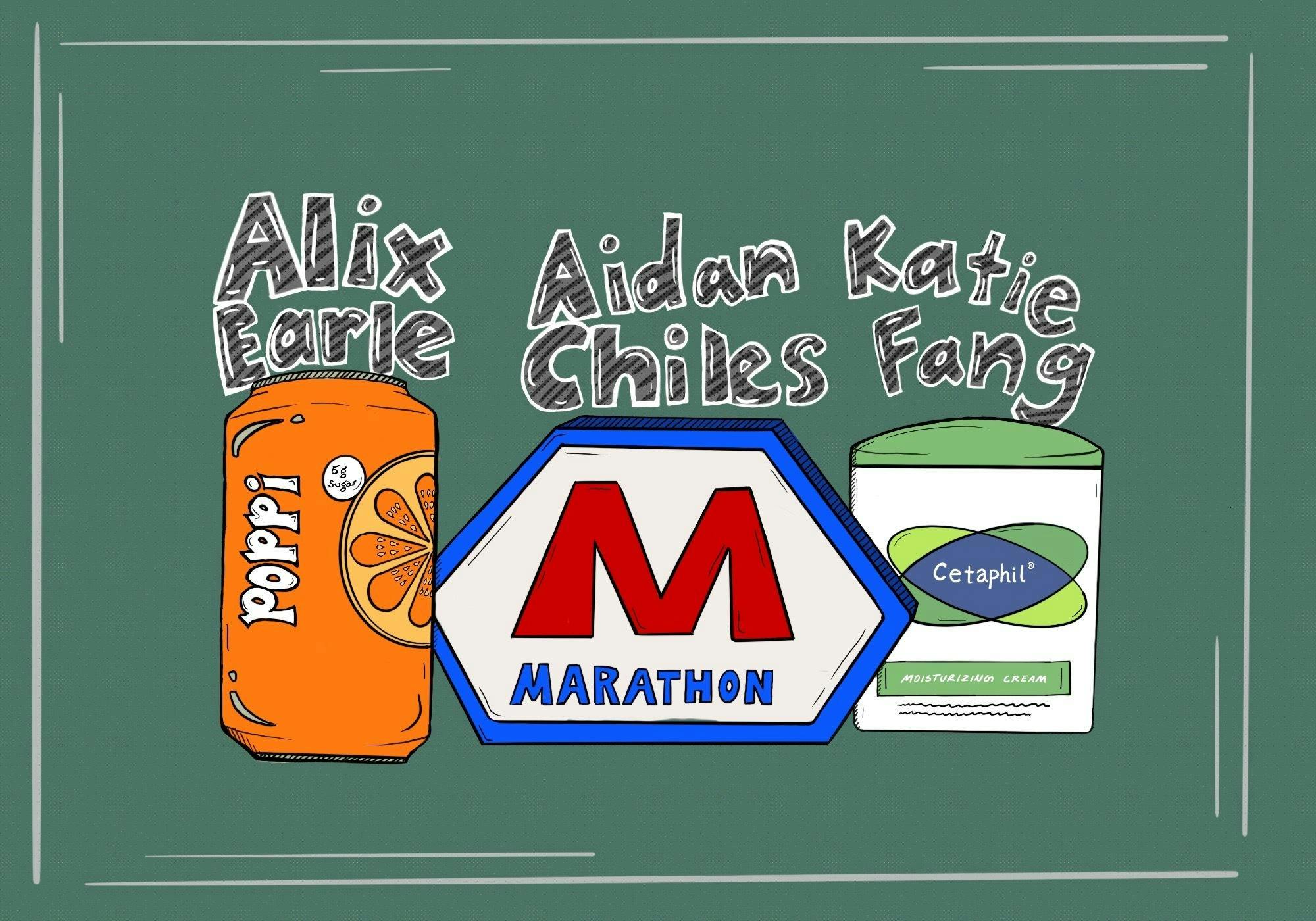
It seems like brands are constantly recruiting well-known faces to endorse their products. But why?
Tiffany Wahl, professor of practice in the advertising and public relations department, said brands may choose to partner with influencers because they sometimes speak to a certain target audience.
"The idea of brands partnering with celebrities is nothing new. It's been happening for decades, but moving to influencers is a direct influence from Gen Z. "That generation, actually, the research has shown [that they] trust influencers more than they trust celebrities," Wahl said. "Given the fact that Gen Z, and actually, even millennials and Gen X, are now using social media platforms as search engines even more than they're using traditional search engines to find things, that just makes it a very natural connection."
Wahl also said influencers typically cost less to work with, compared to traditional advertising, such as TV commercials or billboards.
Similarly, digital storytelling senior Hayley Vedders said brands may reach out to influencers because they may possess the relatability factor with their audiences.
"I think it's just because we know them, so it's not like we almost trust them, but we see them as like, more personal, we’re [like] 'Oh, they're like me,'" Vedders said. "They're not necessarily like a brand, they're more of a person that we can relate to."
On the flip side, Wahl said well-known individuals, like influencers, may choose to work with brands for multiple reasons.
"Brands are willing to pay them, both actually monetarily and also payment in experiences, products, things like that," Wahl said. "I think influencers, especially influencers that maybe aren't as big as some of our, you know, tens of millions of followers are, some of those influencers are wanting to use some of these well-known brands to help establish credibility for themselves, extend their own reach."
However, in some cases, influencers or athletes may choose to partner with brands that don’t necessarily have anything to do with their public image.
Wahl said this may be due to a variety of factors.
"We don't always know the reasons behind that, we don't. Sometimes there's a personal relationship that brings those together. Sometimes, people are asking for a favor … sometimes it really is just a financial decision,” Wahl said. “Sometimes in situations where the brand and the personality aren't a direct match, the research has shown that the person's audience could be a really good fit for that product, even though it might not be as linear of a connection as we might think."
Vedders said the financial aspect may be the reason why.
"I think that they mostly do it for the money, just because me, personally, I would never partner with somebody unless I knew them or like, I was a fan of their product, or if they were just paying me a lot of money," Vedders said.
When it comes to already well-known and famous brands, does partnering with popular figures really create a noticeable difference in sales?
Wahl said yes.
"The research shows that [this] is true, that when we're looking at a holistic view, all of the pieces, because we're looking at sales cost or sales, right? Sales, numbers, sales of market share, we're looking at those things," Wahl said. "So if we're looking at a direct, you know, before Poppi was working with Earle versus after, and how long after, if we're looking at, you know, we're really matching the numbers together, yes, you generally do see a lift."
Similarly, communication sophomore Austin Janz said these partnerships make a difference, especially as a "recognizable face" could draw the attention of customers.
However, Vedders disagrees.
Support student media!
Please consider donating to The State News and help fund the future of journalism.
"I honestly would say no," Vedders said. "I would say, like, especially with Nike. Nike was always popular for me, like, since middle school, and I always knew what it was, even without celebrity influence. But when it comes to smaller brands, I feel like they have to reach out to influencers, almost [to] get their product out there."
For individuals who closely follow influencers, do they tend to purchase products from the brand the influencer is partnered with, solely because of the influencer themselves?
Wahl said it boils down to the amount of trust individuals have in the influencer.
“We follow who we want to follow. We follow who we have interest in, and then when that person, who we've chosen to put our trust and our interest into, says, 'Yeah, I think this is a great product,' yes, it absolutely does increase the likelihood that someone is going to make an actual purchase, and not just lift the brand awareness," Wahl said. "And that's important — lifting the brand awareness — but at the end of the day, we want a return on our investment, whether it's a sale or a click or an engagement or whatever we're measuring."
Vedders said she sees this behavior in younger audiences, but doesn’t necessarily do it herself.
"I would say, especially younger people, definitely will buy products because they see a celebrity that they know, like Earl, because she's very big on TikTok, and sometimes it can. I would say, like the teenage girl range, they're a very big fan of her, so I feel like anything she endorses, they're gonna want, because it's like, 'Oh, well, Alix Earl has it, so I'm gonna want it.'" Vedders said.
Similarly, Janz said he hasn’t recently purchased products from a brand that partnered with an influencer, solely based on the influencer.
"I can't think of a time I've done that before [recently]," Janz said. "I'd say when I was a kid, I did it more often, just because I would have more interest towards what they were interested in."
However, in some cases, can the positive feelings for the influencer outweigh the negative feelings towards the brand itself?
Wahl said this only works to a certain degree.
"I think it can be sort of a 'three strikes and you're out' idea. I think you might be able to go back to the well once, maybe twice, or something like that, but I think we all are consumers, we have a lot of choice, and we are very passionate about what we will throw our endorsement behind," Wahl said. "... So, I don't think that the power of influence or celebrity influence can override a substandard product or service, at least not more than once or twice."
Similarly, Janz said situations where individuals keep going back to faulty items or brands simply because of the influencer are "rare."
However, Vedders said there are certain situations where individuals may continuously support a brand just because of the partnership with an influencer.
"I feel like maybe, just because, if they trust that influencer a lot, or they've been a follower of them for a long time, and they are like, 'Hey, I really like this product, like, you guys should still use it,' yada yada, whatever, I feel like they'll almost be persuaded to continue to use the product," Vedders said.
Similarly, when it comes to seeing an unfamiliar or unknown brand endorsed or partnered with an influencer or athlete, both Vedders and Janz said they’d be inclined to check out the brand, but wouldn’t necessarily make purchases, simply based on who the face of the brand is.
Overall, Wahl said non-traditional approaches to advertising, like partnerships with well-known individuals, are continuing to increase.
"I think it's fascinating what this has evolved into, from an advertising standpoint, from a branding and brand loyalty standpoint, I think it's really the ability for creativity and, kind of, non-standard or non-traditional advertising options are almost limitless right now," Wahl said. “You know, really being able to reach a very niche audience, depending on what it is that you're selling or trying to sell, I think that's really interesting, and it kind of goes along with the gig economy, which we saw come out of the pandemic, seeing people really being able to be entrepreneurs without having to have massive capital or branding behind them, if they can get into their audience. So that's sort of what I meant by, we can all sort of be influencers, in a way, depending on what we are passionate about."
Discussion
Share and discuss “Do brand partnerships with influencers really affect sales?” on social media.