What is ASMSU?
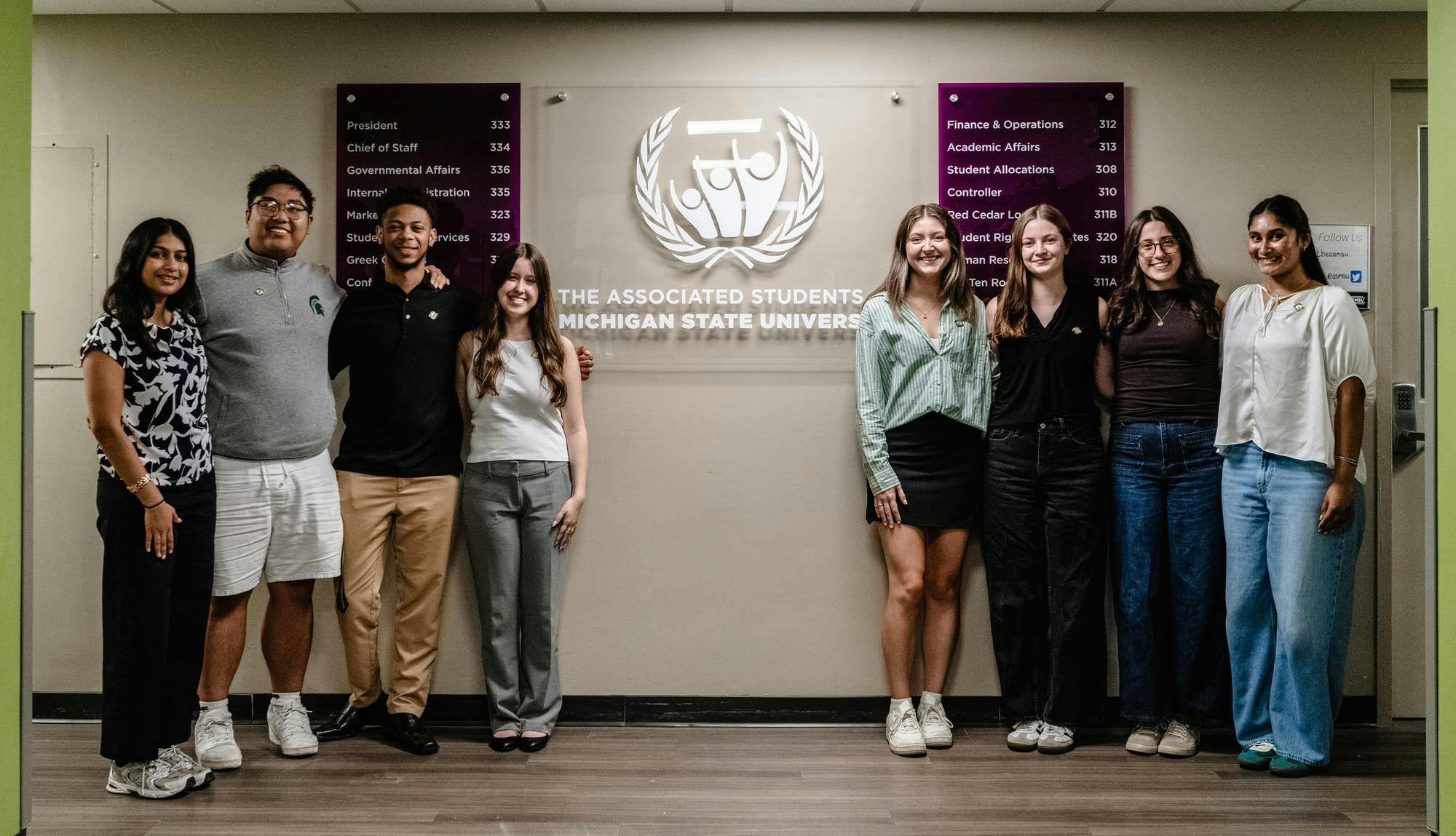
The Associated Students of Michigan State University (ASMSU) is the undergraduate student government of MSU. They recently reintroduced their functions as an organization and their objectives for the upcoming year in an interview with The State News.
President Kathryn Harding explained that ASMSU exists to serve the unique needs of students at the university. They do so through advocacy, providing services to students and financial allocation to registered student organizations (RSO).
Out of ASMSU’s budget, 30% is allocated for RSOs, while the other 70% goes to the organization’s programming.
The main services ASMSU provides to students are SafeRide, student rights advocates, student legal services, access to student Blue Books, short-term loans, readership programs and iClicker/calculator rentals.
This school year, Office of the President (OOTP) members aim to bridge the gap between themselves and the general student body.
“This year, our vision and goal for the organization is to become more connected with the student body,” Harding said, “We want to make sure that we're as visible as possible to students so that they feel safe and comfortable coming to us with anything they need or with any concerns that they're having so that we can address it for them.”
On September 30, ASMSU is holding an open forum in the MSU Union. This will be the first of a series of forums starting this year, designed to make ASMSU more accessible by giving students time to address their concerns directly to the OOTP.
The organization also plans to attend every possible tabling event, starting with their presence during welcome week, as part of their efforts to ensure students are aware of ASMSU and their mission.
Isabel Buckles, Chief of Staff, referred to ASMSU’s internship program, open until September 19, as an opportunity for underclassmen to get a behind-the-scenes experience of ASMSU’s operations.
Fall elections and promoting class councils are additional ways ASMSU hopes to increase student participation in their activities.
Harding encouraged students to “look around,” because the majority of what students see on campus has been affected by ASMSU through their decision-making process.
At the core of ASMSU is advocacy and inciting change, and they achieve this by passing legislation through bills.
According to Maddie Hanes, Vice President for Internal Administration, the bill process begins with General Assembly representatives or their constituents. If any member has a proposal for a bill, they construct it with a template provided by ASMSU.
After completing the drafting process and sharing it for approval among their peers, General Assembly representatives pass the bill off to Hanes. Hanes then assigns the bill to one of the three committees: policy, academic or finance. During committee meetings, the members discuss, analyze and vote on the bill.
The bill then moves on to the General Assembly, where they vote to officially pass, fail or table the legislation.
When a bill is passed, it represents a step toward change – with the General Assembly driving advocacy. Implementing bills often involves correspondence with university administrators, and members of the OOTP meet with officials to present the bill and advocate for its objective.
Tony Pham, Vice President of Academic Affairs, mentioned that the academic affairs department focuses on integrating student voices into university committees and their processes.
Harding acknowledged the challenges they face when implementing bills. She said that despite maintaining a positive relationship with the administration and continued advocacy, officials may deem certain proposals ‘impossible’ or unrealistic, considering the timeliness.
ASMSU’s solution is to seek compromises with the administration to continue addressing students' concerns, regardless of whether the original bill is fully implemented.
Support student media!
Please consider donating to The State News and help fund the future of journalism.
ASMSU works to include a wide range of representation from within the university to ensure each student has a voice in their decisions. By having representatives from each college at MSU, CORES/CAMS, Greek Life, RHA, the Student Athletic Advisory Committee, and the Spartan Housing Cooperative, the organization and its members hope to bring a diverse student viewpoint to the table.
“At the end of the day as a student government, our job is to support and serve all students.” Harding said. “So, we really want students to know what we do for them, how we can help them, and that we're just here to support them in any way we can.”
Discussion
Share and discuss “ASMSU aims to strengthen its connection with students in the upcoming year” on social media.