Sitting in his sociology class at Michigan State University, Jackson McIntyre had finally had enough.
The journalism senior’s professor, Bryan Ellis, had just begun presenting a series of multiple-choice questions that students in "The Social Science of Sports" could answer on their devices.
The second question in the deck asked students to consider why white people are overrepresented in ice hockey. It’s a well-documented phenomenon; the sport’s premier league, the National Hockey League, reported in 2022 that its workforce, including its teams, was 83% white.
Students could then select one of four options to explain the discrepancy: "economic inequality," "racial discrimination," "both" or "other."
Upon seeing this question, McIntyre reached for his phone, opened X, formerly Twitter, and uploaded an image of the slide presentation to his account.
ISS-328 The Social Science of Sports, with professor Bryan Ellis at Michigan State University.
In the comments of the post, which ballooned to just shy of a quarter million impressions, McIntyre explained why he took exception to the question.
"Race doesn’t determine your income, there’s no discrimination in professional sports," he wrote. "If you’re the best congrats you play professional, if you’re not you don’t play it’s as simple as that."
"Get outa (sic) here with this libtard bulls--t," he wrote.
Commenters derided Ellis’ question, accused the professor of being racist toward white people and hurled personal insults at him. One commenter asked McIntyre to share Ellis’ email, to which he responded, "I ain’t doing all that."
Hinting that his contempt was directed at more than the premise of the question, McIntyre elaborated in another comment, "The point was, there wasn’t a discussion about it, as I mentioned 'lecture.'"
Ellis did not respond to requests for comment.
It’s not the first time an MSU professor has caught flak from conservatives for theiractions inside the classroom. The morning after the 2024 election, an assistant professor’s announcement to students that class would be cancelled to "grieve" Trump’s election was posted online, where it was picked up by some of the online Right’s most influential accounts. Another professor who, in response to the election, wrote to her students that it was "unbelievable" that so many Americans would support "misogyny, racism, xenophobia, hate and violence" faced calls for MSU to conduct a disciplinary review of her.
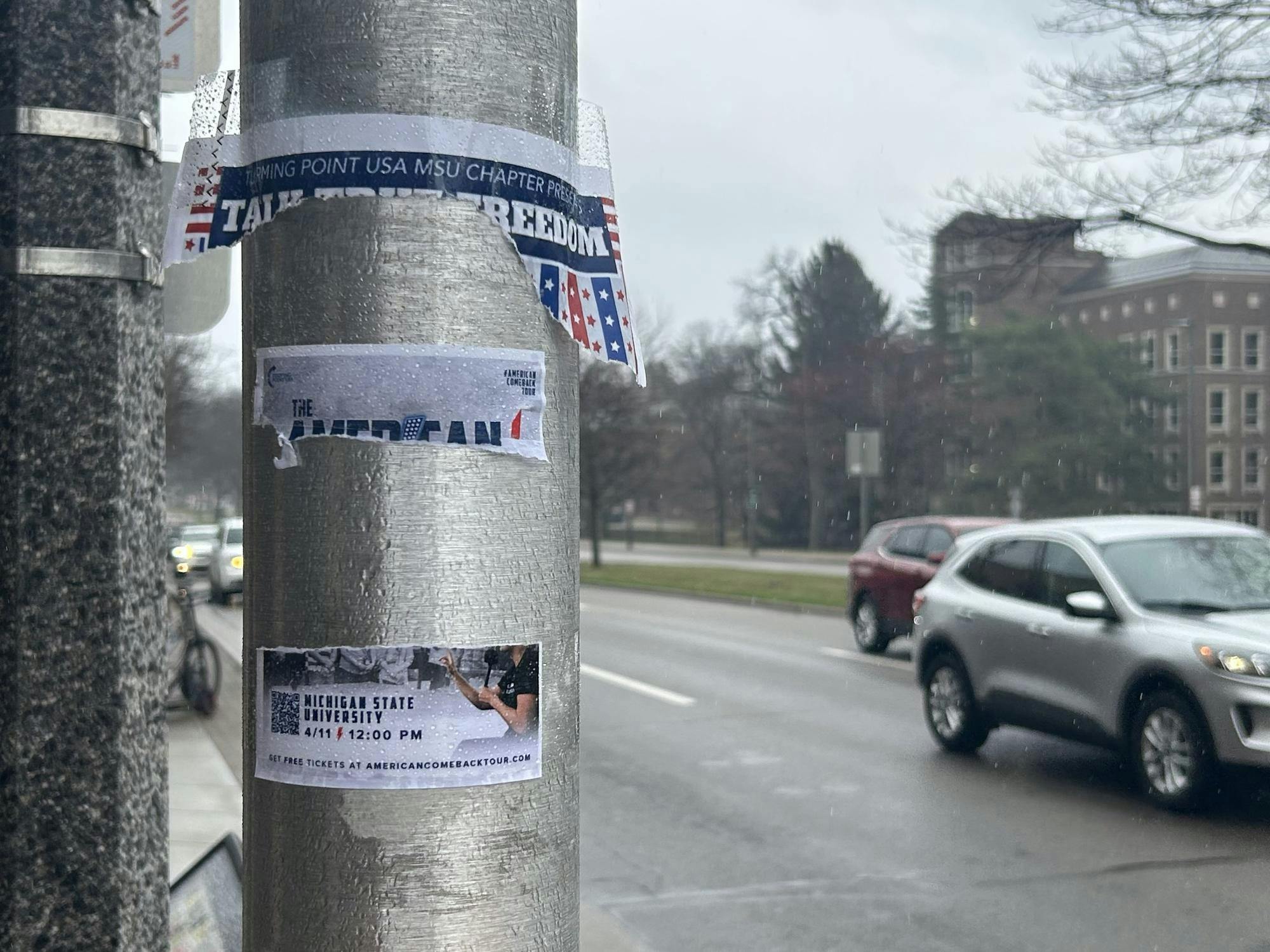
McIntyre’s grievances are far from uncommon either. Organizations like Turning Point USA and the Young America’s Foundation have harnessed conservative students’ disenchantment with their campuses to fuel their movements, becoming some of the most prominent groups for young conservatives. The general public also believes that college campuses are far friendlier to liberals than to conservatives, according to a 2023 study from the University of Chicago.
McIntyre’s reaction to his professor’s question is indicative of a widespread frustration among conservative college students across the country, where a combination of bad pedagogy and liberal biases leaves them feeling unable to discuss their political views without incurring academic or social repercussions. When those students find themselves upset enough with their professor to do something about it, they’re met with a collection of well-funded organizations created to publicly denounce liberal educators.
While these snitch networks purport to help conservative students fight back against liberal bias, they also come at a significant price for faculty members who find themselves in their crosshairs.
'An insult to the idea of education'
McIntyre declined to be interviewed, but wrote in an email that "professors are shoving liberal ideas down the throats of young Americans in universities all over the country."
It’s a common metaphor — one that conservatives have leveraged to decry the spread of progressive ideas in American life. Pride flags in the classroom, the inclusion of pronouns in corporate email signatures and mandatory diversity trainings, some conservatives say, are symptomatic of an oppressive, paradoxically intolerant liberal regime.
Claire Potter, a professor emeritus at The New School for Social Research in New York, doesn’t deny that there are professors who shove their politics down the throats of their students; she said she's seen it.
Support student media!
Please consider donating to The State News and help fund the future of journalism.
However, what discussions about professors’ biases often miss, she said, are conversations about whether or not they’re even teaching effectively. Potter, who hails from a decidedly left-wing institution, said she doesn’t think Ellis’ question could be considered good teaching.
Clicker questions like Ellis’ create unnecessary boundaries for students by ignoring nuanced answers in favor of stark choices, Potter added. She recognized, however, that it’s difficult to assess a professor’s instruction from a single image.
There is a way to effectively teach social justice in the classroom, Potter said, by demonstrating how different communities define and promote their understandings of justice. Teaching social justice as a narrow set of values, she said, more often than not leaves students feeling disengaged and lectured to.
"There’s a lot of really bad pedagogy out there that is masquerading as social justice pedagogy," Potter said.
Duke political science professor Michael Munger said he agrees that some liberal professors fail to give their students the education they deserve (he referred to Ellis’ questions as "an insult to the idea of education.") Rather than being failed by instructors hawking their ideology, however, he said the most harm comes from professors not effectively teaching opposing views — a practice that ultimately harms their liberal students.
"I worry that many students on the left have never talked to a smart person they disagreed with," Munger said. "They’ve never learned to respond to arguments they disagree with with anything other than an expression of anger."
He pointed to a colleague at Duke who allegedly said they don’t feel like they need to talk with their liberal students since they "already know what they need to know." The colleague added that she spends most of her time talking to, and presumably correcting, the conservatives in her class, Munger said.
The effect is twofold, Munger said. On one end, some liberal students could feasibly graduate without ever having to defend their beliefs in class (a side effect of this is that conservatives end up intellectually sharper, having spent the last four years "playing against the first team.") And on the other end, some conservative students who are frequently confronted in class simply walk away from the humanities.
"If what you’re doing is teaching social justice and saying that your job is to confront students with their privileged white hypocrisies, unsurprisingly, they’re going to go major in economics," Munger said.
Criticism toward conservative students doesn't necessarily stop when they leave the classroom either. Speaker events hosted by MSU’s Turning Point chapter have been protested by students who condemn what they call the group’s fascist ideology. Last year, a student flipped over an anti-transgender display operated by Young Americans for Freedom, and struck two students at Brody Hall. Students who express conservative views in class also risk being ostracized by their classmates, Potter said.
'YAF has your back'
When students like McIntyre find themselves at odds with their professors, a host of organizations geared toward young conservatives provide avenues for exposing — and occasionally for trying to fire — their professors.
In 2016, Turning Point launched its Professor Watchlist to catalog academics who "discriminate against conservative students and advance leftist propaganda in the classroom." People can submit tips to Turning Point USA by explaining how their professor is biased and selecting from a series of labels such as "anti-law enforcement," "climate alarmist" and "socialism."
It’s unclear how many academics are listed on the website. Turning Point did not respond to The State News’ request for an exact figure.
Nine former and current MSU faculty members are listed in the database, with most being involved in research or teaching around racial justice, queer rights or reproductive health. One faculty member’s listing contains a phone number and email belonging to MSU’s School of Social Work, where she teaches.
Iskandar Arifin, a former finance professor charged with possession of child pornography, is also listed alongside the faculty despite not having participated in any research or activity the Professor Watchlist purports to catalog.
Young America’s Foundation, another organization geared toward college students, launched its Campus Bias Tipline in 2023. In a news release announcing the tipline, the group claimed its team of legal experts would work with the tipster to "remedy the situations" they report.
"YAF has your back," its homepage states.
The group seemingly succeeded in having a Michigan Tech University professor removed from one of his classes after he called members of the group "dumb" and "racist twits." The professor, Carl Blair, appears to have only been removed temporarily and is still employed at the college.
McIntyre’s strategy of posting Ellis’ presentation online was the unnecessary nuclear option, digital storytelling sophomore Forrest Keesee said. Keesee, who said he appreciates the classroom as a space to discuss and disagree in, said McIntyre ignored accessible avenues to address his grievances with Ellis, such as filing a complaint with the university ombudsperson or talking to Ellis after class.
If Ellis had been targeting McIntyre in class and "making his life hell," McIntyre would have been slightly justified in calling Ellis out online — but only as a last resort, Keesee said.
"It’s not OK to be going over the professor’s head and reporting them, possibly ruining their career, over perceived bias," Keesee said. "It harkens to other time periods I don’t want to go back to."
A student who declines to meet with their professor privately and instead takes the issue to social media, Potter said, needs to be aware that they’re unlikely to start a productive or intelligent conversation.
"You can say 'Oh, this is woke, DEI bulls--t,' and think you’re saying something," Potter said. "You’re not digging in and saying ‘No, really, why was this upsetting to me?'"
In an email declining to be interviewed, McIntyre hinted at the idea that he knew his post was more akin to a ventilating scream into the void, rather than an effort to address his grievance.
"I posted this thinking it would get the standard 20 views and maybe a like, like the rest of my posts do, not knowing it would get any traction," he wrote.
'A bit like McCarthyism'
When students like McIntyre post their professors’ material online, or report them to an online database or tipline, Potter said, a deluge of harassment typically follows. Faculty members receive cruel emails, have their personal information released and, in extreme instances, have a hostage situation or another active threat reported to the police — a practice called swatting, she said.
After Shlagha Borah, the MSU professor who cancelled class to "grieve" the 2024 election results, had her announcement posted online, MSU removed her profile from its faculty directory.
MSU has a webpage dedicated to resources for professors who are being harassed online. Even for faculty members who haven’t been the subject of online harassment, the fear of becoming one influences how they teach.
Melissa Fore, an associate professor in James Madison College listed on the Professor Watchlist, said she believes one of her students submitted her information to Turning Point. Her profile on the site, published in October 2022, is tagged "LGBTQ," "Socialism" and "Racial Ideology."
Although Fore wrote in an email to The State News that MSU has assured her that her job is not under threat, she has changed her instructions to decrease the opportunities students have to share class material online.
During a recent class, she "didn’t put a full discussion question on a handout because I didn’t want a record of what I was asking students," Fore wrote. "It’s nuts."
"Here is another time that feels, objectively, a bit like McCarthyism," said Ashley Finley, the vice president for research at the American Association of Colleges and Universities.
In 2024, Finley and a colleague published a national study of faculty attitudes regarding academic freedom, civil discourse and self-censorship. At the time, Finley said, they were inspired by state legislatures proposing, and sometimes passing, restrictions on what educators could teach. As President Donald Trump continues to target universities, in some cases getting them to change their curriculum to restore federal funding, the results remain relevant, Finley said.
More than half of faculty, 52.7%, reported that their colleagues were more worried about being the target of online harassment based on their beliefs or activities compared with seven years ago, the study found. 45% of faculty reported refraining from expressing an opinion that would draw negative attention from outside the university.
Faculty with less job security, such as adjunct or fixed-term faculty, were more likely to report self-censoring, Finley said.
The study also found that 47% of faculty reported at least occasionally being worried that students would intentionally or unintentionally share their ideas out of context.
Ellis’ case could be "a confirmation of where those fears stem from," Finley said.
The proliferation of social media, Finley said, has irrevocably opened up the learning space, turning conversations and ideas that used to be contained to the classroom into topics of potentially nationwide interest.
"Learning environments have always been places to take risks. They’ve always been places to be provocative in the safety of that space," Finley said. "When you open it up, it can feel like a loss of control, like a loss of the ability to try and to fail."
Discussion
Share and discuss “Why are conservative students putting their professors on blast?” on social media.