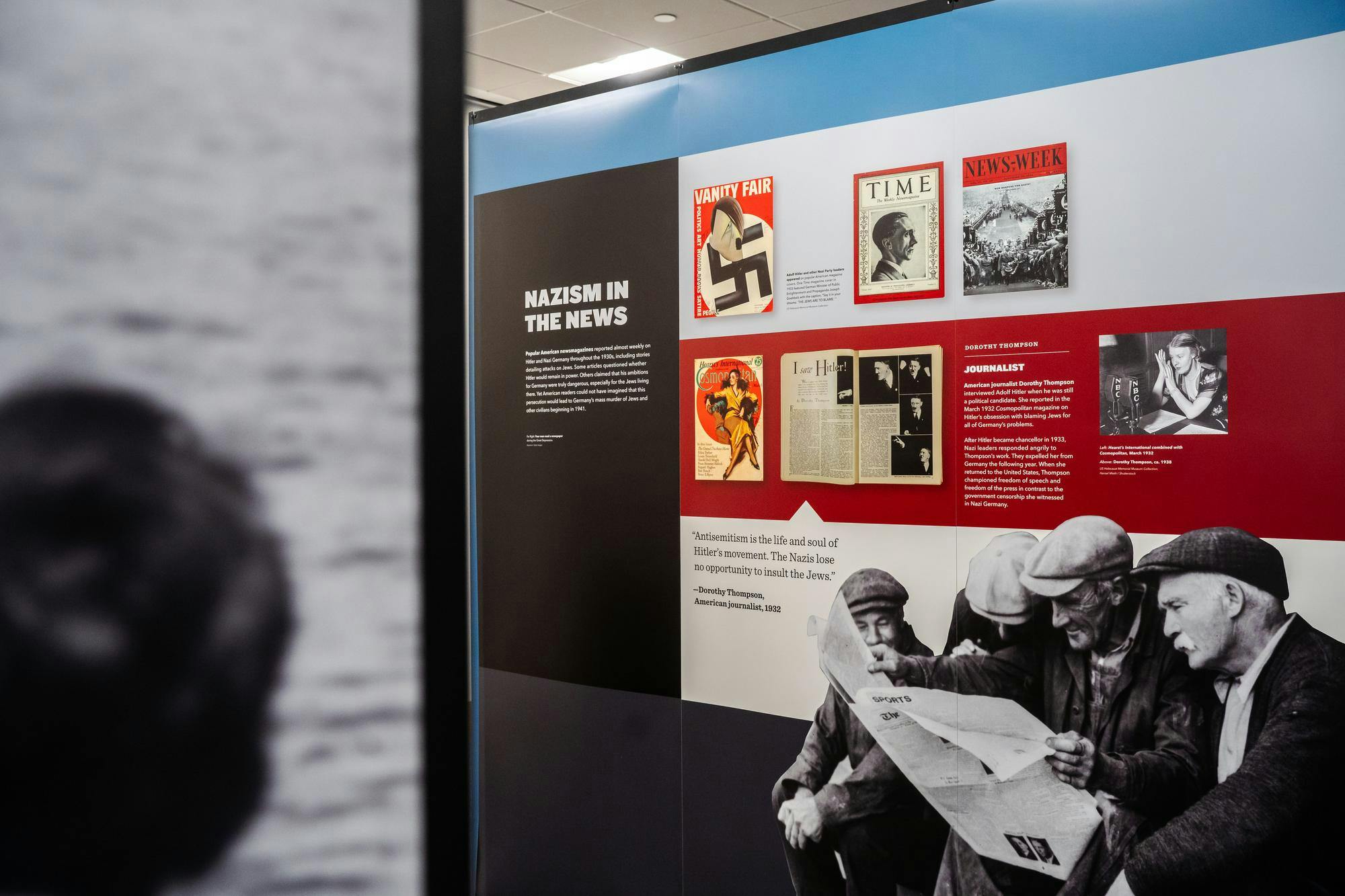
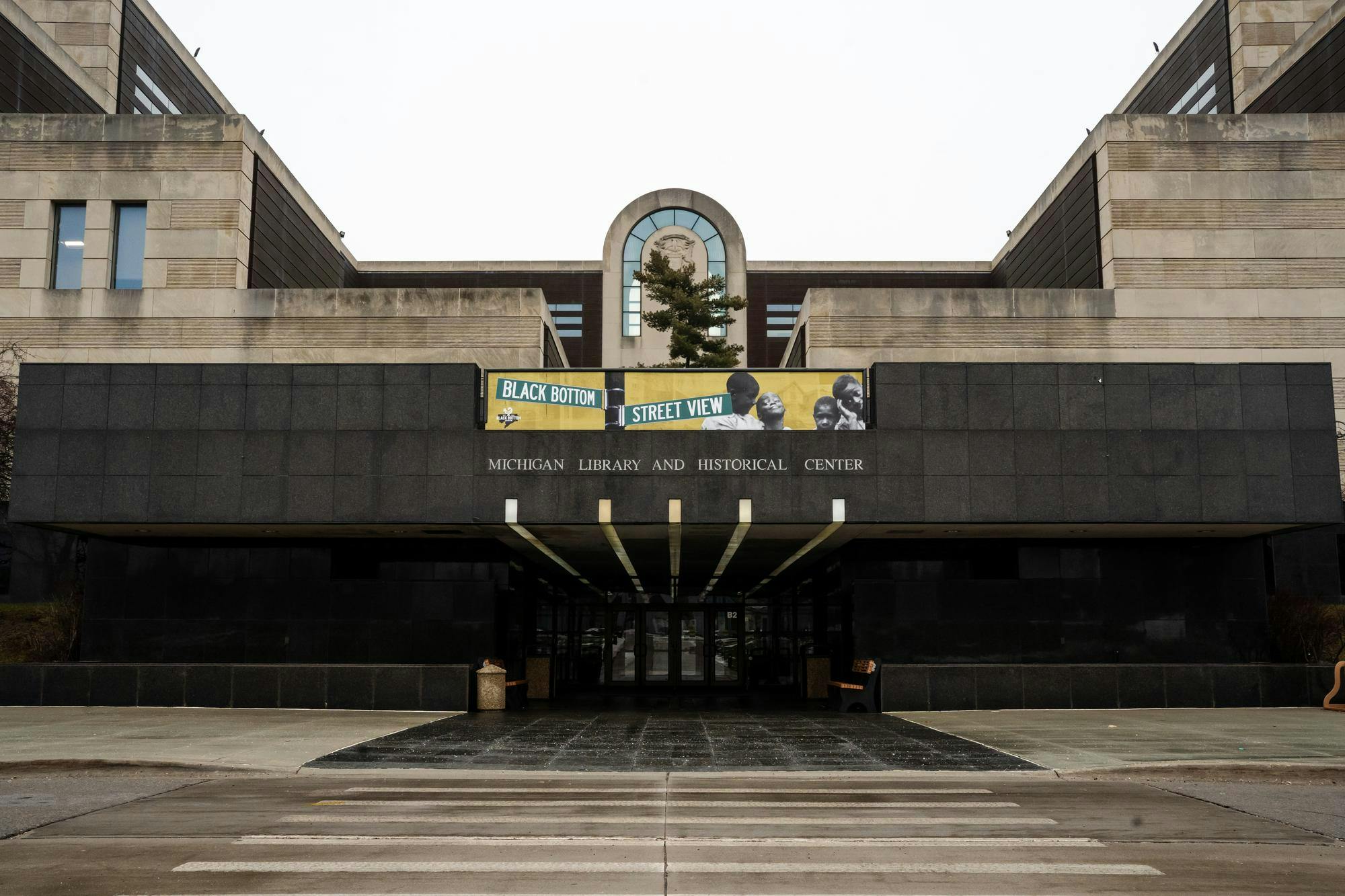
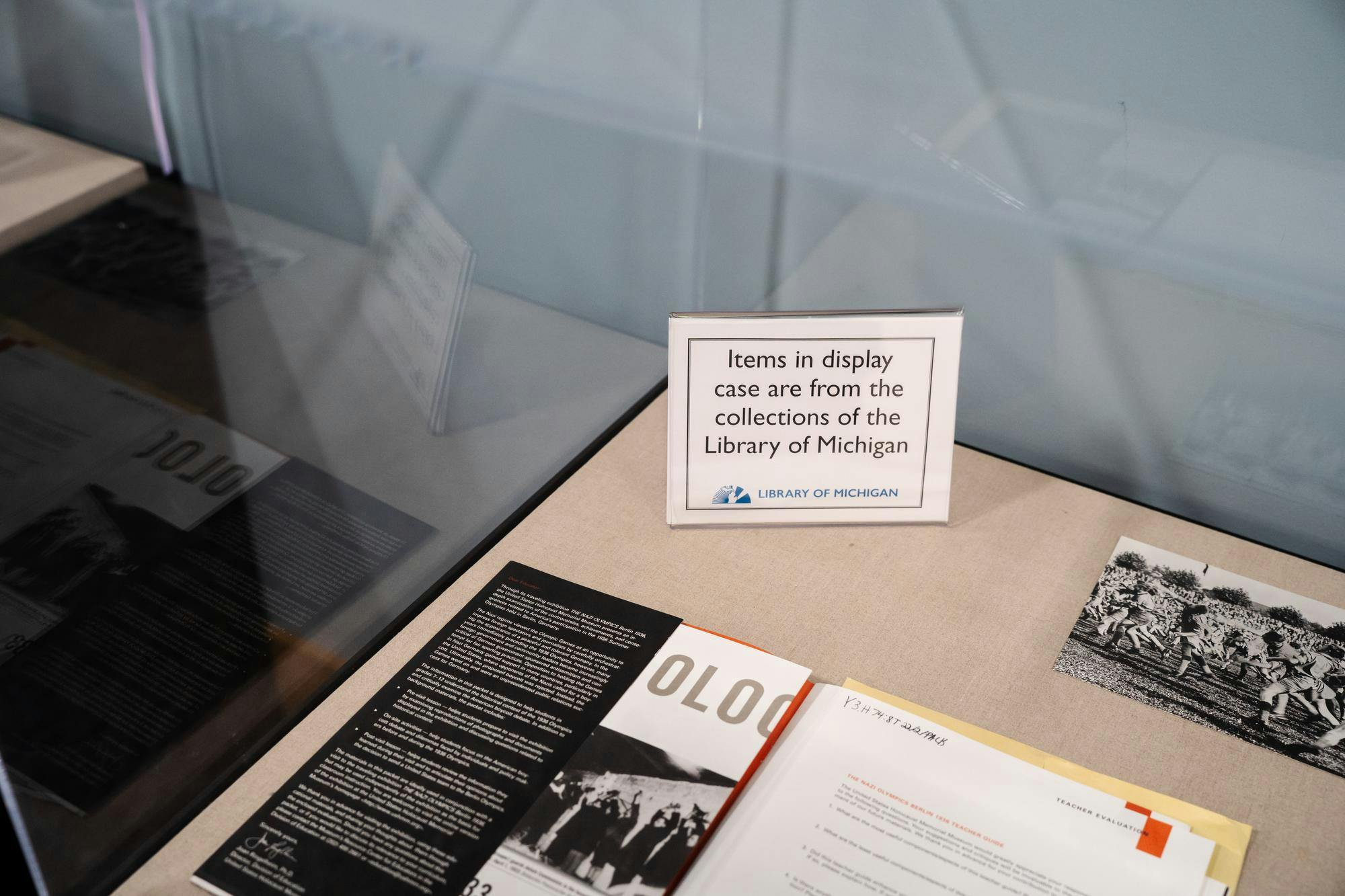
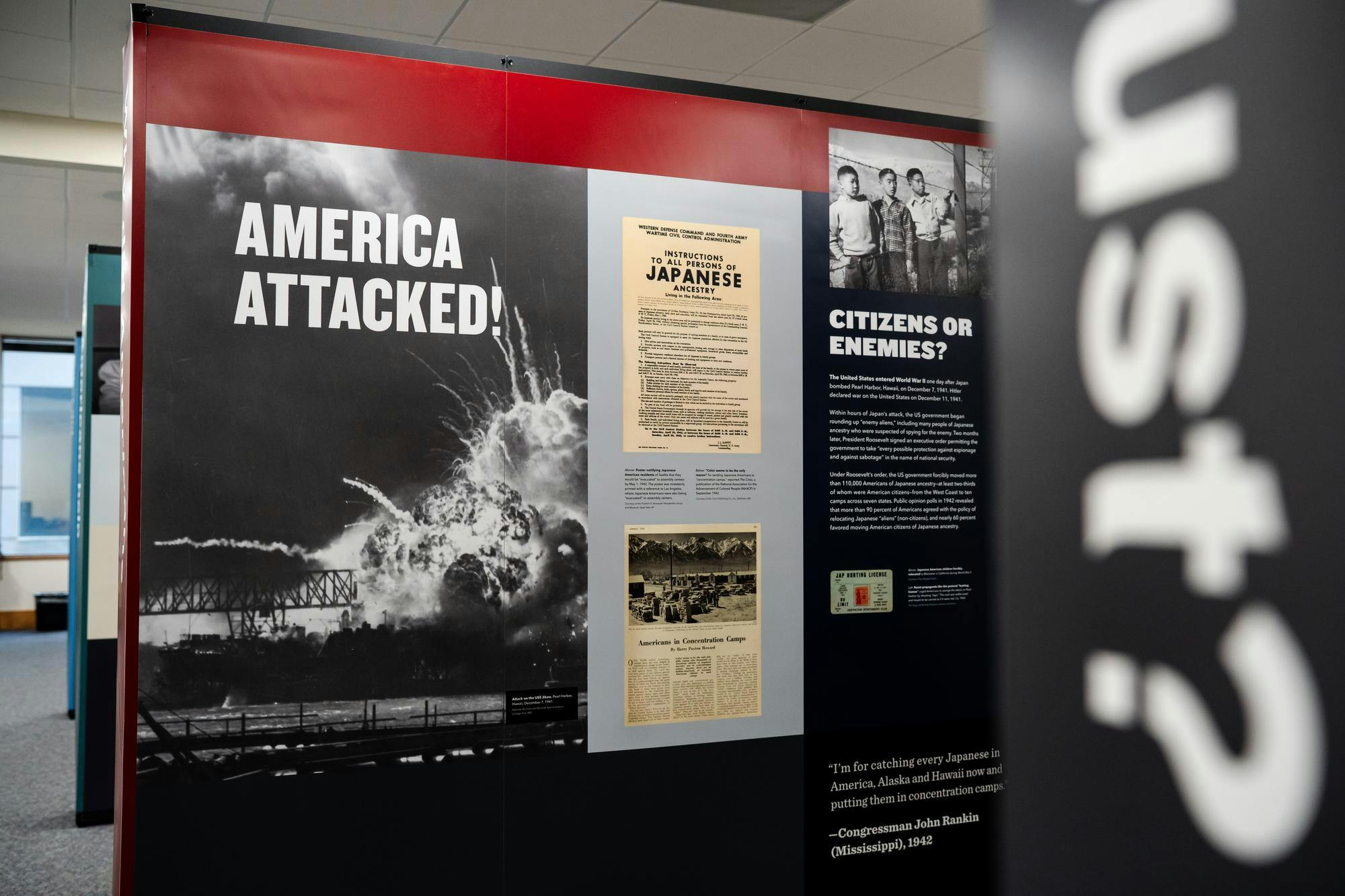
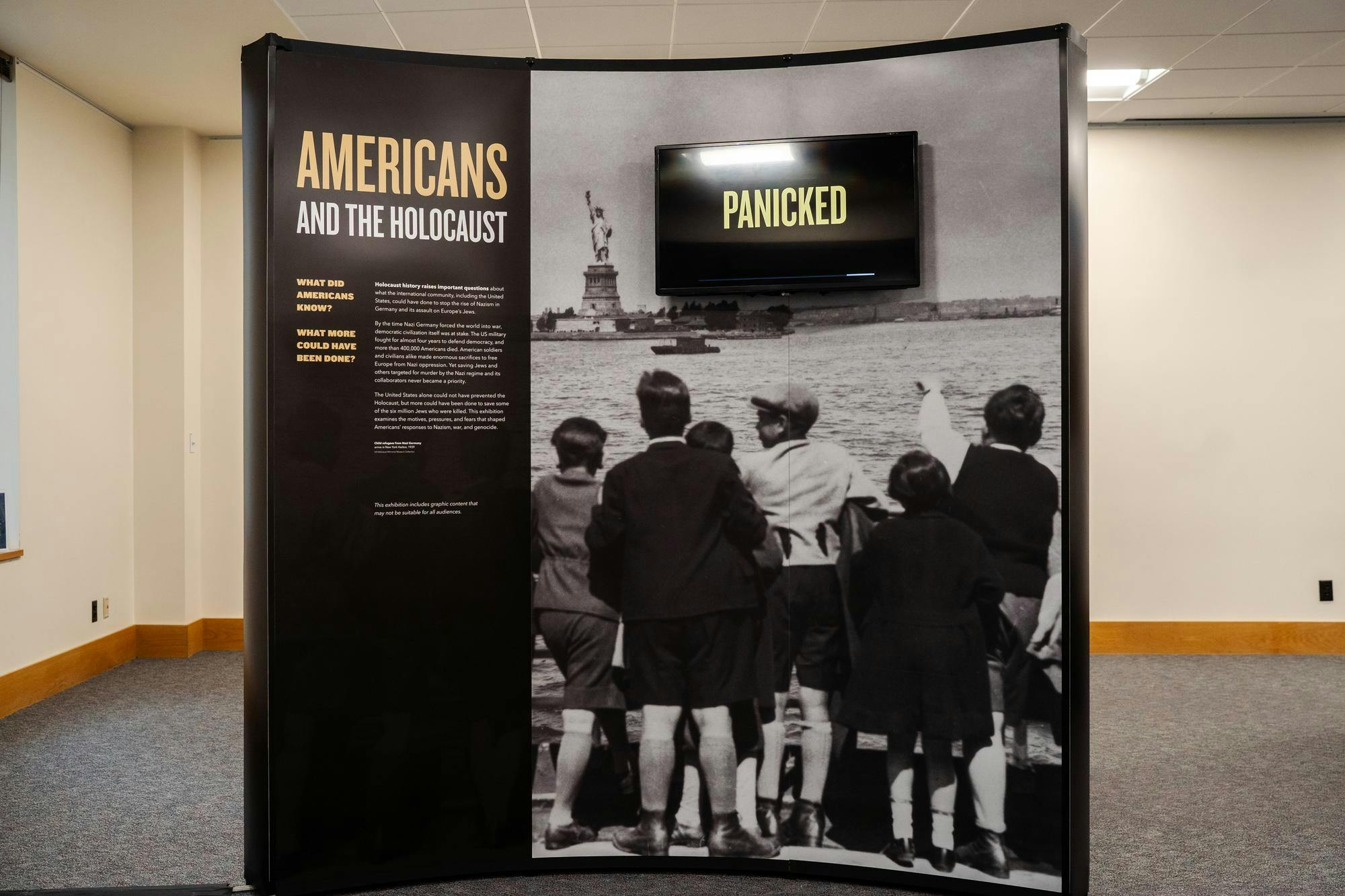
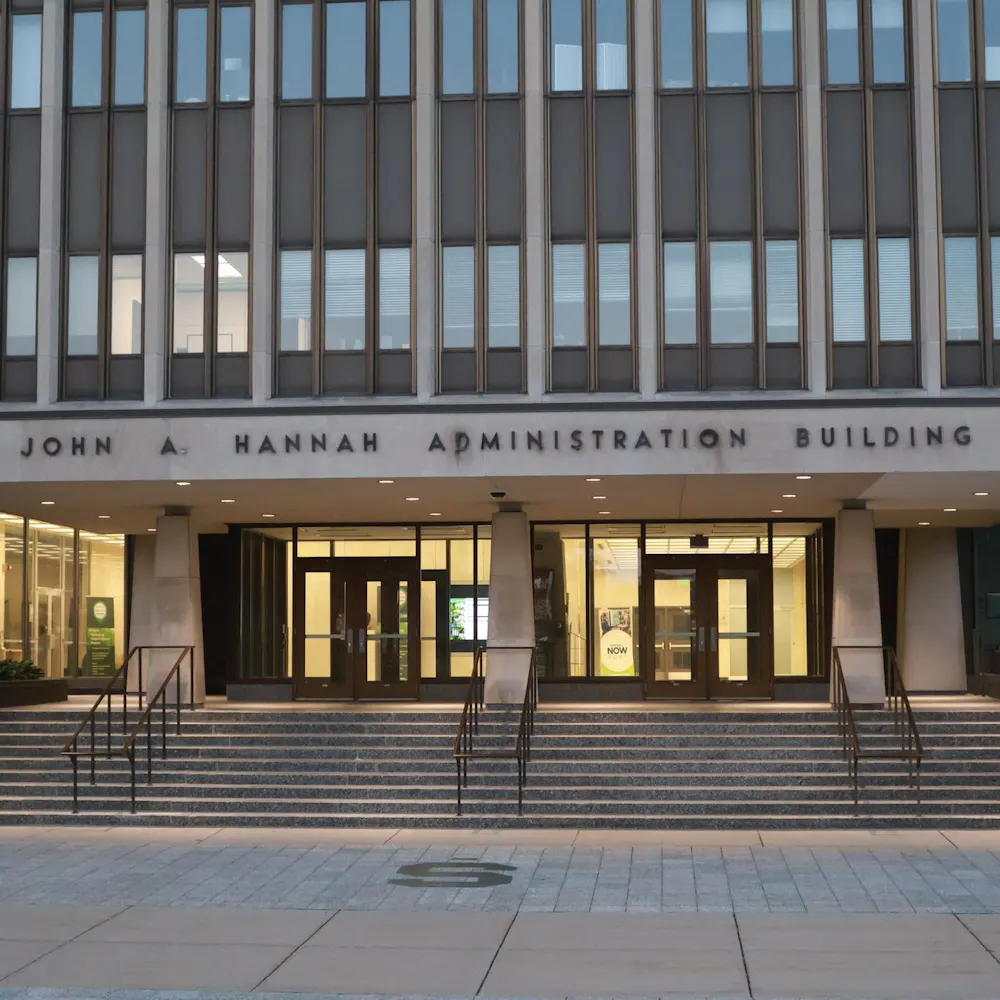
The Americans and the Holocaust exhibition at the Library of Michigan on Feb. 3, 2025. The exhibit, open through Feb. 22 in downtown Lansing, explores how Americans responded to Nazism, war, and genocide in Europe during the 1930s and 1940s through newspapers, photographs, and historical artifacts. Sponsored by the U.S. Holocaust Memorial Museum and the American Library Association, the exhibit is presented in partnership with Michigan State University.
While in high school, and selectively in college, students across the country learn the basics about the Holocaust, a horrific event in history. Currently, the Library of Michigan in Lansing is hosting an exhibit "Americans and the Holocaust" aimed at supplementing this broad-based education and presenting new perspectives about how the U.S. handled the situation.
"Their goal is to really help people understand the context of what was going on in America during the Holocaust," associate director of the Michael and Elaine Serling Institute for Jewish Studies and Modern Israel Kirsten Fermaglich said. "In historical angles, there’s been criticism that Americans didn’t do anything. I think the general American public sees Americans as liberators."
Fermaglich said the exhibit is trying to present the nuanced context of the U.S. at the time so the general public can better understand what they knew and how they acted. The exhibit shows how the U.S. was purposefully isolated, and involvement in a world war threatened that isolation.
"The depression was really turning people inwards, so while the exhibit addresses the way people may have felt sympathetic and that they did hear news about the persecution, they really didn’t want to do anything about it," Fermaglich said.
Fermaglich is also a professor at Michigan State University specializing in Jewish Studies and the author of books aligning with the themes of the exhibit. When she heard about the traveling event, she knew she had to bring it to Lansing.
After finding out the library at MSU could not host the exhibit, she reached out to the Library of Michigan. They submitted an application and were chosen as one of the 50 U.S. locations. The exhibit is a partnership with the American Library Association and its locations allow more accessibility for each community they are visiting.
"Not all towns have museums, but everybody’s got a public library," Fermaglich said.
The organizers also prioritize the exhibit visiting areas with limited access to Holocaust education.
Adam Oster, the community engagement librarian for the Library of Michigan, said Fermaglich reached out to begin the application process and is proud their location was chosen for the event.
"This kind of exhibit is not necessarily something that we do on a regular basis," Oster said. "We have done collaborations with various authors and artists, but something like this, especially considering the uniqueness of the topic, it’s out of the norm."
Oster said the uniqueness of the event type is a good change because it provides access to difficult information. Michigan locals and students of all ages can experience this topic without making the long drive to Washington D.C.
"It’s meant to be that a wide age range would be able to understand the key topics related to it and have visual examples that go along with the text," Oster said. "There’s also a video and audio component of it. If there are people that have some visual impairments, they do have the option of other auditory versions."
Oster said the exhibit demonstrates perspectives of Americans during the 1930’s and 1940’s through newspaper clippings, interviews and other media.
"It provides a portrait of American society that shows how the depression, isolationism, xenophobia, racism and anti-semitism shaped responses to Nazism and the Holocaust," Oster said.
Oster said history has a cyclical nature and having accessible information about these kinds of events in history is crucial in drawing parallels between the past and present.
Fermaglich said the exhibit is relevant to the U.S. today because we can draw some of those parallels. She said the exhibit even touches on some restrictive immigration policies in the U.S. during that period.
"I would go a step further and say more that those restricted immigration policies were created by declaring a national emergency," Fermaglich said. "Anti-semetic perspectives helped to get the law passed. I do think that’s relevant for today."
Support student media!
Please consider donating to The State News and help fund the future of journalism.
Public relations senior Matthew Zivian said he plans to visit the exhibit before it's over. Zivian is an executive intern for the MSU Hillel, the Jewish Student Center that oversees the Jewish Student Union. He said it's incredibly important that MSU helped bring this opportunity to Lansing.
"It’s not ironic to say that an educational institution understands the importance of education," Zivian said. "Being able to give their students access to incredible education like Holocaust education, something that many feel might be lacking in certain areas, is a wonderful thing."
He said the exhibit focusing on the American view of the Holocaust is important because it helps people see the full scope of the impact it had on Jewish communities around the world.
"We get an opportunity here to have such a well put together exhibit through cooperation with the university," he said. "To be able to educate not only ourselves but our peers, maybe even our non-Jewish peers, on a major aspect of life and something that affected us all."
The exhibit is from the United States Holocaust Memorial Museum and curated by Daniel Greene with the collaboration of the American Library Association. It will be on display until Feb. 22 at the Library of Michigan during business hours.
Discussion
Share and discuss “‘Americans and the Holocaust’ exhibit highlights underrepresented perspectives ” on social media.