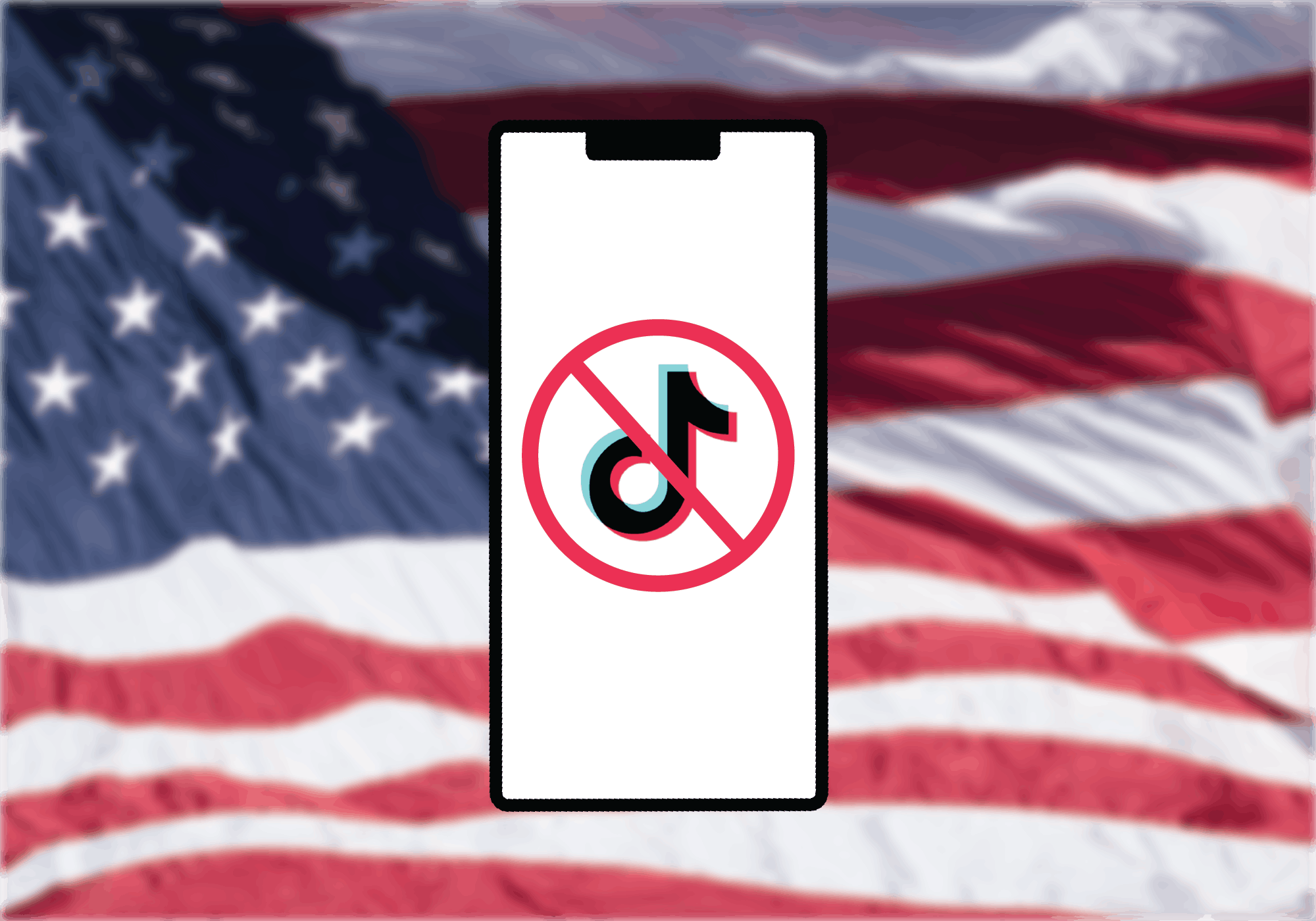
For many college students, a typical daily routine may be to wake-up, scroll, go to class, scroll, go home, scroll. TikTok is the most popular app currently filling the "scroll" part of the to-do list. However, a nationwide ban on the app has been in negotiation since President Donald Trump’s 2020 term, and may finally go into effect on Sunday, Jan. 19.
Many are asking: why ban TikTok? Legislators are concerned about the app due to its parent company, ByteDance, which is based in China. Michigan State University clinical professor of law and director of the first amendment law clinic Nancy Costello said legislators are worried for national security reasons.
"All the data that TikTok picks up from American users, which could be geolocation data, it could be their online behavioral experiences, and going from there they can feed you all kinds of content because of your interests," Costello said. "This data can be passed directly from ByteDance to the Chinese government."
TikTok could remain useable in the U.S. if an American entity gained control of ByteDance, Costello explained. Being owned by an American entity would reduce the risk of the app being a national security threat.
"China’s communist government has been on the radar for decades as being a foreign adversary to the United States," Costello said. "Having all this data going to China, Congress and the President believe that it can be weaponized to be used against Americans and against American interests."
The law requiring TikTok's parent company to divest was upheld by the Supreme Court on Friday, Jan. 17. Ultimately, the decision is being left to president-elect Donald Trump as he takes office.
Recently, Trump has expressed interest in saving the app. TikTok CEO Shou Zi Chew will be attending Trump's inauguration on Jan. 20, where Trump hopes to strike up a deal. There has also been talk of an executive order circumventing the ban.
Though TikTok's future remains uncertain, many users are preparing for the worst. A popular assumption is that the app's functions will deteriorate and eventually "go dark" or completely shut down, explained Omura Saxena professor in responsible AI Anjana Susarla.
"It won’t get updates, that’s the first thing," Susarla said. "Secondly I think the talk is that it will go dark."
Many TikTok users have made their way to a new app called Red Note. Posts saying goodbye to Chinese spies and claims of being a "TikTok refugee" have appeared on Red Note. The high number of users switching to Red Note has made the app the fastest growing on the app store. Some posts by Chinese users have welcomed Americans to the platform.
"Countries are more than just their governments," Costello said. "We’re a bunch of people, after all, just living on planet Earth… I kind of love it that a lot of young people have signed on to (Red Note) and making friends."
Regional and urban planning and international relations sophomore Dylan White thinks the emotional departures from TikTok may be due to the feeling of losing a community.
"I feel like it’ll hinder our connection," White said. "I feel like TikTok definitely helps prosper a communication... a way for people to connect and share common ideology. And I feel like that was threatening to some of the more conservative older generations."
Many users are concerned about the ban because they feel it threatens their right to free speech and limits their connection to the rest of the world, White explained.
"(TikTok's) an international community," White said. "I feel like a lot of Americans are just kind of scared of… this idea that we can’t be communicating with people outside of the U.S. It’s kind of freaky."
Being a TikTok user himself, White said he is a bit afraid of what the ban may mean for our first amendment rights. The Supreme Court, however, ruled against the argument that the ban would impose on citizen's rights.
Costello, who is also on TikTok, sees validity in the perspective of users, but also sees the reasoning behind the Supreme Court's ruling.
"The only times historically, legally, we see these sweeping bans go into place and do so successfully is called prior restraint," Costello said. "Which is suppressing speech before it is even uttered. The only time you really see that happen, successfully, is when there are national security threats… very strict regulation or sometimes outright banning of speech, has been upheld as constitutional."
Support student media!
Please consider donating to The State News and help fund the future of journalism.
Discussion
Share and discuss “Time's ticking: Here's what's happening with the TikTok ban” on social media.