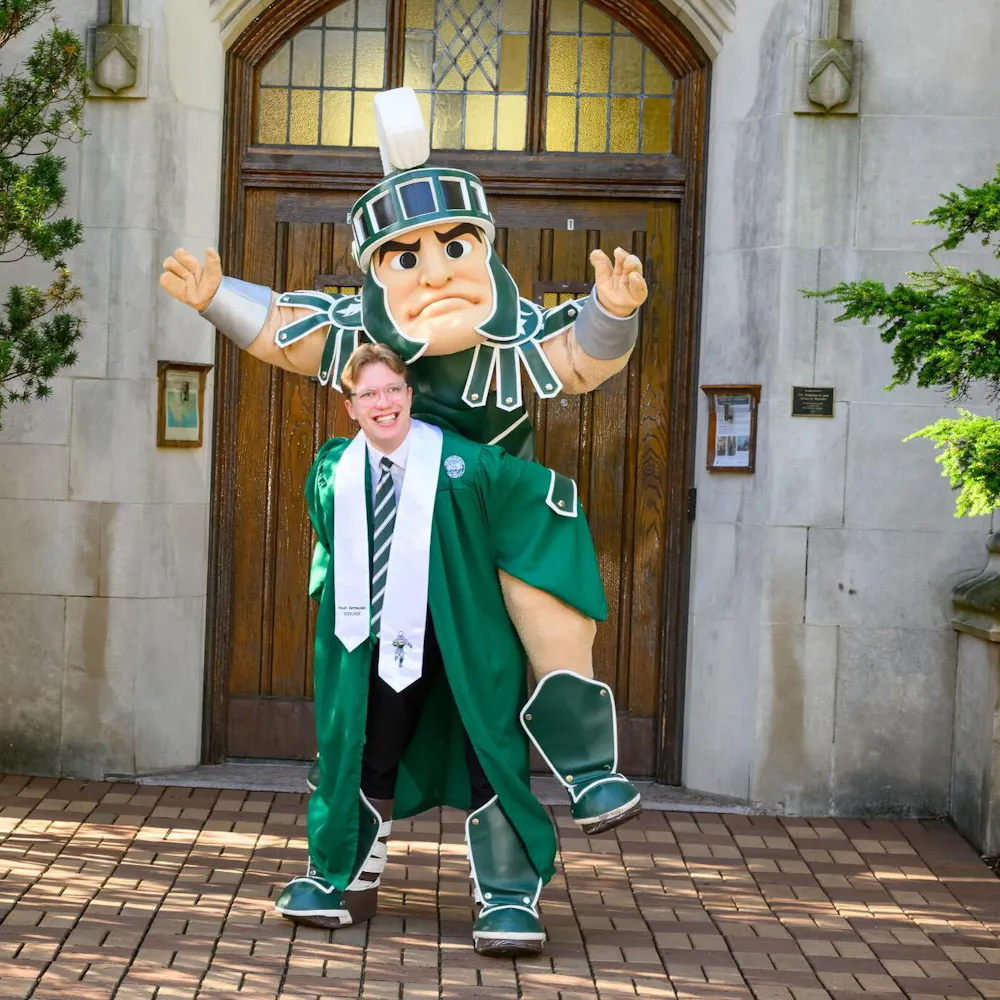
Although the beginning of the school year can mean chaos and many adjustments, Stefan Fletcher has enough experience under his belt to lead the Council of Graduate Students, or COGS, into a new school year with a fair amount of ease.
Last spring, COGS waived a constitutional clause limiting executive board members to only two terms. And it’s thanks to that decision that Fletcher, a higher, adult and lifelong education doctoral student, was able to enter his third term as president of the council.
The State News: With the school year and your work as COGS president under way, what will be brought to the table and what are the first things you want to get started on?
Stefan Fletcher: We’ve already started to ramp up the sales for the parking permits for the city of East Lansing for graduate and professional students, (and) it’s the first time that we’ve used PayPal as well … If you talk about substance of topics of interest that have come up, I think you’ll find two topics that the council and graduates have emailed me about, one of them being the graduate student study spaces in the library (and the other) the increase to the student international fee.
Both graduate students and professional students are represented by COGS. Do you feel they have equal representation and opportunities through COGS and the university?
The graduate-professional student mix is something that we’re always very cognizant of, given that the COGS tax comes from both populations. We have been very intentional and very, very deliberate over the past few years in particular to reach out. I was a law student when I first started in this organization so that made me first very sensitive to this issue. It’s a consistent thing that is always in my mind and certainly is something that COGS always needs to be aware of to maintain its status as representing both graduate and professional students, and that’s something that the organization can never really lose sight of.
What will be some of the organization’s greatest challenges in the coming year?
If you look at challenges, it’s always a combination of, I think, the following. One, Michigan State has traditionally been focused upon and centered on undergraduate education. There are approximately 36-37,000 undergraduate students here and about 11,000 to about 11,500 graduate professional students, so we always have to work particularly hard to make sure that we maintain strong relationships and clear lines of communications in order to really push major issues that really affect our constituency to the forefront. The second part, obviously, is competing time responsibilities and prior obligations of graduate-professional student time. It’s always making sure that we have a diverse, talented group of student leaders involved.
Support student media!
Please consider donating to The State News and help fund the future of journalism.
Discussion
Share and discuss “Face Time: Stefan Fletcher” on social media.