Susan Copland is glad she was a college student during the tail end of the Great Depression.
Copland, who has resided in East Lansing for more than half a century, started her college career at Wayne State University in 1940, after spending her childhood years in the thick of the worst economic downturn in American history.
As difficult as it was, those years provided life lessons that have stuck with her.
“I’m glad I had the experience,” she said. “It was probably an advantage because you had to learn to do everything yourself.”
Times of economic downturn — such as the current recession, which has delivered the highest youth unemployment rates since World War II — can have a profound effect on the current generation’s cultural identity, experts say, as they have in previous generations. Although it might be too early to guess how the current economic climate will affect today’s generation of MSU students, the economy has the potential to reshape the way the culture of young people and how they look toward the future, academics say.
Diminished aspirations
When Bruce Greenman came home from two years of fighting in World War II, he saw many of his peers unemployed; the market wasn’t expanding quickly enough to satisfy the influx of returning veterans.
Greenman, a former sports writer for The State News and an MSU alumnus — who took a completion test to finish his degree early before being sent to fight the Japanese at Guava Canal — luckily was able to land a job at an insurance company. This allowed him to support his newly-wedded wife, and a newborn he hadn’t met until the child was 16 months old.
But today’s generation is far different than the one that experienced the after-effects of World War II, said Michael Stamm, a U.S. history professor. Events within the last decade have led to a cultural paradigm shift, where many students have developed a more pessimistic view of America’s landscape.
“It is a generation that has grown up with a lot of uncertainty for all sorts of things,” Stamm said. “They’ve been in an environment of a lot of fear and uncertainty for the United States.”
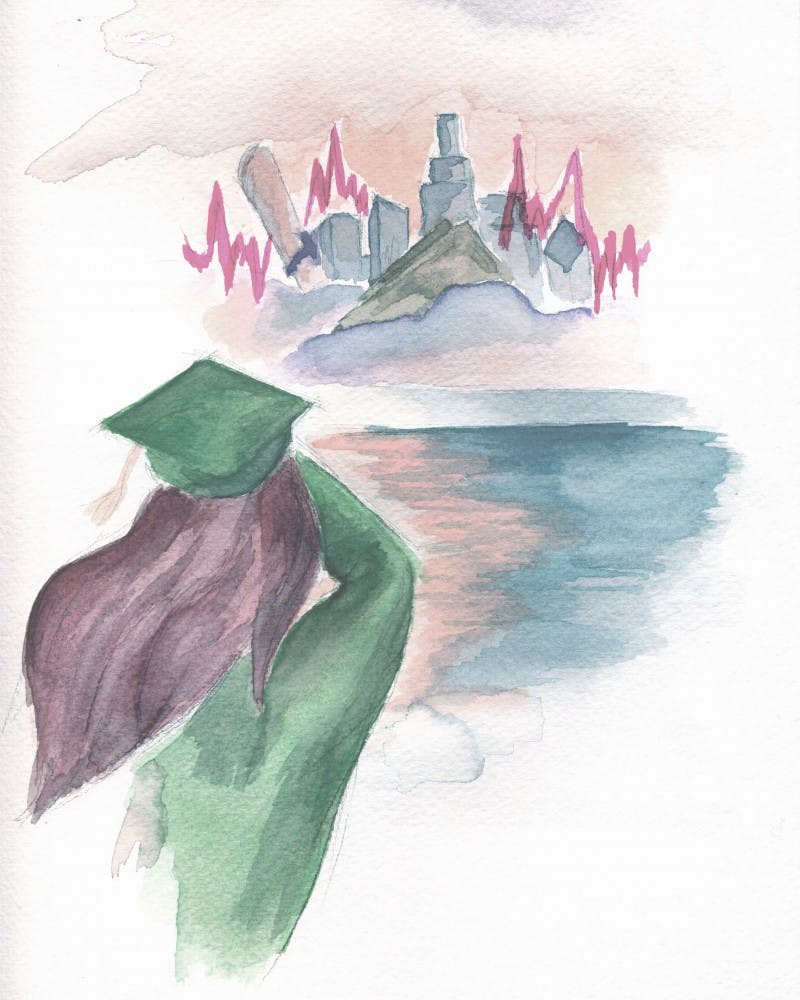
This environment has lead to a psyche of “diminishing horizons,” Stamm said — while the generations following World War II believed their children would build on their success, students today feel like it’s difficult to live up to their parents’ level of success as a result of the down economy.
The overall “horizon” of today’s college-aged generation is going to be lower, said Kenneth Waltzer, a James Madison College professor who specializes in social history.
Although the specific effects only will be seen with time, students nowadays will have less certainty in changing jobs, buying houses and other routine life decisions.
“People are scared the government is not going to give them nearly as much support,” psychology senior Olivia Bailey said. “People feel taken advantage of, really, by capitalist power.”
This attitude also is fueled by the continuing devaluation of college education, Stamm said. As tuition continues to climb and unemployment stays high, students feel powerless.
After graduation Bailey said she plans to follow the path of many others she knows — going to graduate school to increase her employment chances.
“It’s kind of a buffer,” she said. “It makes you feel like you will always be able to find a job.”
The lost decade
Mitchell Rivard disagrees with the perception some elders have of his generation.
“I’ve heard some people refer to our generation as ‘the lost decade,’” Rivard said. “It’s truly unfortunate, because young people today are tomorrow’s future.”
To prepare for a career in the political arena after he graduates in December, Rivard, a social relations and public policy senior, has tried to prepare with several jobs and internships, including positions with former Gov. Jennifer Granholm and former Speaker of the U.S. House Nancy Pelosi.
“(Employers) are looking to see you have real world qualifications,” Rivard said. “That makes all the difference for me, personally.”
Support student media!
Please consider donating to The State News and help fund the future of journalism.
History shows periods of financial despair often lead to following periods of activism, particularly led by younger demographics, Waltzer said. The 1930s depression sparked a period of political organization and change, largely marked by Franklin Roosevelt’s New Deal, which had lasting effects on the way society views the role of national government, he said.
Rivard said he already has seen such activism, marked by movements such as the Occupy Wall Street protests, which he is traveling to New York this weekend to take part in.
“I don’t think we’ve seen anything like that in a long time,” Rivard said.
“We’re going to see progressive change from it.”
Discussion
Share and discuss “Uncertain horizons” on social media.