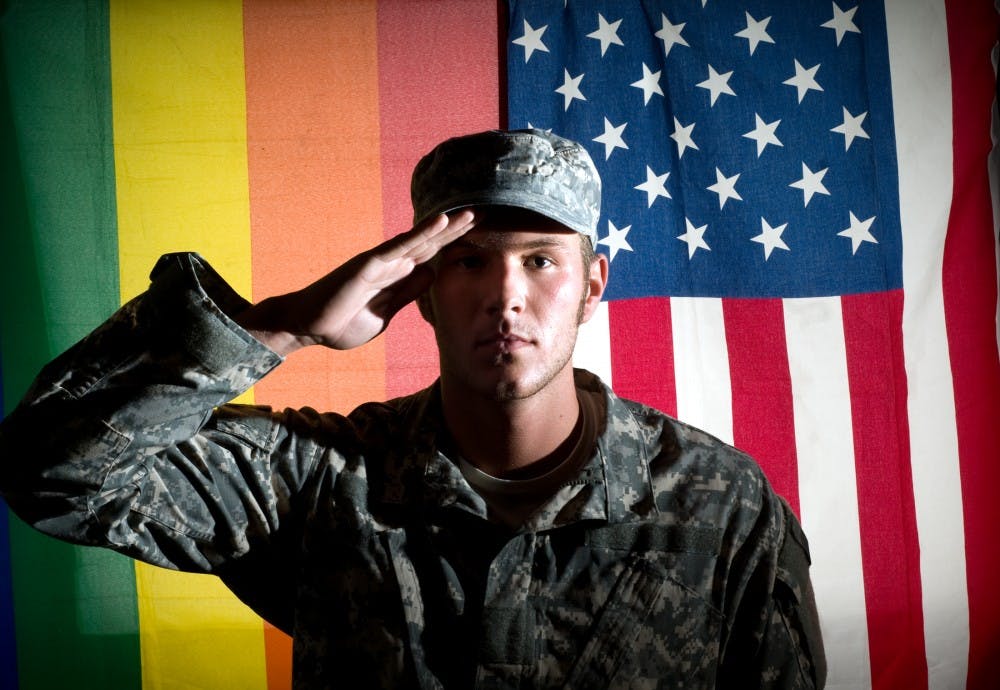
“I just don’t know if it would make things any easier for me,” said William, an MSU student who asked to remain anonymous.
“I feel like I’d fit in better now (without my peers knowing) than if I were just open,” William said.
After a political and ideological debate that hung over federal officials and legislators for almost two decades, the “Don’t Ask, Don’t Tell” Law, or DADT, which allowed gay and lesbian citizens to serve in the military on the condition that they refrain from publicly exposing their sexual orientation, expired Tuesday.
Gay individuals now can serve openly in the military, alongside heterosexual members, for the first time in history.
The policy change includes all on-campus ROTC units, meaning all students enrolled in the program cannot be discharged or discriminated against based on sexual orientation, said Jeff McDonald, chairperson of MSU’s Army ROTC program.
Although the law allows students enrolled in the program to be openly homosexual, ROTC students and experts on the issue said the total transition won’t happen overnight. Many already are accepting of the idea of serving with openly gay students, they say, but it will take time for the culture to entirely catch up.
On Capitol Hill
More than a year after U.S. Sen. Carl Levin, D-Mich. stood alongside Adm. Michael Mullen, Chairman of the Joint Chiefs of Staff, to urge the congressional repeal of DADT, he saw the end of the law he had long opposed.
“Today’s repeal of ‘Don’t Ask, Don’t Tell’ marks the end of a discriminatory policy and the beginning of a new era when gay and lesbian service members can serve their country openly without living in constant fear of being outed and kicked out of the military,” Levin said in a statement Tuesday afternoon.
“Our military will be stronger because service members with skills and experience that our military needs will not face discharge because of who they are.”
At MSU, the change affects hundreds of students enrolled in the Air Force and Army ROTC programs, which offer students large scholarships on the condition they serve four years in their respective branches upon graduation.
McDonald said training preparations on the new policy will continue for the rest of the year, where cadets will attend a series of educational sessions designed to help them understand and handle different problems that could arise, mostly related to housing, once they become officers after graduation.
Recruiting and administrative documents also have been changed to reflect the new rules, McDonald said.
Harassment issues related to gay cadets will be addressed under the existing sexual harassment policy, following the same chain of command for complaints.
DADT first was enacted in 1993 under former President Bill Clinton, who introduced it as a compromise measure, allowing gay and lesbian members of the military to serve their country as long as they did not disclose any information about their sexual orientation.
President Barack Obama signed the repeal of the law in December 2010.
“Today, every American can be proud that we have taken another great step toward keeping our military the finest in the world and toward fulfilling our nation’s founding ideals,” Obama said in a statement.
In time
When William first joined the ROTC program, he had to lie on the dotted line.
In the initial contract, new recruits promised they had never engaged in homosexual activity.
Support student media!
Please consider donating to The State News and help fund the future of journalism.
But even then, he could tell tides were shifting; the officer administering the paperwork assured the incoming cadets the law likely would be repealed soon.
“You could tell she was kind of upset about it,” William said.
“Most of them I’ve known have probably been for (the repeal), even if they don’t express it much.”
ROTC leaders received new administrative documents without that language today, McDonald said.
Still, William said he’s more worried than anything about the reaction from his peers in the program if he were to reveal his sexual orientation.
While he is not necessarily afraid of harassment, William feels he could be socially shunned at the very least — cut off from the rest of the group.
“The guys I’m with are very conservative mostly,” he said.
Deanna Hurlbert, interim director of the LBGT Resource Center, said in the short-term future, there likely will be many gay service members in the army who will remain in the closet.
“Now you have people in the situation where they have had to, in some instances, lie.” Hurlbert said, explaining these lingering effects of DADT would prevent gay service members from being honest about their sexuality, even with the repeal in effect.
Lyndsay Utke, an international relations and comparative cultures and politics junior who is enrolled in Army ROTC, said it was business as usual Tuesday as the battalion conducted weapons training.
Utke said she thinks ROTC culture will be less affected by the change than enlisted service members, as students on college campuses already come in contact with a diverse demographic of students.
“I think over time there will be a change to understand equality,” Utke said.
Although he isn’t ready tell come out to his fellow cadets, the repeal has come as a relief for William.
Now, he doesn’t have to worry about going on dates or showing affection with another man in public.
“I feel like I can keep these things separate — my personal life and my ROTC life,” William said.
Discussion
Share and discuss “Still in shadows” on social media.