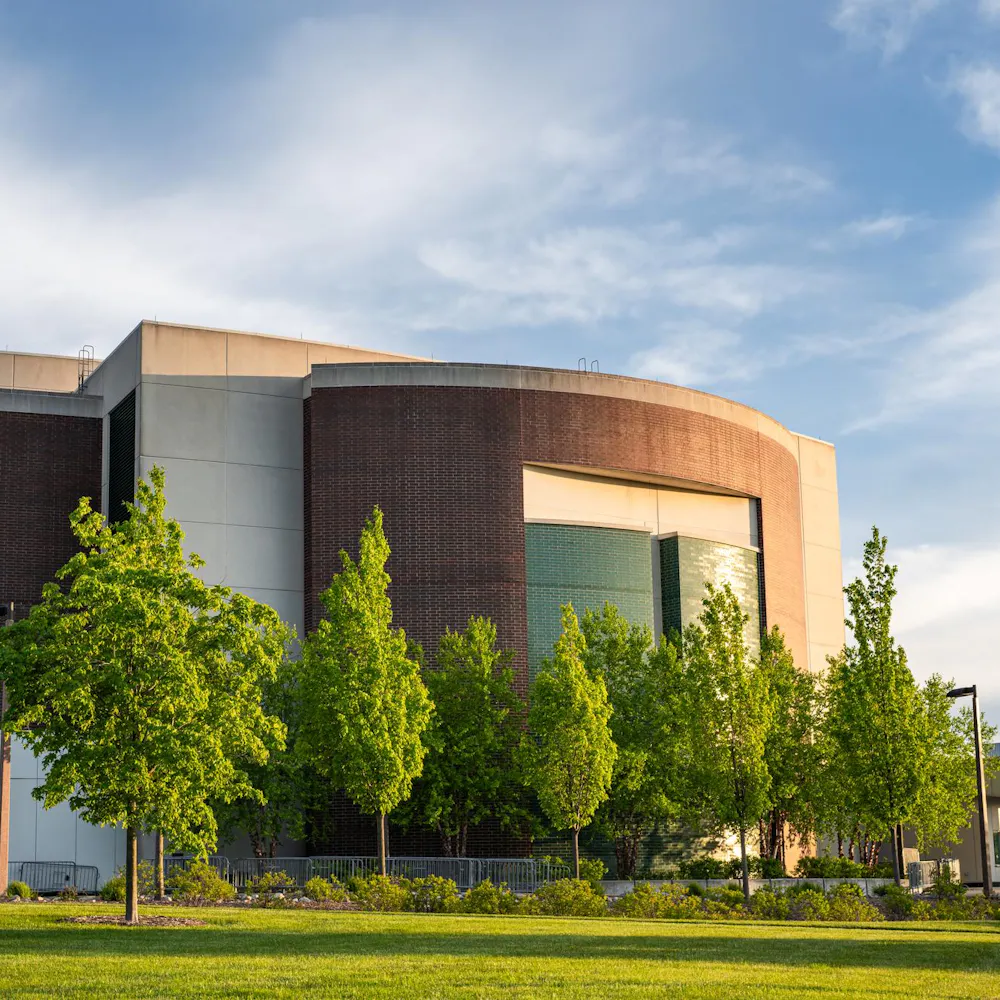
The fourth time the ceiling fell, John Coogan found it funny.
The retired MSU history professor’s office on the fourth floor of Morrill Hall had a perpetually leaky ceiling, causing Coogan to move most of his operations to the Main Library. But when a student did come to his office in Morrill, Coogan remembers interrupting office hours to warn students they were sitting in a hazardous spot.
“No one was ever injured, but it was sort of strange to tell a student, ‘OK, you better move your chair to that side of the room because the leak was over here,’” Coogan said.
While his office was at Morrill, Coogan advanced within the department, met his wife and made 25 years of memories before retiring in 2008. He is one of the many stories that have passed through Morrill throughout the past 110 years the building has stood — and one of the last.
At its June 18 meeting, the MSU Board of Trustees approved a $38 million plan to demolish Morrill in 2013 and move its current classrooms and offices into a new addition to Wells Hall. MSU President Lou Anna K. Simon said she has received expert reports that the building is not stable and is unable to be renovated. But as one of the oldest buildings on campus, Morrill is a piece of MSU history.
Beginning
On a cool day in October day in 1900, more than 1,000 people gathered for the dedication of the Women’s Building, later to be renamed Morrill Hall, according to papers in the MSU Archives & Historical Collections.
The Women’s Building, as its name implies, was built to house women students. When MSU’s women’s program first began in 1896, 17 women lived in Abbot Hall.
Jennifer Allen, an MSU alumna who worked with the MSU campus archeology program on the history of Morrill Hall, said the building was an important testament to MSU’s commitment to female students.
“It was one of the first in the country for a school of higher education,” Allen said. “It’s a representation of MSU ideals for supporting women’s higher education from the beginning.”
By the next year, the women’s program had outgrown the accommodations, said Portia Vescio, a public service archivist for MSU. In 1900, Morrill Hall housed 120 women students, as well as faculty and the dean of women.
“They had cooking laboratories, woodworking laboratories, they had a large gymnasium, and faculty had their residence rooms within Morrill, as well,” Vescio said.
In October 1937, the Women’s Hall was renamed Morrill Hall and became a liberal arts division center. Today, it houses the English, history and religious studies departments.
Century legacy
Morrill Hall was named after the 1862 federal act that laid the foundation for land grant colleges and a national mission to redefine higher education by providing universities funded by the government and built on federal land.
Ironically, the legislator behind the act that bore his name, Justin Smith Morrill, left school at the age of 15.
Growing up on a farm as the son of a blacksmith, Morrill did not have a life in which education was the top priority. He became a successful businessman after he left school, retiring at age 38 and becoming a Vermont senator, according to documents in the MSU Archives & Historical Collections.
In 1856, he presented the Morrill Act to congress, citing his own lack of education as the motivation for the bill to be passed. It took 11 years to accomplish, but the act arguably is Morrill’s greatest legacy.
Almost a century and a half later, there is a land grant university in every state.
Morrill died on May 13, 1898, about one year before the MSU building was approved for construction. Michigan legislators unanimously approved allocating $83,000 to the university to construct the four-story red sandstone and brick building and $12,000 to furnish it. The amount was $10,000 more than was asked for originally.
Support student media!
Please consider donating to The State News and help fund the future of journalism.
Debate
The building received renovations again after its basement ceiling collapsed in February of 1991. No one was hurt, but it was a sign of the building’s age.
Morrill’s historical roots have led to some protest of the building’s destruction. At the same time, even those who want Morrill to remain standing acknowledge that the building is deteriorating.
Coogan’s wife, Sheila Teahan, an associate professor of English, has had an office in Morrill since she came to MSU in 1989. Although Teahan said she can sympathize with those who see the building’s historic value, she is surprised it has not come down sooner due to the danger the building poses to anyone who uses it.
“Anyone who has a romantic idea of Morrill Hall has not spent a long period of time there in recent years,” Teahan said. “It’s structurally unsound.”
Teahan said the floors and ceilings are tilted, and the building is infested with cockroaches and bats, among other problems. For a while, she had an office in the basement with a large hole in the middle of the room’s floor about four feet deep and four to five feet wide.
Jyotsna Singh, an English professor who has had an office in Morrill for 10 years, said the university should work harder to preserve the building.
“We spend millions on football or basketball and at other places,” Singh said. “This is such an important monument of the Morrill Act.”
Singh said the professors in the department were not consulted about the demolition of Morrill or the move to Wells Hall.
“I have a beautiful office,” Singh said. “There are large spacious rooms, it’s got high ceilings. We are going to be moved to a tiny office on the top of Wells Hall. We have 1,000 English majors, and they are all going to have to come up by the elevator.”
To commemorate Morrill, the MSU Physical Plant is working on plans to restore the area to a park setting with a plaque commemorating the building, said Amr Abdel-Azim, design representative for the project.
“It would be some kind of plaque,” Abdel-Azim said. “Something that is part of the stone or the brick (of Morrill).”
Discussion
Share and discuss “Historical foundations” on social media.