Nabil Baker moved a lot as a kid. In Miami, New York and Washington, D.C., he noticed a similar pattern — people around him weren’t receiving adequate health care and were letting small problems grow into fatal illnesses. He remembers one 6-year-old boy whose mother accidentally spilled a pot of boiling water on him.
“The burn was so severe that once it healed, he couldn’t extend his right arm,” Baker said.
The boy’s mother had not taken her son to a doctor, and the problem worsened until surgery was needed.
“His elbow and right arm were fused,” he said. “For something like that, a doctor would have treated it so it wouldn’t have gotten to that level.”
It is incidents like this that ultimately inspired Baker to pursue his medical degree and eventually become a primary care physician. Now a medical student in MSU’s College of Human Medicine, or CHM, Baker’s job is becoming increasingly important as the U.S. faces a shortage of physicians in the coming years.
By 2020, the U.S. is expected to have between 85,000 and 96,000 fewer physicians than needed, according to a national study by the Blue Ribbon Committee on Physician Workforce.
But MSU’s medical program, and students such as Baker, are helping to fill the gap.
Limited help
In 1994, the Journal of the American Medical Association predicted a surplus of physicians in the next decade. In response, programs that trained medical students held their class sizes steady, which laid the foundation for the physician shortage.
Meanwhile, the baby boomer generation began to age, increasing the need for primary care physicians. The new health care reform bill, which President Barack Obama signed in March, will contribute to the shortage as millions more Americans will become insured and eligible for medical care.
This shortage could encourage people to ignore minor symptoms until they manifest into something more serious and costly, said Leonard Fleck, an MSU professor of philosophy and medical ethics.
“The more (patients) that have to seek out primary care, the more likely it is that they’ll only go to a physician when a problem needs urgent care,” Fleck said.
Another factor restraining the number of upcoming physicians is a decreasing number of residency programs across the U.S., which medical students must complete to become qualified doctors.
“The real limiting factor in the number of physicians is the residency training, and those funds are capped by the federal government,” CHM Dean Marsha Rappley said. “Until that number changes, we won’t have more doctors practicing medicine.”
Even with the changes being implemented, were a program to expand next year, it still would not provide an immediate increase in physicians because of the length of medical training.
“It takes seven years to grow a physician … four years of school and at least three years of a residence,” said Bryant Cameron Webb, a medical student at Wake Forest University in Winston-Salem, N.C., and president of the Student National Medical Association.
Expanding to the future
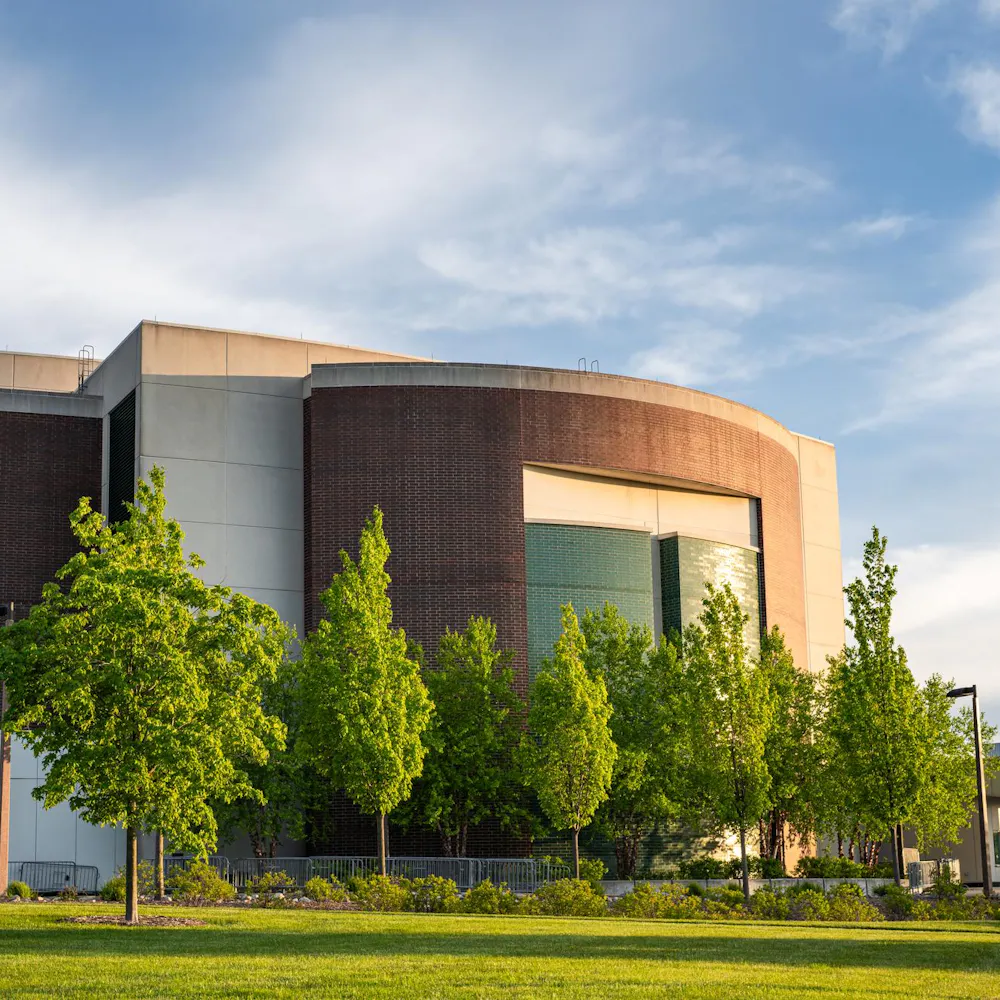
In three years, MSU officials in the CHM plan to have about 800 students in the college — 250 more students when compared to enrollment numbers for 2009. The expansion partly is because of the completion of the Secchia Center in Grand Rapids, which is expected to train 350 students by 2013.
However, several complications stem from expanding class sizes because a college must prove it will be able to adequately train additional students. But the biggest obstacle in stagnating the primary care physician shortage is actually placing medical students into internships or residencies.
“The same time we have medical schools across the state increase enrollment, the number of hospitals and health care systems … has dropped dramatically from 300 to less than 200,” Rappley said.
Support student media!
Please consider donating to The State News and help fund the future of journalism.
To fight the decrease, the CHM has reached out to seven residence programs and internships across Michigan to engage them in research projects and opportunities.
The work is paying off. When expansions to the college began in 2007, the CHM had the largest percentage increase in first-year student enrollment, according to the Association of American Medical Colleges. The association also highly ranked MSU, placing the university in the 99th percentile out of the 144 medical schools based on the number of students who chose to pursue primary care.
“It’s part of our land grant university tradition to look to the needs of our state and our nation and be a leader in addressing those needs,” Rappley said.
Student struggles
MSU’s CHM receives more than 5,000 applications each year. Although the interest in attending medical school is increasing, few students choose to become primary care physicians, opting instead to go into a medical specialization such as dermatology or neurology.
“There’s a lot of things primary care physicians are restricted in,” said Paul Johnson, a medical student at the CHM who plans to go into neurology. “(They) can’t do certain procedures specialization doctors can do.”
Various incentives have been created to encourage students to become primary care physicians, such as scholarships and special programs allowing students to complete their training sooner, as well as a more personal aspect involved in the job.
“You get to make a relationship with patients over time,” Webb said. “The purpose of primary care physicians is a special role in patient care.”
There also is a problem in evenly distributing physicians throughout rural and urban areas to ensure all people are adequately covered.
“One of the underlying problems is primary care physicians tend to congregate around large urban areas,” Fleck said. “Part of the issue is not so much a shortage of but a maldistribution.”
To combat this, the CHM gives students an opportunity to become part of a program called Leadership in Medicine for the Underserved/Vulnerable. The program focuses on populations in rural and inner-city areas and provides them with assistance.
“I have been one of those people that have been uninsured,” Baker said. “It sucks not being able to see a doctor. I don’t want other people to go through that. It’s really important to help those people who may not be able to get help anywhere else.”
Discussion
Share and discuss “Filling the gap” on social media.