MSU astronomers soon will be able to look 10 billion to 15 billion years into the past with the push of a button and the new SOuthern Astrophysical Research, or SOAR, telescope.
MSU joined with the University of North Carolina at Chapel Hill, the National Optical Astronomy Observatories and several universities from Brazil to fund the $43 million project located on the western edge of the Andes Mountains in Chile.
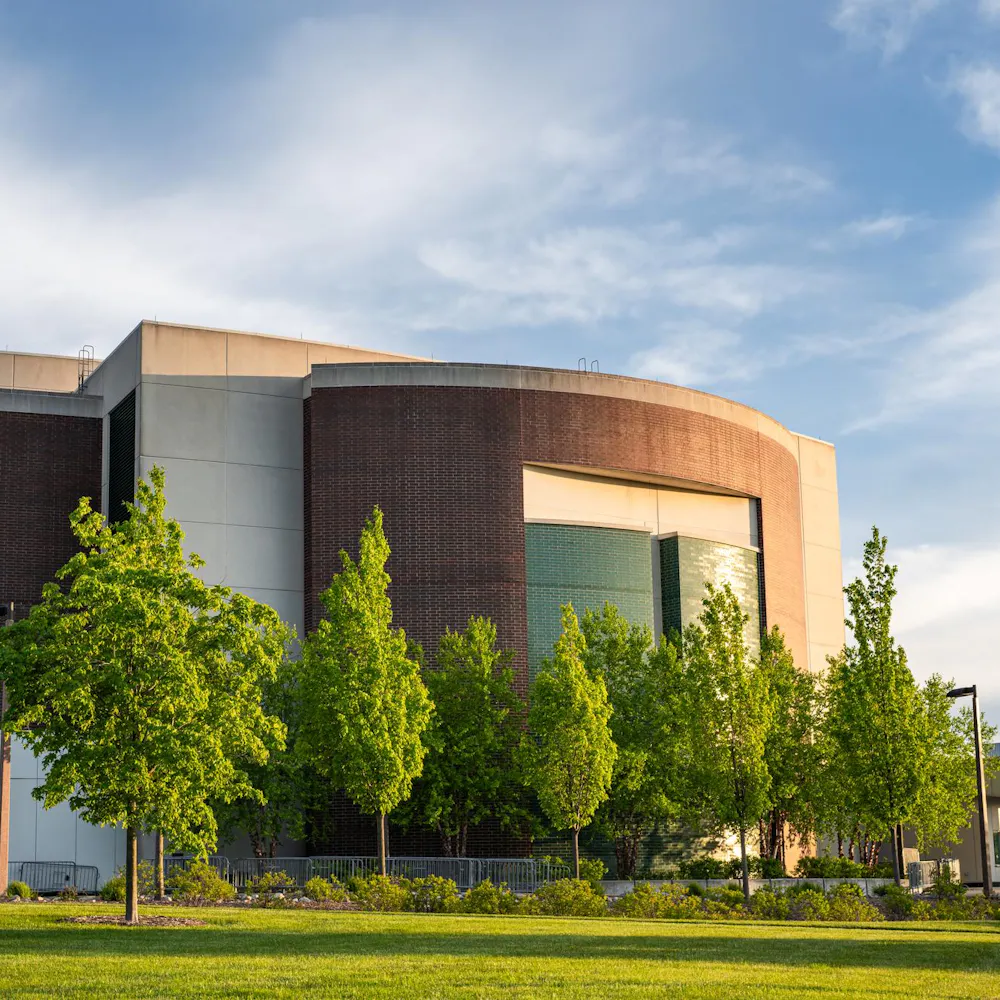
On Saturday, the completed telescope will capture its "first light" during a dedication ceremony at 7 p.m. at the Biomedical and Physical Sciences Building.
The joint venture will allow each institution a portion of viewing time throughout the year. MSU's $6 million contribution and custom-made $1.6 million Spartan Infrared Camera guarantee university astronomers 40 nights of viewing throughout the year.
This is the first time MSU has ever had part ownership of a telescope such as this, said Wolfgang Bauer, chairperson for MSU's Department of Physics and Astronomy.
"That allows us to play in a completely different league in astronomy now," he said.
In the past, when MSU astronomers needed to work with telescopes, they had to ask permission for use of a national telescope or would need to fly to Chile to complete research. But limited time was available for those telescopes, and using them was expensive, said astronomy Professor Timothy Beers.
"We had to exclusively use national facilities and submit proposals to use them for maybe two or three nights of viewing," Beers said.
The telescope was built in Chile because of its clear viewing conditions and southern-hemisphere location that looks out into the center of Earth's galaxy.
The telescope's distance shouldn't limit astronomers' abilities in East Lansing to explore the universe because the telescope will be able to be controlled from MSU's campus, Bauer said.
"It's almost like playing a video game, but it's a 100-ton telescope that they are moving around," he said.
The telescope's capabilities will have some of the farthest views of the universe available, said astrophysics graduate student Nathan De Lee.
"There's a lot of interest in looking farther away from our position," De Lee said. "Light travels at a set speed. When you look farther away, you're not only looking farther in distance, you are looking farther in time because it took time for the light to reach us."
The Spartan Infrared Camera, specially designed by MSU astronomy Professor Edwin Loh, not only captures light visible to the naked eye, but infrared wavelengths as well.
"It's like a still-picture camera with very long exposure time," Loh said.
"It will be the biggest infrared camera when it is finally finished."
The public will be able to view images of Chile's night sky from the camera through windows into the remote observing room when the telescope is in action.
Beers said he expects the viewing opportunities of the telescope to become an attraction for visitors to MSU.
"When people come to visit MSU, one of the things they come to do is visit the planetarium," Beers said. "This remote viewing room is going to make this telescope halfway across the world as much a part of campus as things that are already here."
While the research of supernovae and globular star clusters might have little everyday use, Loh said, human curiosity is astronomers' greatest motivation.
"Once you've satisfied that curiosity, you'll better know how the universe began, how the Earth was formed," Loh said.
"It helps to put a better perspective on our place in the universe."
Tina Reed can be reached at reedtina@msu.edu.