While most people can navigate campus as the crow flies, Bill McCreary knows his way around as the mole digs.
McCreary worked maintenance on the miles of steam tunnels under MSU for 15 years and knows how to make his way from Hubbard Hall to the Red Cedar River - underground.
"They're pretty good-sized tunnels, most of them you can get through all right," the 76-year-old Lansing resident said. "It's not bad at all. It's hot, but that's where the steam goes. There's water, electricity, telephone lines and air. It's pretty interesting."
McCreary began working in the tunnels in 1968 and recalls their mystique.
"Oh yeah, there were kids that went down in there and tried to blow pipes up and played that what-do-you-call-it game with tunnels," he said. "I don't remember what happened, but it seemed to me that one of the kids got killed or something."
University engineer Bob Nestle said there are about 10.5 miles of tunnels running through both north and south campus. The steam from the tunnels is transferred into steam lines which travel under bridges over the Red Cedar River.
The tunnels, which are about 7-square-feet tall, are up to 90 years old in the north end of campus.
"Inside those tunnels are steam and condensate lines that provide steam for campus buildings which turns into condensate in the building and goes back through the tunnels to power plant and gets turned into steam again," Nestle said.
He said basically every building, including new structures such as the Biomedical and Physical Sciences Building and the Shaw Lane parking ramp, have steam tunnel work associated with them.
"We also have a fair amount of direct buried lines," he said. "The lines put in the ground have a relatively short life but if they're inside a tunnel, they'll last almost indefinitely."
Audrey Brockhaussaid she thinks the tunnels are used for more than just steam regulation.
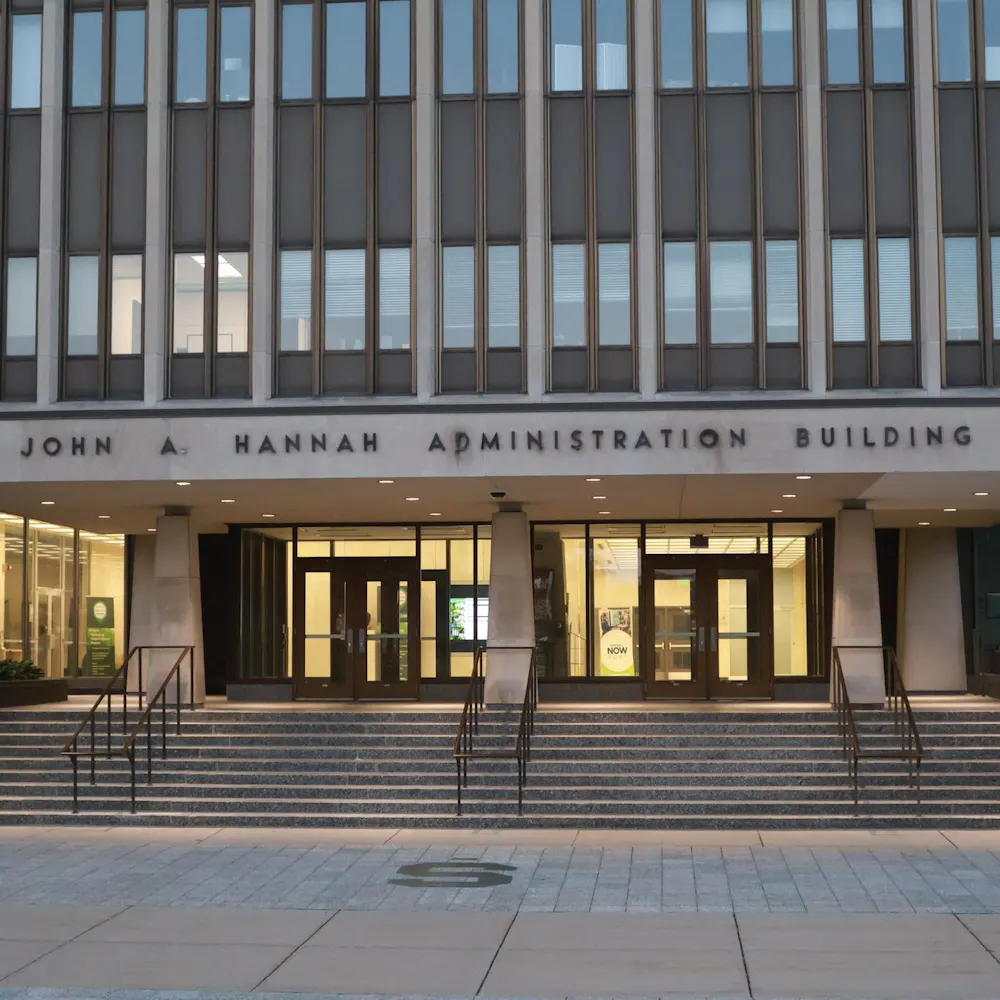
While walking across campus last summer, the interdisciplinary studies in biological sciences junior noticed something suspicious in front of the Administration Building.
"Men in suits came out of those tunnels, they were walking out," she said. "It was creepy seeing these men in black suits coming out of the ground. I brought my friends back there later because it was so strange and we found a place for a key."
Brockhaus said the fact the tunnels are square makes her think their main use could be for a walking space.
"It's all flat, so people can go through it," she said. "It almost seems like it's a bomb shelter they don't want us to know about, like a weird backup plan for a nuclear war or something."
Maintenance workers are in the tunnels on a regular basis working on tunnel upkeep, Nestle said.
And although there hasn't been much of a problem in recent years as far as tunnel break-ins go, Nestle warns it's not a good idea to go searching for them as there is a high potential for serious injury or even death once inside.
"The key concern about people being in these tunnels is that steam is carried in the pipes down there at about 90 PSI," he said. "The tunnels are very hot, you could be overcome by heat. If somebody were to break a pipe down there, which could happen, and let that steam loose, it would turn that tunnel into an oven almost immediately."
Nestle said it's been about 15 years since people have broken into the tunnels in search of a good place to play Dungeons and Dragons.
"That game got really popular for a while," he said. "The tunnels were a real attraction for people who wanted to play that game."
Not only has the dwindling popularity of the game assisted in keeping the tunnels secret, but security on the tunnels has also been improved immensely.
"We learned a long time ago not to underestimate the ingenuity of students on campus when it comes to getting into locked spaces," Nestle said.
MSU English Professor Bill Vincent chose the MSU tunnels as the filming location for a few scenes in a scary movie he wrote.
The film, "Terror at Baxter U," was released last June and was filmed entirely on campus.
"It was a horror film and we thought the tunnels would be a good place to film," he said. "Back in the '60s and '70s, there were rumors that people played Dungeons and Dragons down there. There was also a legend that some guy had disappeared down there and was found dead but as far as I know, that wasn't true."
Vincent's screenplay focused on a blood-sucking, man-eating monster that lived in the underbelly of campus' many aging edifices.
"We just filmed in the tunnels below Berkey Hall and that's all," he said.
Although the tunnels provided excellent scenery and mood for the film, Vincent, who has walked through the underground system, said there's nothing exciting about them.
"They're really sort of uninteresting, they're just these tunnels with all kinds of pipes running through them," he said. "They're uncomfortable, dirty and not pleasant to walk through."
Still, the thought of a mysterious underground world on campus is an idea some students have romanticized.
If someone does happen to make their way through the tunnels and survives, there could be some serious repercussions awaiting them when they get out.
University Ordinance 15.09 states, "No person shall enter any steam tunnel, mechanical room or boiler room unless required to do so in the proper performance of assigned university duties."
That ordinance and others are maintained by the MSU Department of Police and Public Safety and the Board of Trustees, said Bryan Robinson, assistant to the university Ombudsman Stan Soffin.
"I would just think people wouldn't want to be down there because of the safety hazards but as far as punishment, I only know what we would cite them for," MSU police Sgt. Florene McGlothian-Taylor said.
Terry Lapinski, deputy chief of the East Lansing fire department, said one of the department's responsibilities is to be specially trained for rescues in confined spaces.
"In about 1992, there were a lot more laws coming out about entry into what they call confined spaces," Lapinksi said. "What we did, knowing that we are the rescue unit for the campus, is we embarked upon training people in confined spaces. Every year we do confined space training in the tunnels under the university as well as the huge 8-to10-foot tunnel that runs down Grand River Avenue into the waste water treatment plant."