After semesters full of typical, boring college requirements like math, history or English, some could only dream of taking a Dave Matthews Band class - for credit.
And as colleges and universities continue to vary the kind of electives students can take, the subject matter gets even quirkier.
Oberlin College in Ohio offered the Dave Matthews Band class this semester, along with classes analyzing the television show “Buffy the Vampire Slayer” and the films of Harrison Ford.
The classes are offered through Oberlin’s Experimental College, also known as ExCo, launched in 1968 to allow instructors, students and community members the opportunity to teach others about unconventional topics.
“I was looking at some old course catalogs from the early ’70s and there were schools everywhere like this,” said Oberlin sophomore Tessa Shanks, an ExCo office assistant. “I think it was just a trend at the time. It encouraged a different kind of learning, and ours just kept on going.
“Most of the students I talk to around campus think that ExCo is one of the best things the school has to offer.”
Classes studying different aspects of popular culture are not limited to Oberlin. Adrian’s Siena Heights University began offering a class studying the television show “The Simpsons” earlier this year, and a similar course is offered at the University of California at Berkeley.
ExCo’s imaginative course offerings also are echoed at U-C Berkeley’s De-Cal, known as the university’s democratic college. The college offers courses studying the film “Star Wars,” the works of Dr. Seuss and the music of the Grateful Dead.
Shanks said students can receive up to five credits through classes in ExCo. All classes are free of charge.
“I think it’s definitely relevant to look at what popular culture is saying because it’s such an influential part of our lives,” she said. “I think it’s a really important part of college life.”
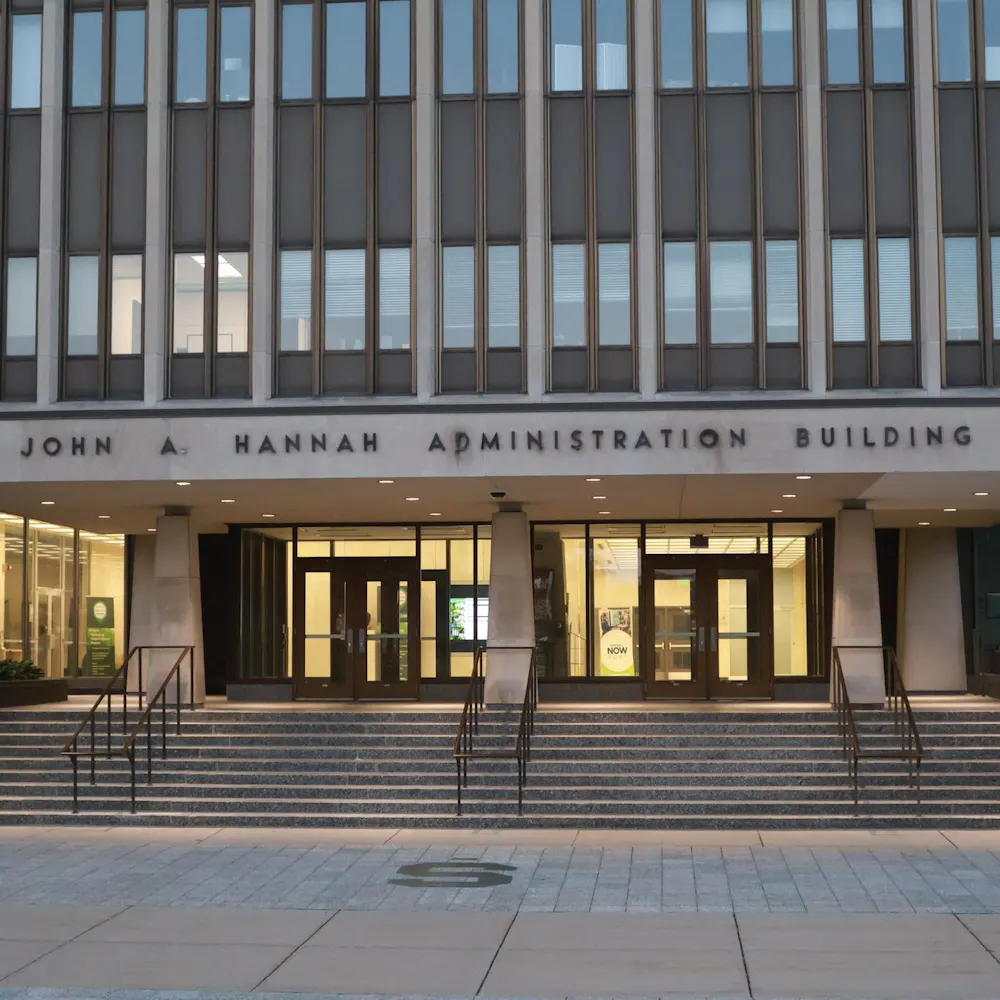
MSU’s James Madison College has also taken part in studying various aspects of popular culture. Three sections of MC 112, “Identity and Culture,” study the culture of Disney.
Kathleen Burrage, instructor for the classes, said the course has been an opportunity for students to realize some of the underlying meanings behind Disney’s marketing.
“Disney is a place where Americans think is the innocence of our culture and I thought by having students discuss these issues we could be more sensitive and aware of our own assumptions,” she said. “It has a lot of Disney animated films to it, but I also want to look at the Disney energy in the ’50s and the relationship between theme parks and television. They show a very important turning point in American culture.”
Burrage said students have studied different films and written papers comparing their experiences with Disney with older people in their families.
“One thing we found out was that for the majority of students in the class, the first question they had was, ‘Was “The Wizard of Oz” Disney?’” she said. “So there’s a tendency to think that every animated film is Disney and nonanimated films are not. One of the things we’ve looked at is that assumption.”
Classes studying the depths of popular culture in American society, like the Disney class, can be beneficial to future impressions of the trend of company, Burrage said.
“We thought it was really interesting to go back to the generation of 1930s, where we have the image of Disney just being cute, to the Disney corporation developing DisneyLand, the TV show, theme parks and becoming a significant part of American generations,” she said. “My students’ generation seems as if there’s always been Disney and the company itself is always saying it’s harmless fun, but at the same time it’s profoundly meaningful.”
And whether it’s a “Simpsons” class to analyze political and religious satire or a course studying important films of the ’80s, Burrage said it should be important for students to realize the meanings of American popular culture that surround them.
“I think it’s tremendously important because part of the job of the academy is to have conversations about meaning and if we don’t talk about certain things, then that means to a large extent those subjects are never challenged or critiqued anywhere in culture,” she said.
Political theory and constitutional democracy freshman John Sturk said his enrollment in the class has been a surprising form of enjoyment for him.
“I thought it was a little odd at first,” he said. “I never really thought of Disney having some kind of deep social message, but it’s a very interesting class.”
Sturk said the image Disney has projected since the company’s launch is one way its culture has affected Americans’ perception of the corporation.
“We’ve talked about Disney doing other films like a film for the Air Force, and I was surprised to see that Disney back then was very patriotic and promoted an American message,” he said. “Then we looked at Disney a little bit later and they sort of backed away from the patriotism and went to a whole fantasy for your imagination thing. It was interesting to see that transition.”
Others in the class said different courses studying popular culture are important for college students to take part in.
“I think they’re pretty important because we’re surrounded by pop culture all the time and if you don’t realize what’s going on, you kind of miss out on something,” said pre-med freshman Stefanie Papps.