Clifton and Dolores Wharton admitted much of Friday afternoon was emotionally overwhelming.
But the couple said they felt at ease standing under the lights of the Pasant Theatre stage.
“We felt very comfortable because we were talking with friends,” said Clifton Wharton Jr., 74, the university’s 14th president.
The former MSU chief executive and his wife had a similar conversation in the form of closing statements at a convocation Friday celebrating their accomplishments at MSU.
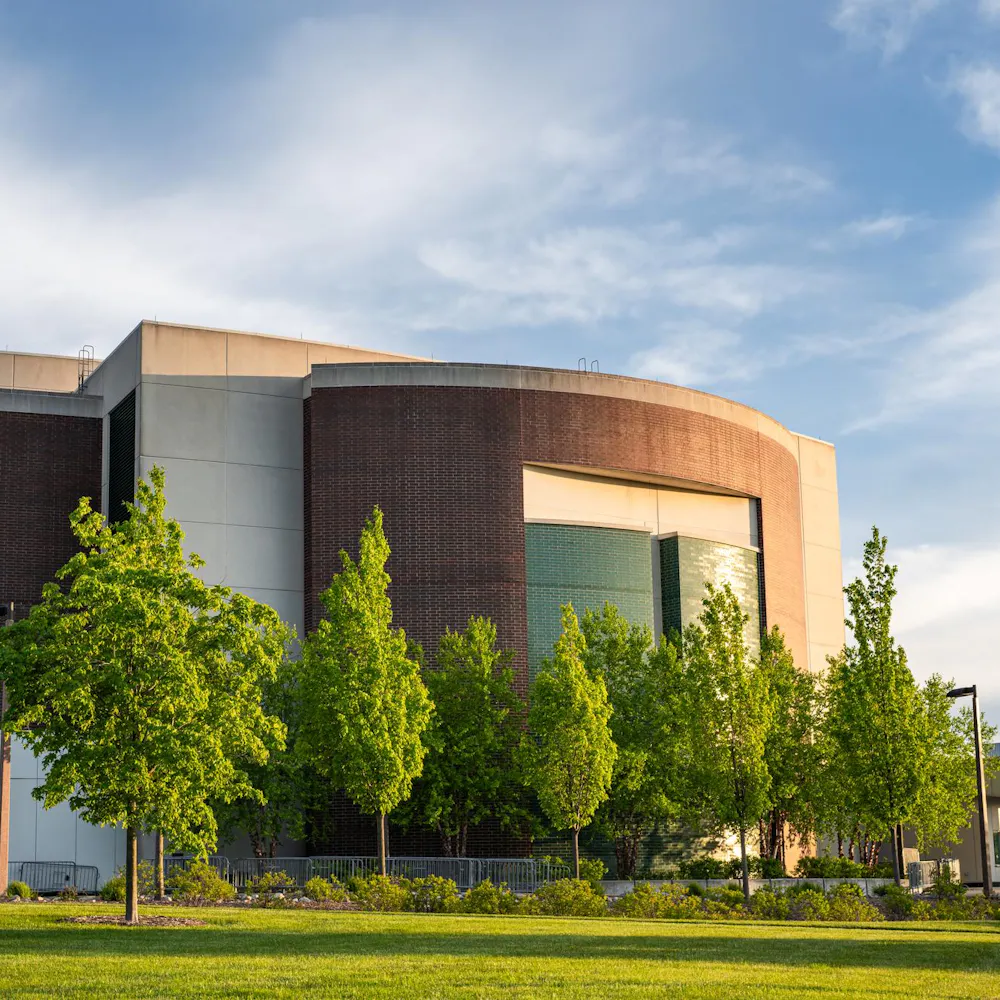
“I am absolutely overwhelmed by this dedication,” Dolores Wharton said during her final remarks in the Pasant Theatre - located in the Wharton Center, the MSU performing arts structure that carries the couple’s name.
The salute, entitled “The Wharton Years, 1970-1978: Trial and Triumph,” was commenced by a welcome and introduction from current MSU President M. Peter McPherson.
“We as an institution did this to honor the Whartons, who had a tremendous impact on this institution,” McPherson said.
“The history of this institution is important in understanding what we are today.”
Following a video tribute composed by university relations, a five-person panel of current MSU employees took part in a discussion that analyzed Wharton’s eight-year presidential term.
His tenure came at a time of controversy, as the Vietnam War was raging and student activism was becoming more and more popular.
Wharton was also the Big Ten’s first black president, and MSU’s only.
Though he dealt day after day with student protests, marches and sit-ins, Wharton always said he wanted to focus his attention on more long-term concerns, such as academics, the faculty and students.
James Spaniolo, dean of the College of Communication Arts and Sciences and a former assistant to Wharton from 1970-1972, talked about the university’s environment during Wharton’s initial years in office.
“After the student deaths at Kent State (University) and Jackson State (University), the campus really came to a standstill,” Spaniolo said, describing deadly student protests that ensued in the early 1970s. “We really felt the university was under siege.”
Along with student unrest, Wharton also faced other pressures.
After a 5-3 Board of Trustees vote in 1970 made him MSU’s 14th president, he became the first permanent chief executive to follow John Hannah - considered the lead force in MSU’s transformation from a college to a university.
Hannah served as president for 28 years.
“To have this turmoil on top of that made it more difficult for Cliff,” Spaniolo said.
Carl S. Taylor, an MSU family and child ecology professor who was a panel member, gave a student perspective to the deliberation. He was one of the first students to be selected into Wharton’s “Presidential Fellows” program.
Through the program, students and junior faculty members were assigned to administrative offices for six months. This allowed them to gain close contact with Wharton and, in turn, allowed the president to better interact with students.
“It was the first giant step in my life,” Taylor said. “I had an absolute ball and I felt fulfilled every moment.”
Wharton was well-known for making time for students, and so was his wife.
The panel also focused on Dolores Wharton’s involvement with students and campus life.
“She was a pioneer and brought a special touch to the university,” said panelist James Bonnen, a professor emeritus of agricultural economics.
Others taking part in the panel discussion were Roger Wilkinson, vice president emeritus for finance and operations and Irving Taran, an MSU art professor. Provost Lou Anna Simon spoke following the panel discussion.
“History has proven that they were the right people in the right time at MSU,” Simon said.
The Whartons were also well-known for their fondness of the arts. Dolores would often host formal and informal gatherings at Cowles House and would invite the MSU Department of Art to hang its work in a continuously rotating exhibit at the president’s on-campus residence.
The couple’s devotion to art spurred the university to construct the Wharton Center in their honor. The $24.6 million structure took three years to construct and has been open since 1982.
During his closing remarks, Clifton Wharton acknowledged that his and Dolores’ comfort with the university is permanent. The couple celebrated their 50th wedding anniversary earlier this year.
“You can go away from Michigan State,” said Wharton, who now lives in Cooperstown, N.Y., with his wife.
“But you can never entirely leave.”
Steve Bossi can be reached at bossifre@msu.edu.