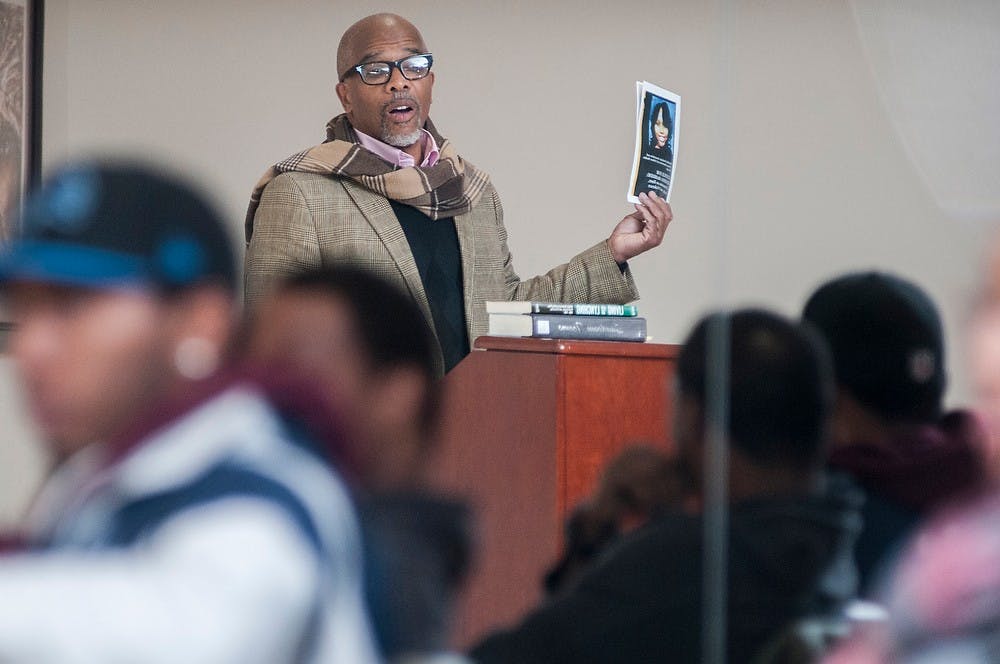
Thursday evening, MSU’s Sankofa Graduate Association and other various student organizations came together to discuss the recent death of Renisha McBride and other acts of debated racial profiling.
McBride was a 19-year-old woman who was shot to death on a porch in metro Detroit after seeking help after a car accident.
The event was titled Justice For Renisha McBride: A discussion of race, gender and violence, and it brought out MSU students to engage in a conversation about racial injustice and problematic violence. The event also welcomed Rev. Steve Bland, who is personally close with the McBride family.
This is an issue that is constantly swept under the rug, African American and African Studies doctoral student Michael Wilson said.
Wilson said in the media that McBride’s death is portrayed as an accidental death in an instance of self-defense, such as the case involving Trayvon Martin and George Zimmerman.
“Unarmed black boys and girls being killed is consistent throughout the nation as an act of stand-your-ground, but now it’s happening in our own backyards,” Wilson said. “It could happen to us.”
“We need to let the country know this is what’s happening to us, and we’re not going to be silent.”
Janelle Edwards, program coordinator for the Sankofa Graduate Association, brought up comments from a recent article published in The State News written by the association.
Collaborating with other MSU organizations such as the MSU’s Black Student Alliance and African Student Unions, the article explained the incident of McBride’s death. One of the online comments stated that if it were a white man or woman, they would have known better then to knock on a stranger’s door, but this drew criticism from those in attendance.
“I was always taught that if you’re in danger, such as a kidnapping, if you can get out of the car, you run to a neighborhood and you ask for help,” said English freshman Amanda Tabbey, who is white. “I think that’s a pretty inaccurate statement (for) a student to make.”
For about two hours, similar conversations occurred, ranging from early 20th century lynching to recent topics in the media involving racism and segregation.
Wilson said he hopes students took away a sense of urgency from the event and will help spread the word to their classmates, family and friends.
“People need to start brainstorming ways to mobilize and ways to address injustices that impact their community,” Wilson said.
Support student media!
Please consider donating to The State News and help fund the future of journalism.
Discussion
Share and discuss “Students, faculty gather to discuss Renisha McBride tragedy” on social media.