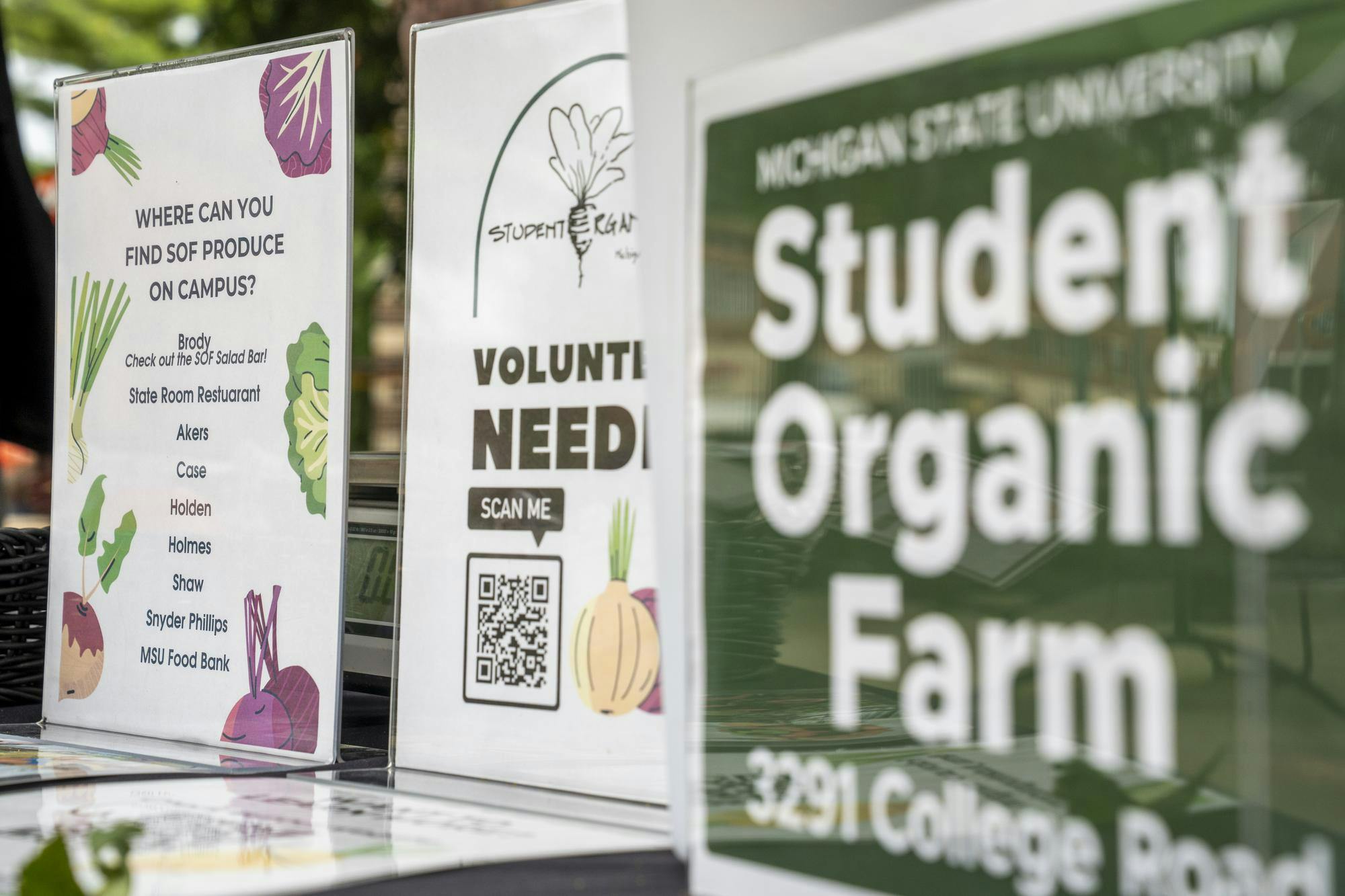
MSU Student Organic Farms has brought back its weekly on-campus farm stand for the first time since the COVID-19 pandemic, outside of the MSU Union. The stand sells a variety of products on Wednesdays from 4:30 p.m. to 7:30 p.m.
The majority of these products are fruits and vegetables, including squash, varieties of tomatoes, Asian pears, onions, garlic, varieties of peppers and the Michigan native paw paw fruit. The paw paw fruit, also known as the custard apple, is the biggest native fruit in North America and is known for its custard-like texture and tropical taste with faint notes akin to vanilla. The stand also sells farm-grown autumn flowers.
While the novelty of the on-campus stand has kept its commercial success from soaring, Student Organic Farm manager Darby Anderson said the stand has provided an opportunity to introduce the farm to those who are unfamiliar with it.
“We've been getting a lot of people to at least stop by and chat if they hadn't heard of the farm before, so they're really interested in knowing more about the farm and about volunteering and other ways to engage,” Anderson said.
Involving students is at the core of the farm’s work. The student employees plant, water, weed, harvest crops and help run farm stands. Any individual or registered student organization can volunteer.
“It's a great opportunity to get into farming," said Andrea Buhl, a student organic farm employee and horticulture junior. "I've never had any farming experience before this. My family doesn't grow a bunch, so I just love working there so much."
Even if students may not have heard of the organic farm’s work, it’s likely they’ve interacted with it. The farm's produce can be found across campus at Michigan State dining halls.
“We have several locations that use the product from this student organic farm, as well as Brody has a salad bar that's dedicated to the student organic farm," said Rebecca Selesky, assistant vice president for Michigan State culinary services. "We do dinners at (The Kellogg Center's) The State Room that include their produce."
The Student Organic Farms also provide produce beyond MSU's campus through summer community-supported agriculture.
In the fall, the farm makes its produce available in harvest boxes. Next month’s November box is a variety of crops that were produced during the farm’s fall season.
The farm also provides better-quality produce to Spartan Shelf’s food bank by donating excess crops. They also sell the food bank crops at a wholesale price; the majority of which are greens and herbs due to their delicate nature and the challenges that come with transporting them while maintaining freshness.
The farm’s local presence has become part of a wider consumer-led conversation over where food comes from. This recent push for local produce has left Anderson and the MSU Student Organic Farm wondering if this conversation is just a fad.
“It's been interesting for a lot of small farmers to know if this increase in interest in small-scale and supporting local is something that's going to last and something that we should plan for next summer, next fall or whether people will lose interest and then go back to their buying from the grocery store,” Anderson said.
Regardless, the MSU Student Organic Farm will continue to provide local produce for Michigan State’s campus and East Lansing.
Support student media!
Please consider donating to The State News and help fund the future of journalism.
Discussion
Share and discuss “MSU Student Organic Farm's campus produce stand returns to campus this fall” on social media.