There's a reason Eminem chose to include "mom's spaghetti" when he wrote the chart-topping "Lose Yourself."
“Food is our cultural currency," said Bon Appétit editor-in-chief Jamila Robinson at Michigan State University on Thursday. "To care about food is to care about people."
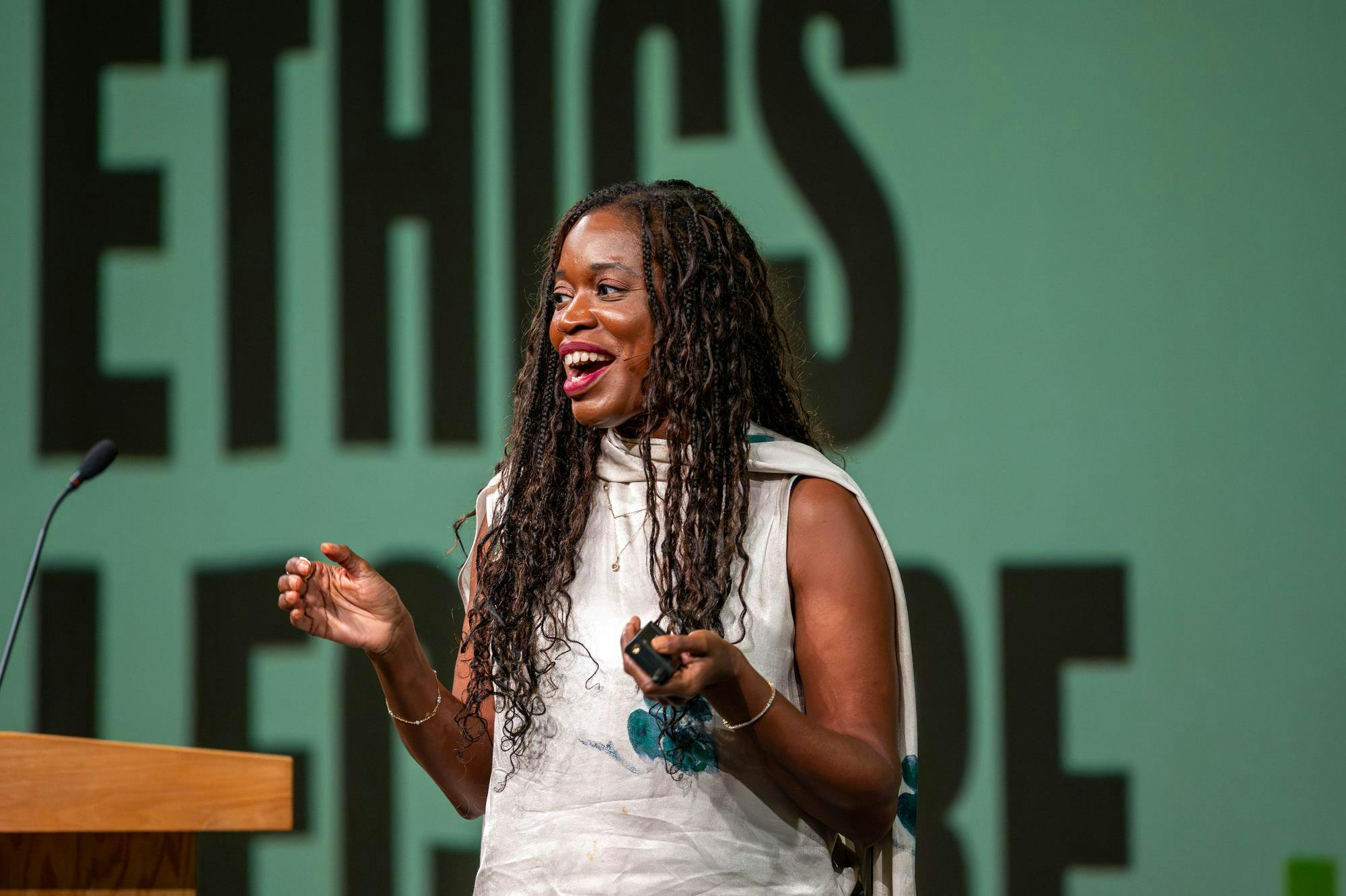
Robinson expounded on evolving the food industry at the day-long Nutrition, Opportunity and Media Food Forum, an initiative dedicated to bring together students, faculty, chefs and media professionals on the relationship between food and the media industry. Robinson spoke as part of the MSU School of Journalism Neal Shine Ethics Lecture, held in memoriam of the late Detroit Free Press publisher.
“It informs art, music, sports, the economy," Robinson said. "It drives culture, plays with our behavior and it fuels our relationships, and it has happened from the beginning of time."
The modern American celebrity chef began in the 1990s. More Americans entered the industry, rejecting food publications' push for traditional French cooking and the emphasis on "making everything beautiful," Robinson said.
Then came easy meals and 30-minute recipes. Shows like "Top Chef" came soon after, where food became a sport and audiences got behind-the-scenes access to the chaos of cooking in a kitchen.
Now, malls are chains of restaurants and eating habits have changed as a result of GLP-1 lifestyle changes and COVID-19 advancing food delivery. 58% of Americans said dining out served as a social plan in January 2026, according to OpenTable.
But the growth of the American food industry has its drawbacks.
"Sometimes we devalue the cost of food, especially when it is from different cultural backgrounds,” Robinson said. “Worth is also a word that triggers me a little bit."
The editor-in-chief pointed to Korean restaurant Atomix in New York being labeled as "cheap eats" despite how expensive it is. Instead of thinking about cost, people should think about their experience with food, she said.
"It’s not neutral; it isn’t immune to politics or policy, and we saw it with ICE raids at restaurants," Robinson said. "It’s important to say that even though food brings us together, during conflict, it’s the first thing that pulls us apart. It’s the first thing that is cut off in a conflict."
In politics, she said journalists don’t need to know what U.S. Senate candidates Abdul El-Sayed or Mike Rogers eat, but what kind of tax breaks they’ll offer to companies that supply organic, nutritious food to public school children.
"We need clear plans that address the fact that one in five children in the U.S. is food insecure, and some of the most food insecure people are students," she said.
As a Black woman, Robinson said she often brings an unseen perspective to the food industry. She recalled a restaurant many people in the industry liked giving her "plantation vibes," confusing her non-Black industry friends.
Her position dispels the myth that critics have to be anonymous. Even if Robinson straightened her hair, it wouldn’t make a difference because she’d still be a Black woman ordering at a restaurant.
"I don’t hide when I go to see the opening of a Broadway musical, so why should I put on a wig and like change how I dress?" she said.
For food publications, brand partnerships have been integral for survival, Robinson said, as they must understand the entertainment industry, sports and evolving technology — such as artificial intelligence.
Bon Appétit partnered with OpenAI last year, although Robinson reassured the audience the AI isn’t allowed to read recipes, but offers tips like affirming to readers they can make cakes in glass bowls.
The magazine has an editorial side and a disclosed branded-content side, which helps Bon Appétit keep afloat without laying off employees, Robinson said.
While AI won't take over food, Robinson worries people won't be taught recipes.
Support student media!
Please consider donating to The State News and help fund the future of journalism.
"It’s an opportunity to close the gap between people, so get your friends together and make something," Robinson said. "Make a cake with your friends. Cook that pasta for your lover. Learn to make your parents’ anniversary dinner dish. Make a reservation for that new restaurant. Build your travel itinerary around what you eat. Savor every bite and, please, for God’s sake, take a picture of your food."
Discussion
Share and discuss “Bon Appétit editor-in-chief explores food’s role in culture, media at MSU” on social media.