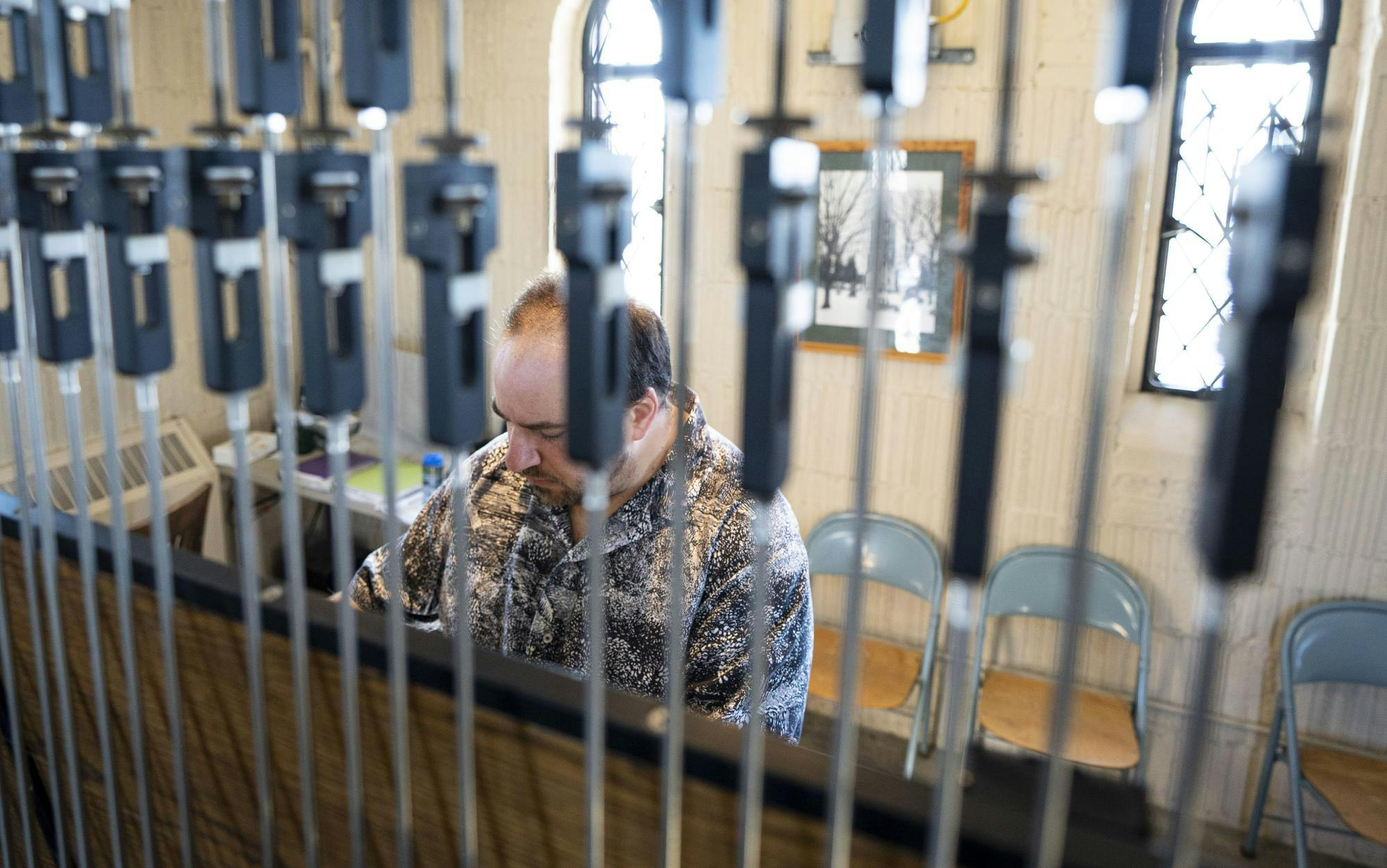
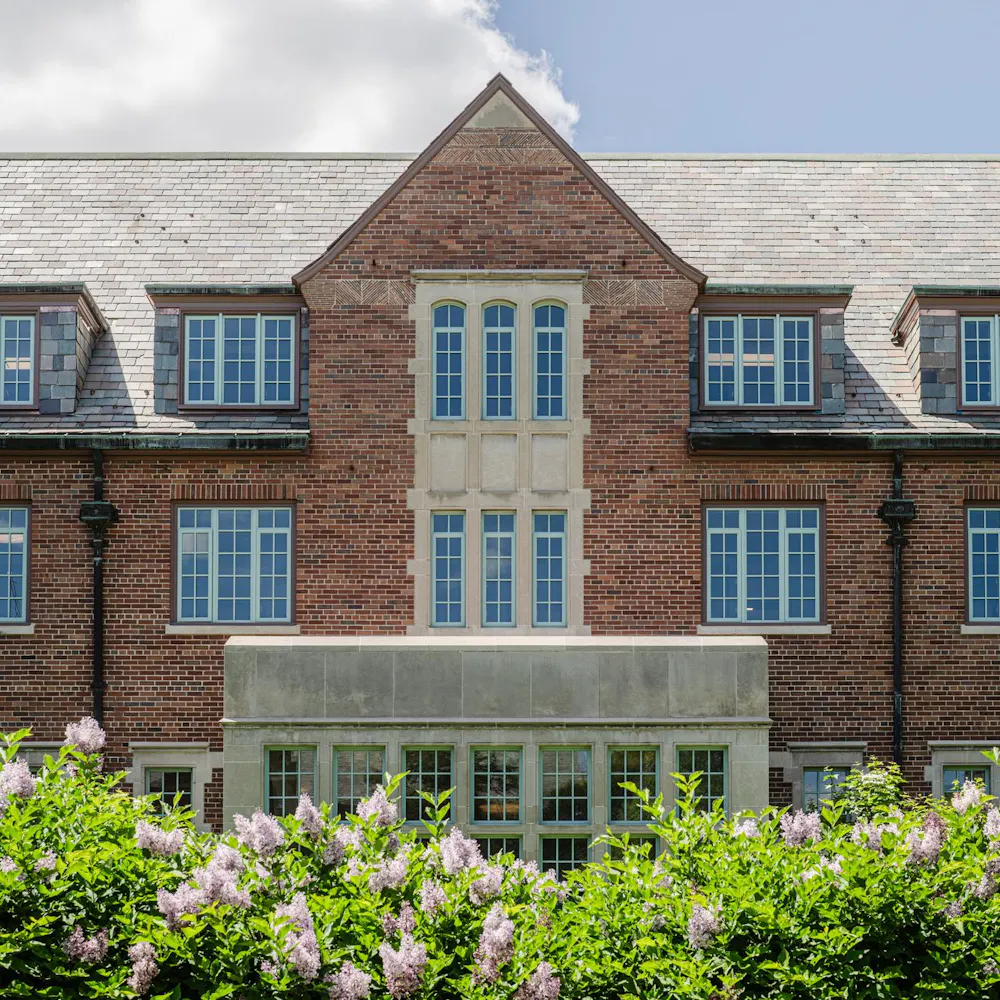
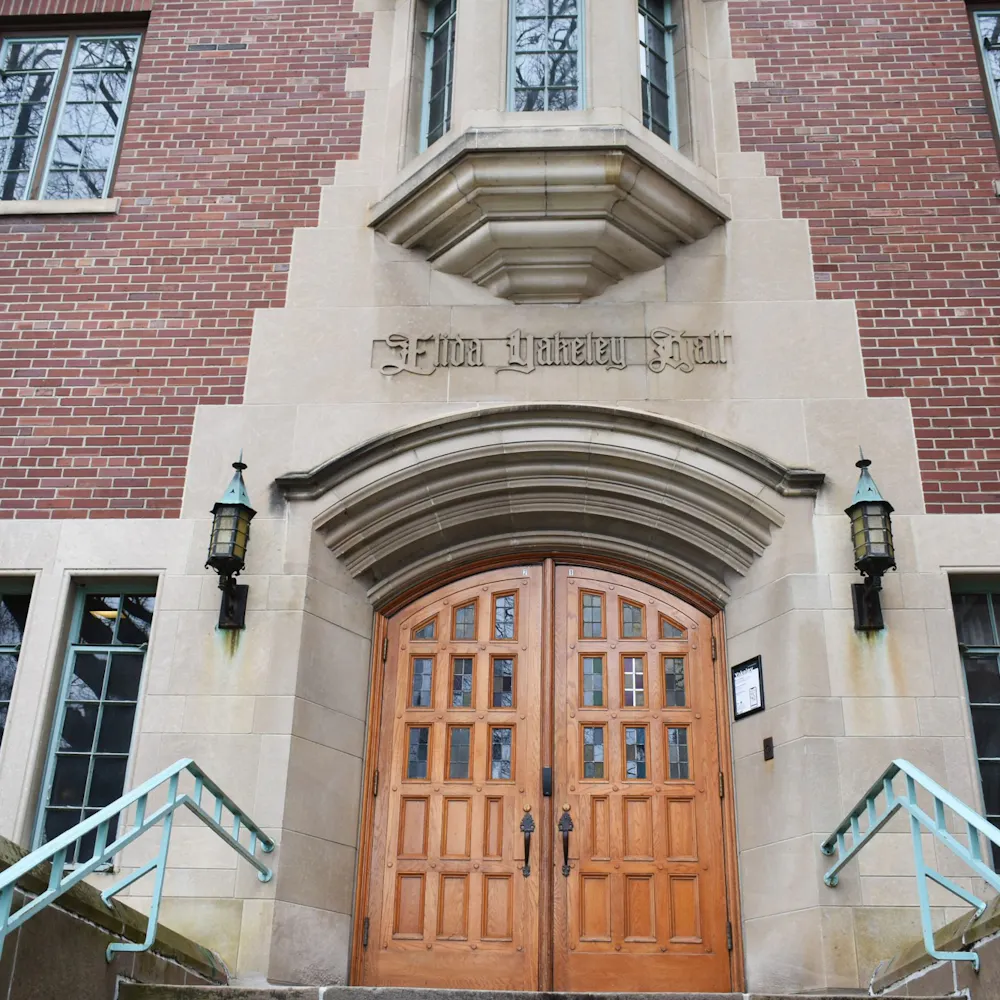
Jon Lehrer, Michigan State University’s carillonneur, plays in Beaumont Tower on Wednesday, Feb. 1, 2023.
Beginning his carillon studies at Yale in 2000 and graduating in 2005 with a degree in mathematics, Jon Lehrer had a 20-year dual career: one in music and the other in cancer research, environmental economics, software and data science.
But for four years now, he has been Michigan State University's carillonist, ringing bells for the campus community.
Functional tool becomes artistic one
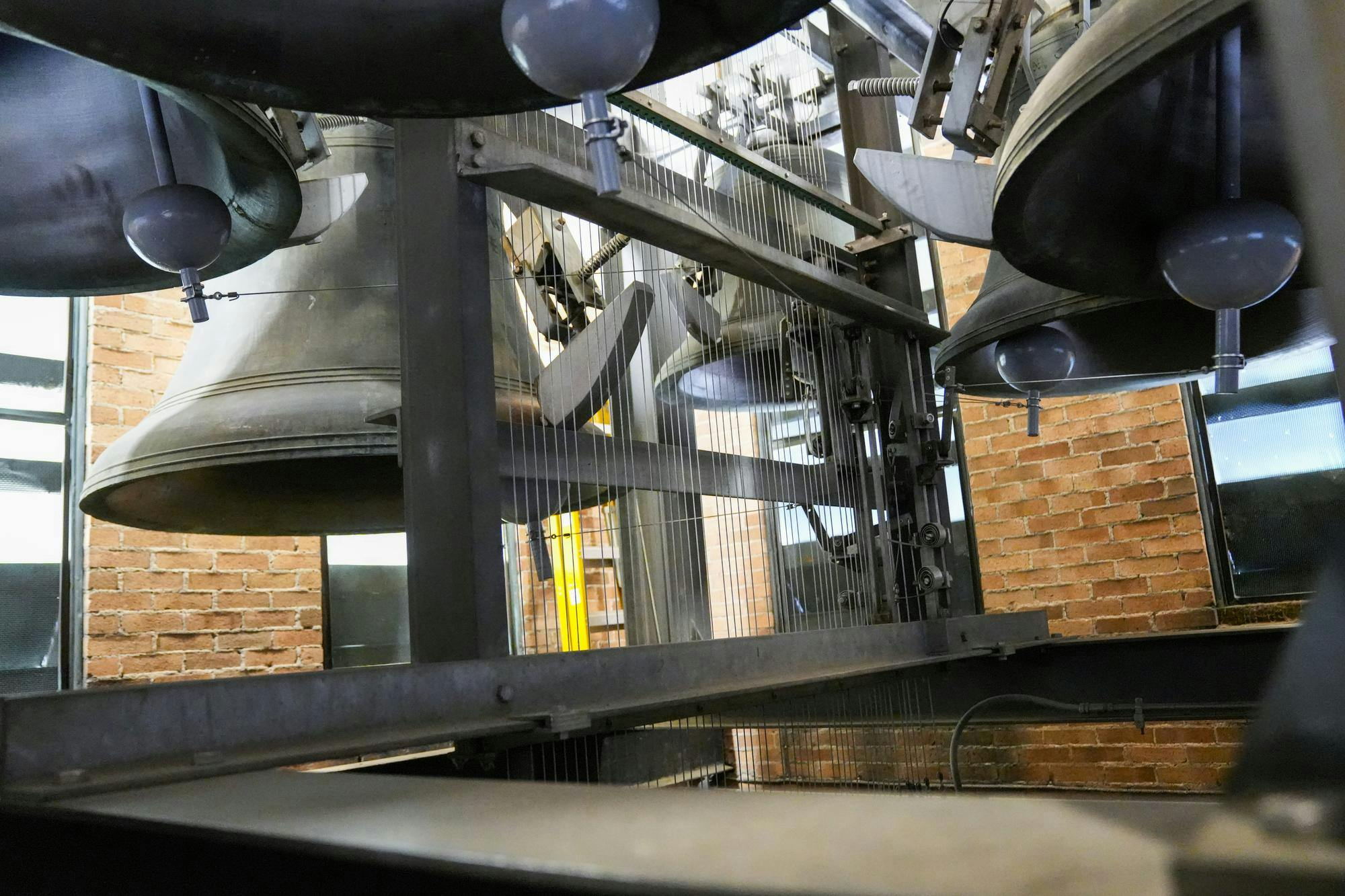
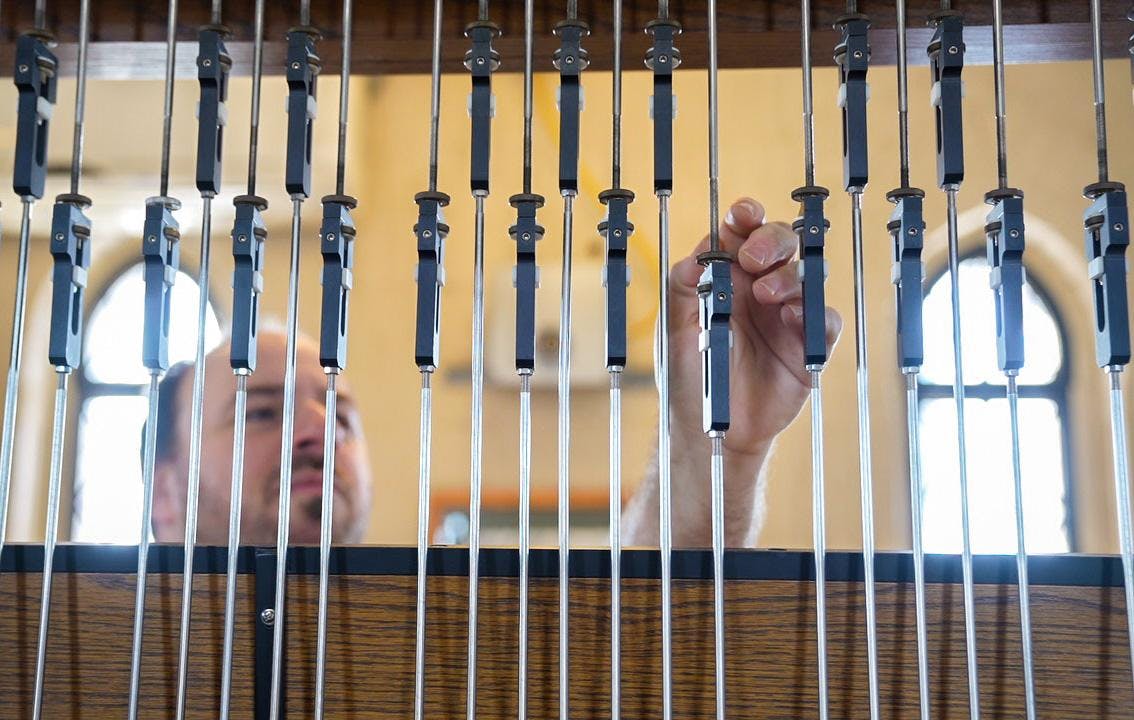
The carillon is older than the piano and younger than the harpsichord — a keyboard instrument played with both hands and both feet — it functions as a hybrid of piano and organ, according to Lehrer.
Before there were cellphones and radio, Medieval countries in Europe had communication systems to tell time, let people know when to start and stop working, when the army was coming and when city gates were closing. They communicated all of that through bells in giant towers.
During the 1500s, after bells that originally served a single purpose had accumulated, people realized they could use them for music, according to Lehrer. What was once a functional tool became an artistic one, and it spread like wildfire over Europe.
“Every tiny little town had their own carillon because it’s what created this sort of civic ambiance and beauty in their town,” Lehrer said, adding that cities competed over who had the best schools and the best bells.
“Despite the fact of its European origins, there are many distinctive parts of North American carillon culture,” Scott Hummel, president of The Guild of Carillonneurs in North America (GCNA), said. “In Europe, many carillons are in public spaces. There are many towns that have a city carillonneur that plays for the town. They’re in public buildings. Whereas in the U.S. and Canada, public (state-owned) carillons are not as common.”
Hummel said people can find them in gardens, churches and other places, but publicly owned instruments are not as common in North America as they are in Europe.
“In North America, the carillon is not necessarily entrenched in the city life like it is in Europe, but North American culture has built up a really strong community at universities,” he said.
According to MSU's College of Music website, MSU's carillon has 49 bells.
Lehrer’s journey to MSU
Lehrer likes high places. He likes being behind the scenes in "secret-access type stuff." And he likes to travel and carillon.
“It was a really long, twisted journey,” Lehrer said.
He studied at a carillon school in Belgium. He won the SABAM (Société d’Auteurs Belge) prize in the Queen Fabiola International Competition, where carillonists compete across Baroque, romantic and contemporary musical styles. He has also performed in the U.S. Renaissance Faire circuit, where people gather to recreate 16th-century Europe through costumes, music, food and theatrics.
Then, in 2022, a carillonist position opened at MSU; Lehrer took a look and started part-time.
“What keeps me in it is the fact that it’s music in public spaces, and it’s music that’s part of a community identity,” he said.
There aren’t any workshops teaching people how to play the carillon in elementary school, Lehrer said. Instead, people typically discover the carillon in one of three ways: they live near one, their campus has one or they go to a church with a carillon.
Support student media!
Please consider donating to The State News and help fund the future of journalism.
Lehrer discovered carillonning as a job by joining the community and being exposed to people attending master classes or conferences.
“We do teach lessons, so we have current MSU students who are learning to play the carillon and who regularly go climb up Beaumont Tower to perform, and that’s sort of how I started off in college,” he said.
“You start to get a sense of the landscape of what a career path in carillon looks like. It’s a very small field, but it’s been a really cool field to be part of.”
Lehrer cited many mentors, including Ellen Dickinson, an advisor at Yale; “half a dozen” teachers in Belgium who contributed a “fair bit” to how he understands the arts and practices it; and Julianne Vanden Wyngaard at Grand Valley State University (GVSU), who was the previous MSU carillonist and encouraged him to apply.
"Live music in the heart of campus"
Students on campus live at a frenetic pace, but the instrument can add value to the community by getting people outside in nature, engaging in the arts, slowing down and breathing a little deeper, according to Lehrer.
What makes carillonning convenient is that people don’t have to carve out extra time to go to a concert or think of themselves as concertgoers to enjoy the music; it's right there when students walk into class.
“It really is putting live music in the heart of campus, and when it comes down to it, you know students are there to learn, but it is really a mark of humanity,” Hummel said.
A carillonist could be playing a piece reminiscent of a passerby’s childhood, or someone having a bad day who hears their favorite song, and hopefully it touches them, Hummel said. They can also play music ranging from pop and Harry Potter to classical composers like J.S. Bach, as well as carillon music by composers people might not recognize.
Lehrer said, “To be able to combine that in a university campus environment, where everybody is probably a little too close to the edge of burnout, just to have some beauty that drops into the day as you’re going from place to place without you having to make a task out of bringing it in, I think that’s sort of valuable."
Nowadays, people are bombarded with stimuli, like phones that play pre-recorded music and can stream anything. What Hummel finds wonderful about the carillon, especially on a university campus, is that it is live music.
“You’re hearing someone play music from a tower as you’re walking, and when you’re passing, you’re hearing a real true human performance, and not only is it human, but it is live. There aren’t speakers; they are playing it, they are physically exerting up there to create that music for you and for everyone,” he said. “The interesting thing about the profession is that you know, often you won’t know who’s listening to you play, and you don’t always know who will be touched by your music.”
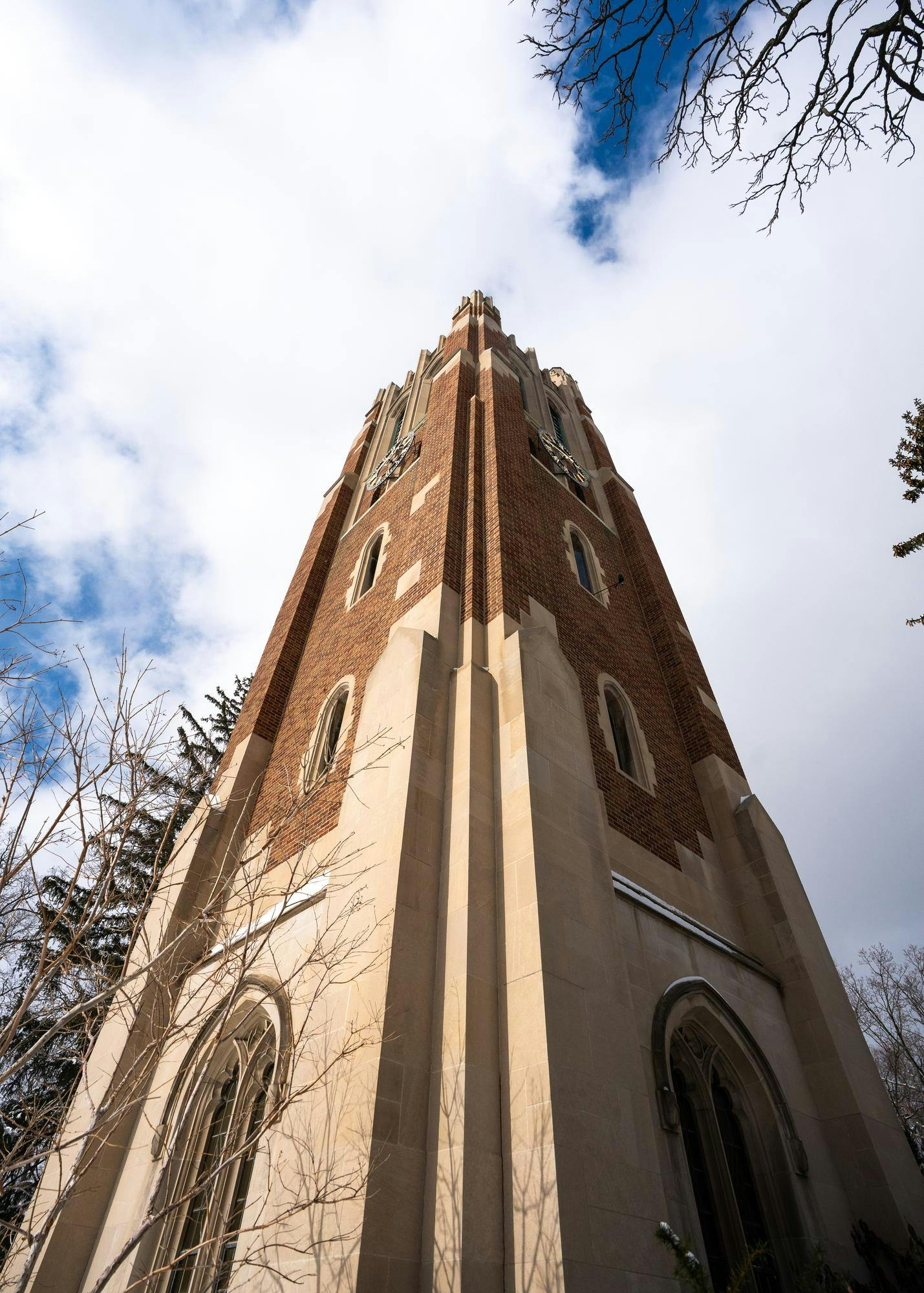
Part of what Lehrer strives for is to integrate with the community's identity and the Beaumont Tower’s symbolism as a musical instrument, representing what MSU is as a community. Lehrer likes being able to give the tower a musical voice and use it to build campus unity and pride in being a Spartan.
Preserving history
One enduring thought Lehrer has is ensuring the instrument continues to be heard and preserved. Between 1986 and 1996, Beaumont Tower fell silent as it fell apart and needed repair. There was also a brief interruption during COVID-19, according to Lehrer.
“It’s had several periods in its history where it fell silent, and once it goes silent, it’s really easy to forget about it,” they said. “How do we set up the infrastructure and the financing around it so that the bells will last 500 years, but the program will also last 500 years?”
Education is a huge component in solving the issue, according to Lehrer. Their goal is to inform people that there’s a human in the tower making music, not a computer or a recording, through education and outreach.
Hummel said it’s a very exciting thing when somebody discovers the instrument for the first time, and colleges are a great place to do that.
Lehrer said he has seen increased interest in the instrument as a result of attention raised to the tower and better recruiting outreach during audition calls; however, it’s not done as often as he’d like. Last time, they had 20 people inquiring about lessons, but with students already in the studio, they only had a couple of spaces.
“I know the demand is there, and I know it’s a hard time in higher education for funding anything, but long-term goals, yeah, I’d love to be able to accommodate more of the people who want to be engaging with this instrument and coming part of the soundtrack of campus,” Lehrer said. “It can be such a cool part of one’s college experience to be involved in that way. I know it was for me.”
Carillon concerts
During the semester, concerts at the Beaumont Tower begin at 12 p.m. every Wednesday, last 30 minutes and are free to the public. Lehrer and associates scour for music year-round that fits the season.
“What movies have come out? What are the classic horror themes that people remember?” Lehrer said. “What’s the best of all of this? What makes the best bouquet together?”
The team makes a long list, goes through it all and decides what’s best.
“So, it’s different every year. I try to draw from everything from ancient Gregorian chants to modern pop rock and some soundtrack,” Lehrer added.
There will be multimodal music and projections for Halloween on October 29th. More details on tour opportunities and special concerts are available on @msubeaumont on Instagram.
Discussion
Share and discuss “Current MSU carillonist took 'long, twisted journey' to finding his music” on social media.