Photo illustration by Tate Rudisill. State News file photos.
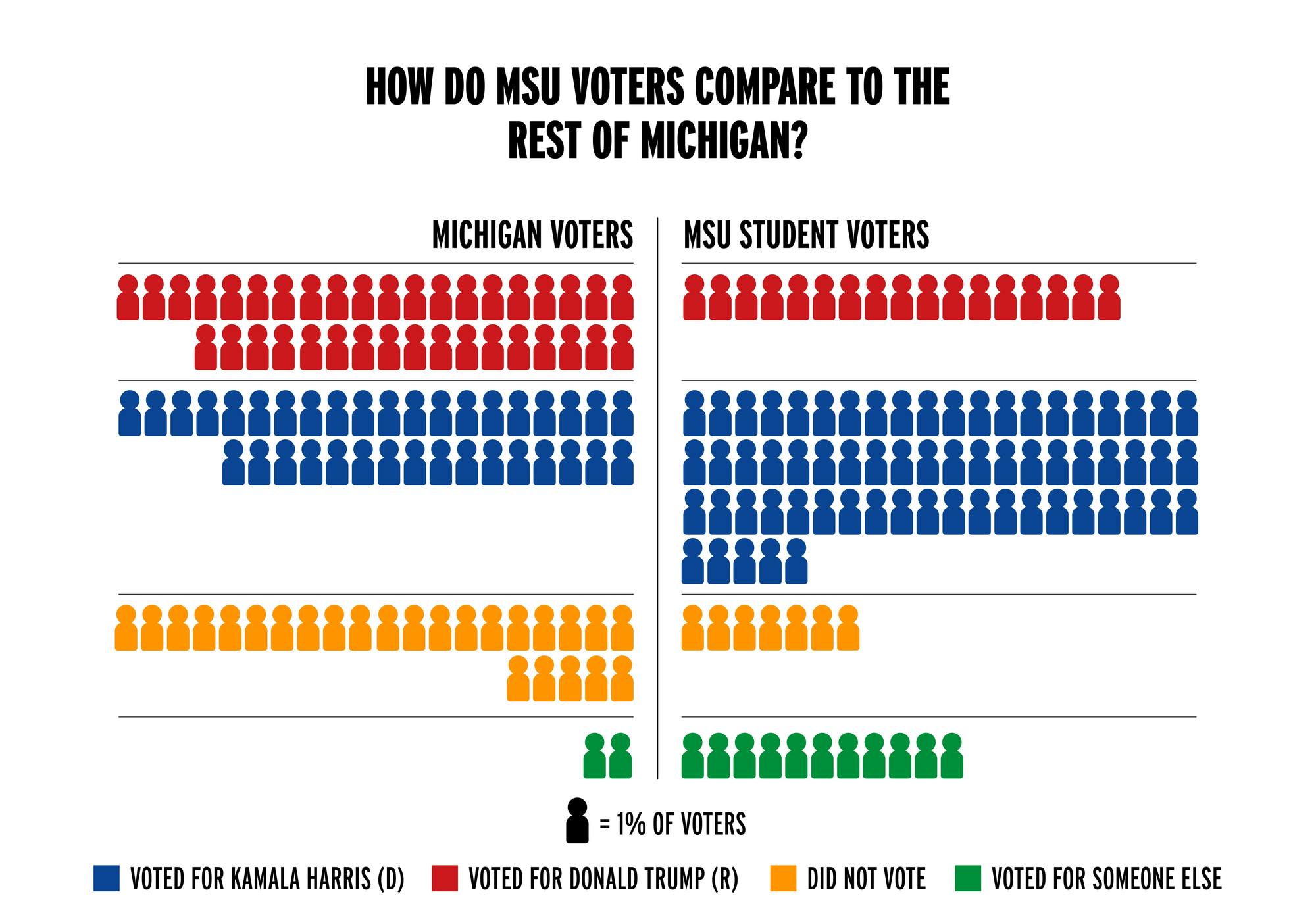
A State News survey of Michigan State University students found that some on the largely liberal campus are regretting their votes in the 2024 election.
The sample of 800 current students aligns closely overall with what is understood nationally about the politics of students at leading public research universities. They lean largely liberal, and there is diversity among those who don’t.
Self-described independents outnumbered Republicans, and the share of students who said they vote third-party is much higher than that of the general population. That makes MSU less progressive than the most selective private institutions and far less conservative than religious colleges.
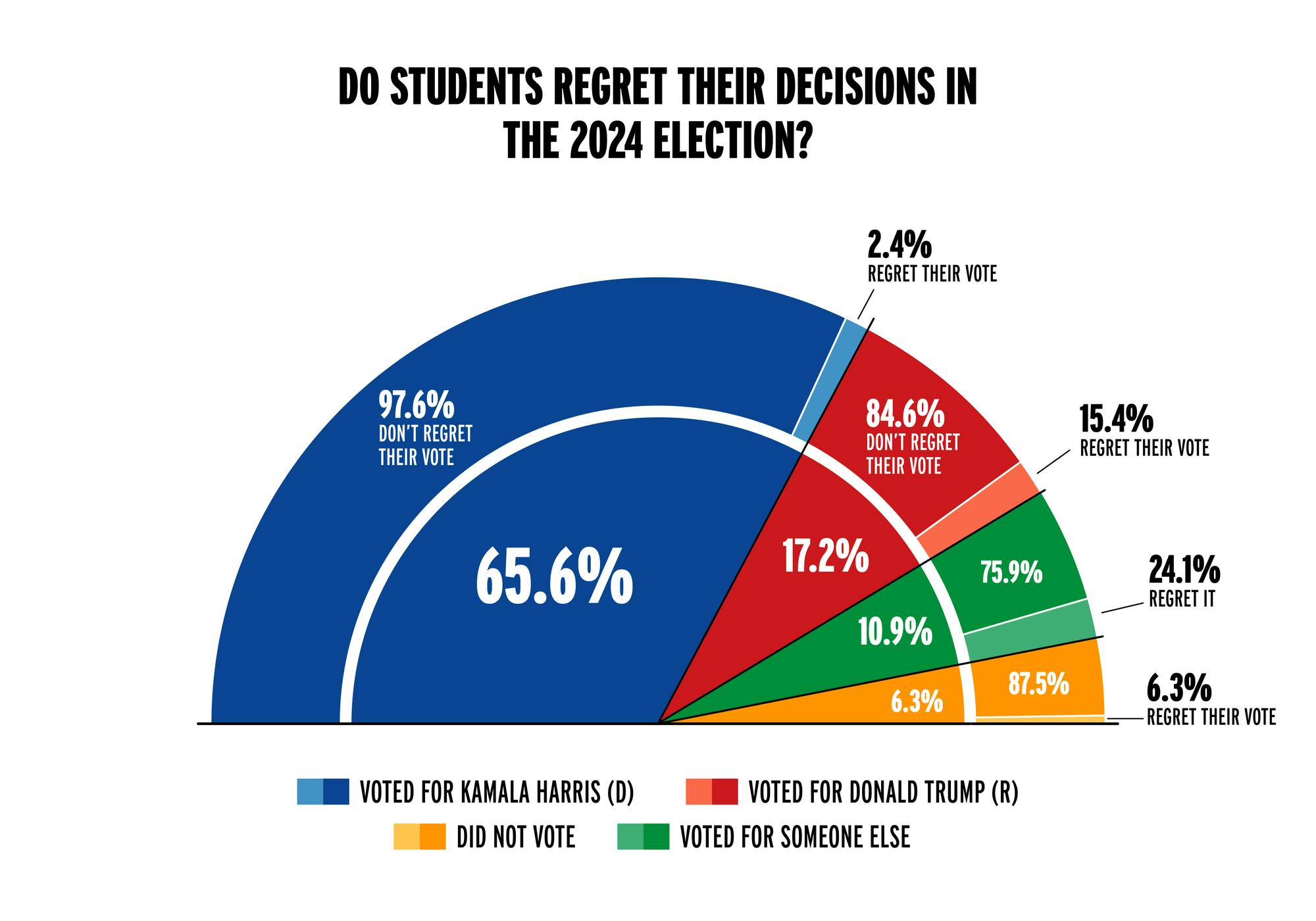
The survey asked students to reflect on their votes in the last presidential election. Just 2% of those who voted for Kamala Harris said they regretted that choice, compared to 12% of those who didn’t vote, 24% of those who voted third party, and 15% of those who voted for President Donald Trump, who ultimately won in Michigan by a thin margin.
Those sentiments seem “perfectly understandable,” said Bernie Porn, president of EPIC MRA, a Lansing-based survey research firm. He said polling in Michigan and nationally has found that voters are rethinking their choices in 2024.
Of the quarter of MSU third-party voters who expressed regret, Porn said “these folks who voted for other candidates might be thinking, ‘well had I not voted for this candidate with no chance of winning, I might have been able to prevent Donald Trump from becoming president.’”
Of the regretful Trump voters, Porn said he believes that number could be even greater today. “The world has changed dramatically” in the months since The State News conducted the survey, he said, pointing to polls that show many Americans are upset about recent immigration enforcement crackdowns, as well as rising costs associated with Trump’s tariffs and the war in Iran.
Polarization of students varied. Asked how well they are represented by each party, Democrats rejected the Republican party far more strongly than Republicans rejected Democrats. Both groups overwhelmingly said they feel represented by their own party.
Apple brownie thank grand starter unhand bebe bronze tyra.