The rule change eliminates redshirts in college sports. Athletes will no longer be granted waivers for injury or other circumstances. The new rule will affect all athletes who enroll in the 2027-28 academic year and after.
Exceptions will be made for religious missions, maternity leave and military service, and reviewed by the NCAA on a case-by-case basis. While there have not been noteworthy instances of Michigan State athletes fitting into this category, it’s possible in the future, and for other NCAA opponents.
What Changes
The new rule heavily changes recruiting, roster building and player development.
High school athletes who were held back can potentially lose the eligibility advantage they were hoping to gain. A 19-year-old athlete automatically has less time to offer a program, which might be the difference between a roster spot or not.
The transfer portal will shrink as fewer players have extra eligibility, and a smaller pool will make players more expensive. Players who need more time to physically develop will no longer be redshirts; they’ll just be sitting out, or they won’t make a team at all.
Five-year eligibility and the elimination of redshirts will affect every sport to some degree, most notably football, basketball and ice hockey.
Football
College football organizations widely supported the five-year rule to provide roster transparency, as football rosters are the largest of any sport, along with the most redshirts in the NCAA.
The elimination of redshirts creates one of the largest shifts that college football has seen — with the exception of recent conference realignment and NIL’s introduction — as football players have been redshirting since the early 1960s.
A redshirt season is normal for football players, particularly quarterbacks and linemen.
With the exception of true-freshman standouts, quarterbacks often spend their first year learning the game from veterans, as Alessio Milivojevic, an upcoming redshirt sophomore quarterback, did. Similarly, young linemen typically spend a year developing in the weight room prior to a full football season.
Five-year eligibility allows athletes to sit out their rookie year and still play four complete seasons. However, whether players and coaches will opt for that is unclear.
Without redshirts, coaches may seek out athletes who are ready for the field. Additionally, players may choose to play five years at less-competitive schools rather than burn a year of eligibility, especially when NIL money comes into play.
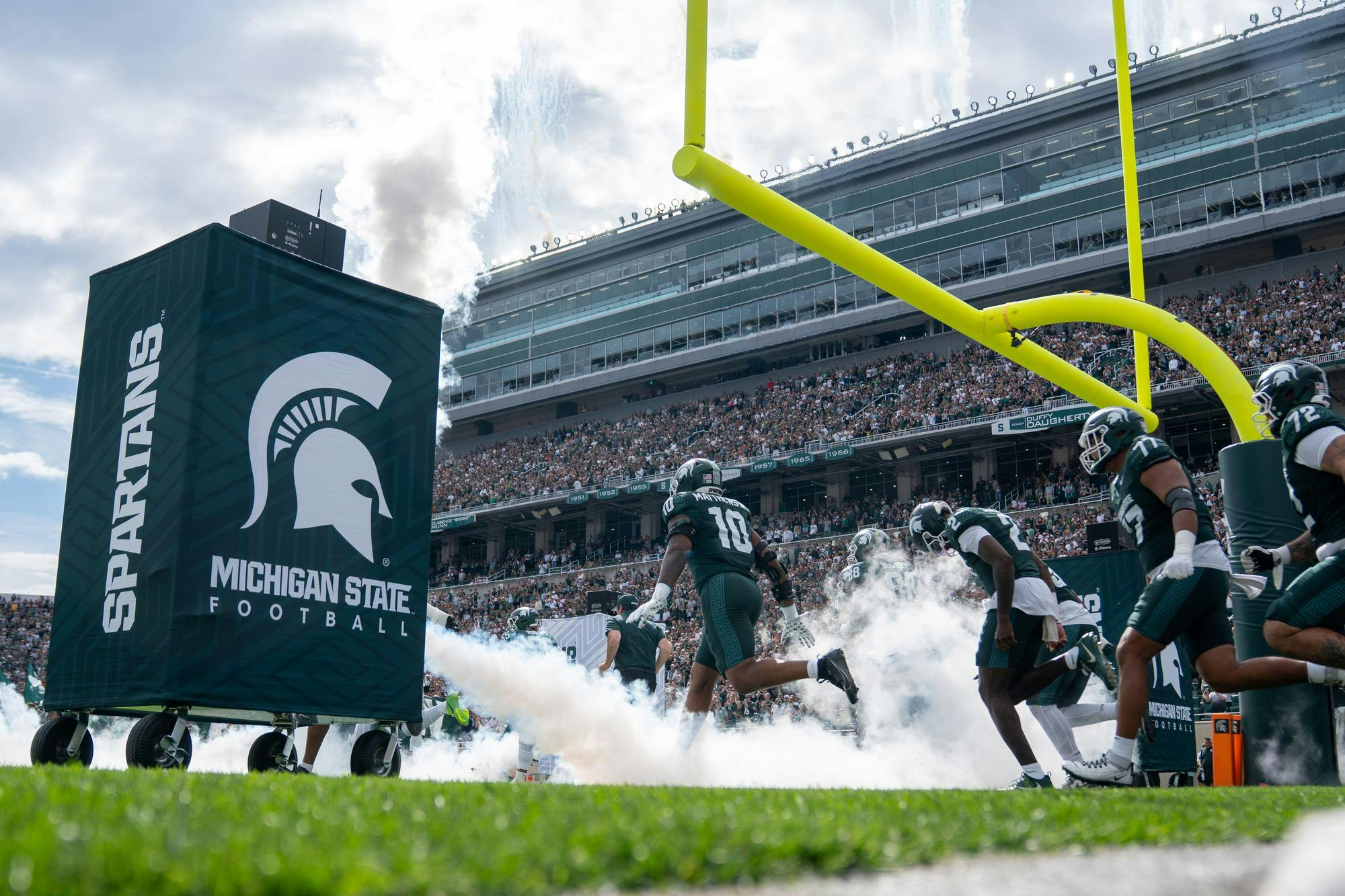
The new rule and its implications on recruiting are one of many changes MSU football will be navigating in the upcoming season under new head coach Pat Fitzgerald and other staff.
Basketball
The college basketball community generally supported the NCAA rule, as it also desired roster stability amid NIL and the transfer portal. Men’s basketball and soccer experience the greatest roster turnover of any sport.
The new POE is meant to close an international loophole that could have introduced older players into the competitive field, such as the case of Yam Madar.
Support student media!
Please consider donating to The State News and help fund the future of journalism.
The 25-year-old point guard was reportedly offered several million dollars to join Louisiana State’s men’s basketball program. He was considered eligible as he was drafted by the Boston Celtics in 2020, but never signed a contract as he competed overseas.
The new rule also eliminates opportunities for older basketball players to enter the league, even if they have not been playing. 28-year-old Brett White II took a four-year break from basketball to support his family. He worked in oil refineries before spending two seasons at Kellogg Community College and eventually Oakland University last season.
Five-year eligibility is unlikely to drastically affect the MSU men’s basketball roster given head coach Tom Izzo’s emphasis on player development. Izzo has openly shared his distaste for the transfer portal and his prioritization of who is already in East Lansing.
Additionally, Izzo rarely had players redshirt as freshmen to physically develop. Instead, they were often due to injury. He said he wished he had redshirted Carson Cooper to maximize his development and give him five years, but the new POE is five years anyway, rather than the four Cooper had.
Regarding women’s basketball, the effects of five-year eligibility are harder to outline for the team specifically. There have only been instances of five-year players due to injury as of late, so nothing is changing there.
However, Robyn Fralick just finished her third season as head coach, and the roster has turned significantly over with five departed seniors and four players lost to the portal. POE will become more relevant as she builds her program for future seasons.
Hockey
The new rule was both a win and a loss for college hockey, the community that expressed the most dissent. The NCAA’s original proposal was for POE to begin at 18-years old. That plan received significant pushback, given that the sport’s development is less linear than other NCAA sports.
Most hockey players don’t jump to the NCAA immediately after high school. Several athletes compete in the USHL or CHL before NCAA, entering college between 19 and 21.
Sophomore forward Anthony Romani was 20 when he joined the program last season, and former mainstay Daniel Russell entered the NCAA when he was 21.
Under the old proposed rules, a player like Russell would only have two years of eligibility. Under the recently introduced rules, he would have had three.
Russell led all active players in career game-winning goals and ranked sixth in points when he played his last game. That never would have happened if age-based eligibility had been in play four years ago. Russell played every game that brought MSU three-straight regular-season titles and two consecutive Big Ten Tournament championships.
Since a POE begins at the time of enrollment or the “start of an academic year” following an athlete’s 19th birthday, athletes born on Sept. 2 can delay their college enrollment and develop in hockey leagues outside of the NCAA.
This birthday advantage is mainly applicable to hockey. Football and basketball players lack leagues to develop prior to the NCAA, leading to redshirts.
Other Sports
Football, basketball and hockey receive the most media coverage and attendance at MSU, but every sport will be affected by the new POE, especially sports that recruit internationally.
Men’s tennis’ Aristotelis Thanos was a 23-year-old freshman after competing in Greece professionally. He just finished his fourth season, helping MSU win the Big Ten regular-season and tournament titles.
Situations like Thanos’ will no longer be possible with five-year, age-based eligibility.
Discussion
Share and discuss “New NCAA age-based eligibility clock to shift sports at MSU” on social media.