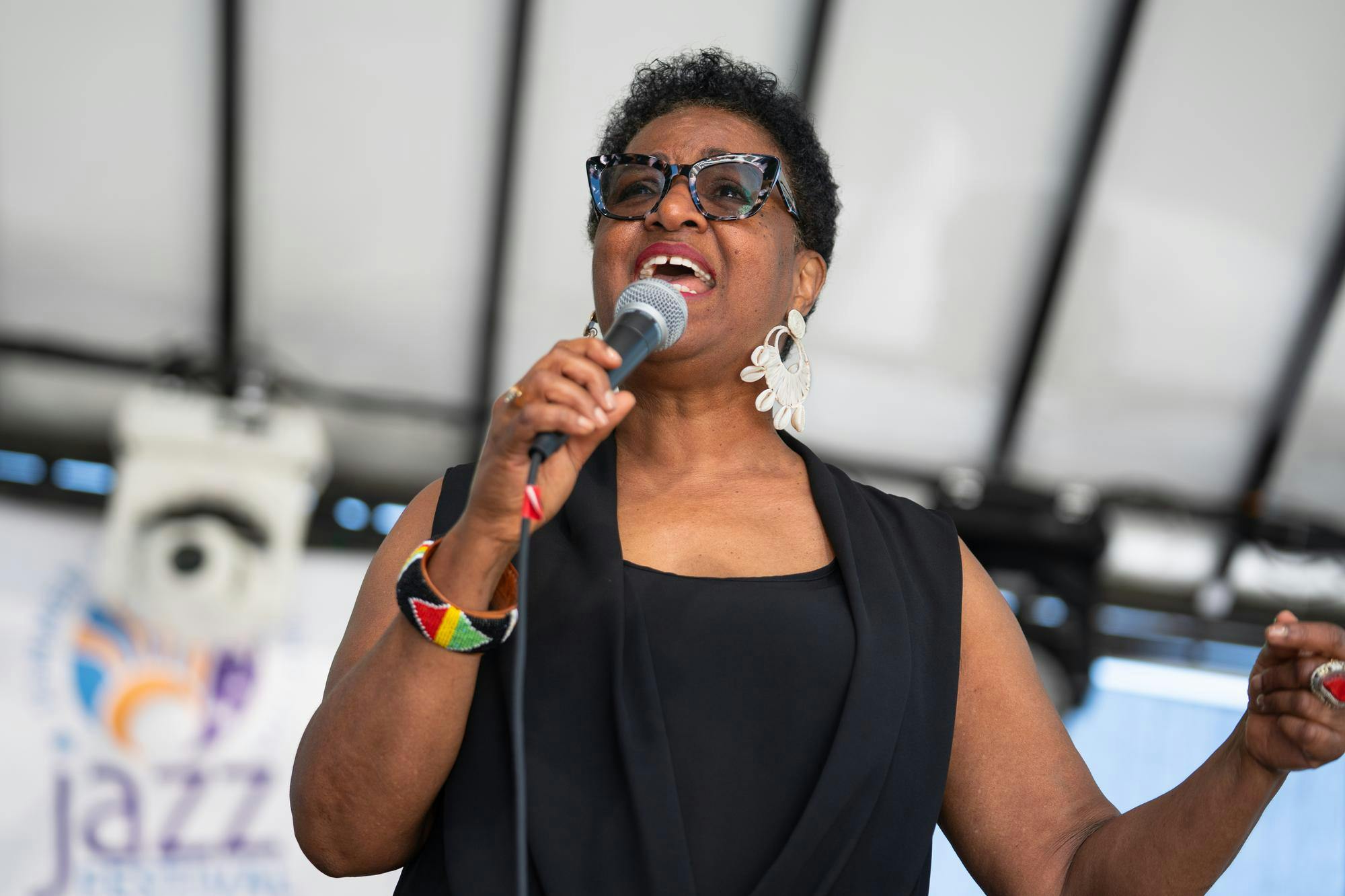
Vocalist Vanessa Rubin performs at the East Lansing Jazz Festival on June 27, 2026, in East Lansing, Mich.
East Lansing celebrated its 30th annual Summer Solstice Jazz Festival on Albert Avenue, squeezed between Harper’s and Dave’s Hot Chicken at the Al and Beth Cafagna Founders’ Stage. Activities ranged from chalk to golf, beanbag toss games and Jenga.
There were tents displaying memorabilia, providing festival information and an MSU Broad Art Museum pop-up with jazz instruments. Across the road was the MSU Outreach and Engagement Education Stage.
Vanessa Rubin Quartet was the opening act, where Lead Singer Rubin asked the audience, “Are you ready for me?”
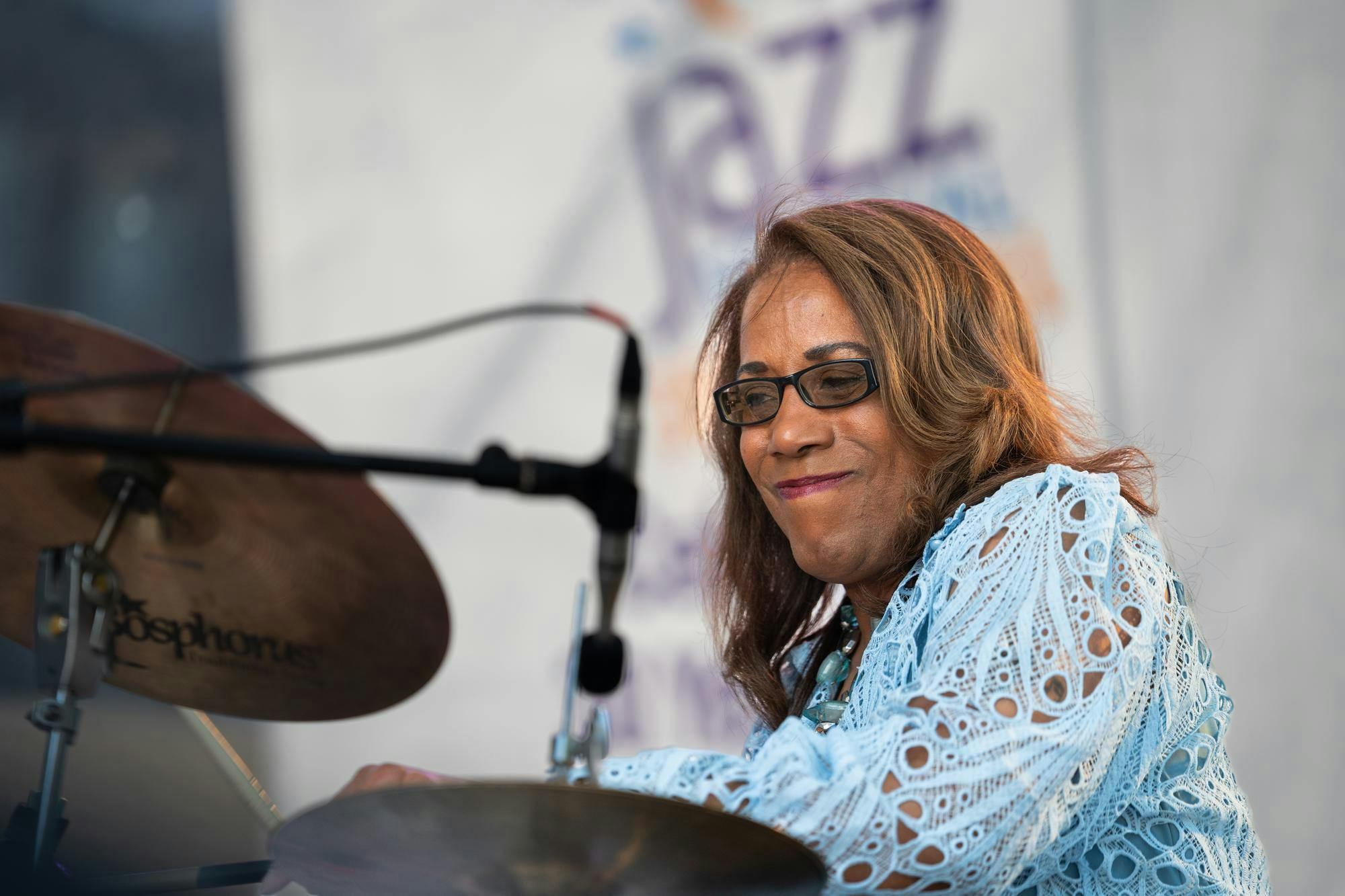
People raised their hands and shouted. A front-row audience member handed Rubin a rose, they blew a kiss to each other and she placed it on the organ. Gayelynn McKinney, the drummer of the Vanessa Rubin Quartet, ripped into a noteworthy solo that captivated the audience.
In 1996, the East Lansing City Council asked the Arts Commission to produce a film festival and a jazz festival to enhance East Lansing's cultural life. Albert Cafagna, then a professor of philosophy at MSU, was asked to start the festival. He came from Detroit and went to school with people who later became famous jazz musicians. Beth Cafagna, co-founder of the festival, worked on it with her husband.
The festival started out small. It took place inside the Erickson Kiva, where — inspired by European summer solstices — they played music from dusk till dawn. The festival eventually moved to downtown East Lansing and played regular outdoor music.
The Cafagnas began with local jazz bands and musicians from Detroit, such as Marcus Belgrave. Originally, the festival lineup featured three or four bands on a single night. The festival eventually expanded to two days — Friday and Saturday — as its own festival.
“From there we were able to raise money and hire bands that were nationally known,” but “we have many great jazz bands throughout Michigan that we have hired over the years,” Beth Cafagna said.
She added that the festival is free for all ages and brings people from across mid-Michigan together.
Susie Mackintosh, an attendee, has been attending jazz events for decades.
“It doesn’t get any better than this … I was a student here in 1980. So, you know, I’ve seen many live events here. They’re all fabulous. There’s never a disappointment,” Mackintosh said.
Mackintosh said she looked forward to Rodney Whitaker’s performance, as she’s “sure many people are,” but that she’s “here for all of it.”
Tim Blackmon, one of the trumpet players for The Gathering Orchestra, a two-year jazz fellowship based in Detroit, said that all festivals, especially those promoting jazz music and culture, are important for local communities and the fabric of this country.
Another trumpet player for The Gathering Orchestra, Jonathon Neal, moved to Michigan a year ago and is getting his doctorate in jazz at the University of Michigan.
“I love this music. This music is a core part of like who I am,” Neal said. “Black American music … is part of the fabric of this country.”
Michael Eyia, director of Orquesta Ritmo and one of the festival's performers, has been performing at the jazz festival for 25 years. He credited Rodney Whitaker and Randy Napoleon for bringing a “tremendous amount of great talent into the area just because of their names.”
Award-winning artists who have performed at the festival include Esperanza Spalding, Cyrille Aimée, Tamir Hendelman and Endea Owens.
Eyia said the festival is important because it helps promote East Lansing and Michigan State University — its biggest contributor — and expands “the vision of jazz, not only in the United States, but in other parts of the world.”
Support student media!
Please consider donating to The State News and help fund the future of journalism.
“I came from Cuba in the early 60s, and my parents got here a couple years after I did," Eyia said.
Eyia left Cuba just before turning 15 through Operation Peter Pan to avoid Fidel Castro’s compulsory military training. Over 14,000 Cuban children were brought to the U.S. Eyia said he stayed in a camp in Florida for a few months.
“From there, they’d relocate you all over the country. I ended up in Lansing, Michigan,” he said.
When Eyia grew up, he formed a small, Cuban American group. The group grew; he choreographed Cuban dances and made outfits for the dancers and the band. Eyia said the band took off from there and began receiving recognition from local bands.
Discussion
Share and discuss “East Lansing celebrates 30th annual Summer Solstice Jazz Festival” on social media.