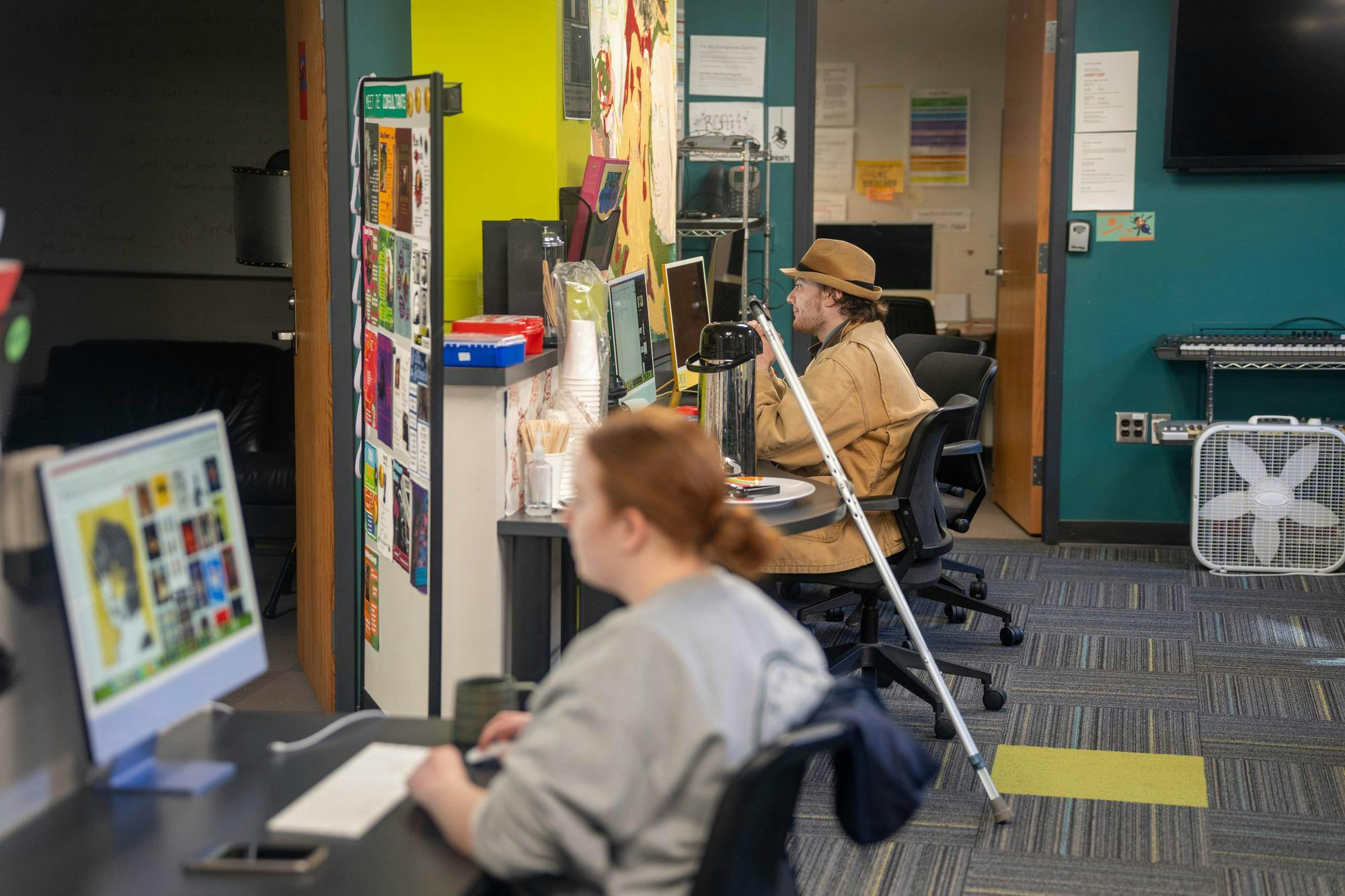
RCAH students use computers at Snyder Hall in East Lansing, Mich., on April 8, 2026.
In the Residential College of Arts and Humanities at Michigan State University, freshmen are promised attractive benefits.
Roommates share majors, classes are just a floor away from living spaces, and, in the basement's creative spaces, students can test out what they learn in lectures.
For students in RCAH, this kind of close-knit learning experience is central to the college’s identity. Since 2007, RCAH has operated as the smallest residential college on campus.
Now, students worry many of those features could change after RCAH merges with the College of Arts and Letters come July 1, 2026.
As plans for the merger become more transparent, underclassmen in the college say they feel they have been sold short of what brought them to the residential school.
MSU’s Board of Trustees voted in June 2025 to fold RCAH into the College of Arts and Letters amid harsh student opposition, citing declining enrollment and subsequent financial constraints.
Tightening budgets are all but unfamiliar to MSU. Currently in the second year of cuts, MSU inflicted a 9% budget cut on itself for the 2025-26 and 2026-27 school year. The College of Arts and Letters itself is facing a $7 million budget deficit.
For RCAH Director Scott Yoder, one silver lining of the merger is that it could improve the education of current RCAH students by allowing for better in-class conversations.
But, as the last graduating class from the RCAH prepares to walk the graduation stage this weekend, the same benefits they enjoyed may look different for future classes.
For RCAH freshman Audrey Harasti, this change combats the exact reason she chose to attend RCAH. Providing a small school feel within a larger campus is a large reason why many students choose to attend residential colleges.
“That’s why I chose to come here. Their whole motto is that you get small class sizes,” Harasti said, later adding that “Maybe I would have considered my choice a little differently had I known college was going to be a bigger thing.”
Yoder, for his part, characterized the class size increase as “not significant,” adding that the current classes that have four to six students are “not a viable option”.
Other students expressed disappointment with the way that the process was conducted.
“This is a really bad precedent to set,” said arts and humanities junior Mikayla Jackson. “You can’t just merge colleges because of budget issues without consulting faculty and students before it was already something set.”
“It’s gone from panic to a sense of disappointment,” Jackson added. “The principle of how everything unfolded is the biggest thing.”
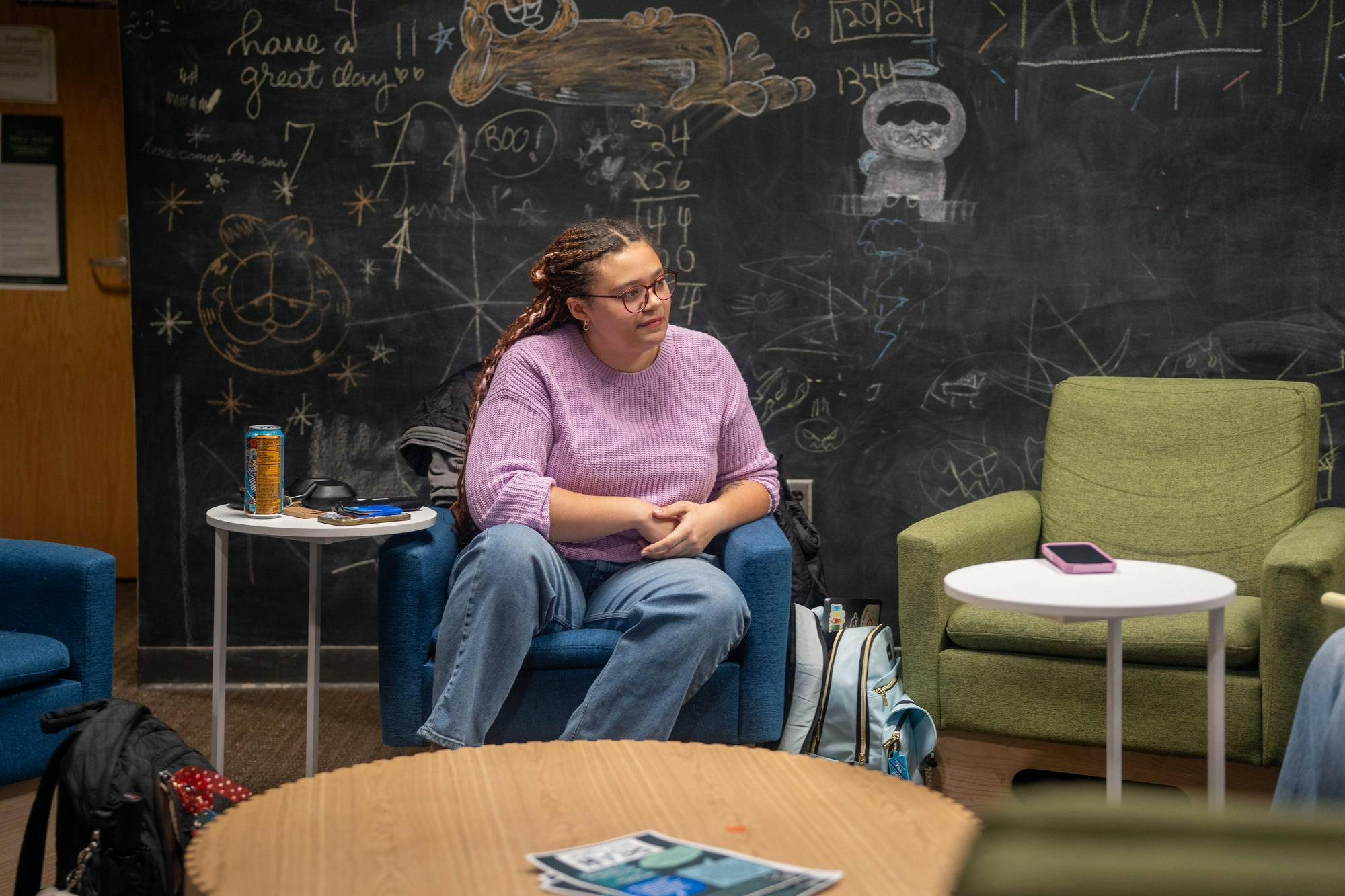
Those consternations came to a head at a recent town hall event held within the college, inside one of its central theatre spaces. The over-hour-long gathering included CAL Dean Thomas Stubblefield, Interim Dean of RCAH Glenn Chambers and Senior Advisor to the Provost Amy Hertel, addressing 40 students and their questions.
Stubblefield told the group, “There’ll be subtle differences, some of those we’ll discover along the way.”
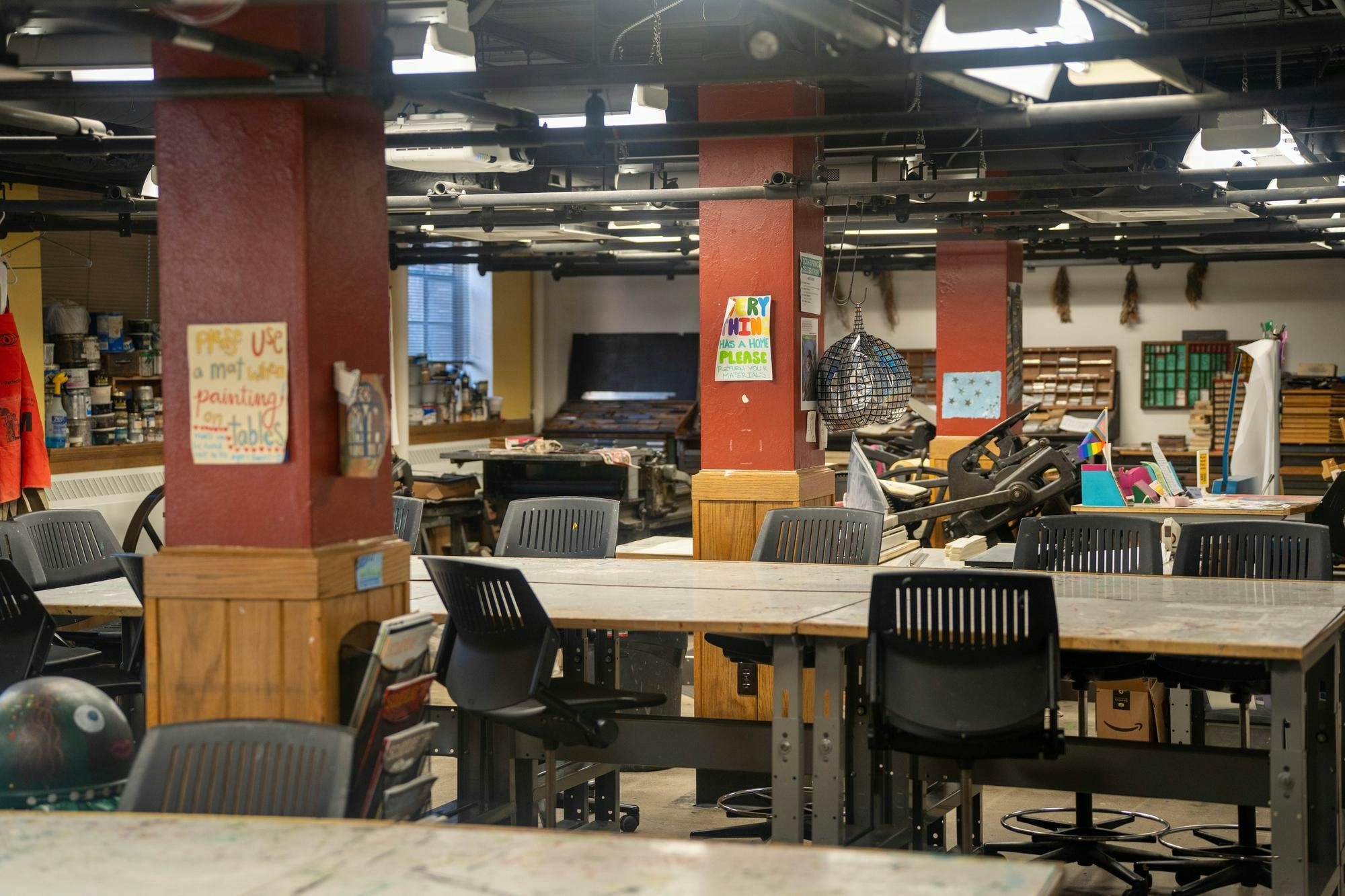
One change will come in the form of altering who regularly uses the creative spaces central to RCAH's curriculum. The Snyder-Phillips basement contains spaces ranging from art studios, music studios and a theater, among others. Although these spaces are open to all MSU students, they are almost exclusively used by RCAH students. But after the merger, RCAH students anticipate that CAL students will also use these spaces.
“I think it’s easy for people, especially even myself, to hold on to something that you think is yours, but I think it’s really important to remember as a human to be open to sharing and welcoming and the community,” said graduating RCAH and James Madison College senior Cami Hufnagel.
Support student media!
Please consider donating to The State News and help fund the future of journalism.
“We have to stop thinking of RCAH as a major only, and think about our community. This is widening our community. It's really gonna depend on returning students to make these other students [CAL students] feel welcome,” Yoder said to the group.
But some students expressed holdups about the viability of opening up these spaces. One RCAH student at the meeting said that the color pencils in the art studios are already broken and questioned where the funding will come from to provide more creative resources if more students are using them.
Stubblefield said that “we will need additional funding,” but that he had already pledged $10,000 to RCAH to “support” programming in the school.
For some students, the town hall did little to quell their concerns.
“They kept repeating the fact that they really wanted to be open and communicate with students,” Elena Roque, an RCAH and JMC freshman, said. Roque later added, “I feel like they’ve been listening to us, but they haven’t really been hearing us.”
For Yoder, who has been with RCAH since its inception, he believes the period of not knowing the school’s exact outcome will likely be more taxing than the outcome itself.
“You talk about the change, you plan for the change, and then you live the change,” Yoder said.
Discussion
Share and discuss “As RCAH's last class prepares to walk, younger students face uncertain future” on social media.