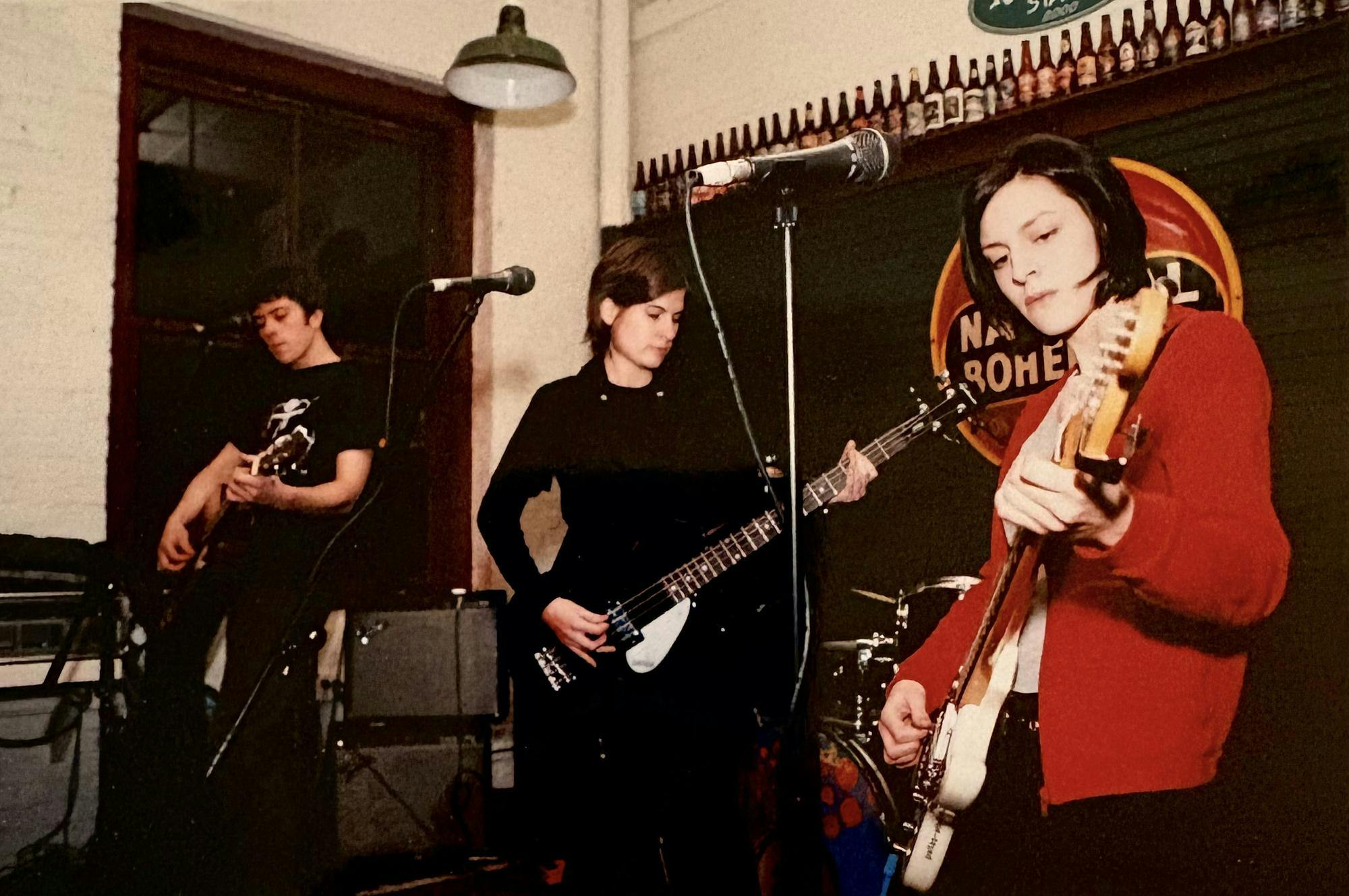
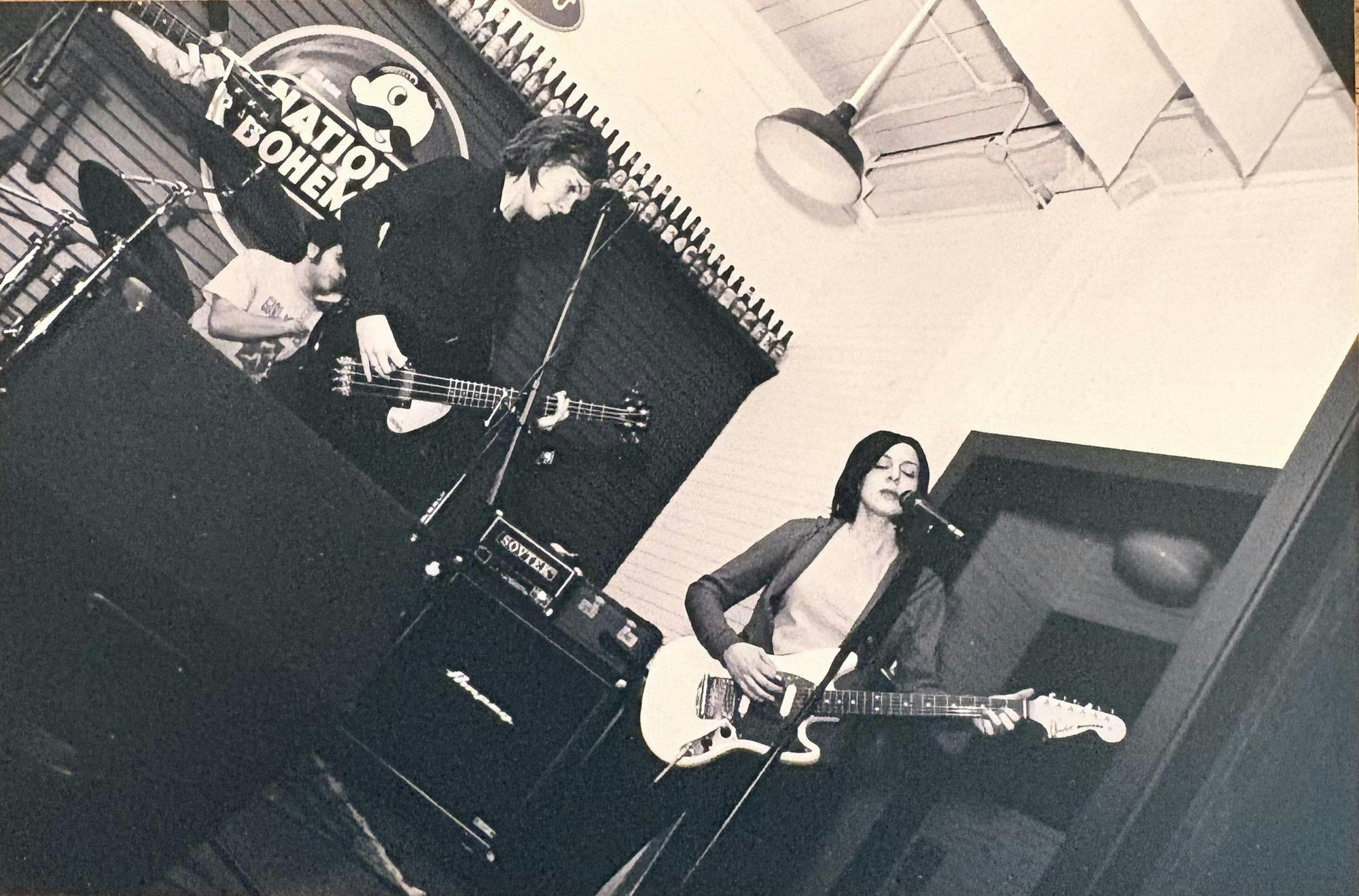
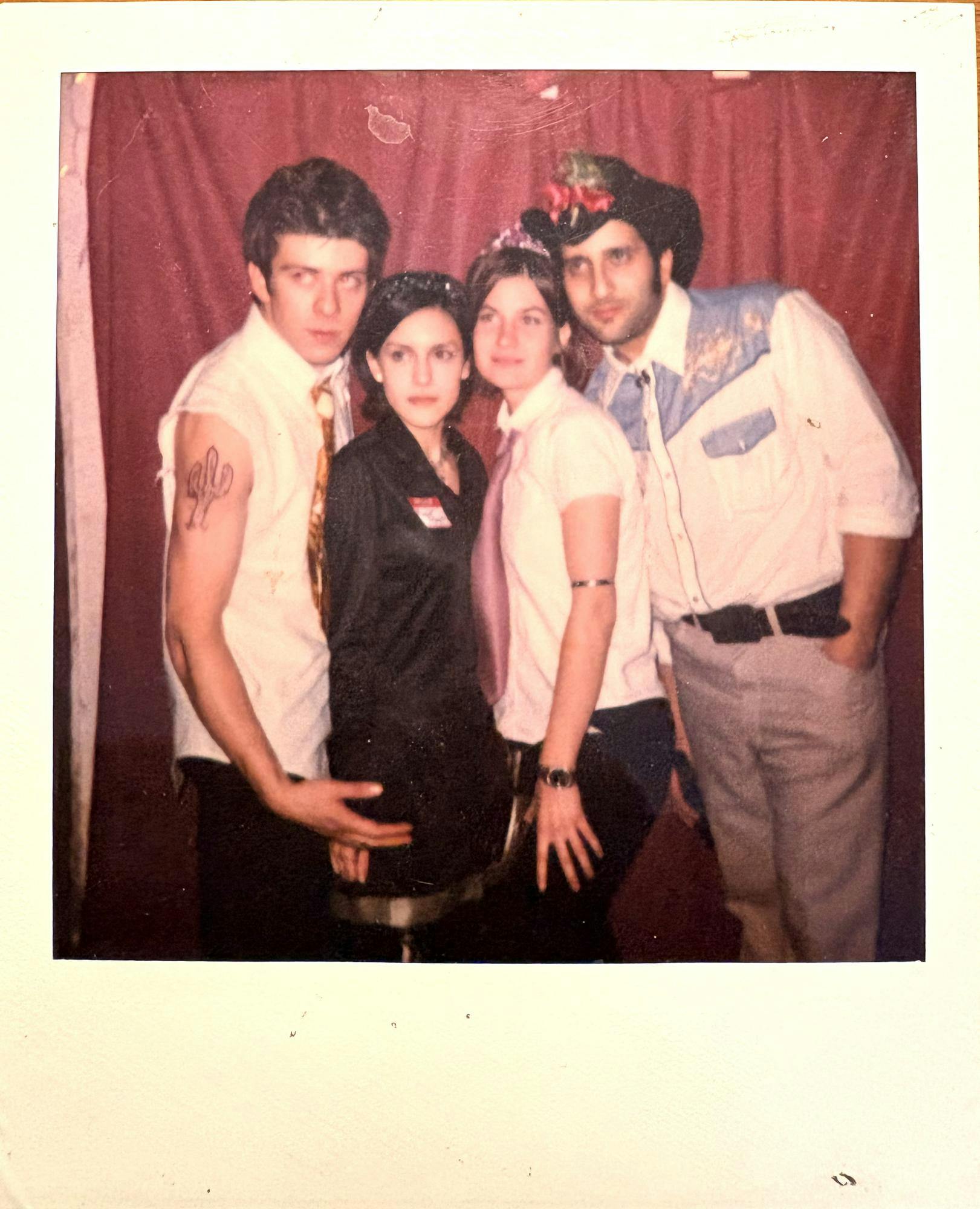
Andrea Burdick was wiped after a day of classes at Michigan State University in 2000 — so wiped, in fact, that she fell asleep before her annual band practice with Audra Marks, Joe Hoffman and Greg Evangelista for their band, A Thousand Times Yes.
When the three stepped on the porch of Burdick’s crooked house on Foster Street in Lansing, they performed a synchronized "dance ritual" to summon her back from class.
"I don't think you guys even knew that I was home," Burdick said to the three of them over a Zoom call. "I was upstairs sleeping in this rickety old house."
"They were all doing it together so that it was loud enough that it woke me up," adding that only the three of them would do something that spunky.
"Had I been in any other band that I had been in, something silly like that wouldn't have happened."
Through the lenses of their screens, they laugh easily. Marks gets teary-eyed. But they smile, and the four of them drift back to a time before responsibility was center stage — when the idea of a five-day workweek felt distant, almost absurd.
Back then, the band was just beginning to take shape, born out of a tight-knit creative circle where connection came naturally. They found each other through mutual friends, a coffee shop job and a magnetic love for making music — not for success, but for the undeniable need to create.
The band's name came from IAH 201 at MSU, a class Hoffman took in which they read Fredrick Douglass’s autobiography, "My Bondage and My Freedom."
"He just has a speech in there where he says 'a thousand times yes' in the speech, and I just liked that very adamant, affirmative expression," Hoffman said. "Also at the time, cool bands had weird, long names like that, and I needed a long name for the band."
"Saying yes is like an amazing thing. It is a cure for depression," he adds. "If you just start saying yes more in your life, you will eventually get your way out of it."
Evangelista highlights the name as kind of a summoning of "I'm alive" and "soaking up the here and now," something the group, with their playful nature, honed during their time at MSU.
Burdick said, "I think back on it, and honestly, I think that my priority at the time was hanging out and playing music with friends, and school was just something that I had to do while I was there."
Though being in school, the members felt like a little family, with college emotions coursing through their veins.
"I felt alive. I felt excited for possibilities, and I felt satisfied because I was able to express myself through music, through words, through sound," Marks said. "I could find new ways of expressing myself too, like with playing with Andrea, Joe and Greg."
Evangelista adds that being in the band was "kind of electric."
For Burdick, playing in a co-ed band when most of the scene had bands that were "95% male" made her feel "so good."
Marks agreed, since it had been a dream of hers to play long-term in a band with another woman — especially when she was in high school. She had never played in a group long-term until A Thousand Times Yes.
"So it was just such a great opportunity and the relationships that we created. Yes, it did feel safe and playful, and part of that safety is that we could be spontaneous and express ourselves in the moment. I think we all got to know each other more — and ourselves — more through the process."
Even though they were serious about what they were writing, the presence of instruments like a flute, which Marks played, and an acoustic guitar, which Hoffman played, made them seem unusual — innocent and different — so people didn’t really know what to make of the four-piece band.
Support student media!
Please consider donating to The State News and help fund the future of journalism.
After graduating in 2001, Burdick moved to New York to pursue a career in packaging since there weren’t many jobs in Detroit. Marks, Hoffman and Evangelista stayed in Detroit and continued A Thousand Years Later as a three-piece band.
"It was so, so hard to leave, so hard to move. I was like a nobody there," Burdick said. "I didn't have any close friends there. It was like a severing in my life. I just ached."
During their time in the Detroit music scene, Marks, Hoffman and Evangelista had a built-in community of oddball indie bands. There, they started to "attack" in their music making.
Evangelista said people already had an idea of who the band was because of their MSU days, but they stood out for their interesting music and band makeup.
"It was a ripe landscape at the time," he said, adding that they played a lot and practiced a lot even though the three were working nine-to-five jobs.
There were many opportunities for the band to play in Detroit, with smaller venues and bars offering opportunities for artists to perform.
"I think we played probably at least 10 different clubs and bars in the Detroit area," Hoffman said. "I mean, they had big festivals, like the Hamtramck Blowout, where even bars that typcially don't have bands will, for that weekend, move some pool tables to the side and make space for some bands."
Throughout this time, Hoffman and Evangelista felt A Thousand Times Yes had lost some of its playfulness. But Marks thinks it stayed.
"Our music sounded more concise in the way that we delivered it and the way we wrote it. Yet, I felt that it was still playful," she said. "Because something that I had been working on in my life was to express myself."
She adds that she has always been in touch with her feelings and how to express herself. Being playful is a part of that, adding spontaneity to her life and music making.
Hoffman and Evangelista thought it was both playful and serious, thinking about whether the band could work and make it big, like Detroit-based Rock duo The White Stripes.
"We were working really hard at it, you know? We were just kind of waiting for a break to take us out of the struggle of having to work." Evangelista said. "It takes a while for some people, when you get out of college, to like really get to your groove."
In 2007, Marks applied for graduate school, and the band fizzled out. However, they made a point to bring Burdick back for their final show before coming back to play a reunion concert.
Evangelista even made an Instagram account to preserve the memories of A Thousand Times Yes, posting photos from their times together and writing captions to give newer listeners context.
The band is also featured in the film "Is That All There Is?" by filmmaker Kelli Miller, which discusses Detroit-based indie bands in the early 2000s.
"It's something that I hadn't thought about in such a long time because it had dissolved, you know?" Marks said.
With Hoffman adding, "It’s such a different life, it's a dream, and there's hardly documentation of that it happened."
The film will be showcased at the Capital City Film Festival on April 18 at 12 p.m.
Discussion
Share and discuss “The art of saying yes (a thousand times)” on social media.