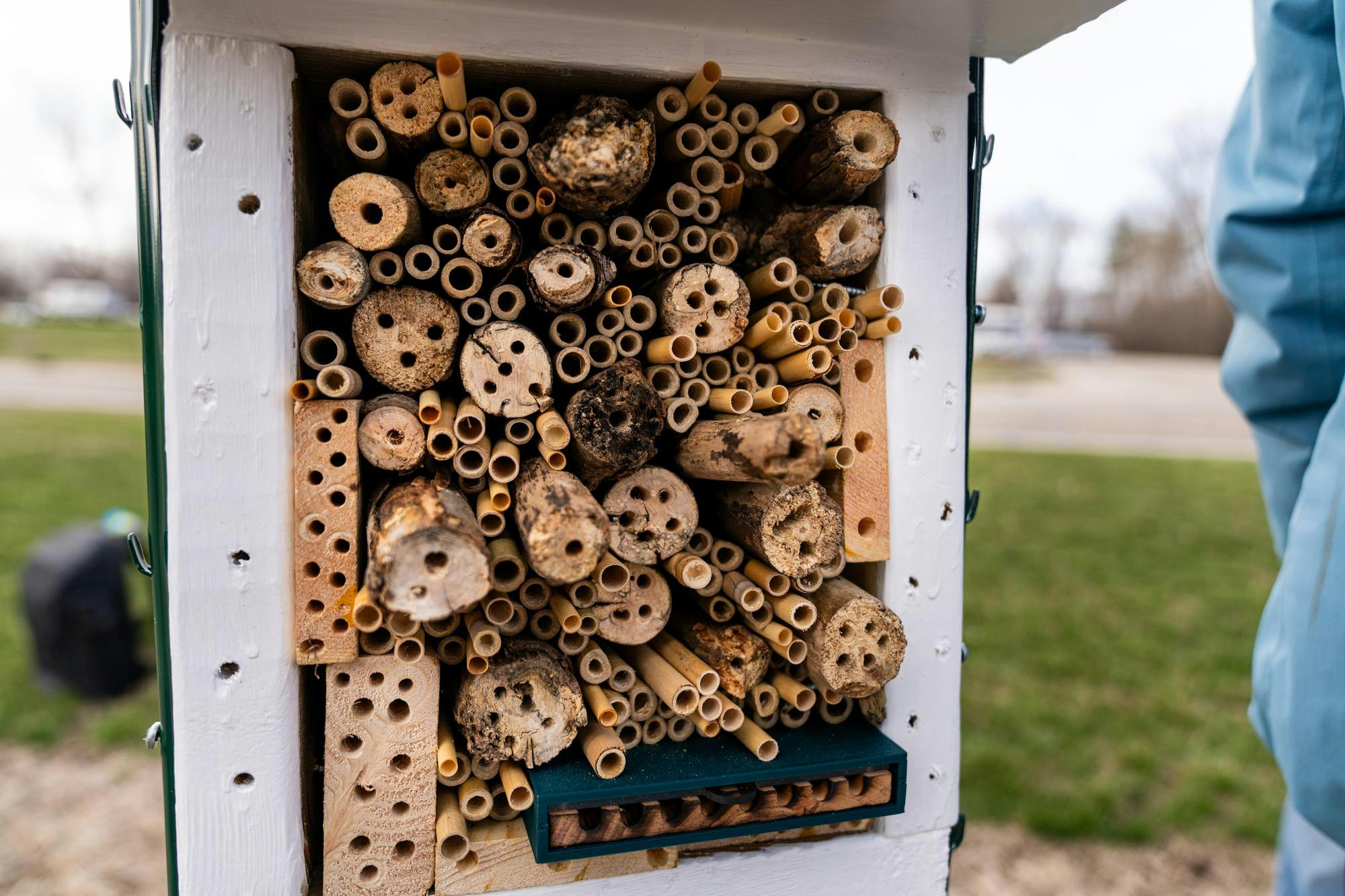
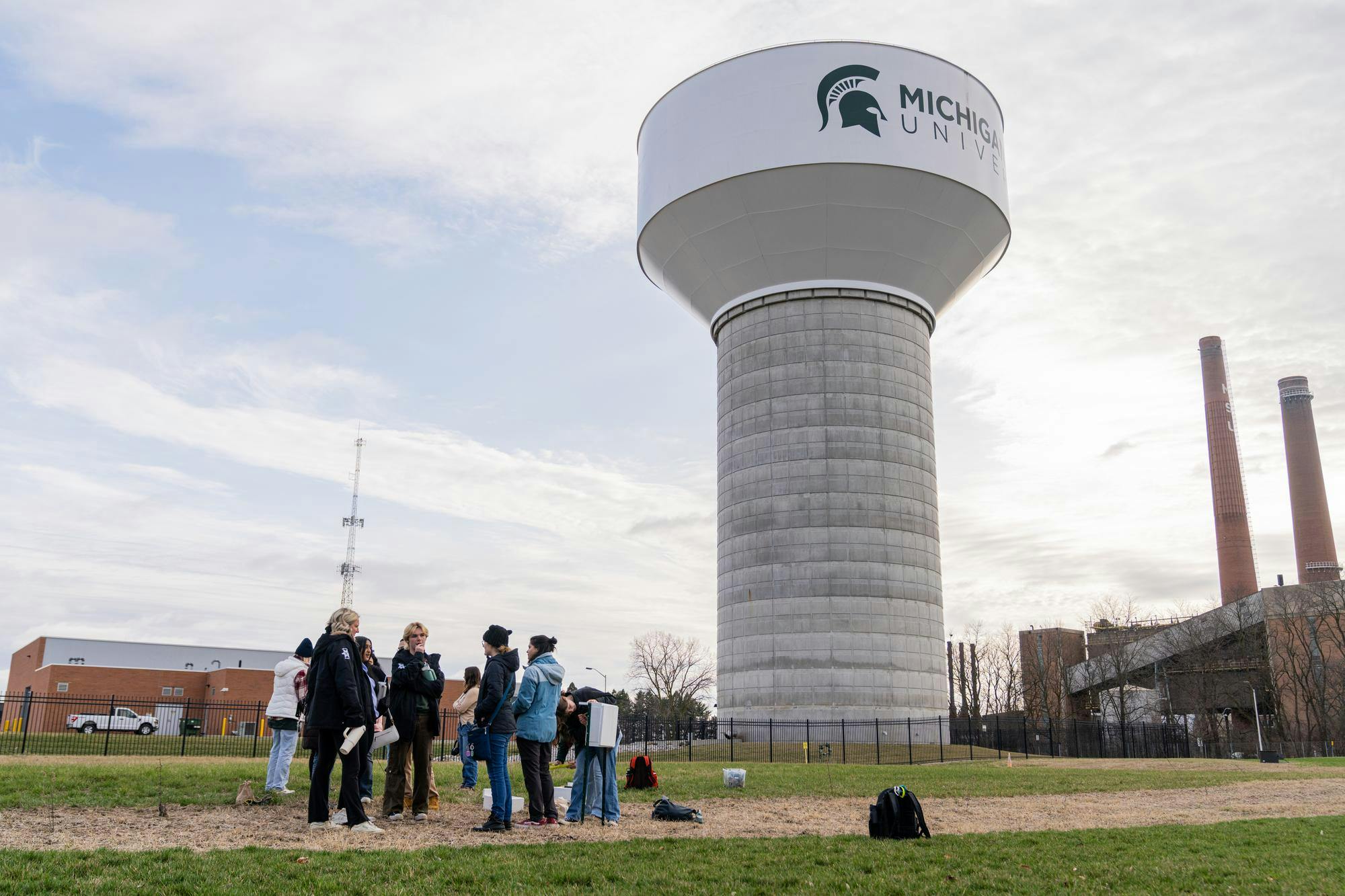
A 'Bee Hotel' is installed by students of the MSU Pollinators club on Service Rd. in East Lansing, MI on April 1, 2026.
A corner of Michigan State University’s campus near the Surplus Store and Recycling Center is the site of new homes for Michigan’s native bees.
The Pollinators Club installed its first “bee hotel” around the intersection of Farm Lane and Service Roads on Wednesday, April 1, with plans to install two more insect inns throughout the month.
A bee hotel is a structure of individual cylinders in which bees can craft individual nests, lay an egg and seal their room with mud or leaves. The cylinders vary in size, so they can appeal to a variety of bee species.
“Doing a bee hotel gives them more space to have their eggs, but also keeps them safe away from animals,” said Pollinators club founder and MSU alum Vera Love. “... So it’s a nice little way to just help bees out, but also your local area.”
Members of the Pollinators Club built the hotels during their meetings, which they said they felt obligated to do in light of the decline of Michigan’s native bee population.
“Their biggest decline is because of habitat loss, pesticide applications, light pollution, and climate change. It's a big combination of things, but the biggest is probably land loss and the use of pesticides,” said Carolyn Miller, the arboretum and invasive species coordinator at the Beal Botanical Garden.
The artificial habitats are meant to better withstand natural and manmade forces. With the hotels in place, the insects have an easily accessible habitat that won’t be disturbed by pesticide usage, Miller said.
The hope is that the hotels will help stabilize the native bee population around campus, which will in turn help the local population of native plants, which rely on insects to carry their pollen.
Economics senior and Pollinators club President Jade Duncan said she looks forward to seeing the plants bloom as visual indicators of the hotels’ success.
“It's something that really brings me a lot of joy because it's something that I can see the results with bees coming in and plants growing,” said Duncan.
In the future, Duncan said, she plans to propose the idea of installing hotels for bats on campus.
While Michigan’s bats aren’t pollinators, Duncan said they play an integral role in the balance of the state’s ecosystems by eating several insect species and by being a food source for larger predators.
It’s that very same sense of ecological balance that draws Duncan to pollinators like bees.
“The more bees we have, the more flowers we have, or the more pollination we’ll have. If we plant more flowers in addition to bees we’ll see more of everything else,” Duncan said. “It's a combined effort of putting this and that together.”
Support student media!
Please consider donating to The State News and help fund the future of journalism.