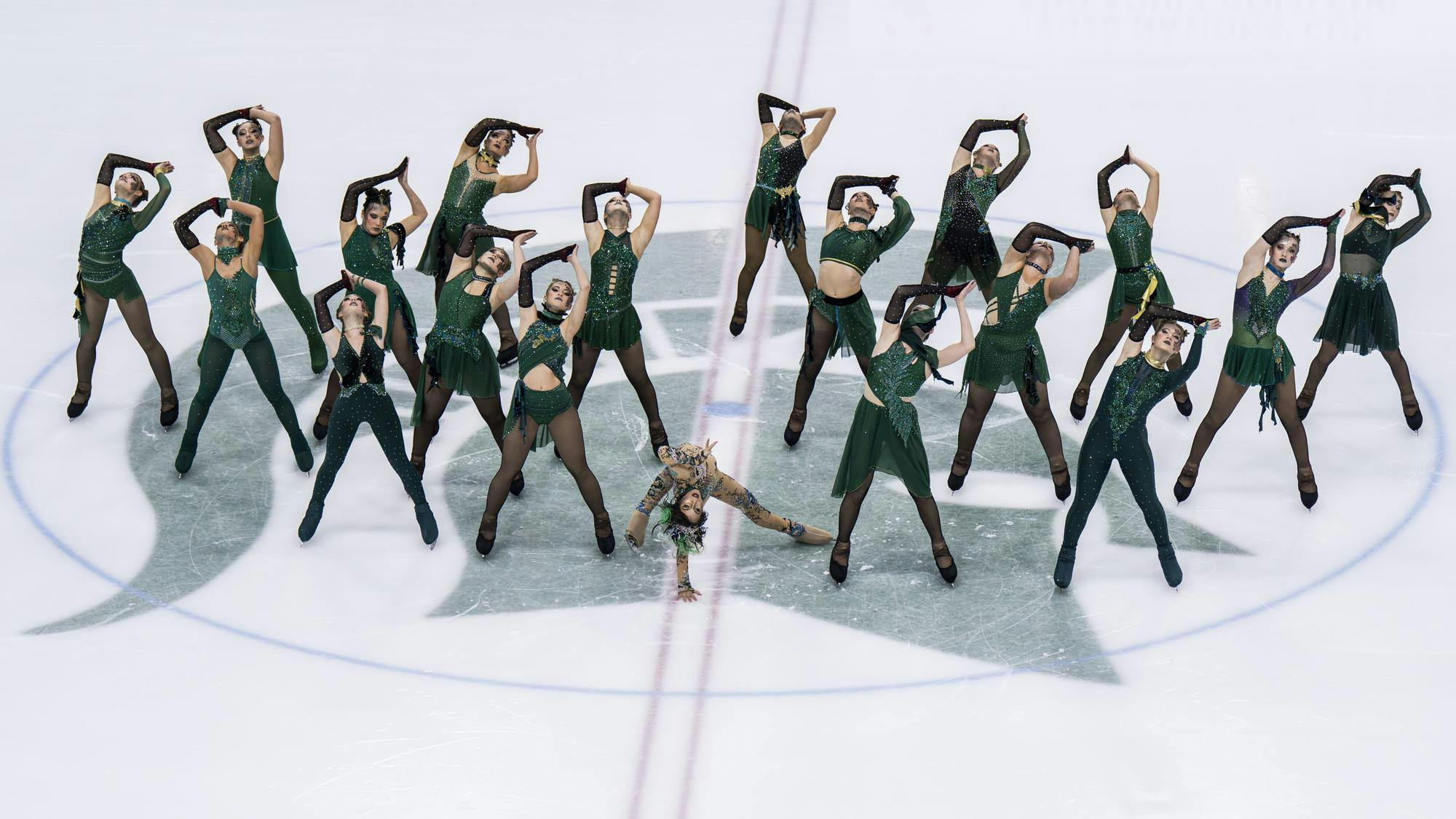
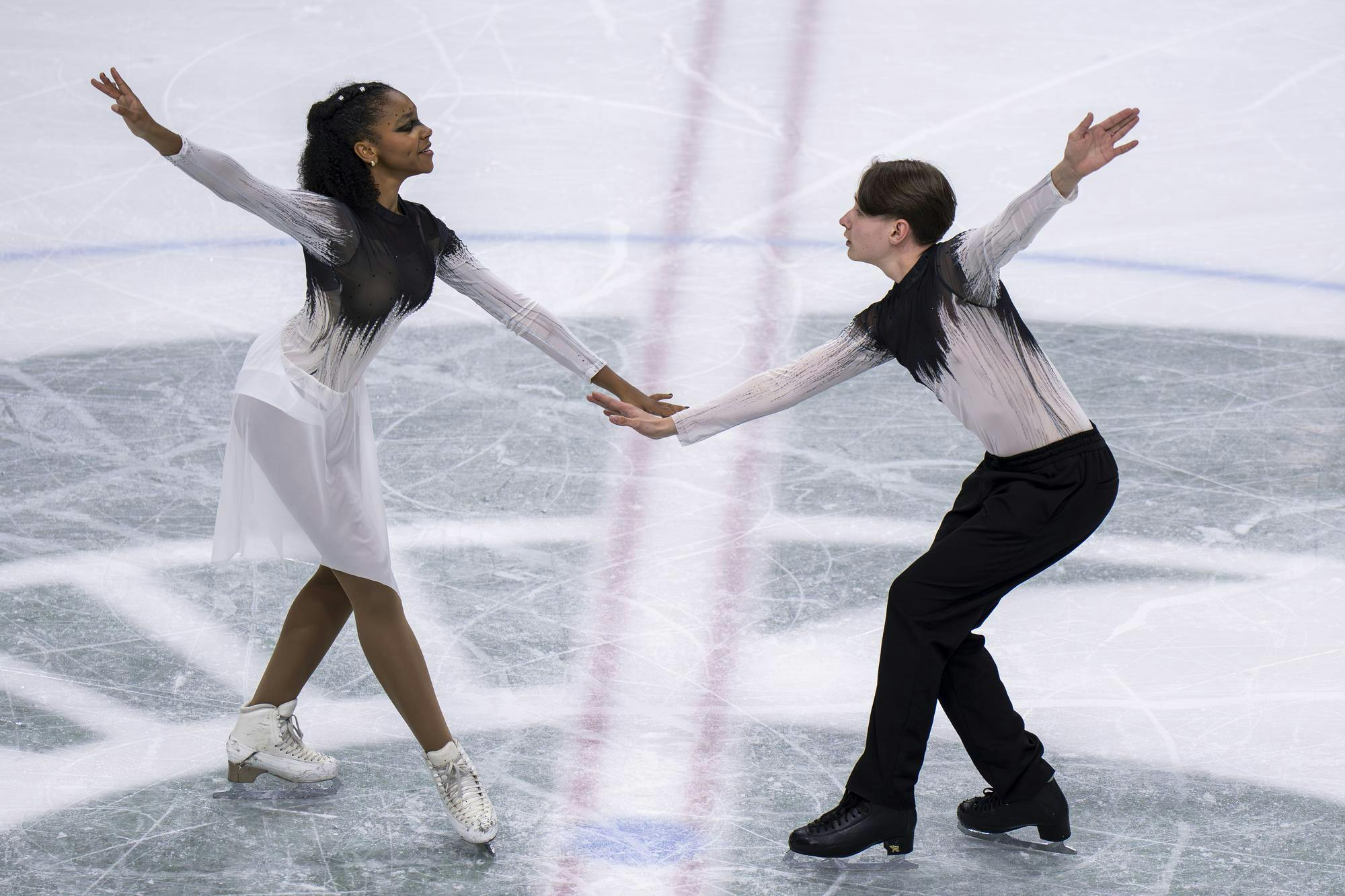
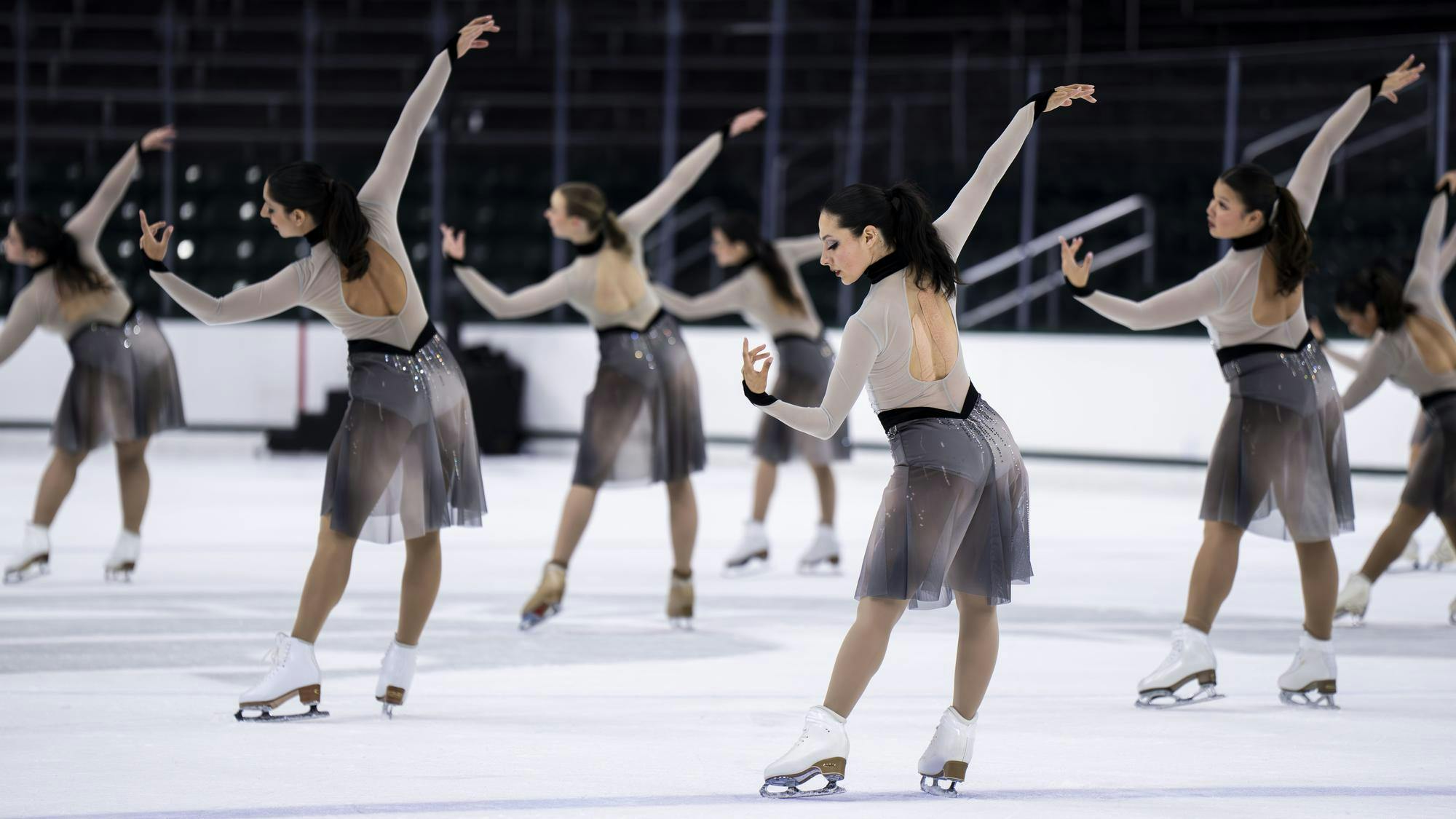
The Harmony Theatre Company competes for the Nations and Gold Cup for the Theater on Ice 2026 competition in the Munn Ice Arena in East Lansing, MI, on April 26, 2026.
For almost a week, Munn Ice Arena played host to the Theatre on Ice (TOI) Nations’ Cup and Gold Cup, with elaborate costumes, full makeup and performances taking center stage in a place normally run on a different sport.
Teams from across the globe gathered for this international competition that mixes figure skating with storytelling and choreography. The event, held every two years, brought together close to 1,000 athletes and highlighted a discipline that continues to grow both in the United States and worldwide.
For local organizing committee co-chair Patrick O’Neil, the event was years in the making.
“It takes about two years of planning to bring something like this together,” O’Neil said. “You’re coordinating international teams, logistics, schedules, all of it to create a good experience once the competition begins. Because you have teams from over the world, I mean, you have to make sure their time here is valuable.”
Unlike traditional figure skating, TOI focuses on the collective. Teams of eight to nearly 30 skaters perform programs built around a central theme, combining technical skating with theatrical elements like costuming, music and character development.
“It’s basically Broadway on ice,” O’Neil said. “You’re not just watching jumps and spins — you’re watching a full story unfold.”
That emphasis on storytelling is what sets TOI apart and, according to participants and coaches, what makes it especially challenging.
Piercyn Hunt, a choreographer for the Harmony Theatre Company of Michigan, said blending performance and precision takes years to refine.
“It’s definitely challenging,” Hunt said. “You’re trying to balance strong skating skills with clear storytelling, and that doesn’t happen overnight. It takes a lot of trial and error to really get it right.”
Hunt, who has a background in dance as well as skating, said the discipline offers a creative outlet not always found in traditional competitive skating.
“I didn’t feel as connected to freestyle skating,” Hunt said. “But once I found this, it just made sense. It combines dance, theater and skating all into one.”
That creative freedom often extends to how teams approach competition. While scoring still depends on both technical ability and presentation, some choreographers prioritize authenticity over trying to match what judges might expect.
“We try not to choreograph just for the judges,” Hunt said. “Of course you want to meet the criteria, but we really focus on creating something meaningful for the team. With the talent that just keeps getting stronger every year, you need to push your boundaries more and more.”
For skaters, that intensity comes with both pressure and reward.
Mel Gaf, a figure skater on the Sydney Ice Theatre Team, said one of the hardest parts of the competition is stepping onto the ice when nerves are high across the entire team.
“It’s challenging when everyone is feeling that pressure at the same time,” she said. “But once you get out there and perform well, it’s incredibly rewarding.”
Behind each five-minute performance is months of preparation, including on-ice training, off-ice conditioning and team rehearsals.
“People don’t realize how much work goes into it,” Gaf said. “It’s hours and hours of training for just a few minutes on the ice.”
Support student media!
Please consider donating to The State News and help fund the future of journalism.
Despite the intensity, TOI also creates opportunities for connection across cultures. With teams traveling from countries like Australia and Canada, the Nations’ Cup serves as both a competition and a meeting ground.
“You form friendships just through performing and sharing that experience,” Gaf said. “It’s not just about competing — it’s about connecting with people from all over the world.”
For spectators unfamiliar with the discipline, organizers hope the event offers a new perspective on what skating can be.
“I hope people walk away entertained, but also with an appreciation for how much goes into these performances,” O’Neil explains. “[The competition] is athletic, it’s artistic and it’s something really unique.”
Discussion
Share and discuss “Nations’ Cup and Gold Cup bring global Theatre on Ice to East Lansing” on social media.