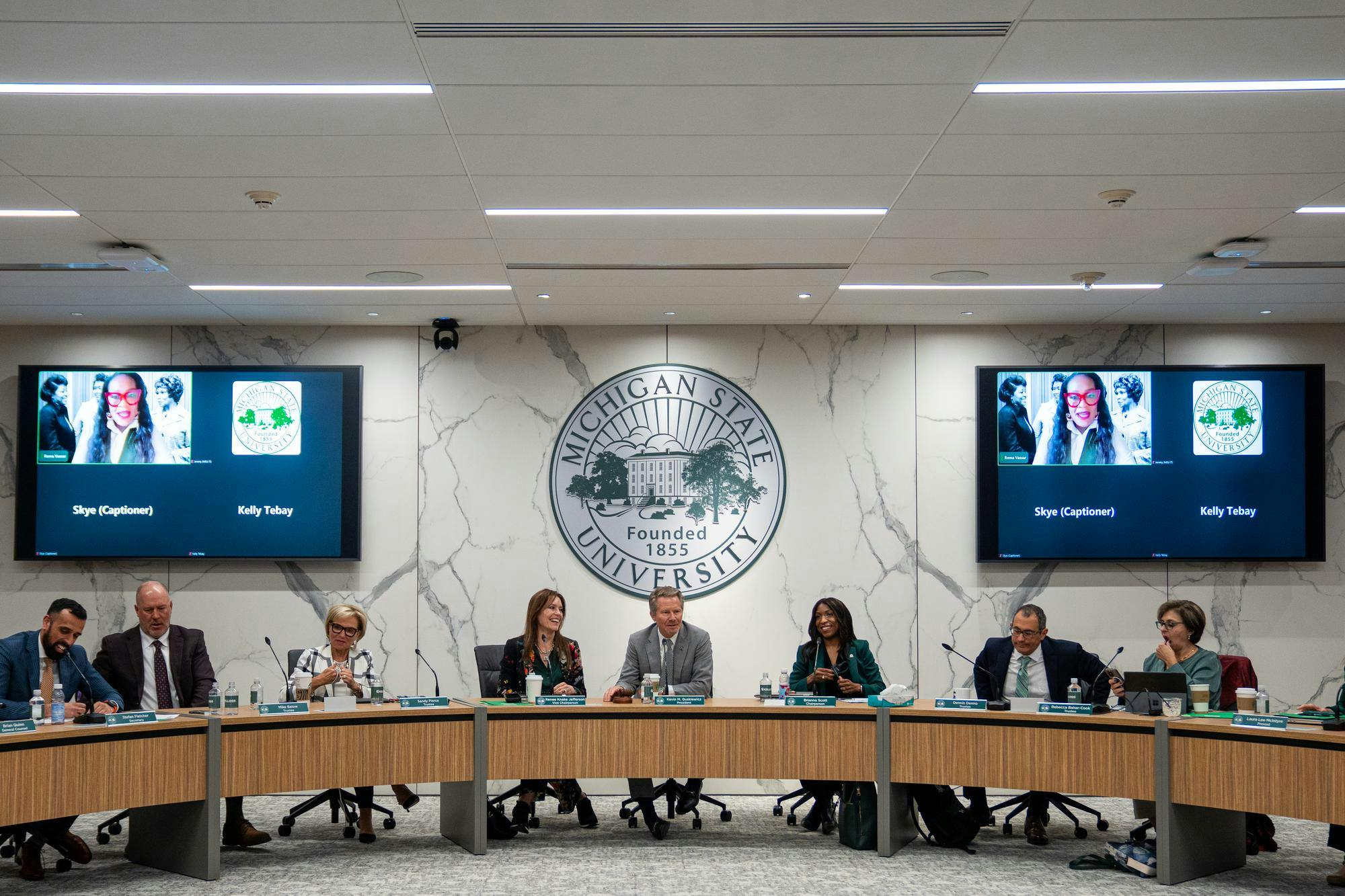
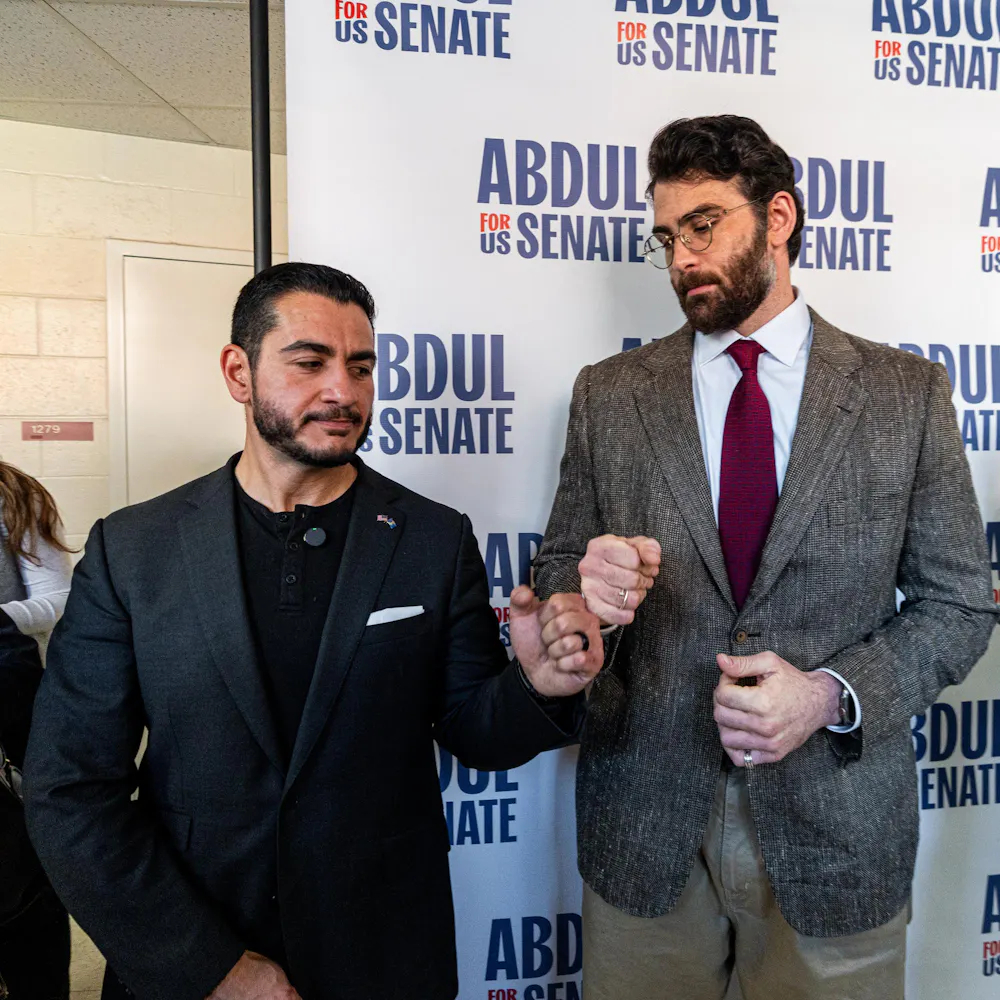
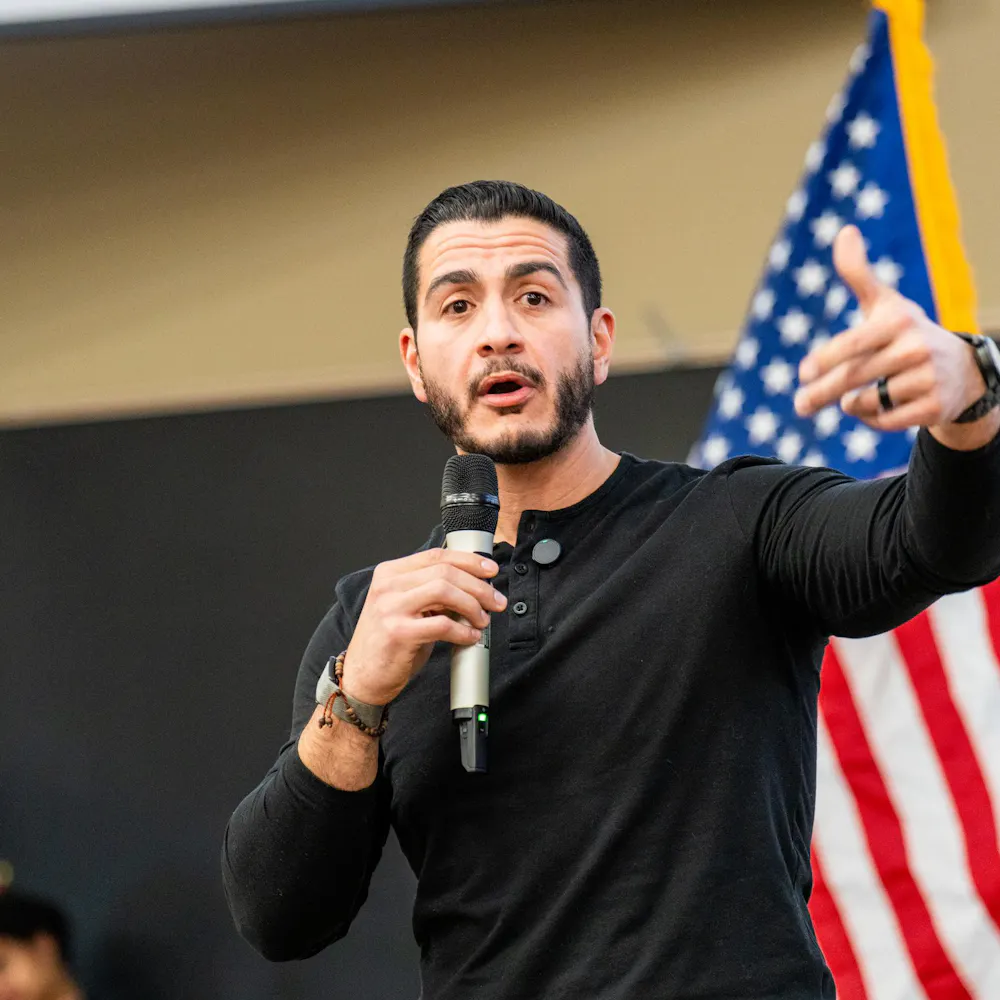
The Michigan State University Board of Trustees wrap up their meeting at Hannah Administration Building in East Lansing, Michigan on Friday, April 10, 2026.
Michigan State University’s Board of Trustees is again divided, after a State News report revealed that a faction of its members has “serious concerns” with the institution’s top lawyer.
In a statement Sunday, five members of the board voiced support for General Counsel Brian Quinn and criticized efforts against him.
“We have the highest confidence in our President and his Leadership Team, including the General Counsel,” the statement said. It was signed by Board Chair Brianna Scott, in addition to trustees Renee Knake-Jefferson, Sandy Pierce, Kelly Tebay-Zemke, and Rebecca Bahar-Cook.
The statement says the trustees that signed are “compelled to condemn the conduct of those who chose to publicly ridicule and evaluate the performance of a university administrator.”
“Such actions are inappropriate, undermine the norms of governance, and erode the mutual respect required to effectively serve (MSU),” says the statement, which was sent just after 11 a.m. Sunday morning.
Missing from the signatories are trustees Mike Balow, Dennis Denno, and Rema Vassar. They are the three board members involved in the efforts against Quinn, according to the State News report.
A previous version of the statement, sent just after 11 p.m. Saturday night, began with a more pointed accusation against those trustees, specifically condemning “our colleagues.”
It said that the signatories “are compelled to condemn the conduct of our colleagues who chose to publicly ridicule and evaluate the performance of a university administrator.”
The State News report, published Saturday evening, detailed a dossier addressed to the university president, which was compiled by Quinn’s critics. The document argues that he has mishandled a host of high-profile sagas.
The State News did not identify who provided reporters with the document, because the person did so on condition of anonymity. The report did say that, according to people familiar with the document, it was assembled by trustees Balow and Denno, and that the broader effort was supported by Vassar.
Scott told The State News that she and the four other trustees changed their initial statement because “your article cites no proof of the Board members you name actually giving you the document.”
In his own statements Sunday morning, Balow took credit for signing the dossier and said that he shared it with the board and president on Saturday but pushed back on the suggestion that he or other board members made their grievances public.
While “many people on campus and beyond have provided me with information over the last several months,” the statement said, “the words in my complaint are mine, and I signed it.”
The statement says that this is the second time Balow has compiled a document for the president and board summarizing his concerns about Quinn. It says that he first prepared such a document in February 2025, but “over one year later, it has still not been resolved.”
Balow “cannot join trustees that are willing to give a blanket vote of confidence to the general counsel,” the statement says. “I’m not sure how any trustee could, since the board has not even begun to investigate my complaint yet.”
“This is indicative of a problem that has plagued MSU for years: The desire to quickly ‘turn the page,’ lest an uncomfortable truth become known,” the statement says.
In an earlier version of his statement, Balow addressed the more pointed allegations in the first version of the statement issued by Scott.
“I have certainly not ever ‘publicly ridiculed or evaluated’ any MSU employee and don’t see any trustee doing that in the story referred to,” the first version of Balow’s statement said. “So, I’m not sure what colleagues the board chair is referring to, as the article refers to non-attributed comments that are not made publicly."
Those remarks were removed from an updated version of Balow’s statement, sent after Scott clarified the rest of the board’s statement.
Support student media!
Please consider donating to The State News and help fund the future of journalism.
Reached on Sunday, Trustee Knake-Jefferson declined to comment. Other board members did not respond at time of publication.
Through a spokesperson, President Kevin Guskiewicz declined to comment.
"Trustees have issued a statement,” spokesperson Amber McCann said in a statement. “The President is not going to weigh in further."
With the schism, the board diverges from two years of ostensive unity following a sustained period of public infighting. Since Guskiewicz took office in March 2024, the board has seemingly heeded his demand that they buck their streak of public division and meddling in the administration.
Dating back to 2018, MSU’s board, composed of eight members chosen by Michigan voters in statewide elections, has grappled with how to strike a delicate balance inherent to university governance: giving presidents the needed space to do their job unobstructed, while sufficiently keeping them in check.
At the time, the stakes in finding such an equilibrium were particularly high, as international outrage mounted over revelations sexual abuse by longtime MSU doctor Larry Nassar. As the university was accused of letting it go unchecked for too long, some board members were eager to assert their independence from the administration. They did not want to appear on the same team as an administration under such intense scrutiny.
That inclination prompted some board members to push for an outside investigation into who at MSU knew about Nassar’s abuse and for how long — though a board vote to order one ultimately failed with less than half of the members supporting the measure.
The following years saw a rapid turnover rate in MSU leadership, sustained public criticism of the board for declining to release documents related to the handling of the Nassar crisis, and a global pandemic that left the East Lansing campus all but empty.
With students and faculty back in-person in 2022, the woes continued.
Then-President Samuel Stanley resigned in mid-October of that year, issuing a teary-eyed video to campus in which he cited an irreconcilably fractured relationship with his board, which had been pressuring him over a range of Title IX issues.
But the most intense of the board and administration’s discord was still yet to come.
The next October, Scott – now the chair of the board, but then a trustee – wrote a letter alleging widespread misconduct by Vassar, who was then the chair.
One accusation hit at a particular sore point for MSU, given its history at that point of misalignment among leadership: Vassar, the board chair, had been “bullying” Interim President Teresa Woodruff and unduly interfering in her administration, Scott’s letter said.
The years of tension would then spill over in a highly public fashion at the first board meeting following the publicization of the bombshell letter. In the packed boardroom on the fourth floor of the Hannah Administration Building, trustees and their factions of supporters traded insults, sometimes in tears.
The board opted to retain an outside firm to investigate the allegations raised in Scott’s letter. The firm’s eventual report corroborated many of them and found evidence of additional widespread misconduct by Denno.
All the while, MSU was searching for a permanent president to replace Woodruff. But as it did so, the university had to contend with the reputation it had garnered: not exactly a place where the board leaves presidents be.
In November 2024, Taylor Eighmy dropped out of the running after it was leaked to The State News that he was one of two finalists. That left one finalist, Kevin Guskiewicz, a concussion researcher with an impressive academic pedigree who then-served as chancellor of the University of North Carolina at Chapel Hill.
As he weighed his decision, the board’s supposed penchant for interference was evidently on his mind. Guskiewicz wrote to faculty at the time that he’d only take the job at MSU if he’d be able to lead “without undue interference.”
Months later he accepted the presidency, at which point he devised a plan to formalize his condition: the board would sign pledges sealing their commitment not to overstep their authority by meddling in his administration. The board signed them before he took office.
For some time, the pact seemed to hold.
Much of Guskiewicz’ early presidency was marked by effusive words of support by board members at meetings — including from the faction now pushing him to consider their criticisms of Quinn — and fanfare about a bold new era for a university that had just churned through six presidents in as many years.
Guskiewicz reinforced the cohesion himself during an interview with The State News following the release of the so-called “Nassar documents.”
Though the board during the fallout of the Nassar scandal wanted separation from the administration, today, he said at the time, the entities were on “one team.”
“Our board and our administration is aligned on this,” Guskiewicz said, referencing MSU’s efforts to move forward from the Nassar scandal and improve its handling of sexual violence.
“Not just on this particular issue, but I feel really good about how we’re working closely together… we are one team, as I’ve been saying, and I’m confident that we’ll move together.”
There seemed to be relative alignment among the trustees, too. Whereas they had previously staked out, for example, divergent positions on the issue of divestment — student demands that MSU’s endowment sever ties from an Israeli bond and portfolios advocates tied to weapons manufacturers — the board members fell behind a united front as activists made a renewed push in late 2024.
Amid the apparent cohesion, Governor Gretchen Whitmer opted to decline a request by the board to consider removing Vassar and Denno from office, following the revelations in the outside investigation. In the more than a year Whitmer spent weighing the request, trustees and administrators said that the board’s scuffle was behind them.
Still, as MSU’s leadership projected public harmony, some tensions simmered behind closed doors — namely, over Quinn.
Two people close to the board told The State News that efforts to oust Quinn took shape as Guskiewicz prepared to start as president in 2024. The lawyer’s critics hoped MSU’s new leader would be willing to eliminate a longtime member of the C-Suite as he built his own administration.
And, according to two people familiar with her thinking, Vassar has remained aggrieved by the university’s handling of the outside investigation into Scott’s allegations against her.
The discord has started to publicly emerge more recently, with trustees tussling with the administration over an ambitious plan to overhaul the university’s athletics department.
Details on the plans are scarce, but what’s known is that MSU entered into a brand management agreement with a nonprofit called Spartan Ventures, from which a for-profit entity called Spartan Media Ventures was then spun off. It is meant to maximize revenue generation within the athletics department and support name, image and likeness deals for student athletes — which proponents say is essential for MSU to remain competitive in a watershed moment for college athletics.
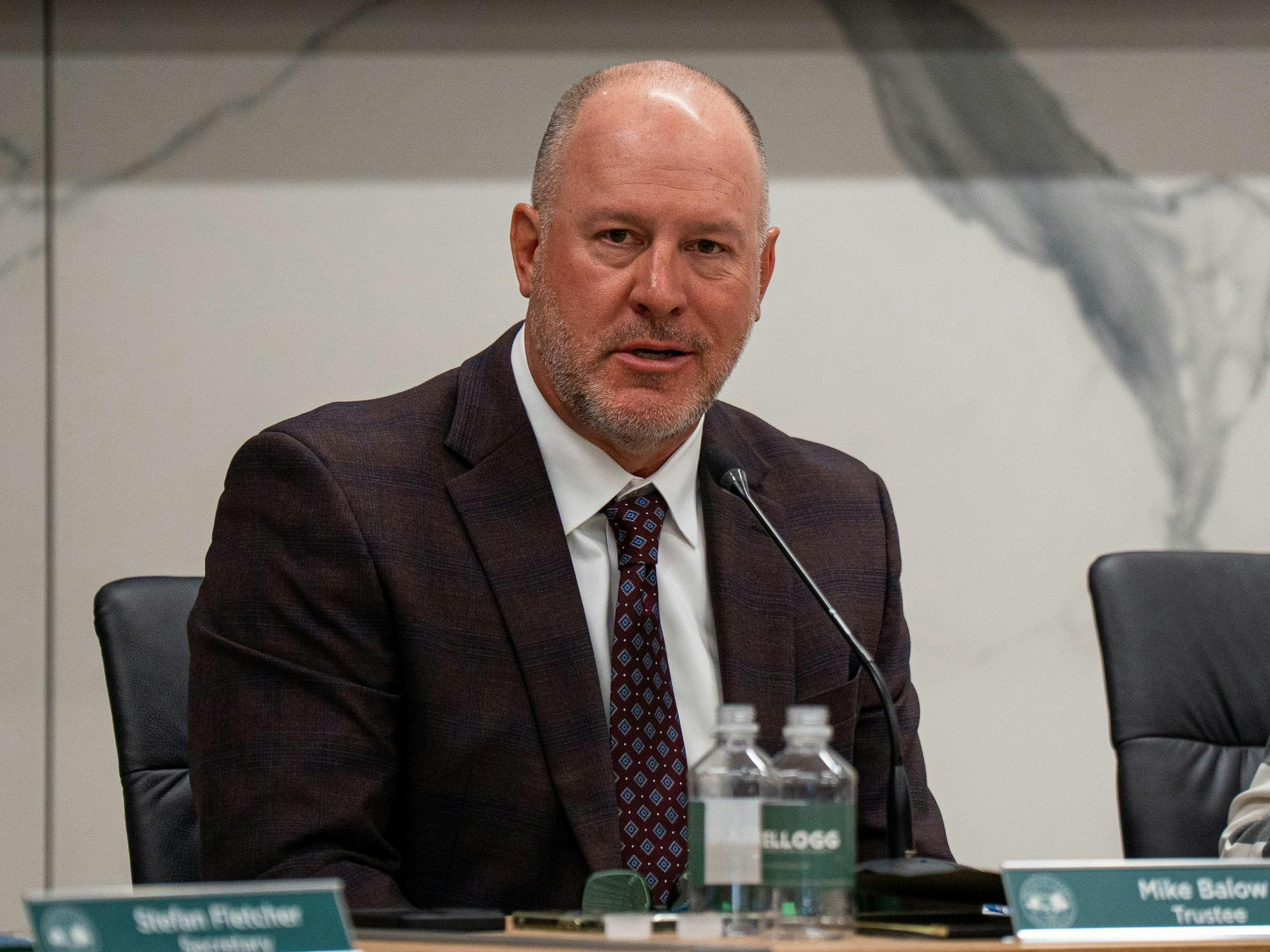
At a board meeting on Friday, Balow said that he, Vassar, and Denno had attempted to introduce a resolution requiring Spartan Media Ventures to be subject to Michigan’s Freedom of Information Act law and allow trustees to view organizational documents without signing nondisclosure agreements. But, Balow said the rest of the board was unsupportive of the measures.
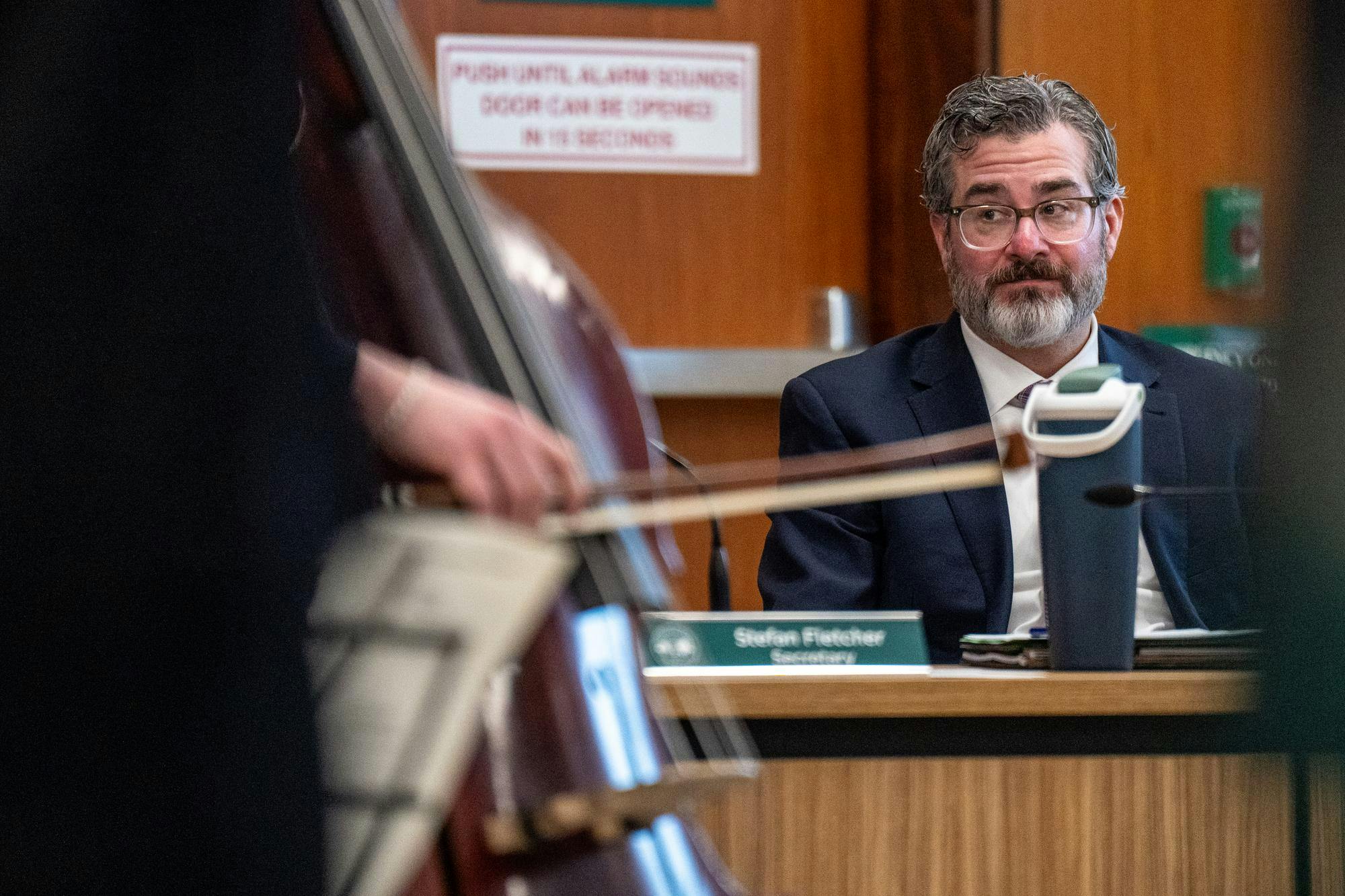
He implied that his suspicions of the plans stem from Quinn’s involvement, not others who have pushed for the changes. Balow complimented his fellow board members, as well as the president and athletics director. Balow said his issue is instead “legal,” as Quinn sat straight-faced to his right.
Then, on Saturday night, The State News published the report on the dossier, which further detailed those concerns, and several others.
Among other complaints in the dossier, Quinn’s critics take issue with his handling of a host of high-profile sagas, including the withholding of the so-called “Nassar documents,” a faculty members’ lawsuit against trustees who conspired to attack him and university lawyers’ interference in independent Title IX investigations.
“There are serious concerns with the MSU Office of General Counsel (OGC),” says a draft copy of the document, which was obtained by The State News. “The concerns are both about overreach and also about decisions made by the OGC that have seriously injured MSU.”
The swift condemnation by a majority of the board signals an unclear path forward for Quinn’s critics. In his statement, Balow said the concerns raised in the dossier should be “investigated thoroughly and resolved professionally and appropriately, as soon as possible.”
“I believe that it is one of our core duties as trustees to bring such issues to the attention of the president and board, and to avoid doing so is an abandonment of the public trust that this office demands,” his statement says. “We are not just here for tickets to football games and to enjoy the good times. If we don’t conduct oversight, no one else will.”
Discussion
Share and discuss “Board split over Quinn dossier” on social media.