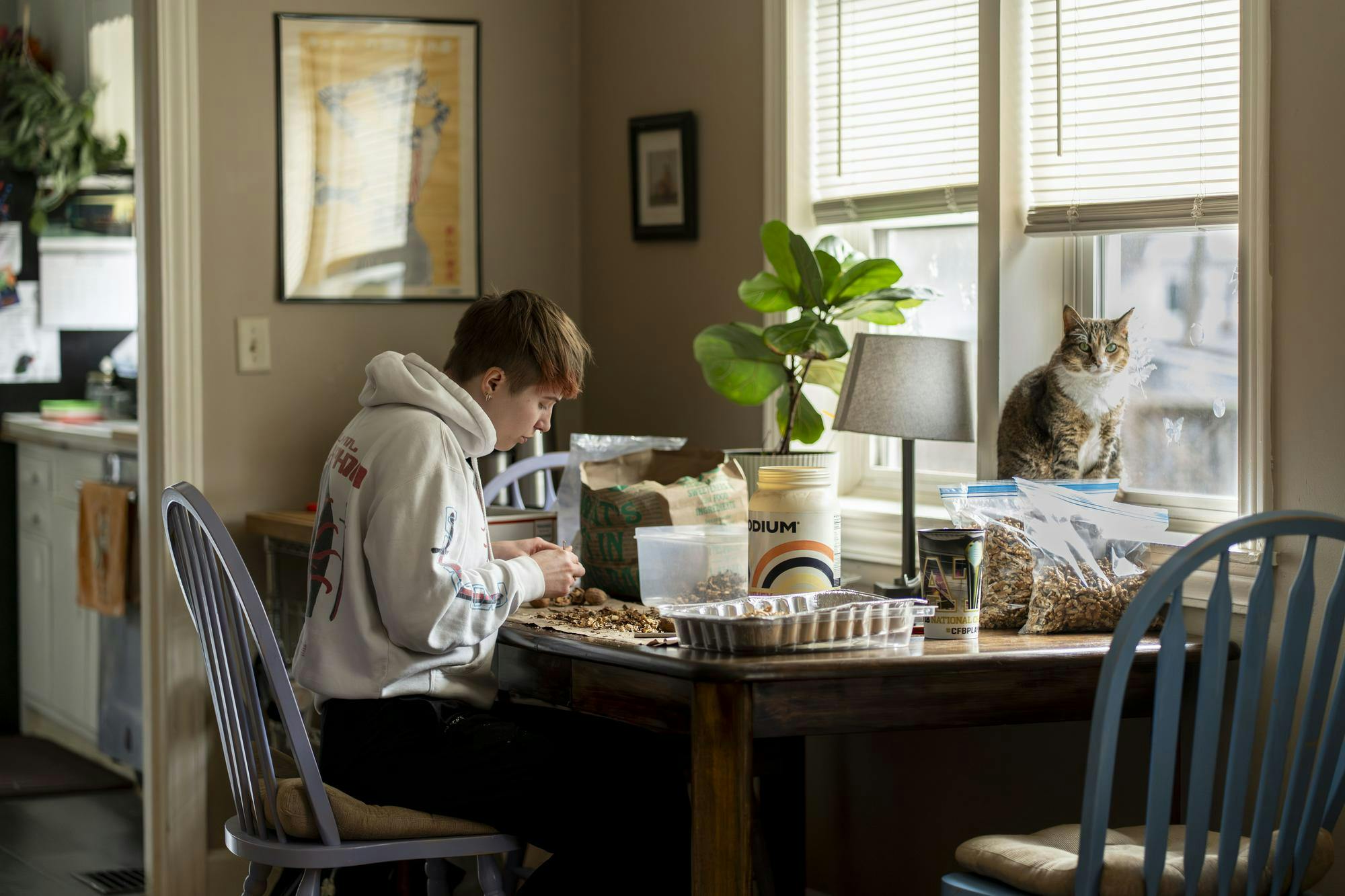
Over the past year, Hailey Becker has spent hundreds of hours cracking walnuts.
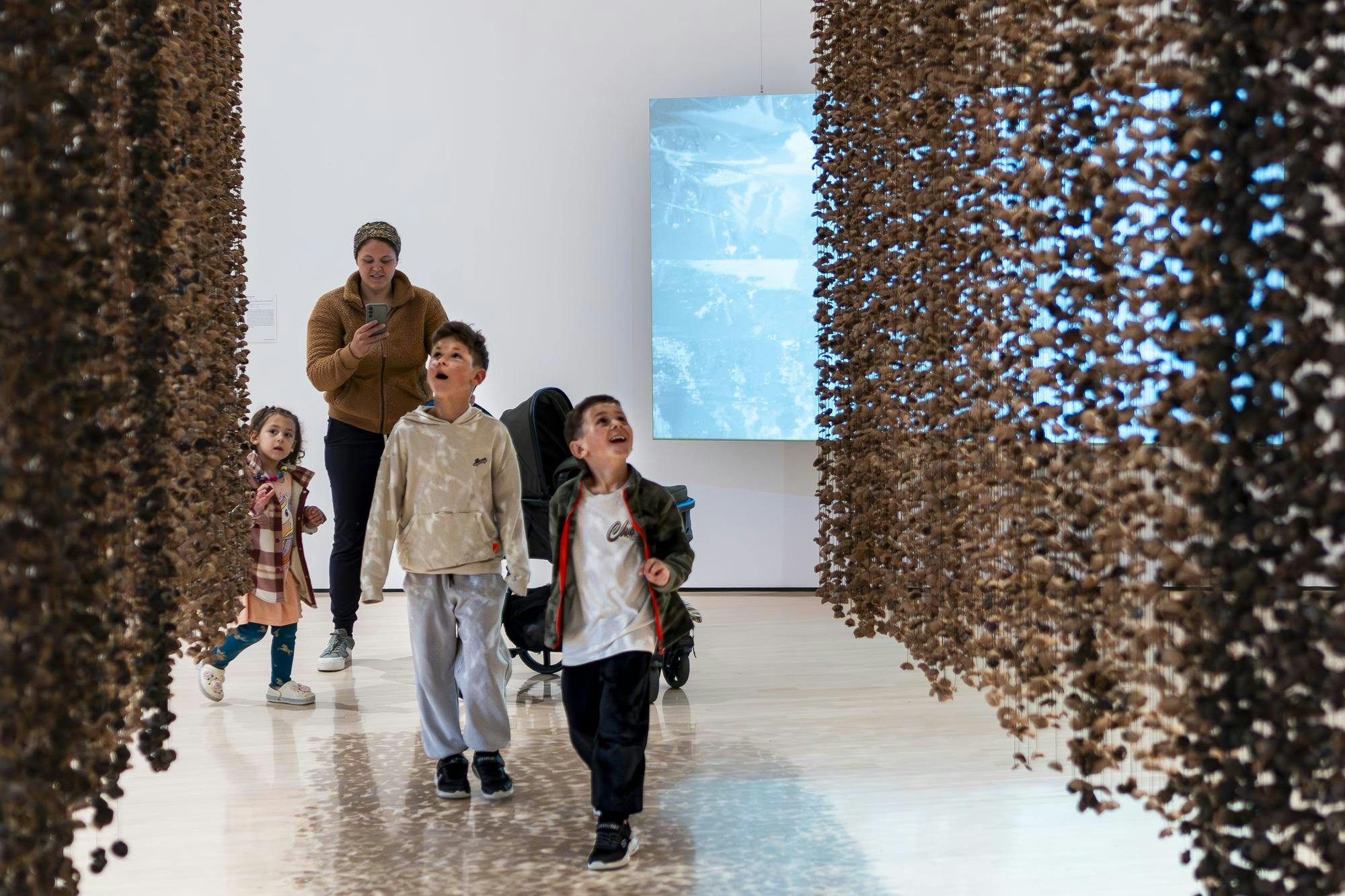
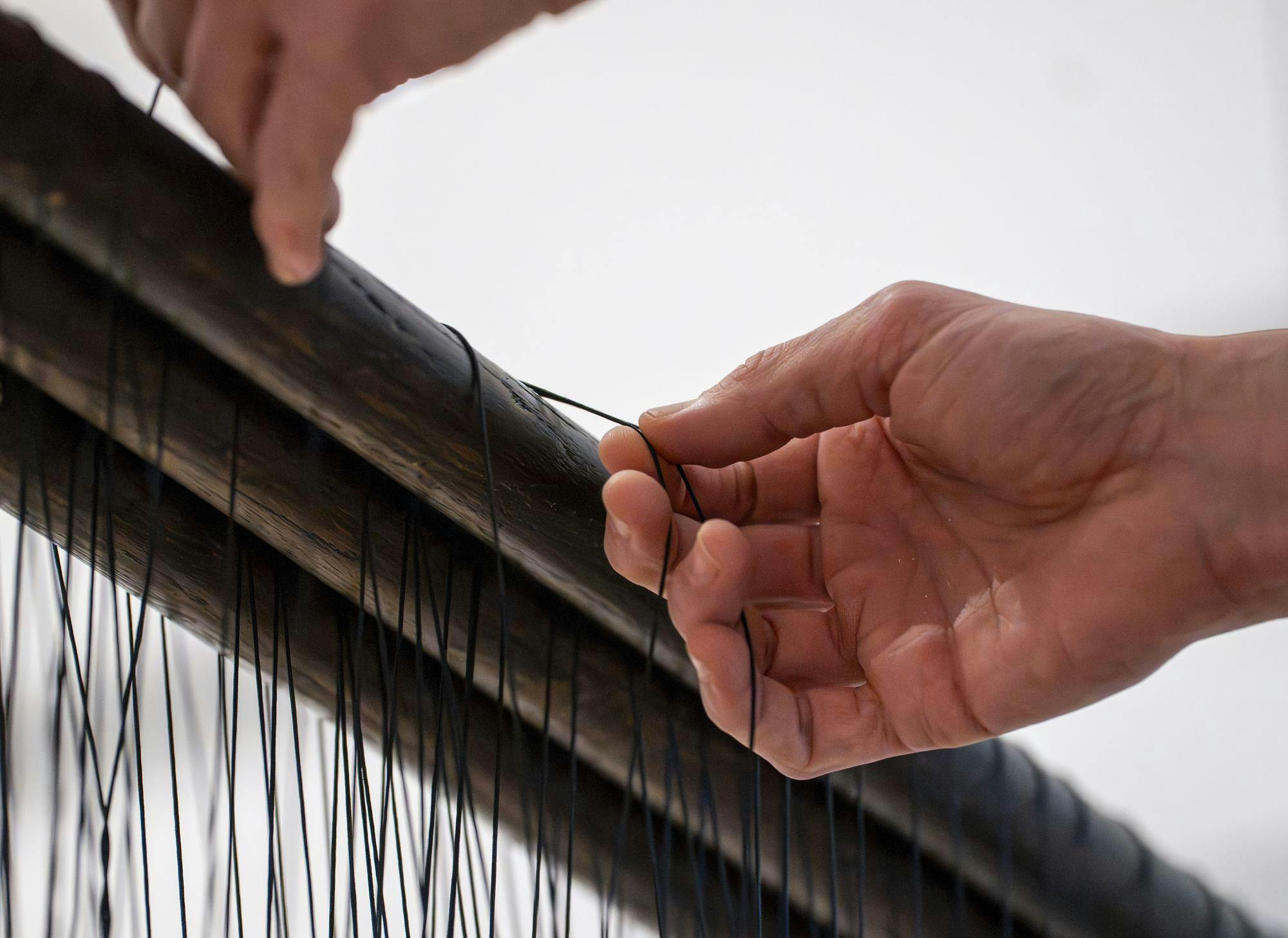
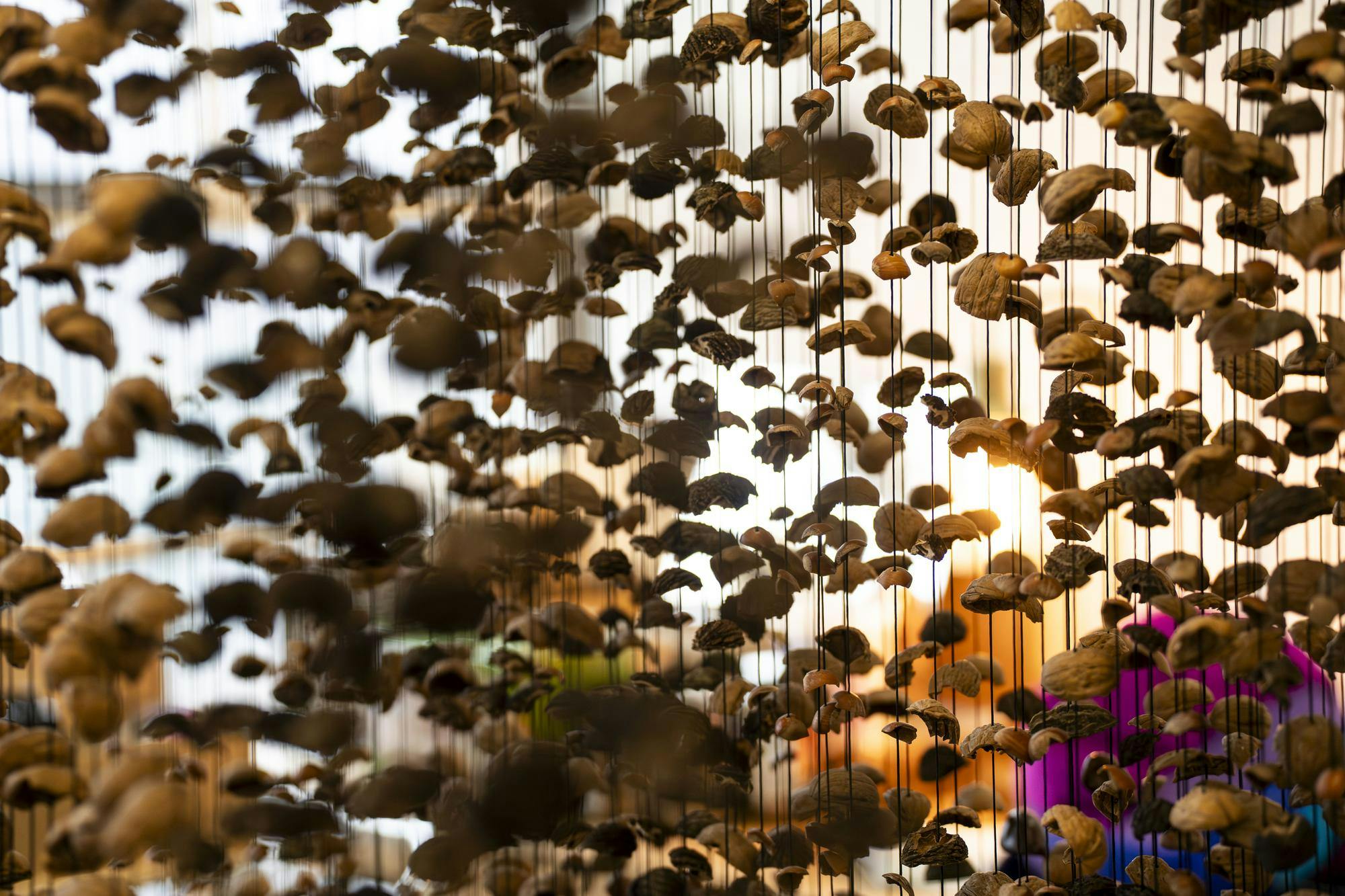
More than 10,000 walnut shells now make up her human-size chime displayed in Eli and Edythe Broad Art Museum.
Over the past year, Hailey Becker has spent hundreds of hours cracking walnuts.
More than 10,000 walnut shells now make up her human-size chime displayed in Eli and Edythe Broad Art Museum.
But for Becker, it was never about the nuts.
While the countless strings of nut shells and the video installation playing alongside the piece bring visual variety, the essence of the artwork is the sound, and how it bridges together the arts, sciences and nature.
“I wanted people to kind of have that moment of reflection and pause in the piece,” she said. “And I think that's been happening.”
As a mechanical arm moves automatically against the strings, the walnut shells hit each other, creating a sound representing water on the coastline.
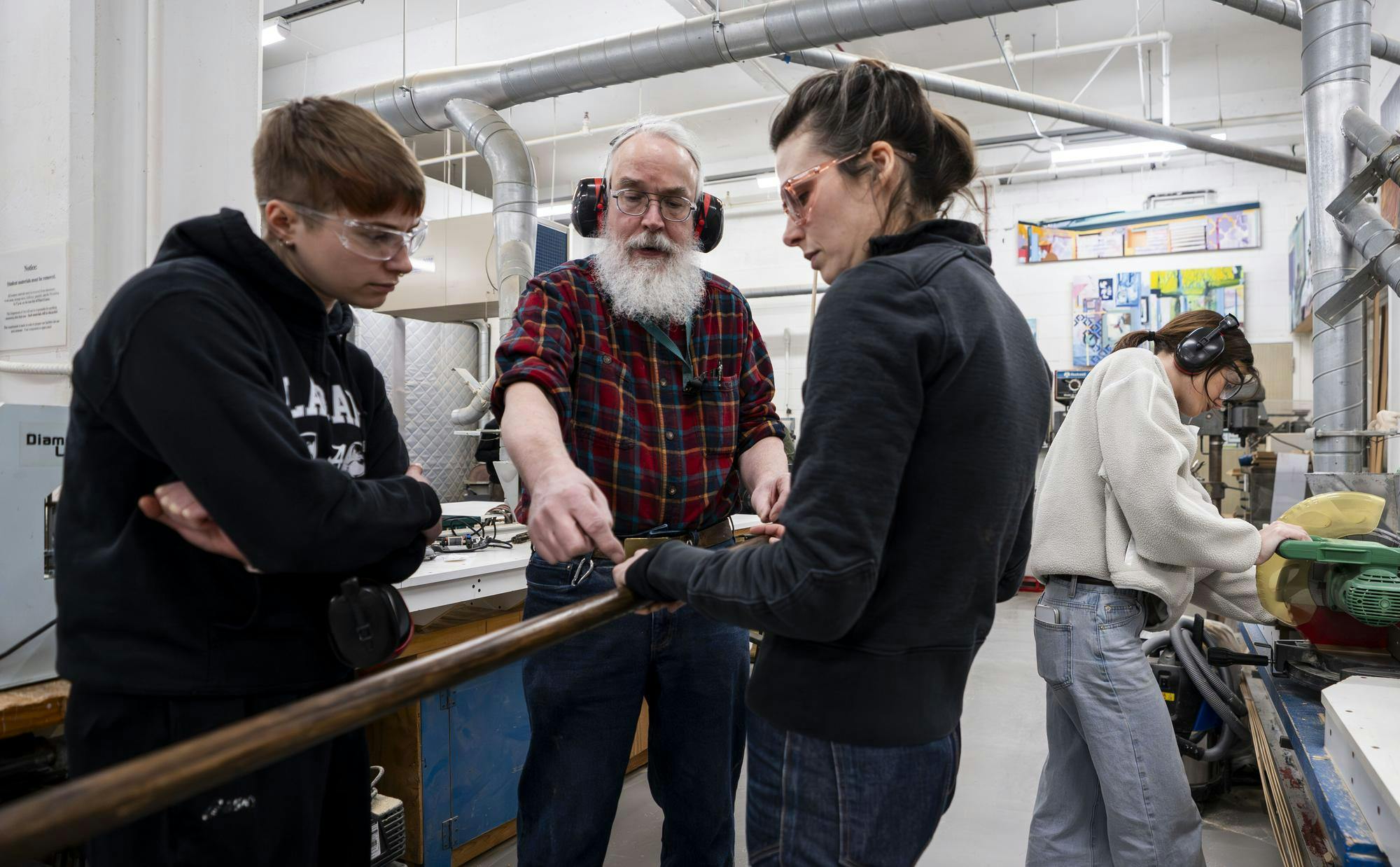
With the completion of this installation, Becker is preparing to graduate from Michigan State University’s Master of Fine Arts program this spring. But beyond her artistry, the inspiration for this piece came from Becker’s other areas of study.
Already with a bachelor's in engineering and a master's in material science, Becker will be staying around MSU for a couple more years to complete her Ph.D. in forestry. By focusing on her work in ecological engineering, Becker’s art installation proposes a whole new way to build the world around us.
Becker thought of the idea for the piece well before she started working towards her MFA. While studying material science, Becker took a class called Biomimicry, which is a method of developing engineering solutions inspired by nature. When she was assigned to create her own solution to a problem, Becker was drawn to the shape of aspen leaves; specifically, how this shape could mitigate longshore drift, the process of sand naturally eroding along the coastline.

She explained that Aspen leaves have an aerodynamic quality to move with the wind, acting as either a “brick wall or an airplane.”
“My idea was, if you can incorporate something like an aspen leaf, would you have this ability to alter how the sand is entering and exiting?” Becker said.
Based on her hypothesis, creating the aspen-leaf-shaped mechanism would create a similar hydrodynamic structure, which could be used to control longshore drift. This would reduce the need for heavy machinery and concrete jetties, thus protecting the environment.
“So, I came up with that solution and then I came to the MFA a few years later and was like, ‘How do I make this into art?’” she said.
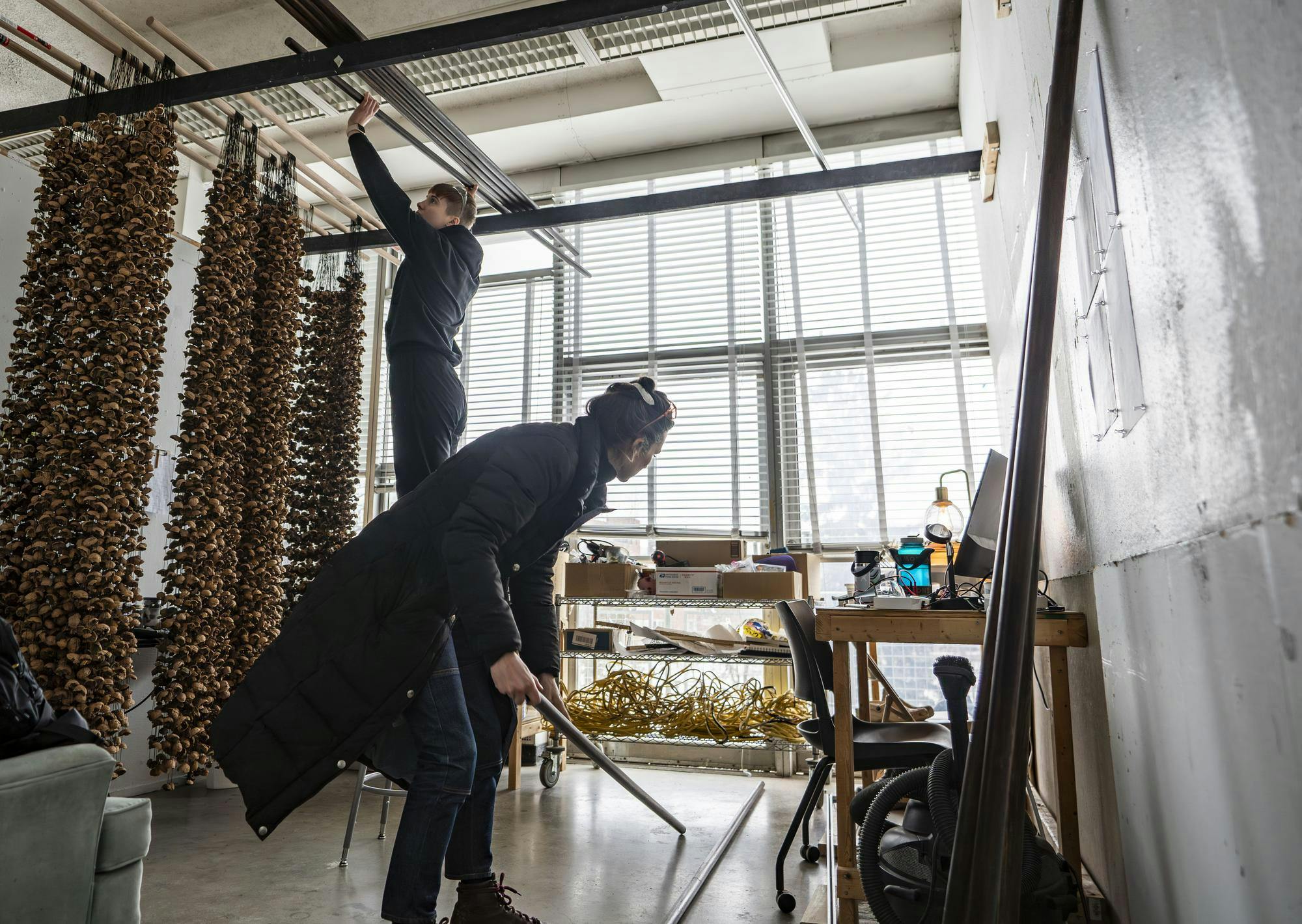
While Becker has had this idea for years, implementing it into an interactive visual art form was a huge undertaking.
“I want it to be a sound sculpture, because I want people to experience the part of it that is exciting to me,” Becker said. “This idea of water coming in and hitting the leaf-like structure, to me, that's a very aesthetic experience.”
Beyond the hours spent building the piece, part of the MFA program involves the students meeting regularly with faculty and staff and the Broad Art Museum to work out logistics for their vision.
Support student media! Please consider donating to The State News and help fund the future of journalism.
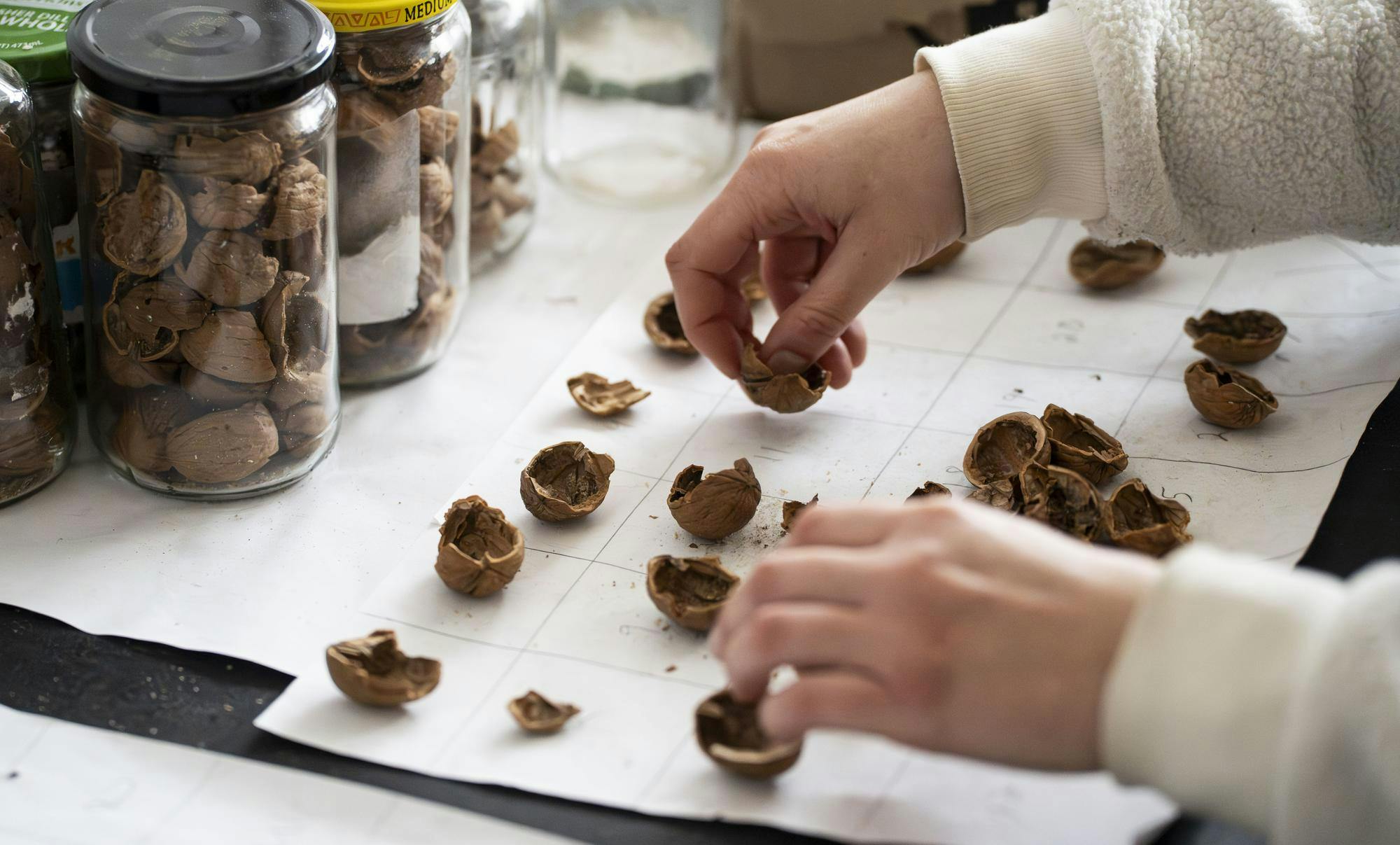
“I kind of tried to approach it through this idea of abstraction,” said Rachel Winter, an assistant curator at the Broad Art Museum.
Winter has been working with Becker this past school year, focusing on how she wanted the artwork to be interacted with in the gallery space.
“Because the sounds that the nuts make sort of abstract and distill this idea of the ocean or the coastline, I was thinking a lot about how we can draw comparisons as a way to help folks understand some of the scientific things that she's talking about, particularly for folks who don't have a scientific background,” Winter said.
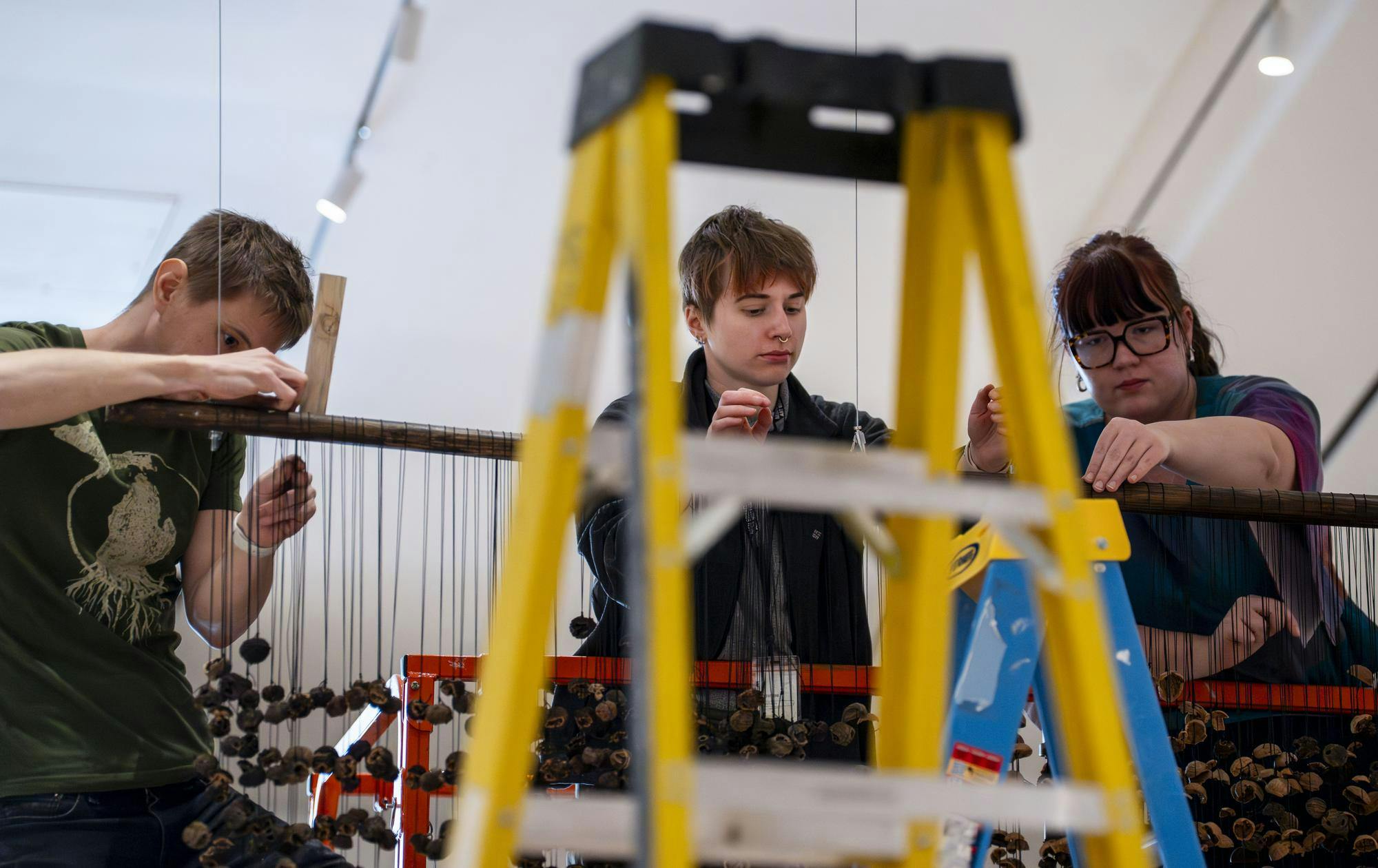
Becker said she sometimes found it difficult to explain the idea for her piece, especially early on in the process.
“I think in higher education it can be very easy to talk about STEM on one end and arts and humanities on the other end. And I think that division isn't necessarily as black and white as we think that it is,” Winter said. “It's exciting that museums can reconsider the divide between academic disciplines in the work that they show.”
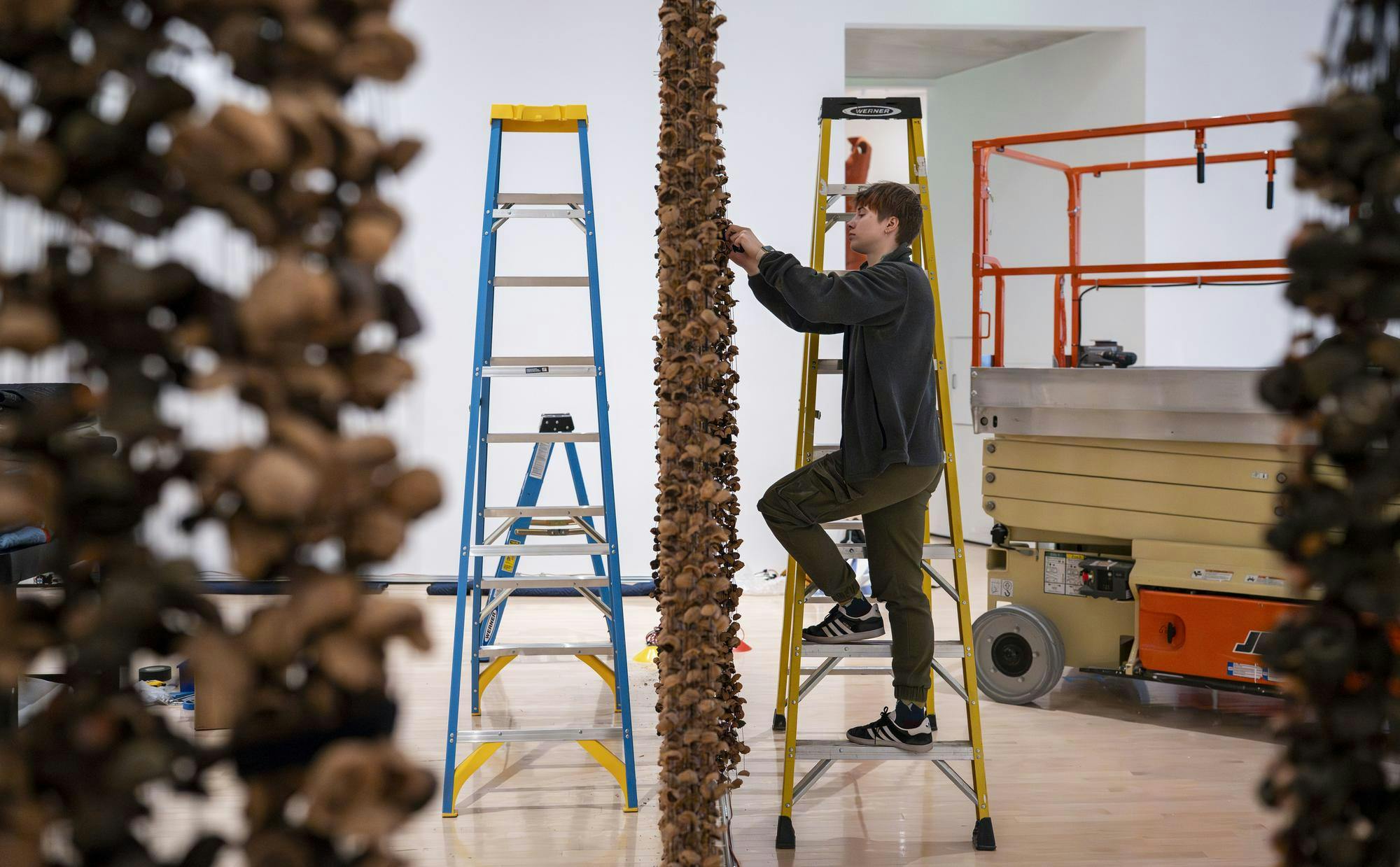
Becker said she plans to continue her art post MFA, focusing on artistic communication for her forestry work.
“This piece is an experiment. My plan now is to continue to go into the process and watch how people interact with it, and then I'll decide how I want to modify it for the next time,” she said. “It shows me what I'm allowed to advocate for as an artist.”
One project Becker is currently working on is her IAH class “Hacking the Built Environment.”
This class, taught by Becker and Barbara Pearsall, a professor in the Department of Art History and Design, has students collaborate with the city of East Lansing and MSU’s Department of Forestry to create public artwork. The goal is to bring awareness and participation to the East Lansing Downtown Tree Canopy Revitalization Project."
“The artworks are designed to spark curiosity and conversation, and to help prime the downtown community to participate in focus groups that will ultimately shape the guide,” Pearsall said. “A big reason we’re able to partner with the city in this way is Hailey’s expertise.”
“It’s especially valuable for students like Hailey to combine the arts and sciences because those fields are often treated as unrelated, but there’s so much to gain when they work together,” Pearsall said.
With her background in engineering, forestry and fine arts, Becker's goal is to bring all of these disciplines together to help make the work a better place.
“Engineers build the world, but they build it in their own vision,” she said. “But is our world just? Could it be different? That's interesting to me, and that's where I think the artist can come in.”