Michigan State University, like colleges across the country, finds itself grappling with a thorny question: how much accommodation of students is too much accommodation?
In recent years, the proportion of students at MSU being granted adjustments to the educational experience for disabilities has markedly increased. The vast majority of the growth has been driven by students receiving extra time, or a separate space, for exams in relation to so-called "invisible disabilities” like ADHD and anxiety.
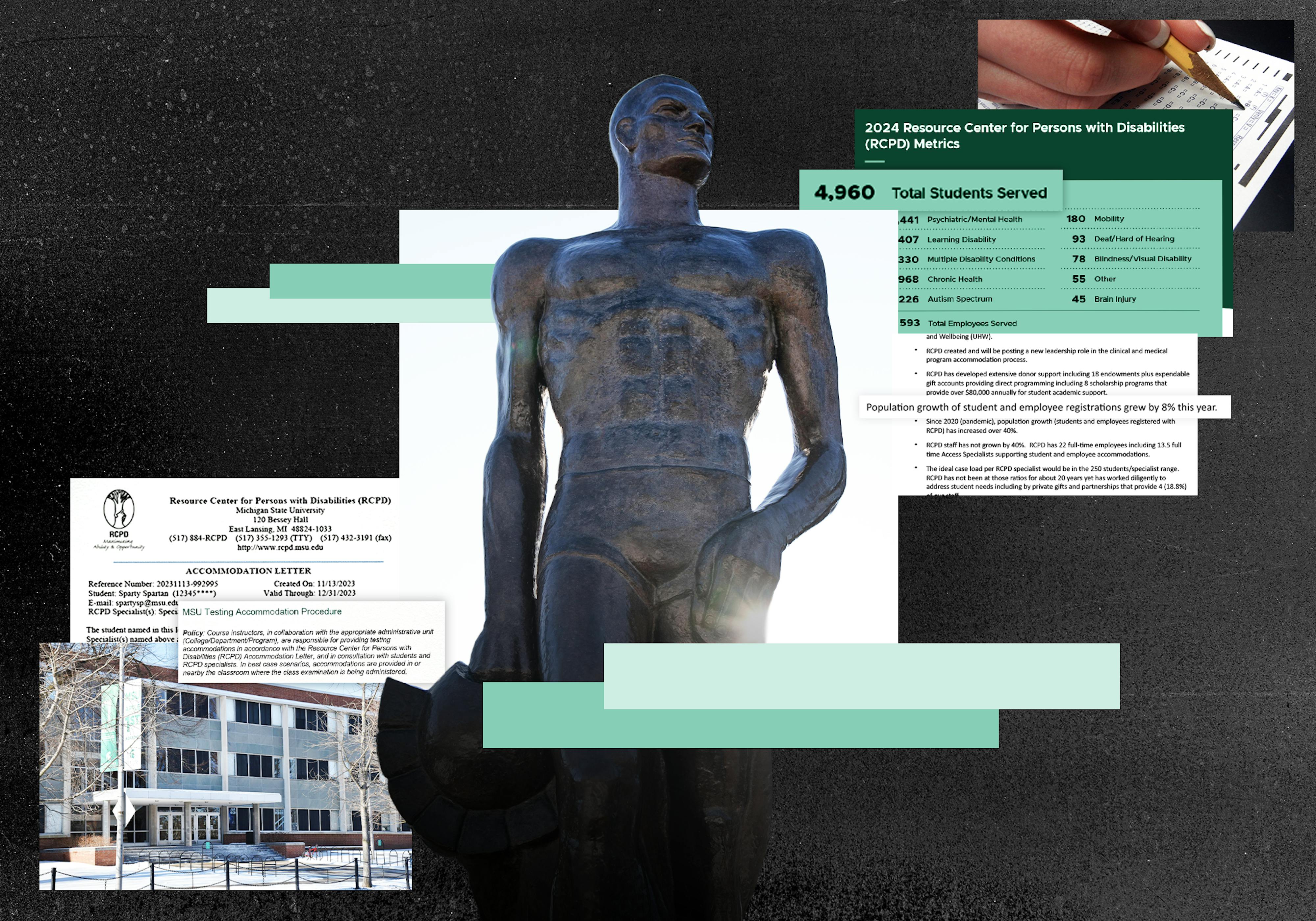
According to a State News analysis of publicly available data, the share has nearly doubled from 6% of the student body in fall 2020 to 11% in fall 2025.
To some at MSU, the growth is welcome, reflecting a more inclusive campus inside a more inclusive society. As our culture increasingly destigmatizes mental health disorders, the thinking goes, more and more students are empowered to recognize that they’re at an educational disadvantage thanks to conditions out of their control and, in turn, seek accommodations; and universities are more willing to level out the playing field for them.
But to some in the faculty, the rise in accommodations can be a source of frustration. For one, logistical issues posed by the growth of accommodations have made them, frankly, difficult to accommodate. What’s more, some have come to question whether their exertion to meet the growing number of requests is ultimately having the intended effects.
The increase in accommodations at MSU tracks with a national trend. Legacy news outlets have reported that the medical community’s loosening of what warrants a mental health diagnosis or learning disability is translating to universities across the country granting more accommodations. They’re required by federal law, after all, to ensure a fair educational environment for all students, regardless of disability status.
It’s also been raised, though, that the growth is most pronounced at the nation’s most selective private institutions. The share of students receiving accommodations at Stanford — nearly 40% of the campus — for example, dwarfs that of large public universities like MSU. Such disparities have spurred a debate about whether a system aimed at ensuring fairness might be, instead, disproportionately favoring students who are already ahead of the educational pack.
On the campus of a massive, relatively non-selective public university like MSU, the debate manifests differently. I hardly found indications of wariness that rich kids are stretching the truth about their mental health for the purposes of out-competing their peers. And yet, interviews with administrators, faculty members, students and researchers; a tour of the campus’ designated space for extra-time, private room tests; and combing through archival materials about the history of accessibility efforts at the university raised a host of other questions around MSU’s handling of accommodations.
Some are pragmatic. How much proof of the effects of a student’s disability on their life should the university require in order to grant them an accommodation? And, in a moment of profound austerity for MSU, how much capacity does the university have to meet the growing number of accommodations? There have been complaints going back for years that the marked increase in accommodations hasn’t followed a parallel bump in budget allocations to properly address them. Now, with units tasked with finding a 9% budget cut, two faculty members told me they’re running short on teaching assistants who can proctor extra-length exams in separate rooms.
“We’re at a threshold point,” Rob Maleczka, a chemistry professor, said.
Other quandaries presented by the rise in accommodations at the university are more philosophical. Some I spoke to doubt that the increase is completely inclusive of the students that are most in need of institutional support; Others wonder about the extent to which the dynamic is lending credence to the politically-coded perception of higher education as unrigorous, and soft; woke, even. Perhaps more implicitly, there’s a question of whether the so-called "privatization" of universities has eliminated their incentives to push back on the requests of students — who are increasingly treated as customers
One researcher told me he believes that, while universities should make changes to their accommodation systems, the root issue is, in some ways, out of their purview. Our culture is in a moment of overmedicalizing, he said, whereby everyday stressors that should be treated as obstacles to overcome are instead increasingly thought of as intractable barriers blocking one’s success.
“I’m not sure that we’re doing our students a service,” Alan Levinovitz, a professor of religion at James Madison University who wrote critically about the accommodations system for The Chronicle of Higher Education, told me.
‘More aware campus’
The modern state of MSU’s accommodations system looks vastly different from the way it looked for most of its near-century-long history.
It dates back to 1933, when May Shaw, the daughter of former MSU President Robert Shaw, founded a women’s honor society called the “Q Girls.” The society was tasked with assisting blind students on campus, including by reading class materials to them. In 1944, the group changed its name to “Tower Guard,” and it has existed on campus ever since, making it one of the oldest student organizations at the university, according to a 2020 article in the university’s publication MSU Today.
Grassroots efforts of the sort were the norm at MSU for the ensuing decades, until one student determined to institutionalize the university’s support for students with disabilities. Judy Gentile (known then as Judy Taylor) arrived at the East Lansing campus in the fall of 1965 and was the first known student at MSU to use a wheelchair, according to MSU libraries. Following advocacy efforts alongside peers in her undergraduate years to make the campus more accessible, MSU established in 1971 the Office of Special Programs, which aimed to support students with disabilities. The next year, Gentile created and subsequently administered the Handicapped Service Program.
Around the time of her office’s founding, Gentile invited Leonard Kriegel — a scholar nationally renowned for his resolute writings on living with polio — to campus for a talk, according to a book he later wrote in her memory. She reached out because of one such essay, in which he framed disability rights as parallel to the Civil Rights movement of the time, arguing “that American cripples would be better off if they emulated blacks and made demands on a society willing to sentimentalize them but unwilling to recognize their existence,” he reflected in his book. Though Kriegel later looked back on that essay with embarrassment, in part because the “analogy of cripple to black is too facile,” he nonetheless felt grateful to it: “For it brought me in touch with one of the more courageous people it was to be my good fortune to know.”
Key to that benevolence, Kriegel wrote, was Gentile’s unapologetic embrace of her disability. “Judy possesses that chair—and she was, in turn, possessed by it, as if the chair were part of her very presence. She had transformed it into a personal emblem, a triumph of necessity.”
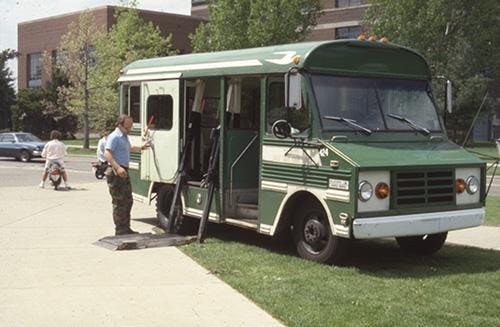
In 1975, a “progress report” laid out some of the achievements the university had made in the years since Gentile’s arrival. Entrance ramps for campus buildings like Bessey, Berkey, the Olin Health Center and the library were installed; dorm rooms at Case Hall were modified for occupancy by handicapped students; telephones and drinking fountains were “lowered for easy use by the handicapped”; and, Gentile’s office debuted in 1972 the “MSU Accessible Van,” which transported students with disabilities around campus.
Support student media! Please consider donating to The State News and help fund the future of journalism.
In the following years, Gentile’s national profile rose as the country increasingly took note of the barriers disabled people faced. She served on various committees dedicated to disability rights and access and consulted on legislation with such aims. In 1980, she was married to Eric Gentile, her assistant in what was then known as the Office of Handicapper Services, during a ceremony at the campus horticultural gardens in 1980, according to an article in the Lansing State Journal from the time. Eric Gentile told the paper about their first dance at a Kellogg Center reception afterward: “I put Judy on my lap and we spun around the floor (on my wheelchair). It was very nice.” He also remarked in the article on MSU’s “firm commitment to handicapper services,” calling it “an outstanding program.”
That was still a decade before equal access for people with disabilities would be federally enshrined. In 1990, President George H.W. Bush signed the “Americans with Disabilities Act,” or ADA, into law. Its effects were sweeping, barring discrimination based on disability in hiring, and requiring businesses to sell to people regardless of disability; For universities and other institutions, it was mandated that they provide accommodations to people with a “physical or mental impairment” that “substantially limits one or more major life activities.”
In March 1993, then-first lady Hillary Clinton was chairing a task force on healthcare. Gentile’s advocacy earned her an invitation to join it, according to the Lansing State Journal. But the advocate would die the next month, aged 46. Then-MSU President Gordon Guyer told the paper, “Make no mistake, Judy’s influence has been extensive and long lasting. This is a more caring and more aware campus because we were lucky enough to have her with us.”
Almost 40 years after Gentile’s death, the campus and its handling of disabilities has been further transformed. Today, there exists a comparatively robust disability services bureaucracy — and efforts to accommodate students solely with physical disabilities comprise only a small share of its total work.
When Tracy Leahy retired as the university’s ADA coordinator in 2025 after five years in the role, its MSU Today publication reflected on her tenure, noting its role in a “century-long commitment to accessibility,” and the university’s as a “pioneer” in disability services for the Big Ten conference. It also pointed to “one of the most significant shifts” during Leahy’s tenure: “the evolving conversation around invisible disabilities.”
“Initially, the focus was largely on visible disabilities, leaving conditions like chronic illness, mental health and neurodivergence underrecognized,” Leahy said in the article. “Today, there is greater awareness that disability is not always apparent, leading to more inclusive policies, improved training and expanded accommodations.”
Indeed, of the 5,525 “students served” by the Resource Center for Persons with Disabilities in 2025, 99% fall under the categories of either “psychiatric/mental health” or “learning disability.” Some of those students could fall under both, or have another disability in addition, but MSU’s data doesn’t break down those specifics. It does say that twenty-nine percent of the “students served” by RCPD are in the category of “multiple disability conditions.”

‘Overstimulating’
The most common way those students are accommodated is through modifications to the testing experience — most typically extra time, though "others with more involved needs" may need, among other things, a separate space to work, according to a February memo sent to faculty by Vice Provost and Dean for Undergraduate Education Mark Largent. “Approximately 85%” have “some requirement for modification to the typical testing experience,” the memo said. “On average, therefore, instructors can expect that approximately 8% of the students in a class may require some type of testing accommodation.”
As the proportion of MSU students receiving such accommodations has grown in recent years, though, it’s gotten more difficult for the university to manage.
The 2023-2024 “Annual Report” of the President’s Advisory Committee on Disability Issues discusses the difficulties. “Since 2020 (pandemic),” it noted, the number of students and employees registered with RCPD had increased “over 40%.” The number of employees in RCPD, though, didn’t keep up with that growth. The ideal caseload for the “13.5 full-time Access Specialists” tasked with facilitating accommodations would be “in the 250 students/specialist range.” But the reality was that “current caseloads peak at 400-500 students/specialists.”
A key issue emerged in light of the growing number of students with testing accommodations: where to take their exams? Faculty are generally encouraged by MSU to administer accommodated exams close to the classroom. Some are able to set up makeshift, quiet testing spaces in rooms next to the main classroom. But that’s not always feasible. For one, such space might not be available. Or, professors might lack access to a teaching assistant who can proctor the accommodated students’ exam and be able to answer their questions about it. Finding the time amid busy schedules to administer extra-time exams can also be a challenge for faculty members. (Courtney Placinta, a spokesperson for the University Health and Wellbeing unit, did not directly respond to a question on how much extra time is given to accommodated students, or how that's decided, saying "exams are individualized by the student's need" and that "faculty do not have the option to change it." Some professors suggested it can range from between time and a half to double time.)
In light of such “scheduling and space issues,” the committee’s report said, “RCPD is looking at a multifaceted set of solutions” to address them, noting that RCPD, historically in charge of administering the accommodated exams that professors could not, "has only three testing rooms.” It did float a “possible solution” — the MSU Testing Center.
Nathan James, the center’s director, told me there was a question of how much capacity it would have to help. The Testing Center also administers tests that community members need to pass in order to receive various professional certifications, and “can generally give about 10 to 15 exams a day for accommodated students.” When it comes to students who require a completely private room, then “we can only give one at a time, so that limits us depending on how long the students’ exams are.” Nonetheless, starting in the spring semester of 2024, the university designated the Testing Center as the official alternative for scheduling and administering all accommodated testing that cannot be managed by faculty. Academic departments must pay a $20 fee for each accommodated exam that the Testing Center administers.
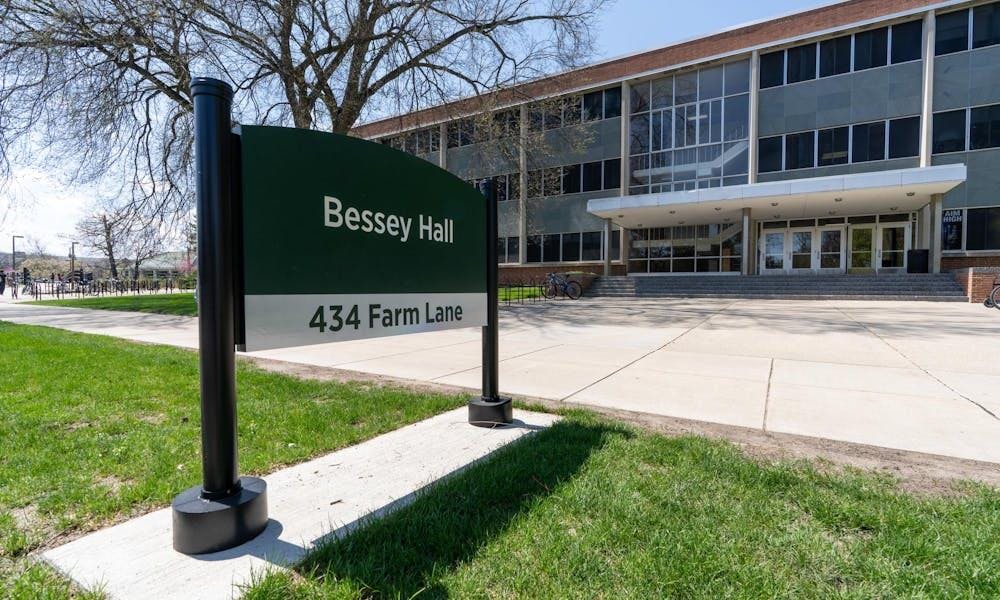
Located on the first floor of Bessey, the second floor of which houses the Testing Center, RCPD “wanted to focus on just dealing with the approval of accommodations and handling accommodations requests,” James told me. “And they said, ‘Can you handle more up there?’ And we said, ‘Yeah, sure, we can.’”
Though the transition came with some initial scheduling “hiccups,” James said, things have been relatively smooth since. “We’ve been able to increase our input and it hasn’t ever gotten to a spot where we’re over capacity,” he said.
Things were indeed quite under control when I visited the Testing Center on a recent Wednesday afternoon. A staffer sat at a desk facing a monitor mounted in one of the room’s top corners. The screen was divided into 8 separate panels, each displaying a birds-eye-view, live feed of a partitioned testing cell. Only one was occupied; notes were strewn across the desk as a student bubbled in an answer on a Scantron sheet. James told me someone is always stationed in front of the screen to ensure no one is cheating. He also explained to me that the room the student was taking the test in is intended for, among others, people in large, hundred-student-plus lectures who find the noise in those rooms distracting during exams. Even James, who doesn’t have a disability, told me he might himself find such an environment overwhelming.
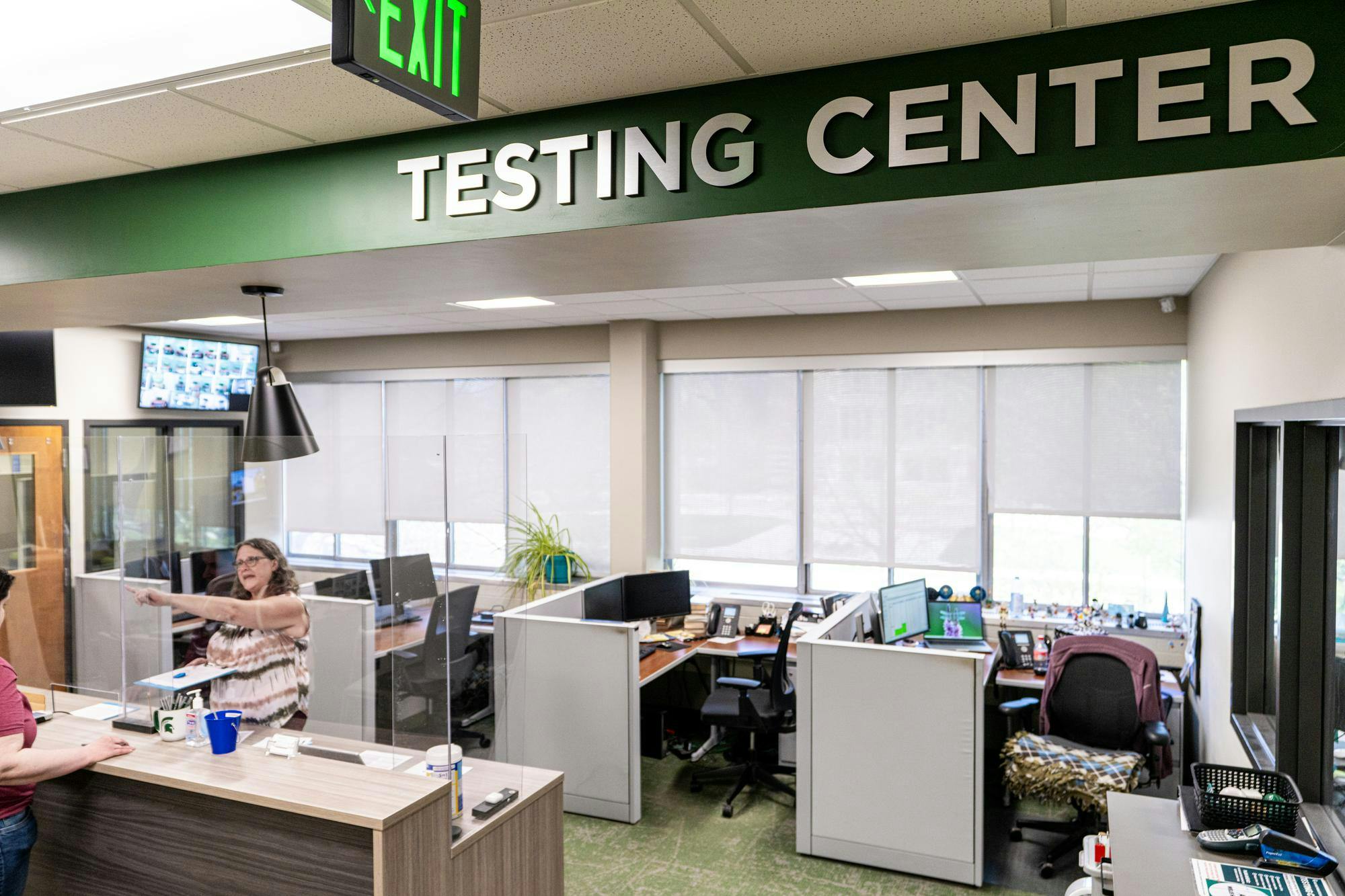
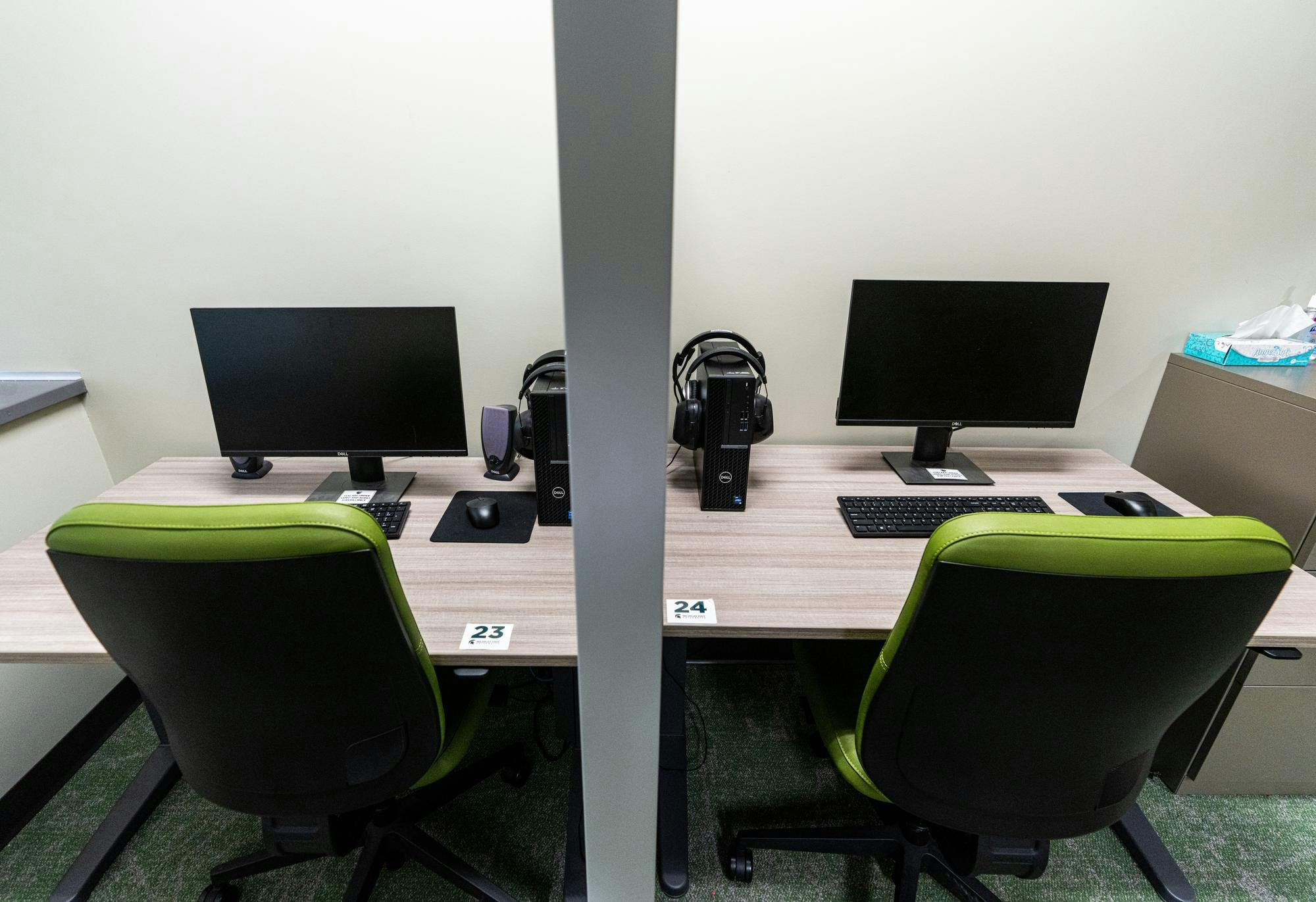
Across the sparsely decorated office and down a small corridor, James showed me another, smaller room with only two testing cells, both equipped with computer screens. That room is intended for students who require especially quiet spaces, technology to make test content accessible, or the services of a scribe or ASL interpreter to take exams, he told me. James motioned toward the mesh, gray blinds covering the room’s outside-facing window and another into his adjacent office, noting that they can be drawn to students’ liking.
With no clear signs that the growth of academic accommodations is slowing, though, the capacity questions remain. RCPD told me that a “workgroup” it convened to “address challenges with accommodated testing” ultimately recommended, among other things, that the unit “Increase pressure on university administration to increase space and budget allocations around testing accommodations for all affected parties: academic units, Testing Center, RCPD.” Representatives have presented to deans and provost-level officials “about the need for more resources,” and the unit it’s housed in, University Health and Wellbeing, has “advocated for additional resources to address increased accommodation needs.”
Any such request for more resources at MSU is certainly sensitive at the moment: the university is one year into reducing its operating budget by 9%.
Not all students with accommodations receive extra time or a separate space for exams. Zoology sophomore Jessica Iekel-Johnson told me they were diagnosed with autism around their junior year of high school, and are permitted by RCPD to wear headphones during exams in order to drown out background noises, which can be “overstimulating” and “overwhelming.” They separately get housing accommodations from MSU: the impact of anxiety and migraines on their day-to-day life entitled them to a single-person dorm room, Iekel-Johnson told me.
Sitting across from them just outside “The Workshop” cafe inside the sleekly designed, mechanical-chic STEM building was their friend Moss Weber, also a zoology sophomore. They haven’t been officially diagnosed, but Weber told me they’ve been working with a counselor in their hometown to uncover whether they might have ADHD or autism. Meanwhile, Weber and their mom have been in contact with RCPD about getting two support animals registered with the university, they told me. Ares, their bearded dragon, frequently needs to be fed, which would motivate them to get out of bed. And Apollo, a boa constrictor, is a comforting presence that, when held by Weber, helps to alleviate their anxiety, or “ground” them.
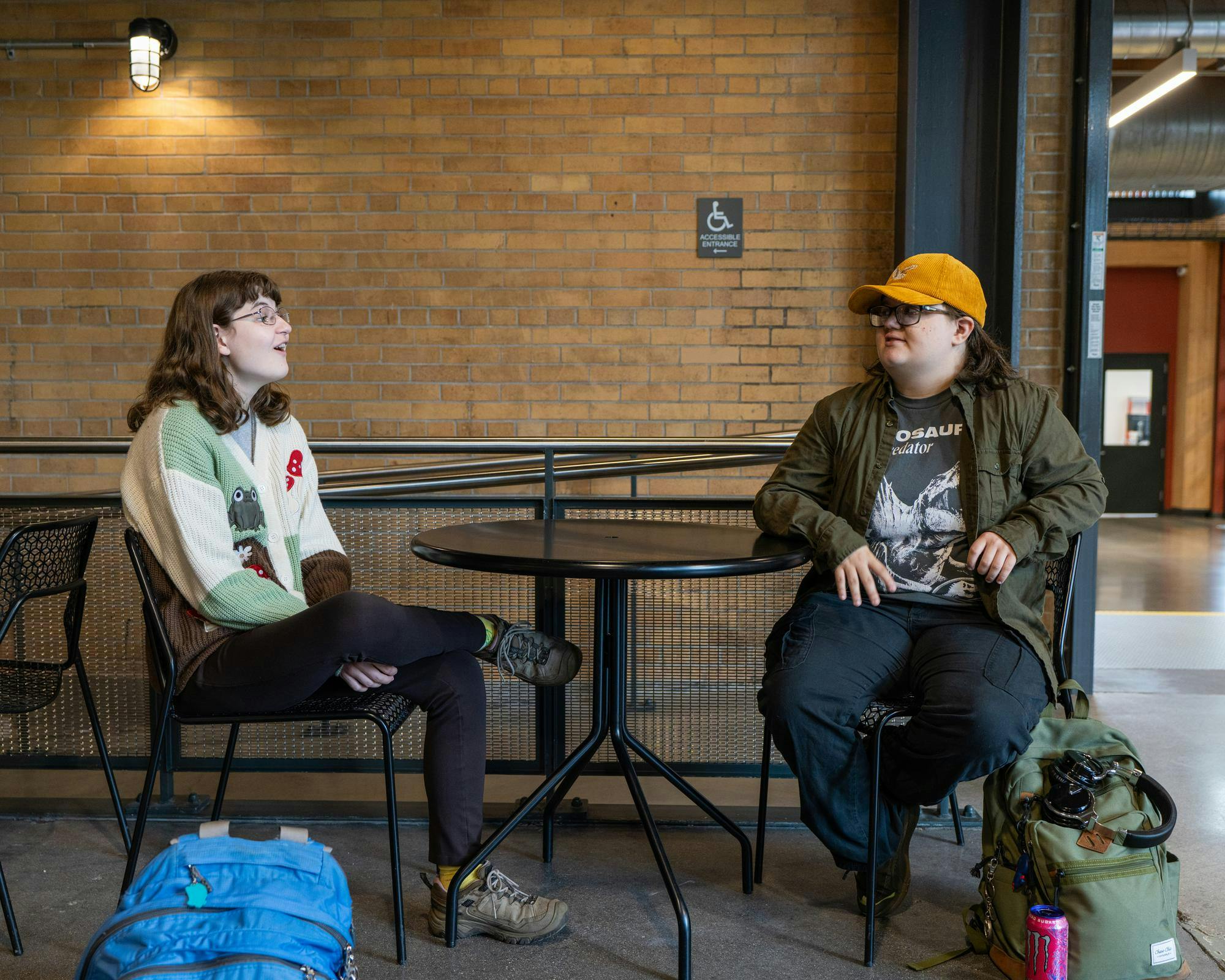
The friends broadly agreed: the increase in accommodations at MSU is reflective of a society that’s steadily destigmatizing mental health conditions. They noted that seeing people discuss their psychiatry on social media during their adolescence helped them to realize they might have conditions of their own. Iekel-Johnson later flipped their laptop around to show me a graph of left-handedness in the early 20th century. When being left-handed was seen as evidence that “the devil was inside,” of people, the number of lefties was marginal, they noted. But once “we realized that the devil is not inside of them, the rates skyrocketed for a little bit and then leveled out at like 11%.”
Iekel-Johnson continued, “A similar thing is happening right now with all sorts of marginalized groups that are not necessarily visible. You can see that with Queer rates, you can see that with autism, you can see that with ADHD. It’s rising now, but it will level out once the stigma is low enough and we can accurately identify who is autistic, and who is ADHD.”
‘Oh my goodness’
Kevin Walker, a chemistry professor who teaches large 100-plus student lecture courses, had an exam coming up.
Given that many of the students had accommodations entitling them to a separate space for the test, he worked with a department secretary to set up a “nice, quiet room.”
Then, overnight, “it rained like hell.”
By the time the accommodated students were taking their exam the next day, the previous night’s rain was “dripping down the gutter” just outside the room.
Unforeseen as it was, shortly before the next exam, a student told Walker that the water sound was “annoying” and that there were more people than expected in the separate test room he and the secretary had established.
“That was brought up as an oversight on us for not providing what they requested,” he told me. He and the secretary “just looked at each other and said, ‘Oh my goodness,’” Walker added, through an exasperated laugh. The secretary ultimately identified a different “more private” room for the student to test in.
Some faculty members I spoke to said they’re largely unconcerned with the increase in academic accommodations. It’s evidence of a more inclusive society and campus, they said, and besides, it’s not much trouble to meet the requests. Among them was Matthew Brodhead, an associate professor in the College of Education who researched disabilities for his PhD and psychology for other degrees. To him, the growth reflects that “people are discovering bits and pieces about themselves that maybe they didn’t fully understand before, or other people are helping them understand things about themselves that they maybe didn’t understand before. And then, with that information, asking, ‘Okay, how can we position things to help you be successful?’”
But there was also an awareness among those I talked to that accommodations are easier to grant in some places than others. Those who teach smaller, high-level classes generally have a simpler time coordinating testing accommodations; and, in some disciplines, where timed exams are less common, like the humanities, for example, it’s something of a moot point.
Walker and his colleague, Maleczka, presented the growth in academic accommodations as a particularly pressing issue in their department. During finals week, the department will likely have to send students outside of the building, he told me. The finals for Chemistry 252 and “one of the Gen-Chem” courses — “huge classes” — are scheduled for the same time. With the sheer number of students entitled to quiet testing spaces between the two exams, there likely won’t be enough available private rooms in the building for everyone. And, paying out of the department’s pocket for the Testing Center’s services isn’t an attractive alternative: “It’s a choice whether I go to McDonald's or I make ramen noodles at home,” Maleczka joked. “But if you got two bucks in your wallet, the choice is made for you.” For an already austere department with a “tight” budget, the economics simply aren’t viable, he added: “10% when you’re talking about thousands of students, you times that by $20 — it’s real money.”
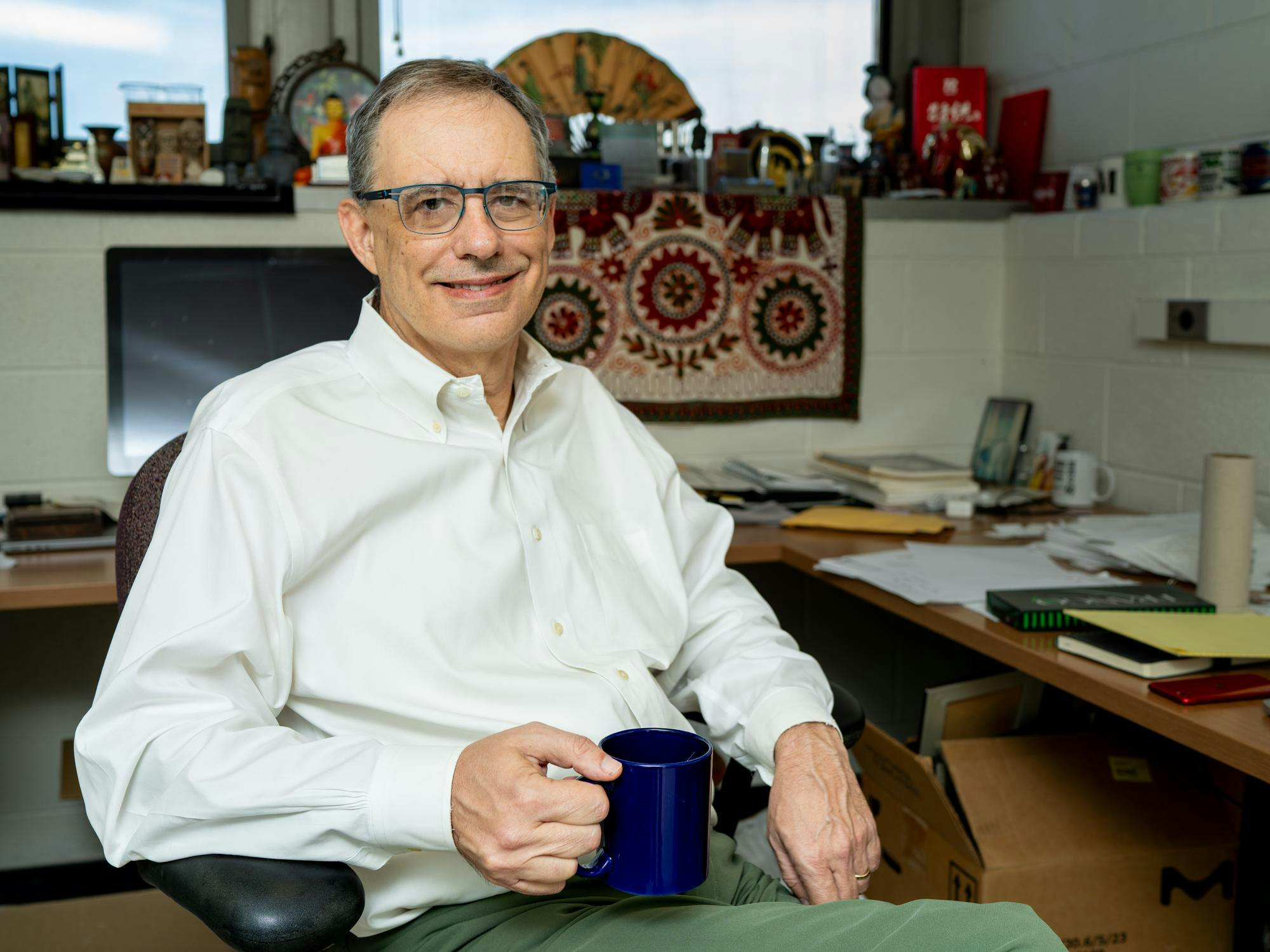
Given the difficulties imposed on faculty through the accommodations system, the professors said they believe the university’s central administration should have a greater role in helping departments deal with them. Maleczka said he sees it as unreasonable that “the cost” of providing accommodations to its students falls squarely on the chemistry department, given that it teaches “thousands more non-chemistry majors than we teach chemistry majors.”
Walker, for his part, pointed to the memo on accommodations to faculty from Largent, the undergraduate dean, saying it “cleared any sort of university responsibility.” It’s subjective, but that does seem a fair interpretation: the memo stipulates, “In every case, faculty are responsible for actively managing their testing needs, and faculty and units are encouraged to collaborate with RCPD as they seek solutions. In almost all cases, faculty should administer tests in a manner arranged locally and done directly under their control.” Walker’s reaction to the memo, he told me, was, “Okay, that’s what we’ve been doing all these years.” By contrast, “what would have been new from that email would have been, ‘We’re going to match (funds),’ or whatever the hell — but nothing.”
At the same time, the professors are starting to worry whether they’ll have enough people available to proctor in the various exam rooms. Teaching assistants are typically a reliable source and are preferred as proctors because they understand the test material and can therefore answer students’ questions during exams. But the chemistry department’s absorption of the 9% budget cut has reduced its TA numbers. Maleczka has concerns for the potential implications of having to send an undergraduate learning assistant, for example, to proctor an exam, given that they’ve had less health and safety training than TAs or professors. He recalled an incident years ago where a student who had ADHD and received testing accommodations overdosed on Adderall during an exam. The proctor promptly called 911, and paramedics then arrived to treat the student; But, “If I didn’t have a proctor in that room, I’m not sure what would have happened.”
Aside from those graver concerns, the professors suggested that handling this scale of academic accommodations is simply stretching the department thin. Maleczka and Walker mentioned the strain on the department’s two secretaries, who, on top of their other responsibilities, are tasked with coordinating spaces and times for accommodated exams and are flooded with questions from students about such. “There’s always interpretational questions about what (the accommodation) actually means,” Maleczka told me, adding that one of the secretaries recently said it’s “getting to a point where we almost need a full-time person just to handle all these (accommodations).”
Perhaps compounding the angst, I sensed, is that it’s difficult to tell whether extra time and separate space accommodations are actually helping students. Walker told me he’s, in fact, been struck by the “disappointing” scores of some students getting accommodations: “The extra time is not what they need. They need more time studying. They need to take the test at a later date.” Maleczka said he hadn’t analyzed how his test scores break down across accommodation statuses, but has observed that some students who are entitled to extra time don’t end up using all of it, and in some cases, finish in the time allotted for students without an extra-time accommodation.
The frustration is being felt elsewhere on campus. Bob Gould, a professor of broadcast journalism, described to me the “gray, fuzzy area” that can surround some accommodation letters, making it difficult to know exactly what he needs to do to accommodate the student. (To that end, accommodation letters don’t disclose what disability or disabilities a student is receiving accommodations for, which can make the process murkier still for faculty members.)
And, with his 60-80 students per semester, Gould said it’s at times difficult to remember all who have accommodations: Hence, his wish that students remind him when they have an accommodation. (RCPD told me a new “data system” currently being integrated will include a “faculty portal” allowing professors “to log in to view accommodations for their courses each semester, in addition to receiving notification of accommodation letters,” which will “streamline notification and implementation of accommodations.”) He’s previously been uncertain, though, on whether the responsibility to follow up on accommodations rests with the student or the professor. Upon asking, one person from RCPD suggested it was his job, Gould told me. Confused, he called the office and a different person said it was the student’s responsibility. “So, I think I’m going with that,” he said, noting that, as professors, “we got a lot on our plate.”
A particular challenge for Gould has been students citing their accommodation letters as justification for routinely missing class. Given that their letters technically stipulated they were entitled to be excused for some absences, though, he told me he accepted it for a number of semesters. At the same time, accommodated students missing “nine, 13, 15 classes” raised serious questions for Gould about how to grade them. So, he reached out to RCPD for clarity, which told him students with accommodations are entitled to double the amount of excused absences stipulated in the syllabus. (RCPD told me in a statement, “This is not what RCPD’s guidance provides for on the website, nor is it what we tell faculty. Our general guidance is that the absence accommodation may provide for two more absences than what the syllabus allows for, not two times the absences.”)
One implication of these stresses is that some professors can’t help but occasionally ponder — are all of these academic accommodations absolutely valid and necessary? However, professors told me, those doubts are mostly internalized. “I mean, look, I’m reluctant to question the legitimacy of these things,” Maleczka said. If he questioned a student’s status to get double time on a test, for example, Maleczka wondered, “Is that going to be interpreted by the administration” as a “violation of our anti-discrimination policy?” And, “are they going to go after me for it?” He added, “Because I don’t trust the bastards not to.”
Skepticism is a part of Gould’s nature, he told me. “I mean, of course it goes through your mind, I’m a journalist,” he said. Gould’s son is diagnosed with ADHD, and he therefore understands why extra time on tests can help to level the playing field for some students whose brains process information differently than neurotypical people. But he, like all professors, has often encountered students who make excuses — “my printer died,” for one — to skirt deadlines. Those cases, Gould suggested, make it harder not to wonder whether there might similarly be a degree of deceit in some students’ citing of accommodations to regularly miss class.
‘Mystical place’
A key question in the debate is how universities decide whether to grant accommodation requests. They’re legally obligated to satisfy the ADA’s requirements, but have discretion to accommodate students in ways that might go beyond them.
RCPD felt like the likeliest place to go to understand MSU’s rules. I also had cultural questions for the office: do its staff feel more like customer service representatives, working with students with ADHD, anxiety and other conditions to ensure their university experience is maximally comfortable? Or, do they view themselves more as discerning gatekeepers, tasked with evaluating accommodation requests closely to ensure equality in academic standards across the board?
However, my request to interview representatives of RCPD was denied — in a rather ironic fashion, at that. Placinta, the spokesperson, emailed me on behalf of the office tasked with facilitating accommodations: “Unfortunately, RCPD staff is booked solid with the end of the semester and no one is able to flex their schedule to accommodate an interview.” Fair enough.
Placinta did, though, relay a list of questions for RCPD to the office. Luckily, that interview method helped to shed some light on how strict MSU is in providing accommodations.
The process has three steps, RCPD told me. The first is “self-identifying” as an individual with a disability using an online portal on its website, at which point students are connected with a specialist based on their disability category. Second, students must submit “required documentation" from a medical provider that establishes the presence of a disability and its hindrances in their lives. The third is a “Needs Assessment” wherein the student and the specialist meet for an hour or so to discuss “what academic accommodations might be best for their unique situation.” Out of that comes an “accommodation letter,” which students send to their professors for incorporation into their courses. A student and professor may then meet to discuss how that incorporation should look in more detail.
The second piece of that process is perhaps the most debated element in the accommodations conversation: essentially, what, and how much, proof do universities need in order to grant one?
Benjamin Lovett, a professor of psychology and education at Columbia University who has researched accommodations, told me he favors “rigorous review” of documentation to “ensure that students meet the legal standards for disability,” and that the scholarship out there suggests those standards are, too often, problematically loose. He points to one study establishing that both students with and without disabilities “desire” common accommodations, and another showing that extended testing time “tends to benefit” both groups. Finally, Lovett supports his position with another study that found “many students who seek accommodations don’t have disability documentation that actually demonstrates the presence of disorders.”
It’s tricky to pin down how rigorously MSU reviews accommodation requests compared with other institutions. RCPD told me that documentation “should come from a licensed health provider that diagnosed or is currently treating the student or employee and should contain the diagnostic information and impacts to activities of daily living (also known as major life activities).” But they added as a note that, “if a student is having difficulty obtaining documentation or do not have a provider,” the RCPD specialist assigned to them can help them to “address barriers to documentation by providing referrals to on-campus providers and/or connecting you with information for insurance or financial assistance through the Office of Financial Aid.” As students move through the process to obtain the needed documentation, the RCPD specialist “may be able to provide some temporary, time-limited academic adjustments while they obtain documentation.”
Asked whether an official diagnosis of a disability is needed to receive an accommodation, RCPD directed me to its webpage on “documentation standards,” which does not appear to stipulate that an official disability diagnosis is necessary.
The MSU Today article about the retirement of Leahy, the former ADA director, said there’s an “emotional dimension of the work, particularly when accommodation requests must be denied.” Leahy is quoted as saying, “One of the most emotionally difficult aspects of this work has been handling appeals of accommodation determinations. These cases are challenging because they often involve individuals who are seeking support to overcome barriers and fully participate in their environment.” She continued, “I strive to approach them with professionalism, empathy and transparency, ensuring that the individual understands the reasoning behind the decision and is aware of any alternative resources or supports that may be available.”
Amal Sebastian, a graduate student in the nuclear physics program, told me that one of his colleagues at the Facility for Rare Isotope Beams, where he works, receives extra time on tests and that he has no problem with it. He does believe, though, that the university should require an official diagnosis before granting accommodations. “If it’s just a claim, anyone could claim it,” he said, adding that leniently granting accommodations in this way “could be unfair to other people working hard.”
Bree Tomlinson, a plant and soil sciences junior, said she worries that if the system is too lenient, people will “abuse it.” But she also doesn’t think the university should require a diagnosis: people who could be deserving of accommodations might nonetheless struggle to get a diagnosis, she said.
Questions of access to diagnoses frequently came up in my conversations with professors, experts, students and administrators for this story. People pointed out that the costs associated with mental health consultations can be a barrier to those from lower socioeconomic backgrounds. And, cultural differences across socioeconomic divides mean that what one person recognizes as a mental health issue might not be by someone else.
That stratification trickles into academic accommodations, too. All of the universities with the highest proportion of its students receiving accommodations are of higher education’s upper crust, according to news reports. In its article “Accommodation Nation,” The Atlantic magazine pointed to the divide as evidence that a system designed to level the educational playing field, was, in effect, exacerbating inequities: students at elite universities, already at the top of the educational and socio-cultural totem pole, were stretching the truth to get extra time on tests in hopes of securing higher marks, while the students most in need of accommodations are going unnoticed, the article suggested.
Danielle DeVoss, the interim chairperson of the Department of Writing, Rhetoric, and Cultures, is broadly supportive of MSU’s handling of accommodations, yet alarmed by the fact that they’re disproportionately available across the country to people of higher socioeconomic backgrounds. The university has a responsibility, she said, to communicate the availability of accommodations to students who, because of their socioeconomic background and upbringing — perhaps they’re a first-generation college student, for example — might be less savvy than others in pulling the institution’s bureaucratic levers to their benefit. “The university is a phenomenally mystical place to navigate if you don’t have the privilege of knowing how to advocate for yourself, how to find resources.”
‘Pushback’
Among everyone I spoke to, including those content with MSU’s accommodations system, there was a consensus about what explains the increase: less stigma around mental health illnesses, and looser criteria for diagnoses. The thinking is that our society is undergoing a seismic shift in how it understands mental health, which is, in turn, impacting all of its segments; higher education just happens to be one of them. But I came to wonder whether the higher education system itself might actually share at least some responsibility for the marked increase in accommodations it’s now encountering.
In the 20th century, the public and policymakers alike coalesced around the idea that higher education should be, in essence, a public good. After World War II, the thinking took further hold, as the country came to see universities as the key to developing a highly skilled and robust workforce, which would, in turn, ensure American dominance on the world stage amid the supposedly creeping threat of Communism. This all meant that there was a willingness, by both the government and the taxpaying public, to cover the copious cost of higher education.
But this started to unravel in the years surrounding the Reagan Revolution. Following a prolonged period of economic “stagflation” in the 1970s, the former Republican president soared to victory on the salient promise to cut people’s taxes and deregulate private industry. Doing so, the thinking went, would usher in a new era of American prosperity by giving people and companies the liberty to make economic choices that best suited them under a free-market system. The public had for decades been broadly willing to give money to the government so it could pay for things that all of society would supposedly benefit from; but that appetite was now evaporating.
Universities, then, had to find other ways to finance their operations as state appropriations declined from then on. One way was to shift research focus away from subjects with the most academic merit, and toward projects that would generate windfalls for universities: it was around this time that universities started striking research partnerships with private companies, where the former could expect to earn cash from, or equity stakes in, the latter in exchange for developing novel technologies and patents. But the principal funding mechanism universities turned to was simpler: depend more on tuition.
These shifts in higher education’s financing are referred to by scholars as the “privatization” of universities. And in that framework, students crucially become “customers”; institutions of higher learning, “businesses.” Importantly, like in any business, the principal goal becomes to sell something customers want to buy.
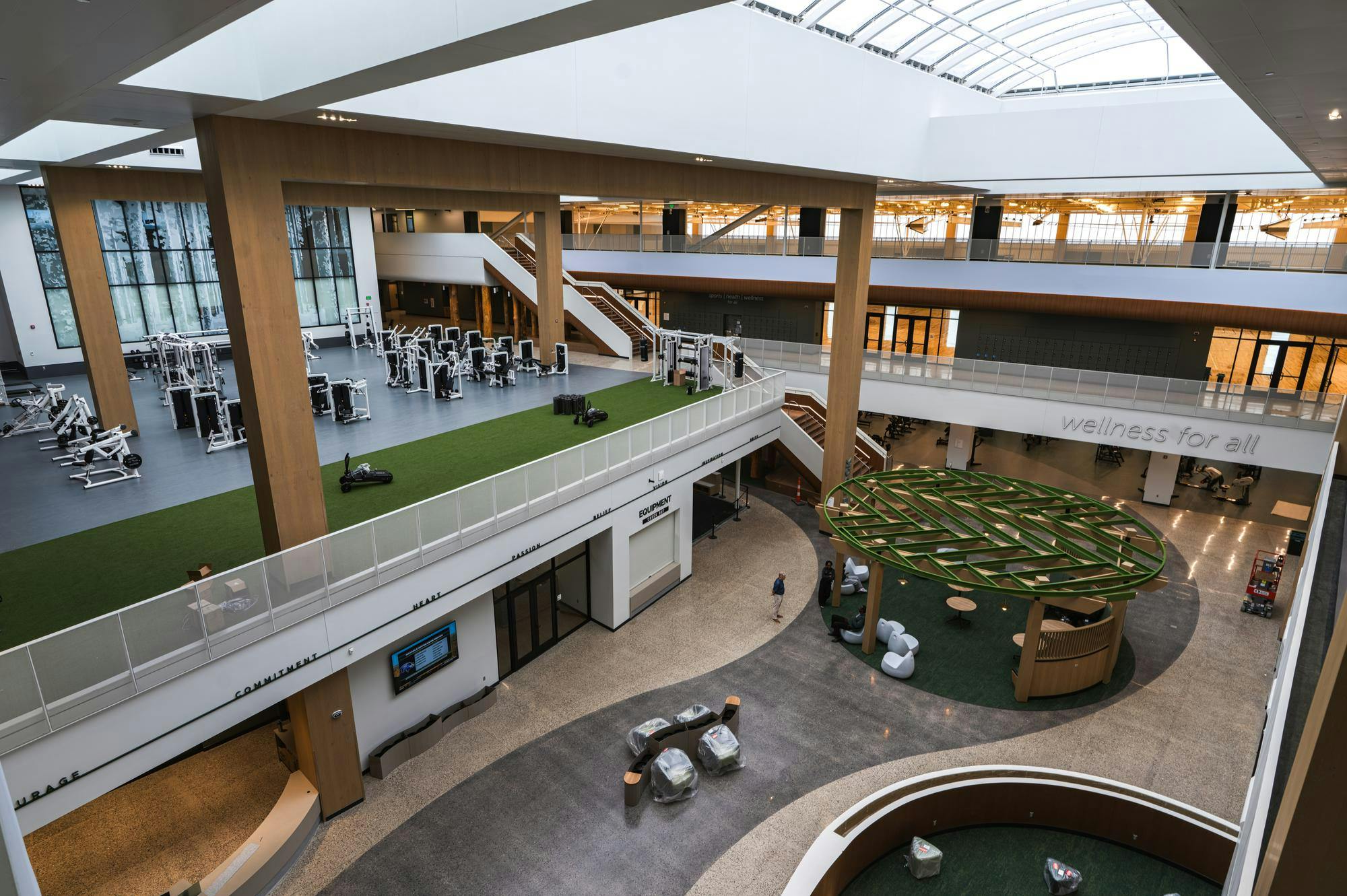
Privatization, then, helps to explain a lot about the university as it exists today: why exorbitant sums of revenue are spent on marketing and PR departments; why schools clamor for endowment gifts that can fund rock-climbing walls and saunas inside of state-of-the-art rec centers (i.e. MSU’s freshly-debuted gym in South Campus, which boasts, among other amenities, a digital golf simulator.) It’s part of the reason for “grade inflation” — universities’ increasingly high tuition targets are met if students are happy, and students are happy if they get high grades that will land them desirable jobs. It’s even been argued that privatization is part of colleges’ embrace of Greek Life: The university system “could never attract hundreds of thousands of (students) each year… if the experience were not accurately marketed as a blast,” the journalist Caitlin Flanagan wrote in a 2011 article for The Atlantic.
I wondered if privatization might also help to explain the growth in accommodations across the country.
Yes, less cultural stigma around mental health conditions and more lax diagnosing procedures are the main drivers of the increase. But the modern higher education system also isn’t designed in a way that’s conducive to slowing the growth.
When universities’ survival is contingent on their ability to convince students that paying thousands of dollars of tuition — and, often, going into decades of debt to do so — is worth it, there’s simply not much of a reason to be a stickler when a student wants extra time, or a separate room, for a test.
It should also be noted that it’s relatively inexpensive for the university to sustain the system. RCPD’s budget for the 2025-2026 fiscal year only accounts for $2,104,351 of the university’s $3.69 billion operating budget, less than a tenth of 1%. (RCPD’s budget also got $617,354 from “gift/endowment” funding, bringing its total to $2,721,705.) And that’s not to mention that pushing back on accommodation requests can run the risk of lawsuits challenging the basis of rejections under the ADA.
I was curious to put the question of privatization's role in the growth of accommodations at MSU to Thomas Jeitschko, the university’s former provost, and an economics professor. When I did, he paused for a few seconds — “That's a tough one,” he told me. For one, even if there’s isolated instances of “overaccommodation” at the university, that doesn’t necessarily mean that the university “overall” is overaccommodating. In fact, “you might be overaccommodating some while others who would really need accommodation have fallen through the cracks.” He continued, “If you wanted to have as a general proposition, ‘is offering more accommodations, from a market standpoint, better or worse for the institution,’ I think it’s a pretty complex picture.”
Accommodations could translate to a “better experience for students” where they get “better training.” That might make more students get desirable “placements” in the working world, which, in turn, “makes you a more attractive place.” But at the same time, prospective MSU students are weighing a wide range of other higher education options — fellow large research institutions, smaller public universities, and private colleges, for example — with a similarly wide range of relative pros and cons. “So, they’re not easy trade-offs in this space,” he told me. “And I think that universities, generally, for better or worse… are not trying to think in a sort of profit-loss, competition type of way.”
Gould, the journalism professor, was also somewhat ambivalent on the point when I asked.
But generally, he said of the university, while it’s full of people who genuinely want the best for students, “it’s a business,” noting that the privatization of universities has contributed to grade inflation.
Under such a privatized system, Gould added, “it’s harder for us now, as faculty, to push the students harder. There’s a lot of pushback.”
‘Unrealistic expectations’
The accommodations debate poses some vexing philosophical questions for higher education — and society more broadly.
For one, it lends credence to some of the negative perceptions that the political right has of universities and that have been used as a justification to attack them. As DeVoss put it, universities granting ever-increasing numbers of academic accommodations might align neatly with the views of people who see them as “soft institutions that see everyone as a unique snowflake and the rigor has been lost.”
Perhaps that perception isn’t even confined to one side of the political spectrum, but has, rather, trickled into the popular consciousness. DeVoss told me about an episode she’d recently seen of FX’s sitcom, “The English Teacher,” that seemingly reflects some of society’s cynicism around accommodations in education. Titled “Lake Trip,” its premise is that two high school English teachers go on a weekend getaway while their colleagues are back at the school administering a standardized test, according to a blurb about the episode on Hulu. The vacationing teachers meant to stay unplugged from work, but one of them, Evan, gets “antsy” and calls to check in for updates on the exam administration anyway. What he finds is that a student was “taking advantage of accommodations to avoid doing the test.” When Evan arrives back at the school, he convinces that student, Chelsea, to “take the test by appealing to her vanity.”
Even the ubiquitous “Wells Hall Preacher,” who has spent years on MSU’s campus trying to convince students to come to Jesus, has expressed misgivings about the state of accommodations in higher education. During a recent sermon, he launched into a tirade about how students would be better served by joining the Christian faith than wasting time and money in today’s supposedly overaccommodating academy — where extra-length tests and extended assignment deadlines abound. “There will be no open-book retake exams when you stand before God,” he bellowed.

Aside from feeding negative perceptions, some in MSU’s faculty told me they’re concerned with the material, long-term impacts on students of too leniently granting accommodations. Noting that perhaps her sentiment is “patronizing, or motherly,” DeVoss said she’s nonetheless “concerned about, when we wrap so many accommodations around students, are they going to be able to function in a world that is ugly and brutal and cold and difficult in many, many ways?” At the same time, she questions if she has “any right to overdetermine how a student’s going to be treated in their professional life as an employee elsewhere.”
Maleczka, the chemistry professor, said he was wrestling with similar questions. He asked whether a culture of accommodation might give students unrealistic expectations of the working world. But he subsequently put a slightly different spin on the idea, implying that, aside from the potential harm to students from overaccommodating them, society could be affected, too. Noting that his department teaches many students who plan to attend medical school, Maleczka said, “If I show up to the emergency room bleeding, I don’t want somebody who needs extra time to figure it out.”
For its part, RCPD pushed back on the notion. The office told me in a statement that “concerns about ‘unrealistic expectations’ for the workplace often assume a sharp divide between academic accommodations and employment realities that does not actually exist.” Citing “data and guidance” from the Job Accommodation Network, an advocacy group, RCPD said “accommodations are common across employment settings, are often low‑cost or no‑cost, and frequently result in improved performance, retention, and productivity. Far from being unusual or extraordinary, accommodations are a routine part of how organizations support employees in meeting essential job functions.”
Levinovitz, the James Madison University researcher, raised concerns about the accommodations system in a 2024 essay in The Chronicle of Higher Education. When I talked to him a few weeks ago, he told me that, while universities have a responsibility to be discerning in granting accommodations, they’re having to contend with a broader social phenomenon that’s largely out of their control: what he sees as the problematic expansion of what is “understood as disorder or illness.” Some scholars call the phenomenon “overmedicalizing,” whereby normal human conditions and stressors are defined and treated as medical problems.
The concern with overmedicalization, he told me, is that people might come to accept the difficulties they face as fundamental and intractable. In such cases, Levinovitz said, people would be better off if they understood the difficulties as issues to overcome. As an example, he pointed to former U.S. Surgeon General Vivek Murthy’s declaration of “loneliness” as one of the greatest threats to the American public’s health. “I think when loneliness comes to be understood as a health problem, which in certain ways it obviously is, we are at a point where illness and sickness and medical models have clearly gone too far,” Levinovitz told me. “You should not be going to your doctor for a diagnosis of loneliness, and we should not be conceptualizing loneliness as a health threat, at least in a medical sense.”
Universities have a role to play in that climate, Levinovitz said. He gave the hypothetical example of students who “have come to believe, or who have been told, that they have anxiety disorders,” and never received any “interventions about how to overcome public speaking fears,” but rather received accommodations. “They can submit the presentation by video, say, or opt out and write a paper instead — I’m not sure that we’re doing our students a service if we always do that.”
The accommodations system was designed for a particular set of disabilities, like blindness or deafness, that can’t be remediated, Levinovitz said. But some of the difficulties students are receiving accommodations for today, in fact, can be, he suggested. “One of the goals at universities” should be that when students go to accommodations offices, they’re told, “we have plans in place for making sure that, eventually, you don’t need to opt out of in-class presentations because of your anxiety, and you don’t need extra time on your exams.”
Some people I spoke to, meanwhile, have concerns that certain media coverage scrutinizing the accommodations system risks stigmatizing an already vulnerable population.
Nathan Tykocki, a pharmacology and toxicology professor who teaches at the 400 level, told me he receives about six or seven accommodation letters per semester, and that he’s not encountered a situation where such requests “inconvenienced” him or other students in the class. In light of pieces on accommodations like the one in The Atlantic, he told me it’s his hope that “those emails from MSU keep going to students and that we do our best to remind them that, even though the pieces like this might be implying that there’s some undeserving aspects here, that it’s just not true. That, you know, we’re here to help and to educate, and that’s our job — not to determine whether or not your disability is disabling enough.”
Public policy junior Nina Blum is hard of hearing. Her accommodations from MSU entitle her to things like closed captions, preferential seating and a microphone that professors wear during instruction. Blum told me that at MSU she’s been “met more where I am” compared with high school; there, she recalled having to miss days of school because her hearing aids weren’t working and the school didn’t have viable alternatives available. Based on her experience at the university, she suggested that suspicions of people stretching the truth to get accommodations for invisible disabilities are largely baseless.
“People will say, ‘the accommodation is unfounded,’ and I’m like, ‘not when you have to prove you have a disability,’” Blum told me. “You’re not just saying, ‘Hey, RCPD, I want extended time,’ and they’re just going to give it to you. No. Or, when I approached RPCD, it’s not like I said, ‘Oh, I have hearing aids, give me accommodations.’ No.”
‘Outcome-oriented’
Jeitschko, the former provost, has an optimistic read on how adjusting MSU’s handling of accommodations could more broadly improve how it assesses students’ academic performance.
As a professor, Jeitschko told me, his main concern is ensuring his students “understand economic reasoning.” What he’s not interested in is “how quickly they can regurgitate something or how quickly they can apply what they learned.” As such, requests for extra time on exams were “never an issue” for him.
That timed exams remain such an enduring method for tracking students’ academic success, he believes, reflects an unfortunate reality in the education system: Often, “we value what we measure rather than measure what we value.” What should matter is that students truly understand and absorb class material, he said; and performance on a timed exam, and GPA, for example, aren’t “infallible” ways of assessing that.
Though the education system writ large can seem to overemphasize easily quantifiable metrics like these over the true pursuit and production of knowledge, Jeitschko told me he thinks that tends to be especially true of the culture at elite, exclusive universities. And that, he suggested, might help to explain why accommodations have disproportionately skyrocketed at such institutions compared to places like MSU.
To illustrate the point, Jeitschko drew on his experience raising children in the affluent Arlington, Va., while working for the Department of Justice. He was struck by the “amount of pressure” that some parents in the area — the highly-educated government employees, diplomats and lobbyists — seemed to exert on teachers, even those at the elementary level, “for, if you don’t give my kids this and that, how are they going to get into Princeton.” Being raised in such a striver culture, he suggested, foments in children a prioritization of hitting specific, quantifiable outcomes: getting into the university with the highest possible pedigree, and receiving the highest possible grades there. By extension, while in university, such students might be more willing and apt to pull the bureaucratic levers at their disposal — academic accommodations for extra time, namely — to maximize those chances.
“I strongly suspect that the type of students who are really outcome-oriented, in terms of these visible metrics, is a much larger percentage of the population at Ivy Leagues than it would be at a school like ours,” Jeitschko told me. “And that’s why we might have a lot of students who say, ‘Look, maybe it would help me a little bit, but I don’t want to bother, I don’t want to jump through these hoops so that I can get this thing.’”
He imagined one such hypothetical MSU student thinking, “‘So maybe there’s a couple classes where I could’ve gotten an A, I got a B instead, and maybe in some instances it’s literally the case that I would need the accommodation in order to demonstrate my knowledge. But I know that I know it, and that’s good enough for me.’” What truly matters to the student is, “‘What did I learn and what did I get out of it.’”
Jeitschko said, “I think that thinking is likely to be more prevalent at a place like MSU than it might be at the Ivys.”
Maybe so. Still, while the growth in accommodations at MSU pales in comparison to that of places like Harvard or Yale, Jeitschko doesn’t feel that means it can be ignored.
As the proportion of students receiving extra time on tests grows, Jeitschko said the institution should ask itself: Are we testing in a way that makes sense? Rather than professors straining on an individual basis to coordinate times and places for the scores of students receiving accommodations, he proposed as a hypothetical that the university require all professors to give exams that are “instead of 50 minutes, 100 minutes long.” In other words, accessibility for the broadest number of people could be better baked into the educational model from the outset.
To Jeitschko, doing so could, if you will, kill two birds with one stone: it could help MSU more truly measure students’ command of knowledge, and it might mean spending the university’s limited dollars more efficiently, he told me.
“For many students, perhaps the exam setting is a high-stress one that doesn’t necessarily map into something that they’ll be doing in their life later, and that adversely affects them — that’s when we try to mitigate that with an accommodation,” Jeitschko said. “But if we can come up with a different way to actually measure what we really want to measure directly then we might have less need for that.” In his “ideal world,” that might be achieved through oral exams where a student simply discusses the course concepts with a professor or a personal essay (that is, if he can make sure that “AI or a roommate” aren’t writing it.)
It’s not clear to him that this would be more expensive than the current system, Jeitschko said. If it necessitates fewer accommodations, which do "cost some, then you have some savings in that realm."
For now, Jeithschko told me, “we need to come up with some structures” to effectuate this sort of streamlining, and “we should periodically revisit them.”
As the proportion of students receiving accommodations continues to grow, he suggested, that work could become especially pressing:
“If you’re up to a third or more needing accommodations, it might be impetus to really rethink some of this.”