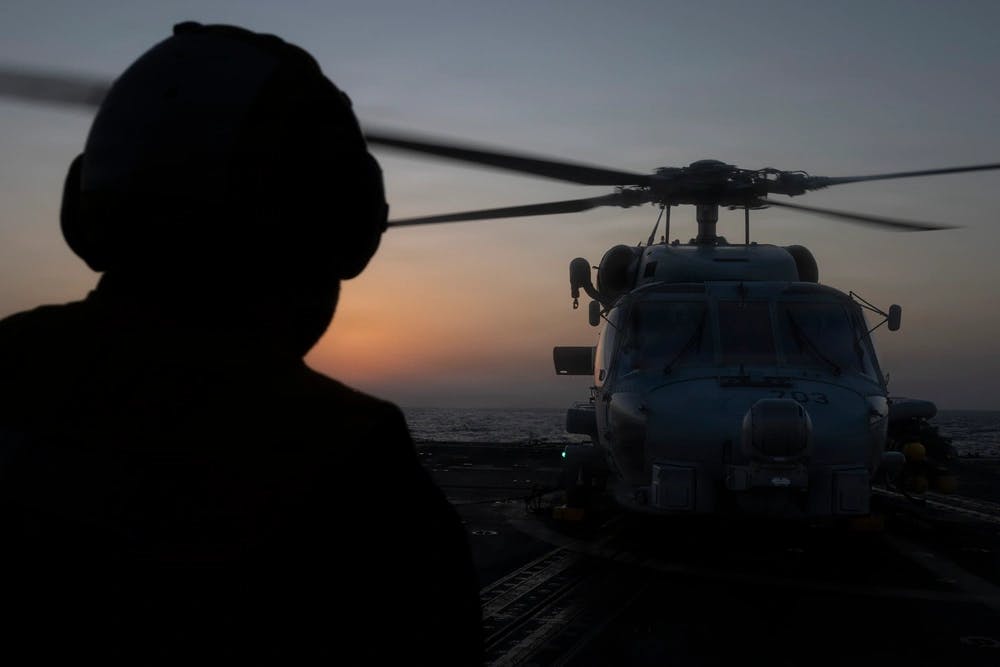
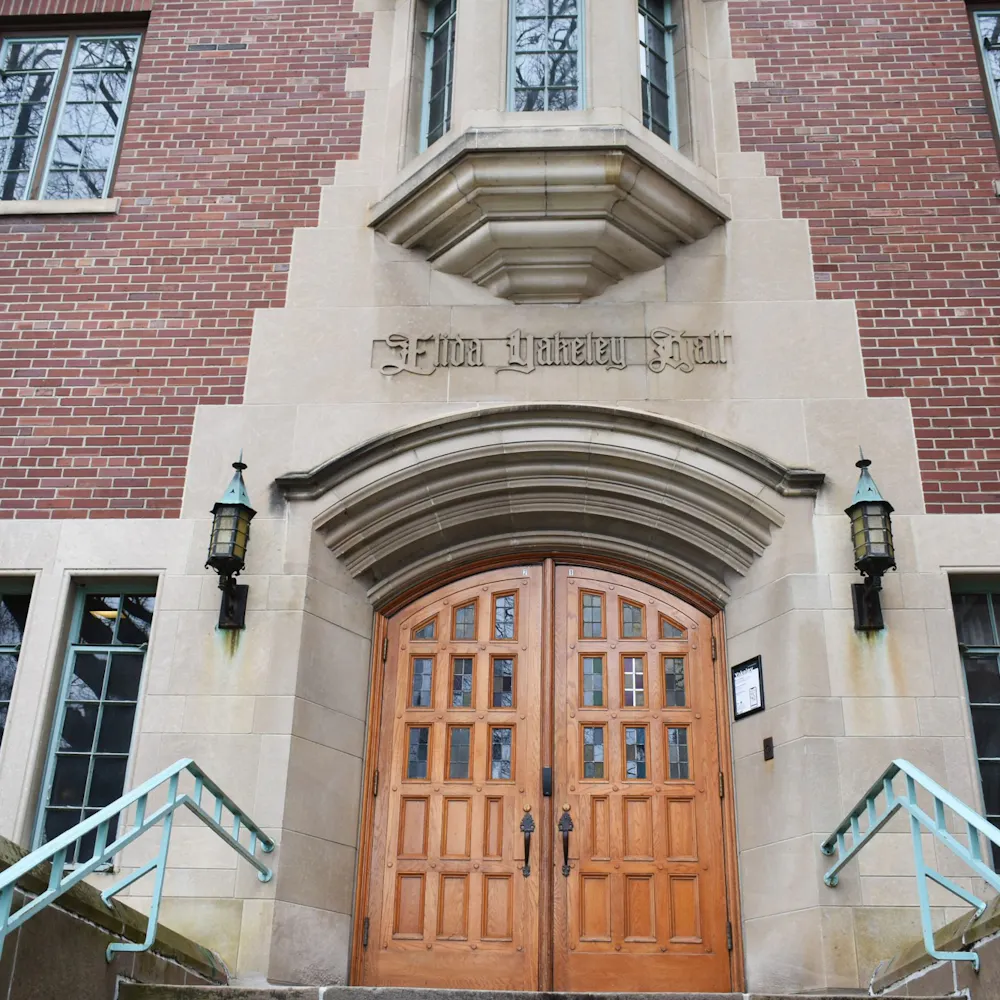
When Maryam Naghibolhosseini woke up on the morning of Feb. 28 to the news that the United States and Israel had attacked Iran, it signified the end of a long wait for her.
“We’ve been waiting for this for so long,” said Naghibolhosseini, an associate professor in the College of Communication Arts and Sciences and the faculty advisor for the Iranian Student Association at Michigan State University. “When it started, I woke up happy.”
Since the beginning of the war, Iranians in the U.S. have been split over how they should feel about an expanding war in which the ostensive purpose is to replace an authoritarian government they say they loathe, but has also killed thousands of civilians.
For some Iranian students and faculty at MSU, the war has forced them to reconcile with the human toll of military strikes against a country they have ties to. Still, some say they support the war effort, arguing that life under the current government was untenable.
Their stance reflects one position that members of the Iranian diaspora have taken regarding the war. In American cities with large Iranian populations, including Detroit, protests in favor of and against the war effort have taken place.
“It’s a very complex emotion. We are happy, scared, and angry at the same time,” said Erfan Omid, an Iranian graduate student studying chemistry.
Iran’s supreme leader, Ali Khamenei, was killed by a U.S strike on the first day of the war. His son, Mojtaba Khamenei, has subsequently been named the country’s leader.
Omid said he "also worried for people who might be in danger in Iran," from further persecution by the government.
Naghibolhosseini, the associate professor, said that hearing that Khamenei was assassinated was “like hearing Hitler is dead, that’s how big it felt.” While she said she is hesitant to outright celebrate Khamenei's death, she said she believes the Iranian government is repressive and needs to be replaced.
Following the 1979 Islamic Revolution, Iran’s government has been a theocratic republican system with its supreme leader wielding control over most state matters. The government has used authoritarian tactics including using the death penalty to punish dissent and consolidate power, according to human rights group Amnesty International.
More than 2,300 people have been killed since the war began, mostly in Iran, with over 1,300 of those being civilians, according to Iran’s representative to the United Nations. 13 American service members have also died in the war, the New York Times reported last Thursday.
A preliminary inquiry into a U.S. strike on an Iranian girls school that killed 175 people, according to Iranian health officials, found that strike was the result of a targeting error by the U.S. Still, Omid referenced the highly publicized incident as an example of Iran’s government using civilians as a “human shield.”
“Why did you (Iran) make that a school in a military base?” Omid said. “... We are worried about our people because they use them.”
Naghibolhosseini, Omid and Ali Kheradmand, another Iranian graduate student, said that many students and faculty at MSU are uneducated on recent events in Iran, including those that preceded the war.
Kheradmand said that of the few faculty that have reached out to him, most of them say they are “worried” about him, but none of them gave “a well meaning message of support for everyone in the (Iranian) community here.”
Naghibolhosseini says that understanding the Iranian government’s history of violence and repression is essential to understanding why she supports the United States’ war effort.
She pointed to the Iranian government’s suppression of anti-government protests earlier this year, in which it killed thousands of protestors, with death estimates ranging from several thousands to upwards of 30,000 people.
“I know that people don’t want to listen to those stories, but you have to understand the level of the violence that this regime enacted,” Naghibolhosseini said. “If you don't understand that, you will not understand why we are supporting the military.”
Internet blackouts in the country have also made it difficult for personal stories from Iranians to reach the rest of the world, and persuade them to support the war effort, Omid said.
“They shut down the internet to control the narrative,” Omid said.
Support student media!
Please consider donating to The State News and help fund the future of journalism.
Following an interview, Naghibolhosseini wrote to The State News that she would like MSU to issue a statement expressing support for the Iranian community at the university, for it to recognize the serious security concerns faced by Iranian students and for the university to host events addressing the war.
“MSU understands that international crises and disruptions abroad — especially those involving violence, uncertainty or limited communication — can affect students’ wellbeing, sense of connection and academic performance,” University spokesperson Amber McCann said. “MSU works to support our community members amid global conflicts that may weigh heavily on individuals and families.”
The largest student group representing Iranian students at MSU has thus far declined to weigh in on the conflict. Fatemeh Yousefsaber, the president of the Iranian Student Association, wrote in an email to The State News that the “non-political and non-religious” group “has not taken, and will not be taking any position in support of or in opposition to the current conflict.”
“ISA remains steadfast in its commitment to the well-being of its community,” Yousefsaber continued. “We stand in unwavering solidarity with the people of Iran and with members of our community at Michigan State University who are directly and personally affected by these circumstances. In all of our efforts, our priority has been to foster a space of care, support, and connection.”
Editor’s note: A portion of this article was updated on Aug. 25, 2026 to redact a specific quote regarding concerns for a source’s safety.
Discussion
Share and discuss “‘We are happy, scared, and angry’: War gives some Iranian students and faculty reasons for hope ” on social media.