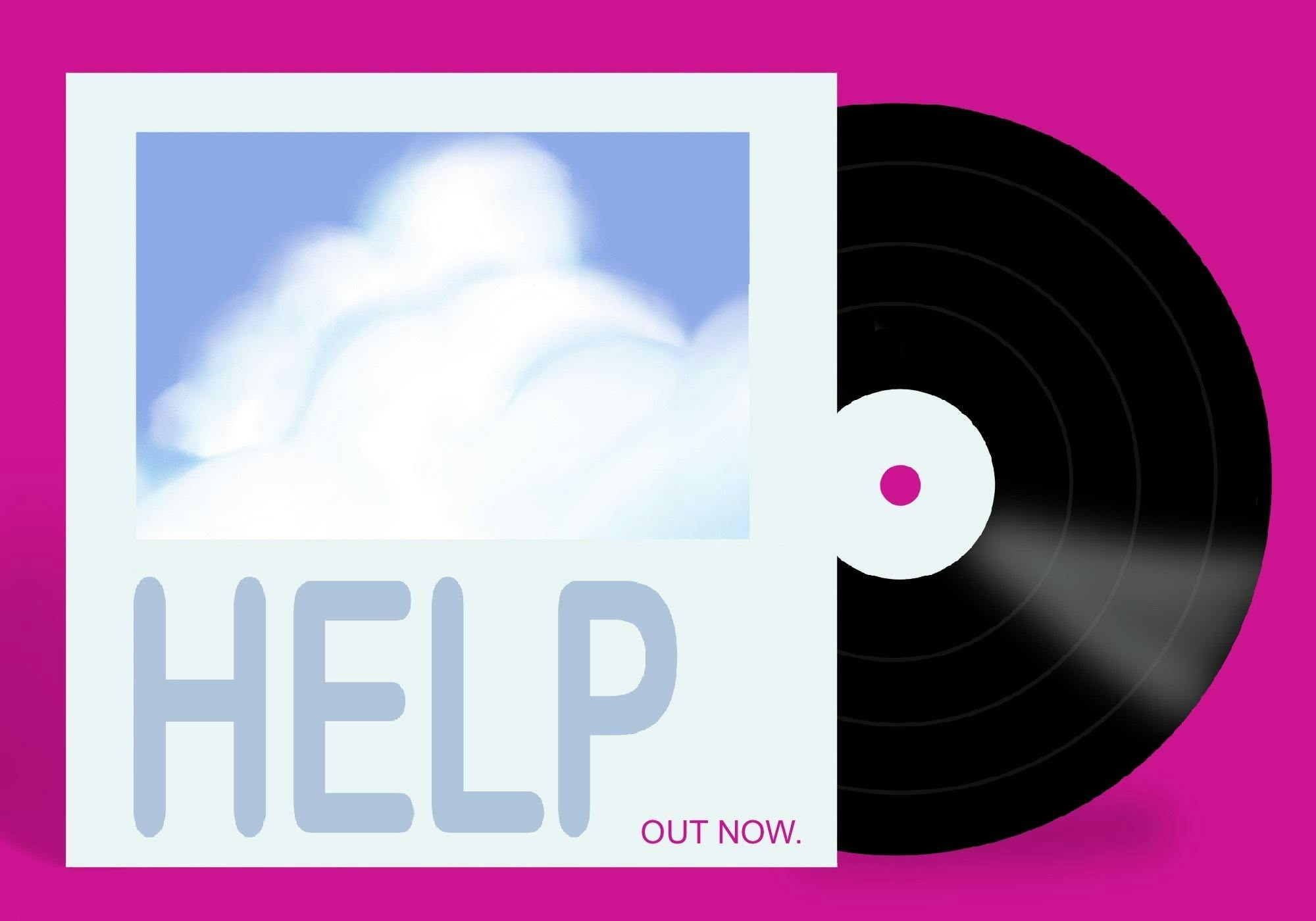
Help (2) was released by War Child Records on Mar. 6 in an effort to advocate for and aid the rights of children who are facing conflict around the world.
Bookended by tracks from Arctic Monkeys and Olivia Rodrigo, the release marked one of the first charity albums of this generation. Most famous albums and performances for a cause came before the turn of the century, including the first rendition of Help by War Child Records released in 1995.
With other featured artists widely loved by Gen-Z, like Beabadoobee and Geese frontman Cameron Winter, it was almost like the compilation was made for young adults, such as technology engineering freshman Ryan Dudzinski.
After catching wind of the project through Cameron Winter and Beabadoobee’s Instagram posts, Dudzinski decided to listen to his first charity album.
“Having people from different cultures in different countries with different views (featured) on it was really cool,” Dudzinski said. “All these people in support of this, a lot of newer generations of people, combined with older generations. I really hope [the album] does help, especially with the recent wars happening in the Middle East. I really hope this can help make an impact for them.”
Noting that the songs written specifically for the album felt stronger and more thematic than the covers, he highlighted Fontaines D.C.’s “Black Boys on Mopeds” as the track that stood out most.
“The lyrics were really deep,” Dudzinski said. “I kind of connected it with real life and what's going on. When they were talking about how it's not a safe place to live and our leaders being hypocritical, it made me really realize what is going on with the world a little bit more.”
Despite the immediate surface appeal to Gen-Z, the album attempts to cater to alternative, pop and rock enthusiasts across generations. Songs from Depeche Mode, Pulp, Blur and Gorillaz frontman Damon Albarn expanded the audience. Covers of songs spanning over decades, like “Say Yes,” originally released by Elliott Smith in 1997 and "Sunday Morning," originally by The Velvet Underground and Nico in 1967, drew in fans outside of just followers of the artists featured.
“It's kind of a show of respect on the part of younger musicians to recognize these greats from the past,” Professor of Religious Studies and American Culture David Stowe said. “But also, it's strategic in terms of maybe attracting older fans. I would probably be more likely to pay attention to such an event or such a recording if they did include a song by an older artist that I recognize, because frankly, at this point, almost all the artists on that recording, I just don't know.”
When making a charity record, the raising of awareness and that of money struggle for dominance, at times muddying the message or impact. Prioritizing raising money by assembling all-star casts can throw off the message of the album, while paying too little attention to audience appeal results in less funds raised and less that can be used to support the original cause.
“Albums like We Are the World were feel-good albums,” academic specialist in the Residential College of Arts and Humanities, Guillermo Delgado, said. “It's like musicians asked to get together, pitch in a song, to raise money and that's it. The main objective is more about raising money than maybe the awareness. It just feels that way because of the songs. Like, for example, [on] Help 2, ‘Helicopters,’ the Depeche song, ‘Warning,’ ‘Universal Soldier.’ Oh my, it's in your face. It's hard not to think about the purpose of this album when you're listening to songs like that.”
In an IAH course on USA and the World that he taught from 2009 to 2018, Stowe set aside a unit for music and held a lecture dedicated to charity albums. Recalling that most students had positive reactions to the lecture, Stowe still had to discuss the negative feedback the albums initially received.
He explained that critics claimed not much of the money raised actually helped people, that celebrities might be participating for their own benefit rather than the cause, and that these projects gave listeners a false sense of impact. He stated that despite the claims being made after the release of We Are The World in 1985, “some of those criticisms probably still hold true today.”
Stowe credits the modern mode of benefit music to The Concert for Bangladesh, organized by Beatle George Harrison and famous Indian sitar player Ravi Shankar, with the help of other big names like fellow Beatle, Ringo Starr and Eric Clapton. Released in 1971 when Stowe was around 11 years old, the project became Stowe’s favorite benefit event.
“It was The Concert for Bangladesh that stuck with me and that I admire the most,” Stowe said. “Partly because of my age, I was very young and impressionable. I was aware of hunger issues because of the family I grew up in, so I knew there were people really suffering around the world. But when I listened to that album, I was really just paying attention to the music. It was only when I came back much later, when I was thinking about teaching it, that I sort of thought more, ‘Oh yeah, that was a big issue at the time, and I'm glad it got some publicity.’ But, you know, 11 and 12-year-olds are gonna mostly hear other things, not so much the larger picture.”
Building off the momentum of these aid events at the time, the performances just kept coming. It wasn’t until the late 90s that the practice leveled off. As artists of this era were the most well versed in these contributions, they don’t hesitate to respond to conflict through song, such as Bruce Springsteen’s single “Streets of Minneapolis,” on Jan. 28, 2026, and U2’s “Days of Ash” EP both featuring their grievances with ICE’s role in the deaths of Renee Good and Alex Pretti on Jan. 7 and Jan. 24 in Minneapolis.
“I think there's still this idea [that] these rock stars should jump into the fray when there are these issues,” Stowe said. “Those weren't raising money, but they were definitely raising awareness. I think with benefit concerts, it's always been some of both. You know, it's nice to be able to say, you know, we raised $60 million. But I think also just raising awareness and making people just feel somewhat responsible for people in other parts of the world. That's been a big issue as well."
Contrasting this type of response, new age artists typically run the route of making a post on social media and “using their platform” as they are often told to do by fans, to more directly raise awareness of issues and donate to charities themselves. As a result, Help(2) was a bit different from what this generation’s audiences may have expected.
“Maybe in this day and age, it's easier to make a recording and just kind of market it through social media because everyone is now streaming so much,” Stowe said. “It's much easier to do things that way than get people together live. I would think it's much more convenient, plus, you know, you don't have to have all the musicians there at the same time.”
The high statuses of musical artists can provide many special channels for change that they can use to advocate and connect a larger community, such as charity albums/concerts, through social media, or in non-charity music. While Help(2)’s release indicated a reintroduction of this art of charity albums to a new generation, only time will tell if the practice sticks around.
Support student media!
Please consider donating to The State News and help fund the future of journalism.
Discussion
Share and discuss “War Child Records’ reintroduces the art of the charity album with Help(2) ” on social media.