Michigan State University students are advocating to establish a green space on campus that prohibits the consumption of alcoholic beverages and other drugs year-round.
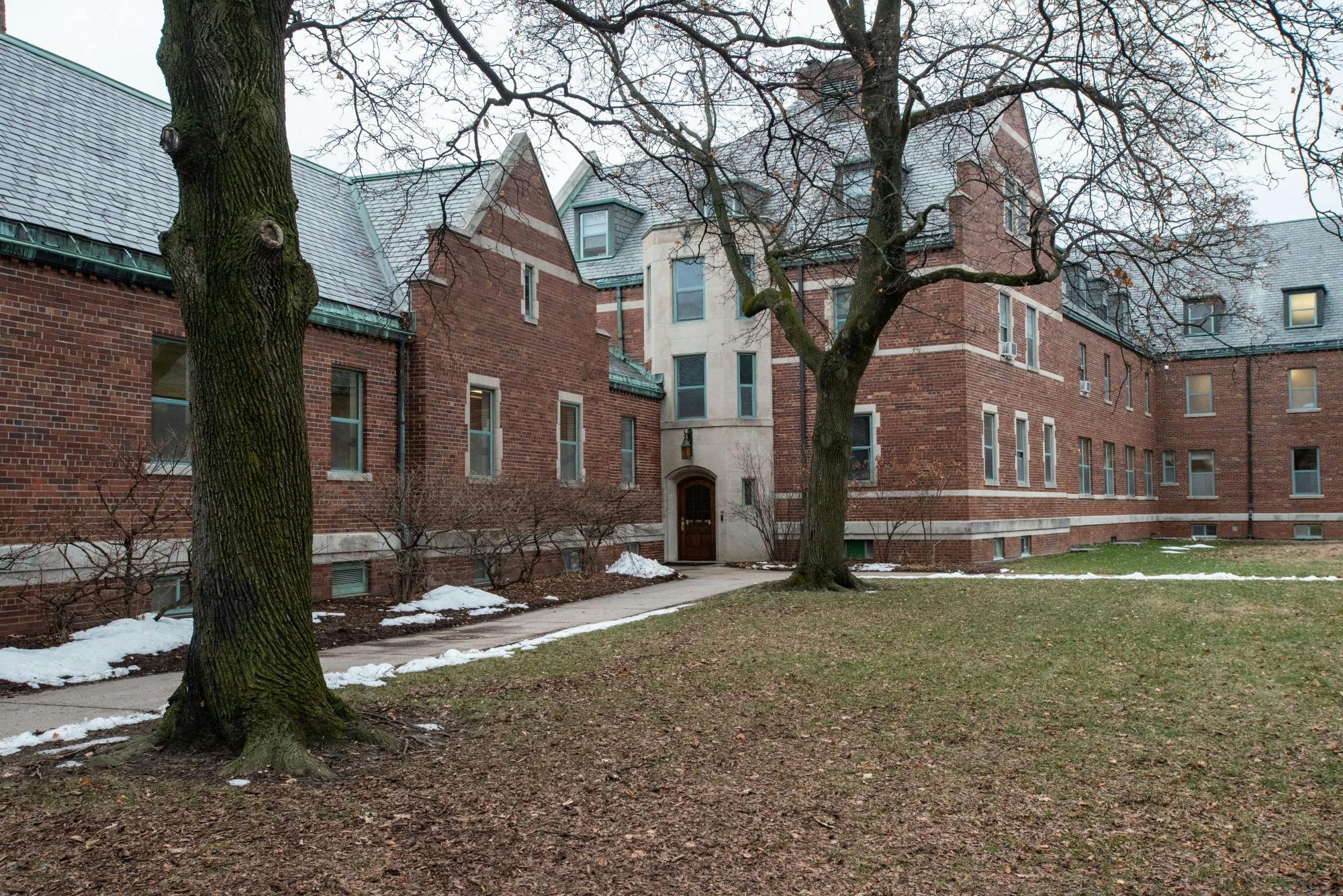
Advocates in student government and other organizations committed to students in recovery are seeking to establish this “substance-free” zone in the courtyard between Mason and Abbott Halls, an area they argue surrounds frequent traffic during MSU home-game tailgates.
Although an MSU Board of Trustees ordinance prohibits the consumption of alcoholic beverages in all outdoor spaces on campus, at-home sporting events serve as an exception to the statute.
The Associated Students of MSU, in collaboration with student recovery organizations on campus, passed legislation last month advocating to amend Board Ordinance 21, which addresses the possession and consumption of alcoholic beverages on campus, and to establish a green space in the connecting courtyard.
Efforts started with the introduction of two bills to the ASMSU general assembly by Broad Business College Representative Christian Allmand in early February. The first called to establish the Mason-Abbott courtyard as a "permanent substance-free recovery and reflection area.” The second supported an amendment to Board Ordinance 21, establishing an exception boundary in this area on game days, in addition to permanently enforcing the area as a substance-free zone year-round.
Mason and Abbott Halls offer dedicated Recovery Housing to students in recovery from a substance use disorder and who are abstinent from all drugs and alcohol. Allmand said these bills serve to ensure that those in recovery have a permanent substance-free area with a green space where students can get away from potential triggers.
Since this legislation was passed by ASMSU, the university has been working with advocates to potentially implement the proposed ordinance amendment and green space.
In an email to The State News, MSU Spokesperson Amber McCann said, “The university is currently exploring options that align with the bill passed by ASMSU and ongoing student advocacy for a potential outdoor substance-free zone.”
However, the idea for the two bills did not originate from Allmand but instead came from neuroscience senior William Brown. Brown reached out to Allmand with the project in the hopes that it could reach the university administration.
Brown said working as a resident assistant in Snyder-Phillips Hall allowed him to get to know those in recovery, as his work often extends to the adjacent Mason and Abbott Halls. As a sophomore, he co-founded Students Teaming for Advocacy and Recovery Together (START) MSU, an organization dedicated to supporting students impacted by substance abuse.
It was Brown’s experience living in a community open to students in recovery, and past research on how green spaces could benefit students’ wellbeing, that led him to propose a green space on campus that is also substance-free, he said.
Other recovery organizations on campus have also sought to establish a substance-free area on campus specifically for tailgating events, Brown added, but his proposal seeks to implement a year-round space that is dedicated to all students.
“It’s taking this tailgate, game day, limited idea to broadening it to a year-round, substance free green space to support everybody,” Brown said.
Having more access to green spaces would improve students’ general well-being, Brown said, and his proposal seeks to install sidewalks in the courtyard that connect to other pathways and residence halls, a pergola with planted vegetation surrounding it and wooden benches throughout the space.
The proposed space would finally be designated as a substance-free area via an outdoor posting board that specifies the nature of the courtyard.
Current START MSU President and At-Large Student Liaison to the MSU Board of Trustees Sarah Fireberg has spoken to university administrators following the passing of the bill last month. Fireberg said the board was very receptive to the idea, with the board secretary drafting documents in order to move forward with the process.
When Fireberg met with the board, she said their discussion focused on why a year-round designated zone for students in recovery was so important.
“When you're in recovery, if you see someone using a substance that could bother you and your recovery process, that can be a little bit triggering to you,” Fireberg said. “So, in order to help create a safe environment for the people in recovery, if there's no tailgating, for instance, in that space, they're less likely to be triggered, and they can then go on campus and feel like they have a space reserved for them, where they're not feeling the pressure of the environment.”
Although the courtyard itself doesn’t see much tailgating, Fireberg said significant home games that draw larger crowds can lead to foot traffic and even some tailgaters in the region. Areas surrounding the courtyard and adjacent halls that see frequent tailgating can also lead to overflow into spaces traditionally occupied by those in recovery, she added.
ASMSU President Kathryn Harding, who has also been engaged in discussions with university administrators regarding the execution of this substance-free space, said she has been working with both the board secretary and the Office of the Executive Vice President for Administration.
Support student media!
Please consider donating to The State News and help fund the future of journalism.
In order for an exemption of a board ordinance to be granted, she said the latter body must make a formal recommendation — something she is currently in the process of advocating for with the EVPA office.
As of now, the university hasn’t given the official green light for the proposed area, Harding said. Once they do, she said ASMSU general assembly members would more than likely work to pass a financial allocation bill to fund a portion of the space.
Although the total cost of the project is still up in the air and depends on future conversations with administrators, Harding hopes MSU will split the cost with ASMSU.
“It just depends on how much the total cost would be, because we only have so much in our general fund that we can allocate to different spaces across campus,” Harding said.
Regarding the timeline for implementing this space, Harding added that she doesn’t expect this to be finalized by the end of the semester due to the bureaucratic nature of policy changes.
“The ball is in their court now,” she said.
Discussion
Share and discuss “Student advocates working with MSU to establish 'substance-free zone' on campus” on social media.