On a quiet practice range away from the noise of Spartan Stadium, members of the Michigan State University Shooting Club concentrate on discipline, control, and trust. They believe these elements often get overlooked in conversations about shooting sports.
MSU shooting club emphasizes safety, discipline in practices
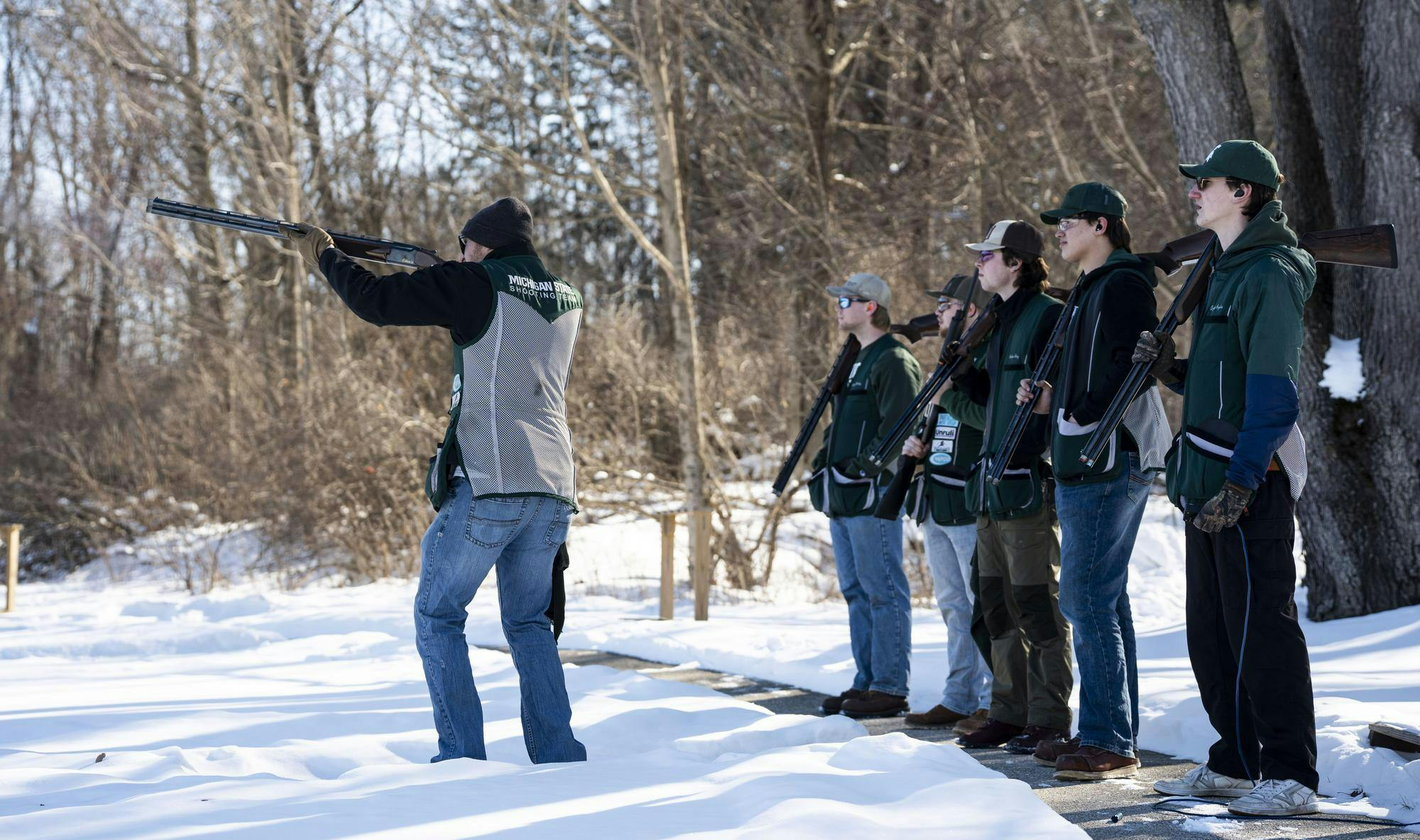
This student-run club competes in rifle, air rifle, and shotgun disciplines. Their practices emphasize structure and accountability. Club leaders say these factors are crucial in correcting common misconceptions that shooting sports are unregulated or unsafe.
“Safety is the first thing we cover before anyone shoots,” said Anna Schneider, vice president of rifle. “At the first practice, we don’t even use live ammo.”
Schneider explained that new members start by learning how to handle firearms, position themselves, and what to expect at the range before they join a competition. Empty chamber indicators are required when rifles aren’t in use, actions must stay open, and shooters must follow strict commands before anyone goes downrange.
“You’re never in front of a firearm unless it’s unloaded and flagged,” Schneider said. “Everything is designed to prevent mistakes.”
Rifle shooting also requires mental discipline. Shooters compete under time limits while managing their breathing and focus, aiming at targets about the size of a coin from 10 meters away.
“It’s almost meditative,” Schneider said. “If you have a bad shot, you let it go. Every shot is new.”
READ MORE
On the shotgun side, Social Chair Parker Shay noted that safety training is equally important, especially for beginners. New members often spend weeks learning proper handling before they compete.
“We focus on keeping fingers off the trigger, muzzle discipline, and ensuring actions are open,” Shay said. “The barrel should never point at anything you don’t intend to shoot.”
Shay added that shotgun shooting relies more on hand-eye coordination than aiming down sights. The club uses simulators to help members practice movement and accuracy without live ammo.
Support student media! Please consider donating to The State News and help fund the future of journalism.
“This sport is safer than a lot of people realize,” Shay said. “Once someone learns the rules, they don’t forget them. Safety always comes before competition.”
While safety is a priority, members say the club also trains thoroughly for competition at the state and national levels. Weekly practices include drills meant to improve focus, reaction time, and consistency.
“We start with warm-up eye drills, tracking the flying disks with our eyes to understand their movement,” Shay said. “Then we’ll shoot about 100 rounds during a practice session.”
After each practice, members review their performance and identify areas for improvement before the next session.
“We talk about what everyone needs to work on and make it individualized,” Shay said. “Then we write a summary of what to focus on and come back the next week ready to improve.”
Training also emphasizes technique. Shooters must maintain a proper stance, control their breathing, and align their firearm to perform well.
“Breathing is crucial,” Shay said. “Even small changes in your breathing or mouth position can affect the shot. Form, stance, and how the firearm lines up with your eye are all very important.”
The club’s structured training has led to competitive success. Members say the team often competes at state and national events, bringing home multiple awards for Michigan State University.
“Just this past year, we placed first in collegiate states,” Shay said. “We’ve also had podium finishes at national championships and strong results at local matches.”
Despite the competitive focus, members say their motivation goes beyond personal achievements. Representing the university plays a significant role in the team’s identity.
“We’re really proud to be Spartans,” Shay said. “When we compete, we’re representing the entire Michigan State community.”
Maintaining a strong mindset is also crucial for success. Shooters say competitions can quickly change based on focus and confidence.
“If you miss your first few shots and let it get in your head, it can affect the rest of the match,” Shay said. “The biggest thing we work on is mindset—focus on the next shot and don’t worry about the last one.”
Freshman team member Gavin Gwisdalla shared that the club’s professional environment helped change his views about shooting sports.
“We have fun, but we don’t mess around with safety,” Gwisdalla said. “If someone makes a mistake, it’s corrected immediately.”
Gwisdalla emphasized that structured instruction helps new members feel comfortable, even if they’ve never handled a firearm.
“They show you everything step by step,” he said. “You’re surrounded by people you trust who know what they’re doing.”
As a club-funded organization, the leaders emphasize communication and transparency. This includes arranging transportation for competitions and explaining equipment limitations. This year, the club has expanded beyond virtual matches to include in-person competitions and preparation for nationals.
While achieving competitive success is a goal, members say responsibility and respect define the team.
“We’re trying to show what the sport really is,” Schneider said. “It’s controlled, disciplined, and safety is never optional.”