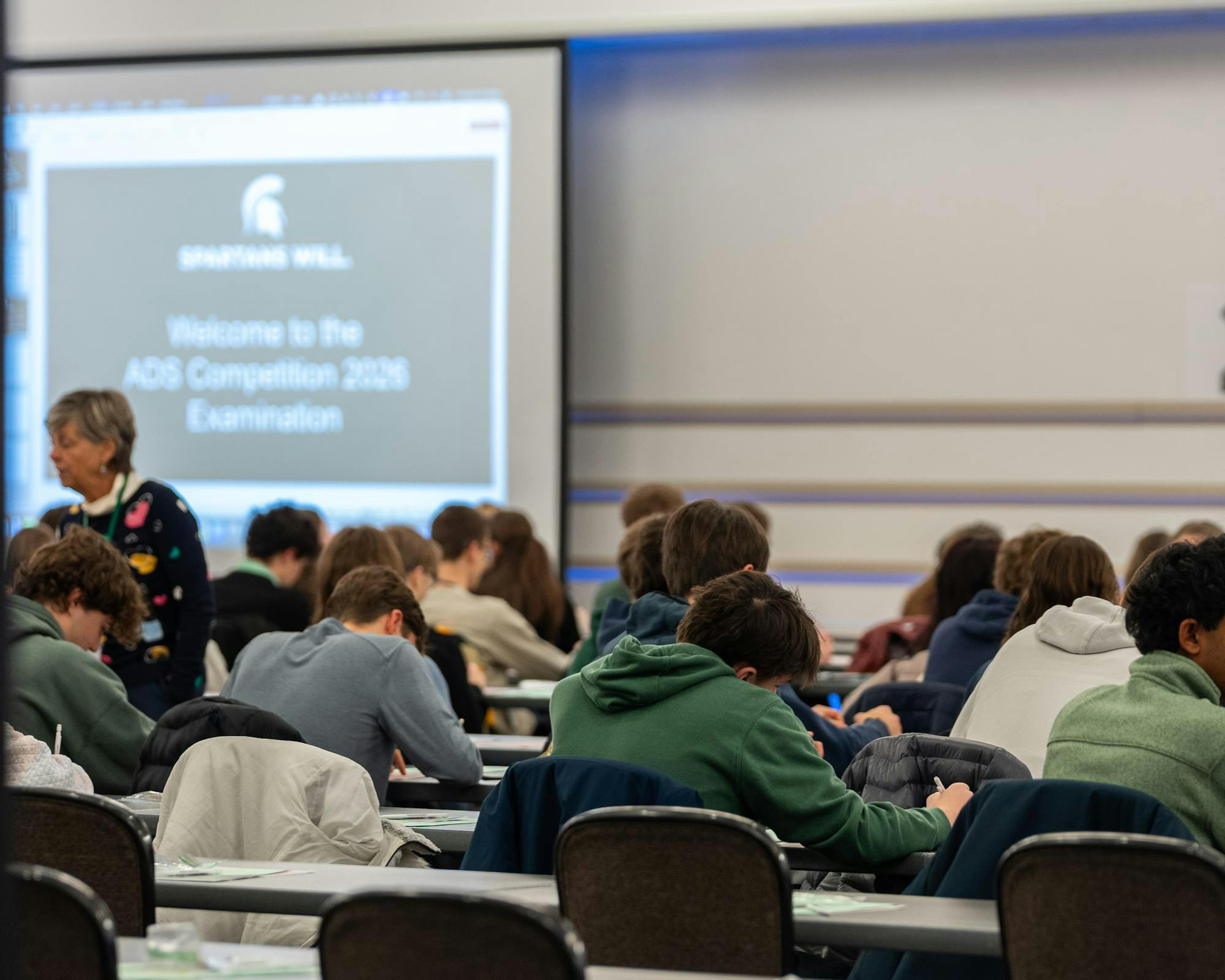
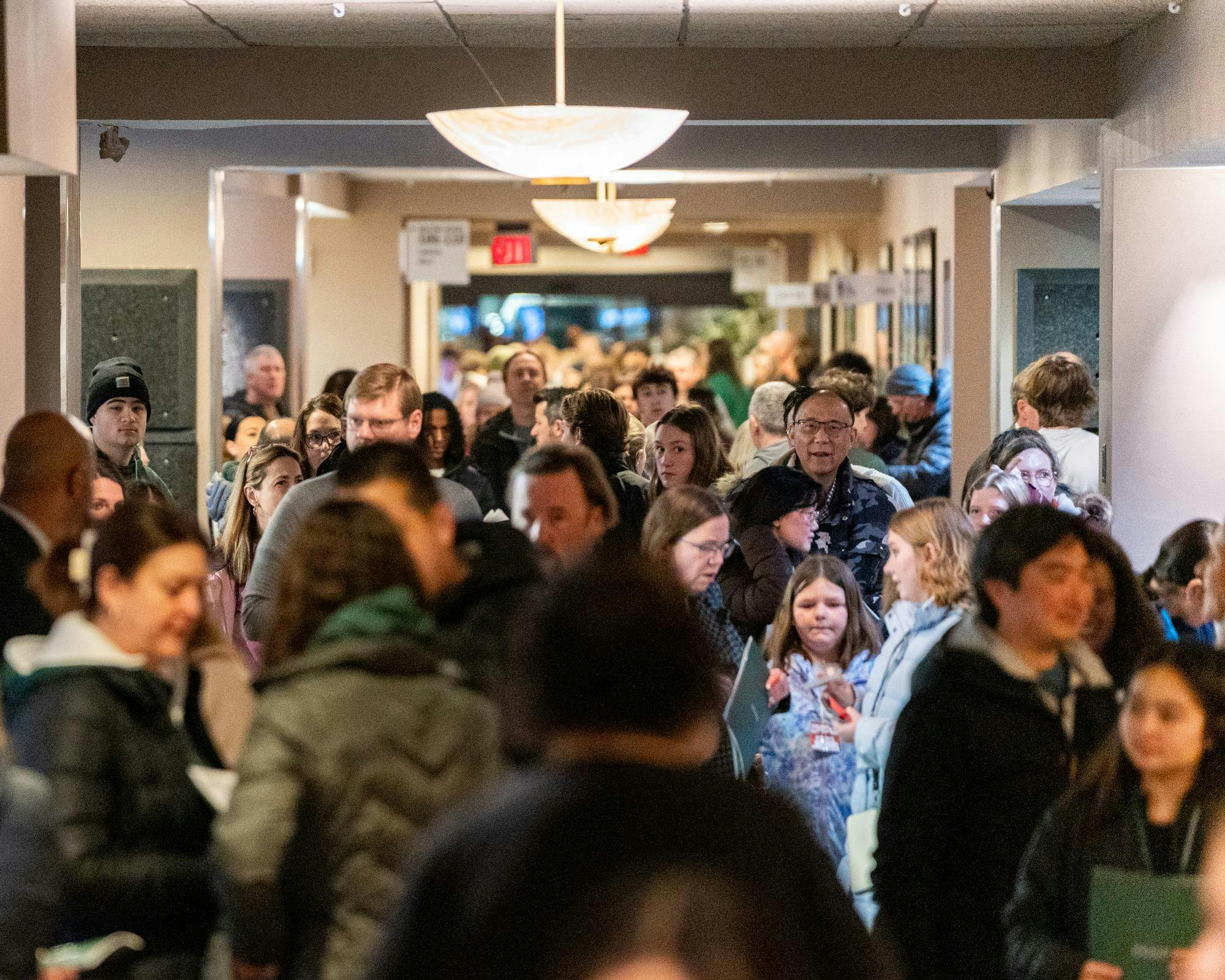
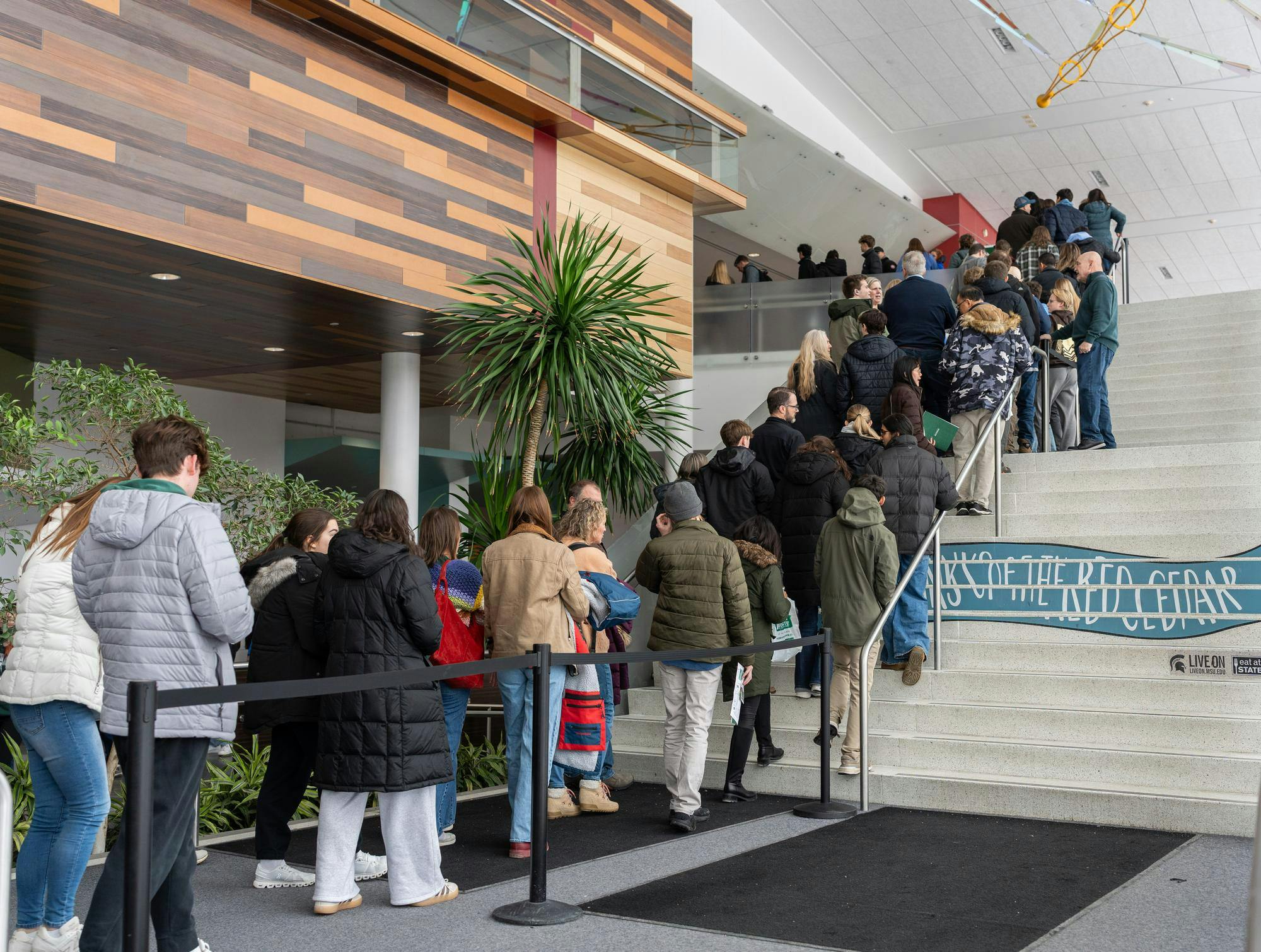
Over lunch with their parents in the bustling Brody Square dining hall, hundreds of striving high school seniors were struggling to make sense of what they’d just experienced.
They had traveled from far and wide on a simple premise: come to East Lansing, ace a sweeping general knowledge test, and college could be free.
These were the invitees of the Alumni Distinguished Scholarship (ADS) Competition at Michigan State University. They had already been accepted to the university, but the Honors College was now giving these chosen candidates a chance to compete for a more coveted prize.
Those who did best on the test were considered for 45 full-ride scholarships.
They include the full cost of tuition, housing and a dining plan for four years, plus annual stipends that students can use as they please. Those selected were also offered professorial assistantships, a type of paid position working with top faculty on research and teaching.
The package is the most prestigious scholarship offered by MSU, and the university claims, "among the most valuable awards offered by any university."
The competitors are not your average 17-year-olds. They talk with impressive vocabularies about their various experiences and achievements. They’ve earned top grades in their classes and great scores on other big tests. Simply put, they know a lot.
But on a chilly Friday morning in East Lansing earlier this year, they faced some questions that, in spite of their academic acumen, could still flummox them. These students had long heard that preparation and specialization were the key to competitive college admissions. And yet, the test before them was a supposedly impossible-to-study-for set of seemingly random questions.
Before the exam, they wondered what it could possibly contain and if there was any way they could have prepared. After time ran out, they wondered who could have possibly been suited to the vexing test, and what valuable insight the scores could provide to their host. By midday, some were questioning why MSU conducts the quirky challenge at all.
If answers lie anywhere, they may have been found in the carefully planned afternoon that MSU had in store for the students. The ADS Competition is one part of a much larger effort by the university to attract and retain high-achieving admits. So while the scholarships are only awarded to a lucky few, all the competitors and parents were treated to tours and presentations advertising MSU and its Honors College.
As such, it was a day in two acts — and the invited students played vastly different roles in each. By morning, they were humble jousters, competing in what felt like an impossible trial for a weighty prize. By afternoon, some realized they were already kings: here was this massive university, working desperately to win their affection.
Some heard out the pitch in good faith and were persuaded by the warm embrace and uniquely scholarly sell. At least one, though, seemed only to relish the passing power, as he happily batted away a particularly belligerent appeal.
'A secured document'
What’s actually on the test? That’s unclear.
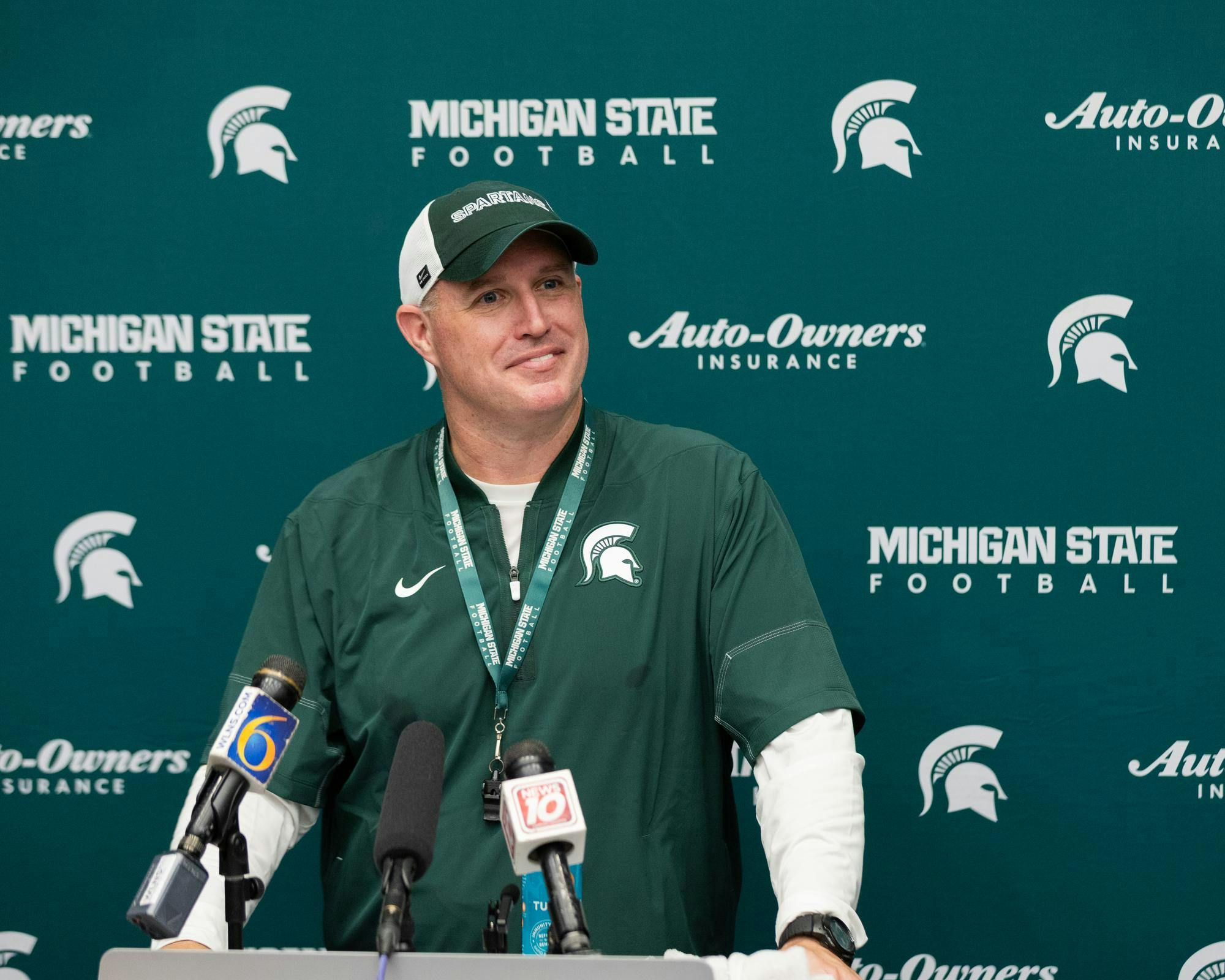
It’s usually around 50 questions, which are "derived from faculty across campus," said Jess Brandt, the assistant director of admissions for the Honors College, who reviews candidates for the ADS.
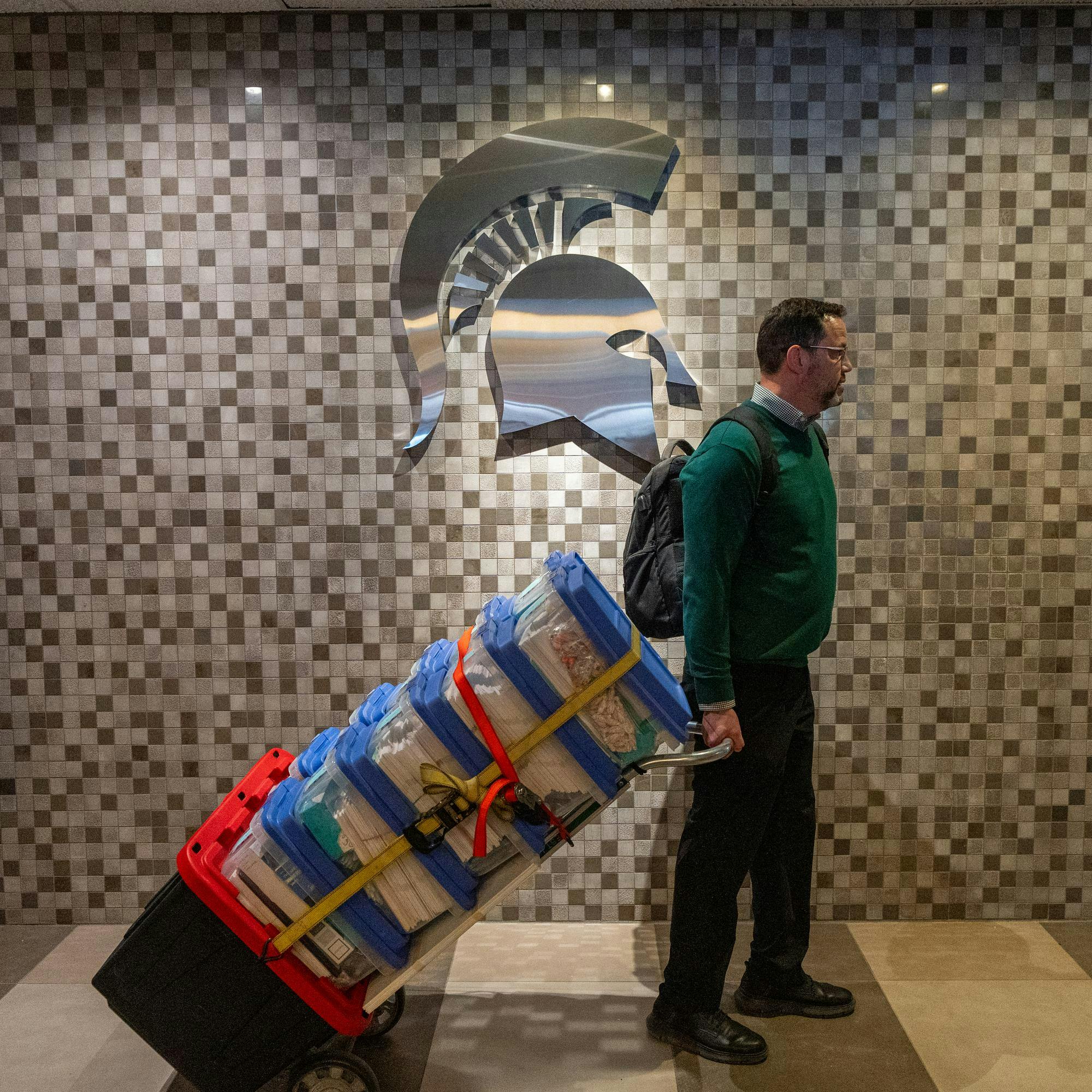
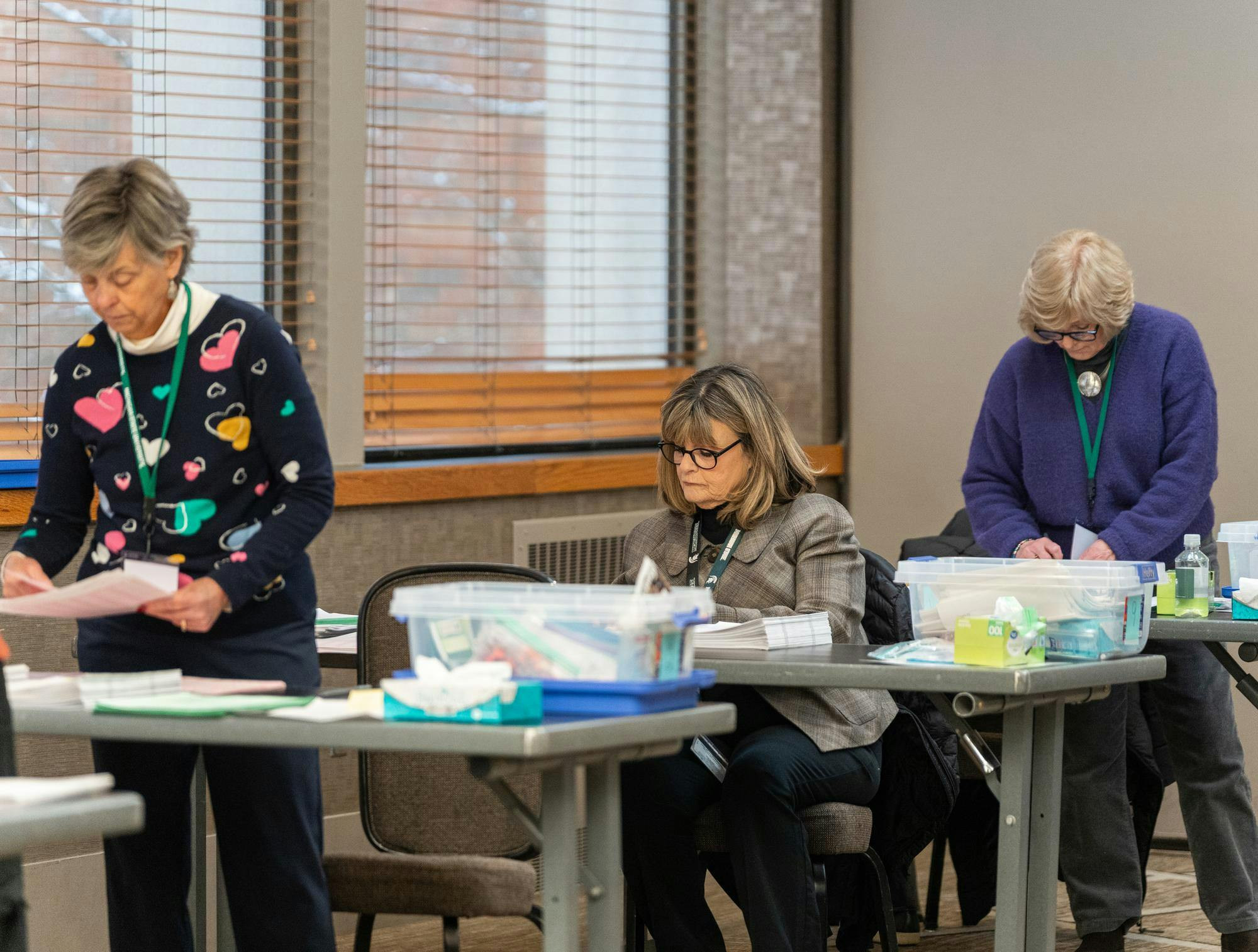
But even Brandt doesn’t know what the questions actually are. The proctors who assemble and conduct the test are the only people at the university who get to see it, she said, lamenting that she has asked to see a copy herself but has been told no.
"It’s very much a secured document," she said. (MSU declined to share a copy with The State News, even saying they could not publicize versions from past years. The university also denied a Freedom of Information Act request seeking copies.)
Accounts from the students who took it, though, offer indications of what the test entails.
Some questions touched on material they knew from high school classes, they said, like chemistry, physics, history, psychology or precalculus.
Support student media! Please consider donating to The State News and help fund the future of journalism.
Other questions were more esoteric. Some said they were asked how they would interpret a poem, or tested on tidbits from Charles Dickens and Beowulf. Questions asked about the genre of a given song, who would be called the "first lady of jazz," or the cultural significance of the holes in a historic mask.
One question sat next to a picture of a chapel and asked, "what part of the architecture showed it was Italian or something."
"I guessed on that one," said Evan Yeh, who travelled from Grand Rapids for the test.
In addition to their test scores, the prospective students were evaluated on a set of essays they were asked to write before coming to campus.
The prompts were written by current Honors College students, who can win a $500 scholarship if their ideas are chosen. One of the winning prompts this year asked students to describe a new type of ice cream that could be served at the campus Dairy Store, as well as a charitable cause that proceeds from the flavor should support.
Elise Russell, from Tecumseh, said she described a lavender-honey ice cream that would benefit environmental causes. Brodie Chase, from Grand Rapids, said he pitched a flavor called "Second Glance," which would look like vanilla but actually taste like fruit or chocolate. It would raise money for mental health awareness because, like the ice cream, "we’re often more than we let ourselves believe."
Based on their essays and scores, about 125 students moved on to interviews, according to an Honors College spokesperson. The around 45 students offered scholarships were notified in recent weeks, she said.
The university expects to announce the winners publicly in June. MSU declined to say what portion of the students offered a scholarship ultimately chose to accept and enroll in recent years.
'No clue'
What’s it like to take the test?
Sitting in the Brody dining hall afterwards, Olivia Anderson told a State News reporter, "it was interesting."
"Tell him what you said before," said her dad, Jim, who drove her from Chicago for the test.
"Okay, it was weird," she conceded.
Some of the questions felt like things she had learned in school, but most felt "random," she said. Her hopes of winning the scholarship were low. On the whole test, "there were only a couple questions I thought I got right," she said.
Such was the consensus. Over plates of fried pollock, balsamic green beans and "pizza tots," student after student told The State News they had surely bombed the exam.
"It was very broad, very awkward, very weird," Melayna Raupp said of the exam.
William Daily felt the same way when he walked out of the test last year. He had "no clue" about at least half of the questions, he said. Even his most comfortable subject, math, proved challenging given the time limit. To attend the exam, he flew to East Lansing with his father, from their home in Olympia, Washington.
"By the end of the trip, I thought it was definitely not worth the money to do this," said Daily. "We thought there was no way it was worth the flight."
But, a few weeks later, he was shocked to learn he was a finalist. Daily eventually won the full scholarship and now studies engineering at MSU.
His experience is rather typical. Multiple recent winners told The State News they left the test convinced they had blown their opportunity and are still unsure how they pulled it off.
Many have attempted to study for the wide-ranging exam, but a fruitful method has not emerged. Some said they tried to figure out gaps in their coursework and quickly brush up on missing subjects, only to never see them on the test; others scoured Reddit posts and Quizlet sets made by previous test-takers, but found the tips therein inapplicable to the current questions; one said he used AI chatbots to generate practice tests, but the real exam was totally unlike their predictions.
'You don’t know'
Who is the test really for? Answers were split.
MSU divulged some of the criteria for getting invited in the first place. About 4,000 students are asked to participate each year. Around 1,000 actually make the trip. The invited students are typically in the top 5% of their graduating class and have taken a challenging course load while demonstrating "community involvement and research interests." Submitting test scores is optional, but those who do average around a 1450 on the SAT or a 32 on the ACT. But beyond that, test-takers weren’t sure who an ideal candidate would be.
Someone who took every AP and IB course, one test-taker suggested. Or, the opposite, someone who focused on eclectic electives, guessed another. Maybe a hobbyist historian who’s always reading a new book. Or, another joked, perhaps it’s only for "real Jeopardy megafans."
Others thought it could be less about what you know and more about how you approach the test itself. Daily said he thinks he won the scholarship, not because he actually knew about the subjects on the test but because of his ability to use context clues and common sense to "piece it all together."
For example, Daily said he didn’t know about different countries’ architectural styles. But he could guess based on the weather. With every confounding question, he asked himself, "how can I make a decent guess here when I don’t know anything about this subject?"
Other former winners said the secret isn’t how one acts in the exam room, or even a classroom, for that matter.
Mechanical engineering freshman Nate Romito said he may have won the scholarship because of his childhood curiosity and love of reading. He’s long known he wanted to be an engineer and has always focused on math and science classes, but he was also a voracious reader who simply "always wanted to find out more information." He said he wonders if that made him a well-rounded thinker suited for the test.
Biochemistry freshman Peter Sanin credited his scholarship to his "active curiosity and diverse group of friends."
"I remember during the test, thinking about how many of the questions had been the subject of conversation with my friends at one time or another," he said.
Seen that way, the ADS test is a sort of foil to the specialization that today’s most ambitious youngsters are asked to embrace. For elite college admissions, students are told to develop their "spikes" and sell themselves as hyper-specific specialists with essays, courseloads and extracurriculars manicured to orbit concrete professional plans.
MSU’s test, meanwhile, appears to promise a life-changing academic opportunity to genuinely curious generalists who possess a breadth of knowledge, rather than a depth of experience in one particular field.
Still, MSU isn’t looking for perfectly encyclopedic people. Brandt, the admissions staffer, said the cut-off for finalists differs slightly each year, but the bar is usually closer to getting half the questions right than all of them.
That may be the point. The ideal Honors College student is curious, humble and sure there is always more to learn, said Camden Kimmel, who won in 2024. A great introduction to the college, then, may be a test where even the very best scores are nowhere near perfect.
"It makes you feel like there’s so much you don’t know," said Kimmel, who studies physiology, biochemistry and molecular biology, with a minor in dance.
Others suspected more pragmatic intentions.
"The exam is so diverse and so scattered — how could it be used as any metric?" asked Thomas Raupp. "It’s difficult to understand the logic behind it."
He was sitting in the dining hall with his daughter, Melayna, who had just taken the test. Her older sister, Hailey, took the test in 2023 and did not win a scholarship. She now attends MSU and joined them for lunch.
Perhaps, Thomas Raupp suggested, the real goal was simply to get hundreds of the nation’s brightest students to MSU’s campus for a day of wooing.
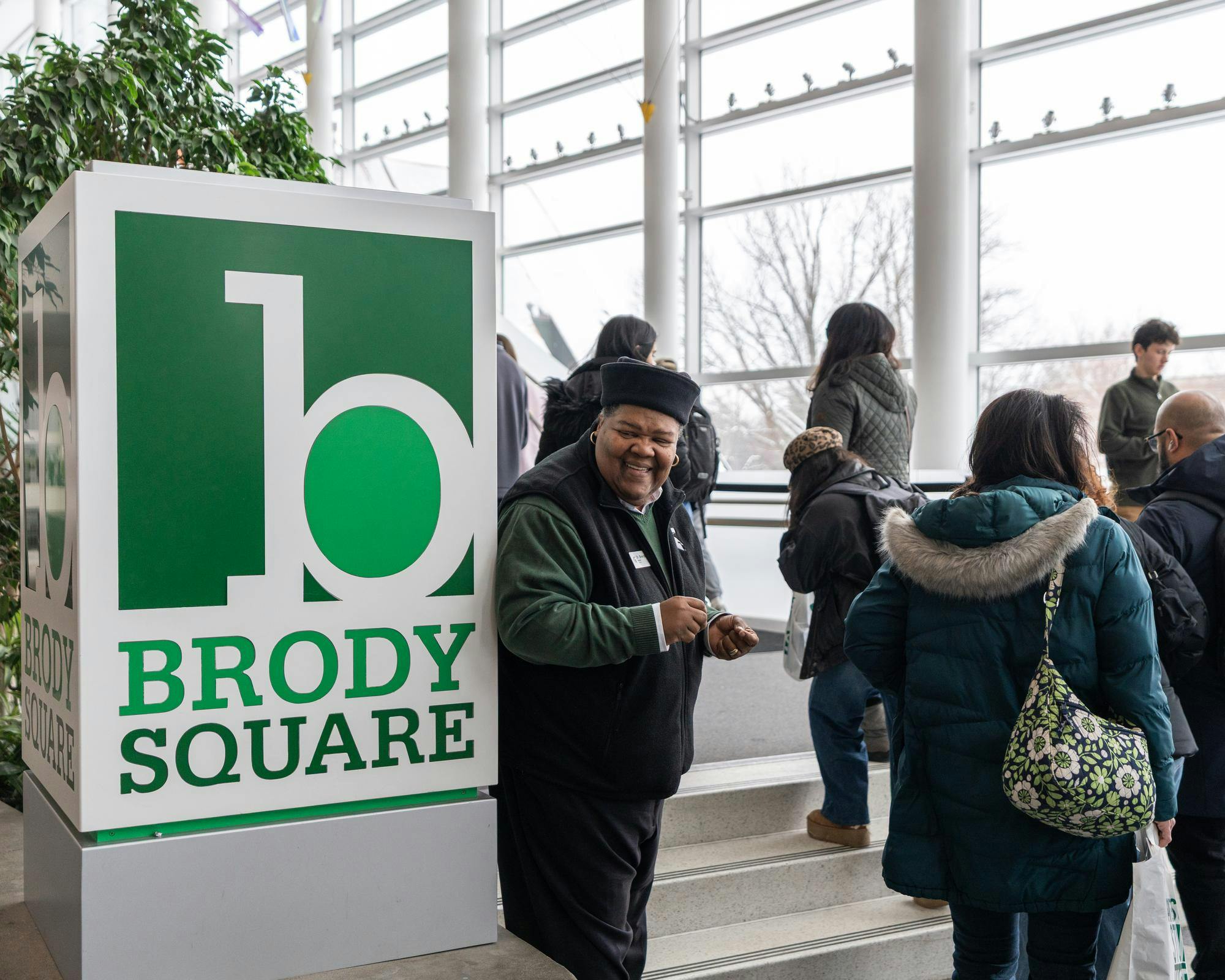
After the exam, students eat in MSU’s largest dining hall and receive an afternoon of presentations on all that the university has to offer. During the exam, parents are herded into auditoriums where they are told about the benefits of the Honors College.
"That’s probably more the actual focus," Thomas Raupp said. "To get people to come out."
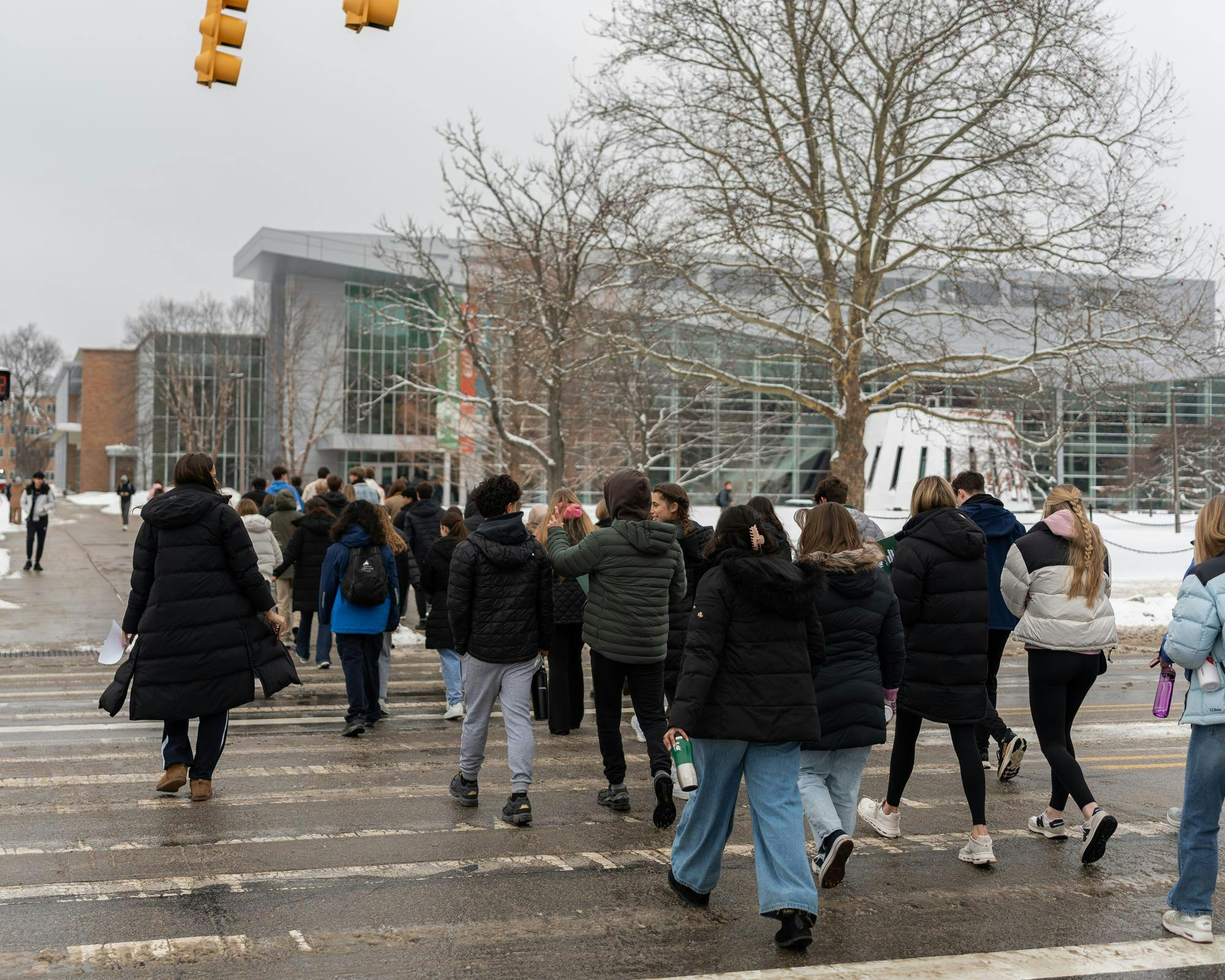
They do, and sometimes at great cost. Some live close by and drive in for the day. But many families told The State News they paid for long flights and local hotels, or drove many hours early in the morning. Not all of them would have visited MSU otherwise, but the allure of the scholarship justified their trips.
Romito, the engineering student who won last year, drove to East Lansing from Buffalo, New York, for his test. MSU initially wasn’t on his radar, but hearing about the ADS program caught his attention. The idea that you could take a test and earn "free college is, like, pretty awesome," he said.
'Not just a number'
Are such suspicions correct? Yes, at least in part.
The competition is, in fact, partially designed to recruit students other than just the few selected for scholarships, according to Brandt, the admissions staffer.
The possibility of a scholarship gets high-achieving students in the door, so to speak, and the timing of the test — it’s offered on two Fridays in late January and early February — lines up with when other schools tend to make offers. The programming throughout the day is designed to help students picture themselves at MSU as they make their decision, she said.
Those who make the trip are more likely to ultimately go to MSU. In 2025, 46% of students who participated in the ADS competition eventually enrolled, according to the Honors College. "That is a much higher rate than it is for Honors College invited students who don’t come to ADS," said a spokesperson.
But the recruitment of the sort of students that qualify for ADS can also start much sooner. Brandt said that she and other Honors College staffers will soon start traveling to college fairs and connecting with students in the class of 2027, who are currently juniors in high school and have not yet applied or been accepted to MSU. The university will keep pushing for applications over the summer at the Green and White Days event.
By the time students are accepted and invited to the ADS competition, they probably have "many great institutions in touch with them," Brandt said. Part of her job is making sure they select MSU.
To do this, she said she encourages them to explore other options and come back with questions. MSU has little trouble competing based on their field of study, she said: Its vastness is such that there is usually a good program for every interested student.
But cost can be trickier, Brandt said. Students don’t want to take on debt, and smaller schools can sometimes offer top students more scholarships than MSU. So ADS is one way, outside of MSU’s need-based financial aid, to entice top students concerned about cost.
The event can also appeal specifically to high-achieving students by emphasizing academic benefits more than a traditional college tour would.
Daily, the student from Washington who was shocked to win, said he looked into a lot of schools, but his day at MSU was an unexpected glimpse of actual academia. He met the dean and professors for his major and got an "engineering flowchart" that showed him what classes an engineering major would actually take in each specialization offered at MSU. It seems simple, he said, but he hadn’t seen anything similar when looking at other schools.
Freshman Henry Tighe said he too was surprised to meet with real professors during the ADS event. It didn’t feel like other college tours, he said.
In the recruitment and application processes at other schools, Tighe said he never truly felt wanted. But the ADS event was unique. It "felt really different from other places, which don’t seem to really care about every applicant," he said.
Tighe ultimately won a full scholarship and now studies finance and electrical engineering. He also does undergraduate research in the Facility for Rare Isotope Beams. Being part of the ADS program has made him feel valued, "like you’re not just a number," he said.
When deciding where to go to college, his dad told him that he could go to MIT "or some other really good institution," Tighe recalled. But there, "you’re just another student."
"An ADS scholar here is actually a person," he said.
'I’m not an idiot'
Another of MSU’s strategies for impressing the ADS competitors? Enlisting former winners.
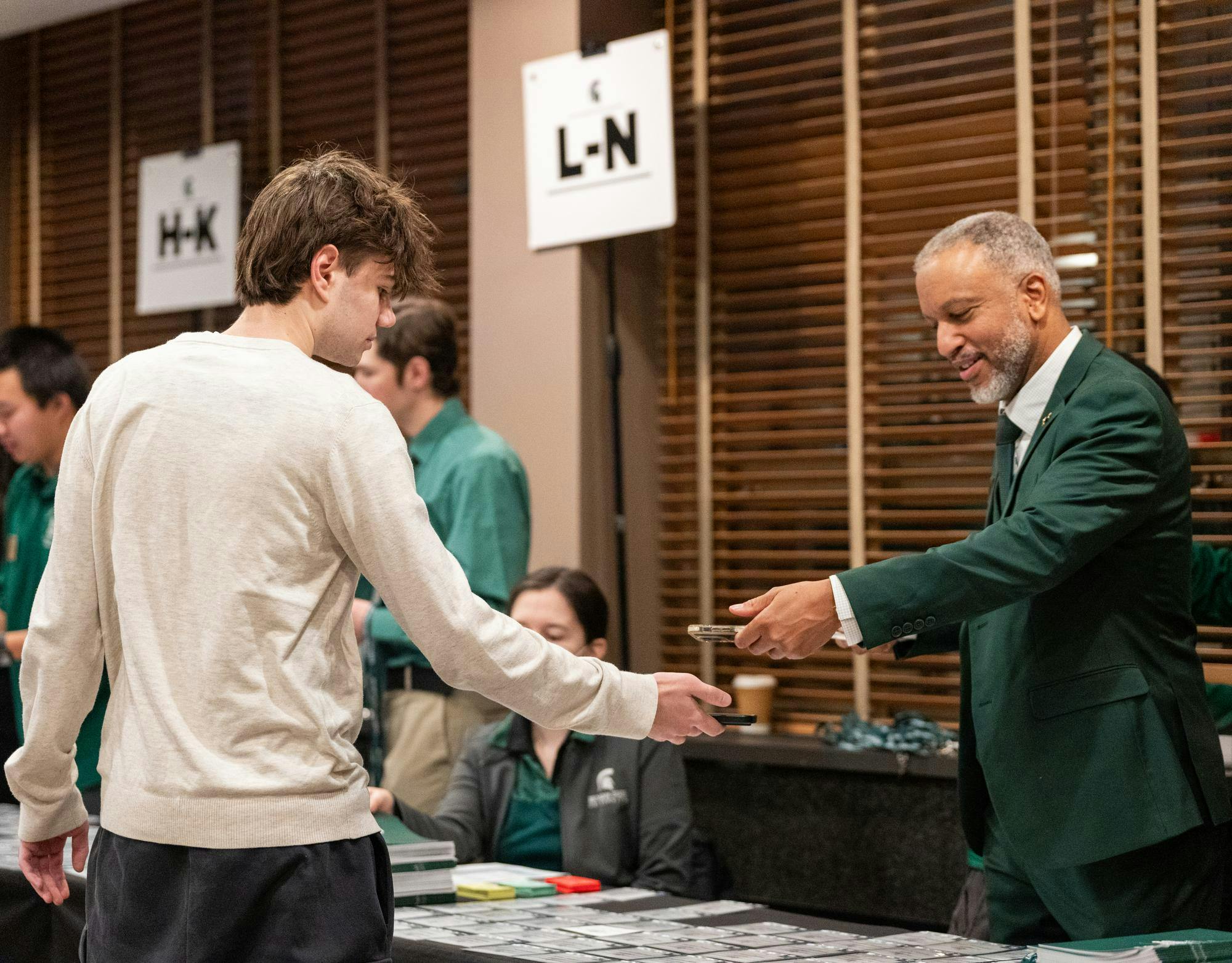
The university calls them "ADS student leaders." They serve as ambassadors of sorts for the Honors College. Their job on the day of the test was to mingle with prospective students and tell them what the university has to offer.
"We are basically vying for their attention," said Kimmel, the 2024 winner, who is now a student leader. "We know we’re not the only place they’re considering, but we’re trying to plant little seeds of like, 'You should come to Michigan State.'"
The whole affair is meant to impress the students, he said. They hold all the cards. Sometimes, Kimmel tells them to "enjoy that little feeling of power."
Across the Brody dining hall, one student appeared to be taking the suggestion.
He sat flanked by his parents, wearing an oversized hoodie. His tousled hair nearly dipped below his eyeline. He had just taken the test and wasn’t sure about MSU.
In fact, he was musing about going to the University of Michigan instead.
Across from the student sat Noah Forman, an economics sophomore who won an ADS scholarship in 2024.
It’s far from his only campus accolade. Forman is a cochair of President Kevin Guskiewicz’s student advisory council, student ambassador for MSU’s advancement office and a recent winner of the College of Social Science’s Humanitarian Award. He also served on the search committee that selected MSU’s new provost.
He was in the dining hall as an ADS student leader — and giving a hard sell.
Why should this undecided student choose MSU? Forman told him to simply look at the high-achieving striver sitting opposite him.
"You need to ask yourself, 'Why did this kid go to Michigan State?'" Forman said of himself, raising his voice loud enough to be heard and draw glances from nearby diners. "'Because, I’m not an idiot.'"
When he was a senior at Florida Atlantic University High School, Forman had no shortage of options for college, he said, telling the student he toured 16 schools and weighed multiple full-ride offers.
What stood out at MSU, Forman said, was the people. A student spent more than half an hour talking to him during lunch. A dean hugged him. An "open-door policy" let him drop in to talk to professors.
Since enrolling, Forman said, that warm embrace has helped him swiftly rise to the top. He claimed that he sat with Greg and Dawn Williams, in their living room, as an example of MSU’s excellence, before they gave their recent, record-breaking $401 million donation. If he ever needs it, Forman said, Guskiewicz has a personalized letter of recommendation on file. By the election this November, he’ll be managing over 50 campus interns for the Mike Duggan gubernatorial campaign.
Had he gone to another school, some "better" school, Forman said he might have similarly ascended. But the time and effort required would be much greater.
So, as Forman saw it, the undecided student had a simple choice.
Go to Michigan and be mediocre among the extraordinary, he said. Or come to MSU and be easily extraordinary among mass mediocrity.
The student appeared unmoved.
Forman said that was okay. His job was to recruit the ADS students, but only if they’re actually "meant to be here."
After listening to the student’s hesitation, Forman — who says his "ultimate goal" is to someday become the president of MSU — conceded that it may not be a good fit:
"At this point then, with your concerns, I would recommend that you go to Michigan."