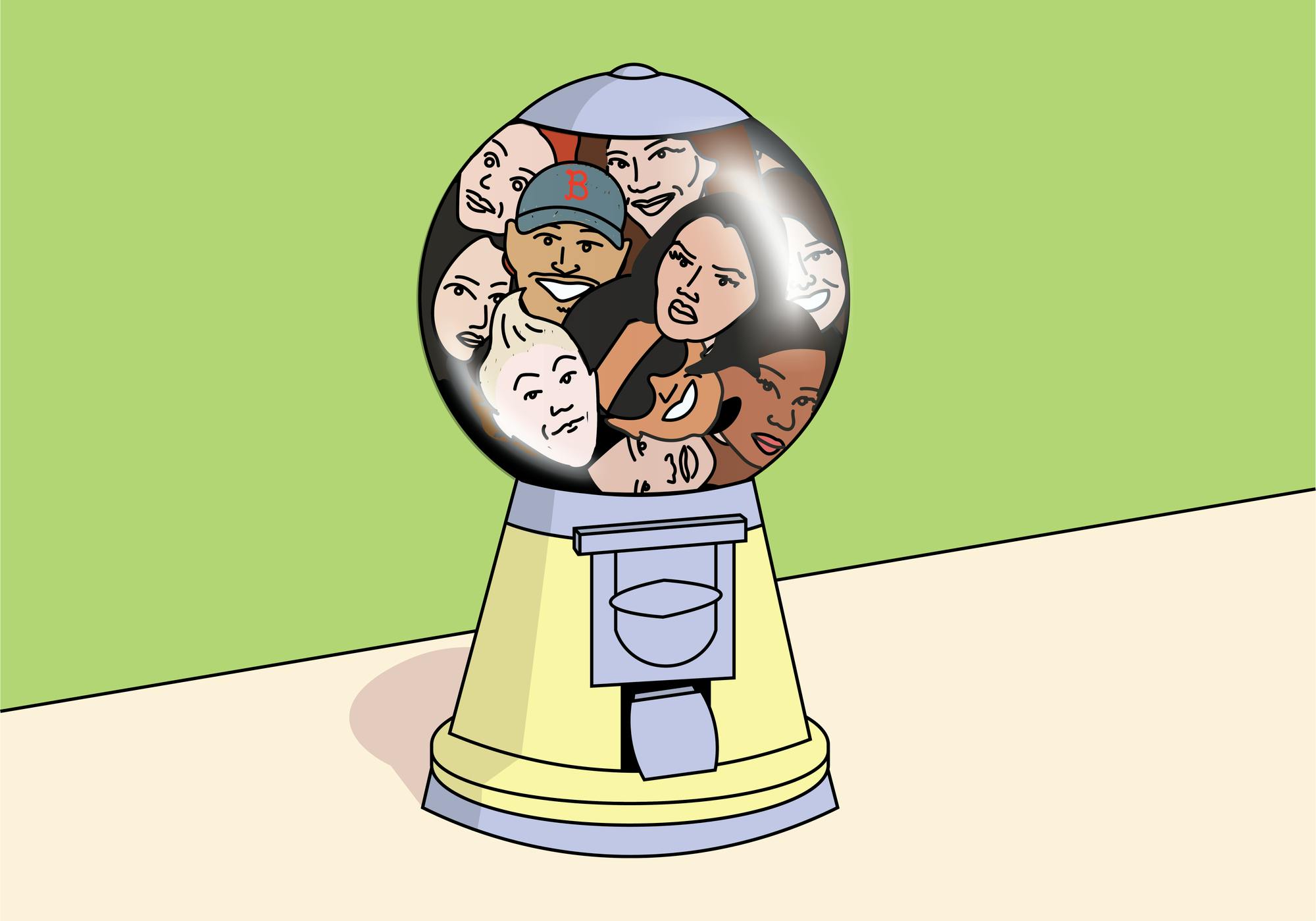
This structure, assistant professor of advertising and public relations Mariah Wellman said, consists of the feeling of authenticity.
"Reality television is the closest that we have to authentic interaction on a traditional media platform," Wellman said. "So, reality TV usually advertises itself as real television programming that is unscripted, that offers you an inside look into the lives, or even just interactions amongst regular everyday people on your television screens."
Wellman said the novelty factor of reality television when it first appeared on television screens helped draw in viewers.
"I think one of the things was reality television, when it was brand new, there was a sort of novelty factor to it and it hit a really particular age group," Wellman said.
However, throughout the years, reality television slowly lost its chokehold on its viewers.
Wellman said the loss of popularity could be attributed to less interest from viewers.
"Reality television grew up and so did the people that were interested in reality television. And so as these people grew up, they became less interested in more of these, like party shows, like 'Jersey Shore,' or, you know, these sort of shows that had a big novelty factor in the beginning, which was 'Survivor,'" Wellman said. "As the shows went on, it sort of became mundane, right? The same things were happening, and audiences were growing up and finding other things that were interesting to them."
But recently, with the release of shows like "Love Island USA" and "The Traitors," the popularity of reality television has been rising once again.
This resurgence, Wellman said, can be credited to social media as well as streaming platforms.
"Reality television happened at a pre-social media time, and so as social media became more interesting and we were introduced to people like influencers — where we didn't have to wait for a once-a-week episode — we could interact with some of these people that we saw as accessible, everyday folks. We could interact with them every single day," Wellman said. "Reality television struggled to keep up, and so they had to become more creative and more interesting in what they were providing to the public. I think that that's what we're seeing now, with an increase in reality television again, on streaming platforms where we can binge some of these shows on a more consistent basis, interact with these people on social media while also interacting with them through our television screens or our laptop screens."
Additionally, Wellman said producers were able to learn from reality television’s previous downfall.
"Reality television producers have found a way to connect with their prime audience again, which is, you know, people in college and right out of college, in that sort of 18 to 30 age group. They found a way to reconnect with those audiences in a way that the reality television shows of the early 2000s really struggled with as social media became more popular," Wellman said.
Similarly, psychology sophomore Maddy Levin said the recent rise in popularity could be a result of social media.
"I really think a lot of it is social media," Levin said. "I feel like it picked up a lot over the last couple of years because of 'Love Island' and all that, it got really popular that one summer. And I think it's just because once a big group of people find out about it on social media, it just becomes, almost like, a trend to watch the show. And I think that's kind of what's pushing a lot of reality TV shows out there."
With reality television shows like "The Traitors" and "Love Island USA" amassing over hundreds of millions of viewers and billions of streaming minutes, the current interest in this genre is high among viewers.
Wellman said the current popularity of this genre of shows is due to individuals "craving realness."
"I think that reality television is popular, specifically right now, because as we're getting — I don't want to say more comfortable, but just more aware of things like artificial intelligence and expanding in the digital age — people are craving realness. They're craving authenticity. They're craving connection, and reality television gives us a taste of that," Wellman said. "I think people are aware that reality television is not always totally unscripted, right? They can't promise you 100% authenticity, but it is a closer or a more intimate version of human connection on our TVs in an age where everything seems to be artificial."
Similarly, accounting senior Ariya Kenny said the want for community within society results in the current popularity of reality television.
Support student media!
Please consider donating to The State News and help fund the future of journalism.
"On a deeper level, I would probably say because loneliness is on the high rise," Kenny said. "Especially since COVID, I think our society has just become a lot more lonely, and community is a lot less popular. So watching reality TV almost gives you, like, this false sense of reality, because you're like, getting to know these people on a deeper level."
Although reality television has been popular among fans, scripted television has continued to be a strong competitor.
However, individuals may choose to watch reality television over scripted television, Wellman said, due to wanting "a little taste of realness."
"I think that people want to see real people succeed. They want to see real people win, and they want to watch people that they feel like are attainable in comparison to their own lives … We understand reality TV as this opportunity that is given to real people to find success, to make money — whether that's, you know, finding love on 'Love Island' or winning a competition show like 'The Traitors' — we see that as a accessible opportunity for us, and that even though we understand it could be partially scripted, that opportunity is really intriguing for us. And we want to see those people that we identify win and find success," Wellman said.
"When you watch scripted television, not only do we know that it's not real because they're acting, but the people who are interacting on our screens feel a little bit less accessible to us, because we understand them as people from Hollywood, people who have a level of fame that is not as accessible to us."
Similarly, Levin said the level of authenticity reality television provides outweighs scripted television.
"When you do watch scripted TV, at least for me, I feel like, 'Oh, like, this is so fake to me,'" Levin said. "It just seems like a lot of the situations are just something that wouldn't happen to a regular person."
During the time that the reality show airs and concludes, stars often find themselves forming a fanbase. Although some don’t achieve the fame of Hollywood celebrities, they find themselves in an influencer status, with fans choosing to follow them on social media or keep up with their lives.
Wellman said this is due to the viewers’ want to connect with the stars.
"I think part of it is the connection to realness and the ability for audiences to, sort of, see similarities or likenesses to some of these people on social media. Whether you see yourself in them as a viewer or you want to be friends with those people, it can really start to draw a level of closeness and intimacy that could build a potential parasocial relationship," Wellman said.
A connection, Levin said, is exactly what viewers feel with the reality television stars.
"I think a lot of it has to do with the person's personality and feeling some sort of connection to the way they handle themselves or the things that they show interest in, and people get like, a connection," Levin said.
Kenny said the ability to "relate" to reality television stars is what drives many viewers to follow them.
"We — in this day and age — have the ability to follow someone and see a lot more of their life than just in that show. So especially if you really relate to someone, you're like, 'Oh my goodness, that's me,' or you're like, 'Wow, I really wish I was that person.' You can get to know more about their life than just that show," Kenny said.
However, with this type of connection could also bring the harms of parasocial relationships, Wellman said.
"The way that we situate them in society as more accessible makes us feel like we truly know them, makes us feel like we're connected to them," Wellman said. "So when we are constantly watching them — whether that's on TV, on our phones or through their social media platforms — the more that they post, even though that relationship is uneven, right? It's parasocial. A lot of times, consumers or audiences don't see it as uneven or parasocial. They see it as actually knowing that person."
Levin said that although there are positive aspects of parasocial relationships, it can quickly become "dangerous."
"I definitely think it's dangerous for the people involved because they don't really know the extent of what's happening with these people who are like, so attached to them, and finding out everything. It could lead to a very dangerous, almost like, addiction to this person's life, and they could end up with stalkers and stuff like that," Levin said.
In extreme situations, these parasocial relationships can become a threat to reality television stars’ lives. For example, "Love Island USA" star Nicolas Vansteenberghe has revealed that fans had taken extreme actions against him, such as hiring a hitman.
Wellman said fans feeling "ownership" over stars could be the driving force behind the extreme actions.
"We feel — or consumers or audiences feel — a sense of ownership over that person. And so when that person acts in a way that we don't like or feels wrong, sometimes we can overreact as consumers or audiences," Wellman said. "Audiences can overreact, and that can lead to some really dangerous situations for these reality television stars, because people feel like we know them, or they know them, and so that can sort of dictate the audience's behavior in some really dangerous ways. Part of that has to do with accessibility ... and part of that has to do with the misunderstanding of what a relationship is between an audience member and a reality television star."
Being able to hide behind a screen, Kenny said, could contribute to individuals feeling comfortable enough to take extreme actions against the stars.
"When you have this false sense of like, 'Oh, I really know this person,' or 'I really hate this person,' even if they have no idea who you are, social media gives you a sense of like, extra boldness — especially when it comes to negative actions," Kenny said. "It's a lot easier to be sending hate messages — or even going to the extreme of, like, [hiring a] hitman — because they don't necessarily know who you are."
With the rise and fall, and now the second rise of reality television, will the genre end up dying down again?
Wellman said it depends.
"If reality television producers, particularly, have their ears to the ground, are listening to what audiences want and responding and showing audiences more of what they are asking for, I think that's going to continue the popularity of certain reality television shows," Wellman said. "Reality television shows that are unable to adapt, I think, could potentially die down, but again, if they're really listening to their audience and responding in a way that keeps the audiences engaged, I think reality television will still be around for quite a long time."
Discussion
Share and discuss “Reality television sparks conversation on recent popularity, parasocial relationships” on social media.