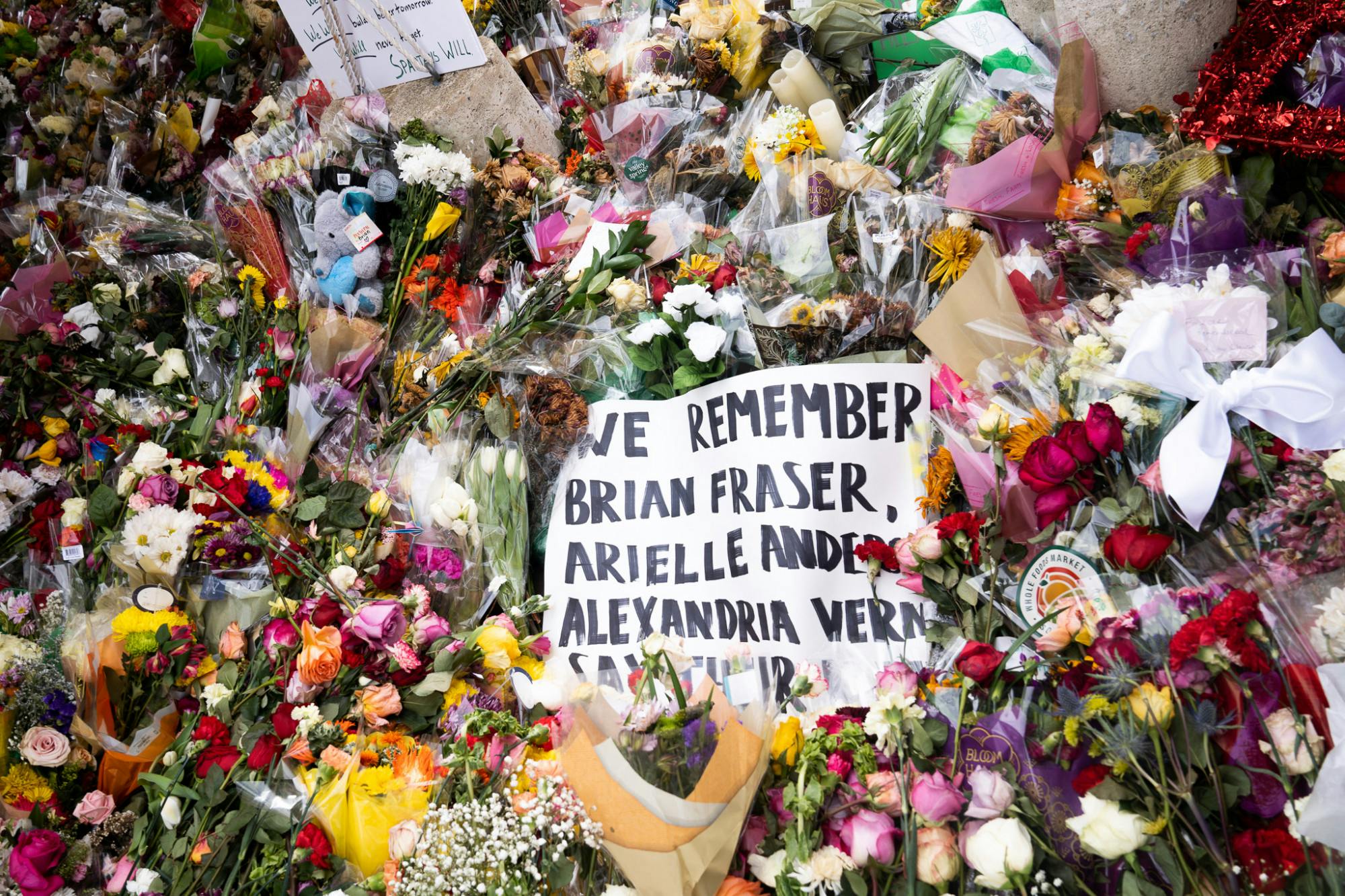
Flowers and signage surround the Spartan Statue on Feb. 21, 2023.
On a recent Monday evening, the scene inside the MSU Union was nothing out of the ordinary.
As the last customers of the day mulled around the in-house coffee shop, a group of skaters reclined on the lobby couch, fans took a picture with a bronze statue of the university mascot, and bleary-eyed students typed away at laptops.
The building — long the idyllic center of campus life — recently celebrated its centennial. In a newly renovated common area on the first floor, a poster lists decades of notable events through the history of the MSU Union, from a visit by Martin Luther King Jr. in 1965 to the closing of its basement bowling alley in 2020.
It makes only a passing reference to the mass shooting that took place in that very room, on another cold Monday night, three years ago. A single, inch-wide tab on the timeline read: “Feb. 13: MSU Community Violence Incident.”
As the shooting, which killed three students and injured five, approaches its third anniversary, MSU’s students and leaders face difficult questions over how long to memorialize a tragedy.
Will the devastating event remain a living, breathing, and aching part of campus life? Or will it become a one-line blip in the long history of a storied institution?
The passing years and convenience of the calendar lend themselves to the latter. The last four-year undergraduates who experienced the shooting first-hand will graduate in mere months. And the university’s leaders will not have to choose whether to hold classes on the anniversary until the next time it falls on a weekday, in 2029.
But, for some, the anniversary was supposed to be more than a temporary acknowledgment of passing trauma. They wonder how, if at all, it will live on.
A day to reflect
Discussions about how to best handle the anniversary began soon after the shooting itself in the spring of 2023, said Thomas Jeitschko, who was MSU’s interim provost during the shooting and until August 2025.
Academic calendars are set years ahead, and subject to scrutiny from accreditors, so cancelling classes for the anniversary presented a logistical challenge, he said. For the first anniversary in 2024, though, Jeitschko recalled that MSU’s leaders were in agreement that it was the right thing to do.
Classes were cancelled, and large assignments and exams were discouraged. The university remained open and offered supportive programming, he said, “because we wanted to be together as a community.” In the end, Jeitschko said he was pleased with how the first anniversary went.
But some wanted more. Members of the undergraduate student government demanded the anniversary become a permanently observed part of the academic calendar.
The university has not adopted such a measure. But the choice to call off classes again for the second anniversary pressed the issue, said Mark Largent, vice provost and dean of undergraduate education, who was among the administrators involved in the decision.
“We did it the first year,” he said. “But then the question was, if you do it a second year, when do we stop?”
The administration eventually chose to cancel classes for the second and third anniversaries, in part because of what Largent called the “poetic logic” of the ensuing calendars.
The first three anniversaries have fallen on weekdays. But for the next two years, the anniversary will be on Saturday and Sunday. So, the next time MSU’s leaders will have to consider canceling classes is Monday, Feb. 13, 2029.
By then, even the undergraduates who were freshmen during the shooting will have graduated years ago. Largent said that timing was discussed when deciding to cancel classes in 2025.
“That was the worry then: if we do it a second year, how do we stop?” Largent said. “But there’s a sort of poetic logic to saying that the students who were here are gone by the time we get to ‘29, so it has this natural end.” (A university spokesperson said no decision has been made about how to handle the anniversary in coming years.)
In Jeitschko’s recollection, administrators imagined that the anniversary would serve a purpose aside from helping those who experienced it directly process trauma: respecting and remembering those who were killed. That, Jetischko said, could theoretically continue long after those who most directly experienced the shooting leave campus.
Support student media!
Please consider donating to The State News and help fund the future of journalism.
At the same time, Largent said that administrators have worried about treating the anniversaries with such longevity. They could “impose the trauma” of the shooting onto new students who did not experience it themselves. But, Jetischko said, even students who weren’t at MSU for the shooting may already feel affected by gun violence and school shootings in general, or from past experiences. The anniversary could then function as a day of reflection for that greater societal stress.
“These are a part of where we are as a society,” Jeitschko said of shootings. “Even a student who was not here on that particular day could very well reflect and have some connection.”
At the same time, Jeitschko said he has worried that the day off of class could become “just a party day or a long weekend.” It would be "personally upsetting,” he said, if students now or in the future took it lightly.
Largent, meanwhile, wondered whether it's realistic to expect all students to engage with the anniversary in a truly solemn way.
He said he thinks about a bench outside the administration building, which he and some colleagues paid to be dedicated to James Murphy, a longtime information technologist who died in 2021. Or a nearby tree, which is dedicated to James Lucas, a vice provost who died last year.
When Largent visits those landmarks, he thinks about his old colleagues. But when a student rests on the bench or enjoys the tree’s shade, he asked, do they know who they are? If they don’t know, or don’t care, is that disrespectful?
In a way, Largent said, MSU’s campus is “full of ghosts.” It’s nearly 200 years old. Almost every spot has surely earned special meaning for someone, for reasons only they understand.
In time, Largent said, the shooting may mature into yet another piece of the university’s history, something “that has more consequential meaning to other people than it does to you.”
Physical reminders
With the physical plans MSU has to memorialize the shooting, these considerations have concrete effects.
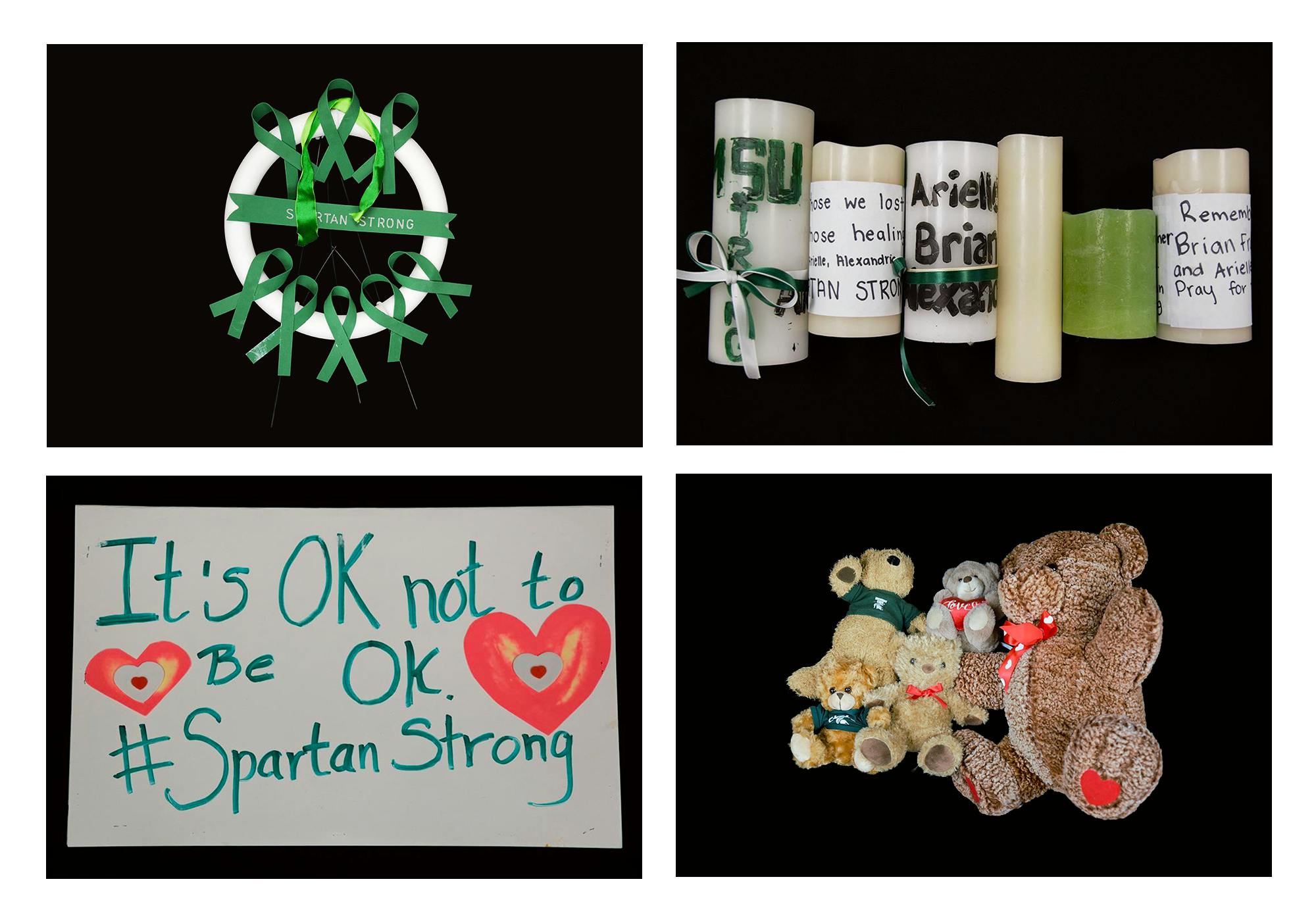
The MSU Museum is still in the process of cataloguing thousands of items placed on campus after the shooting, like signs, artificial flowers, letters, and stuffed animals. There aren’t “immediate plans” to display the items, said Director Devon Akmon, and the museum would consult with trauma experts before doing so.
“We just need to be sure that our university is ready,” Akmon said.
The university is also constructing a permanent memorial, which is expected to be completed in the fall.
MSU largely let the community decide the direction of the project. In August, trustees approved the design — a reflective pond with three benches to symbolize the three lives lost — after multiple surveys and feedback sessions.
Its location in the Old Horticulture garden is accessible, but private, said Judith Stoddart, vice provost for University Arts and Collections and co-chair of the ten-person committee overseeing the project.
The memorial is meant to provide a physical location to process the trauma of the shooting. But it's also a way to remember the event decades from now, when there’s no one on campus that was impacted by it, Stoddart said.
“That's the best way that we can, in perpetuity, continue to remember and honor both what happened but also the process of ongoing healing from that event,” she said.
In 2024, survey respondents indicated the memorial should be most focused on “honoring and remembering,” and least focused on “providing commentary.”
But memorialization efforts that are divorced from political action ring hollow, said Divya Victor, an associate professor in the English department who thinks the university should be an advocate for gun regulation.
Relying on an aesthetic gesture to remember a tragedy is “a very limited way of understanding grief and our responsibility to each other,” Victor said. “It's like sending a Hallmark card to a funeral.”
“We still send the flowers; we still sign the card; we do it because we are at a loss as survivors. We are at a loss for the right gesture.”
‘Just another building’
For a year afterward, Victor heard her students lower their voices when they talked about the shooting. These days, however, she said that doesn’t really happen.
"It's falling a little bit out of memory,” she said.
As memory of the shooting fades, so has its gravity. As statistics junior Peyton Paungam studied in the MSU Union Monday evening, he said that while the shooting was “tragic” — on its first anniversary, he went out of his way to place flowers at the Spartan statue — for him, the building didn’t hold much of an emotional weight.
Urban planning sophomore Reed Papakonstantinou once witnessed leaders of a student organization decide not to host a meeting in Berkey Hall out of consideration for members who were students during the shooting. The moment struck Papakonstantinou, who transferred to MSU last year.
“To me, it's just another building,” he said.
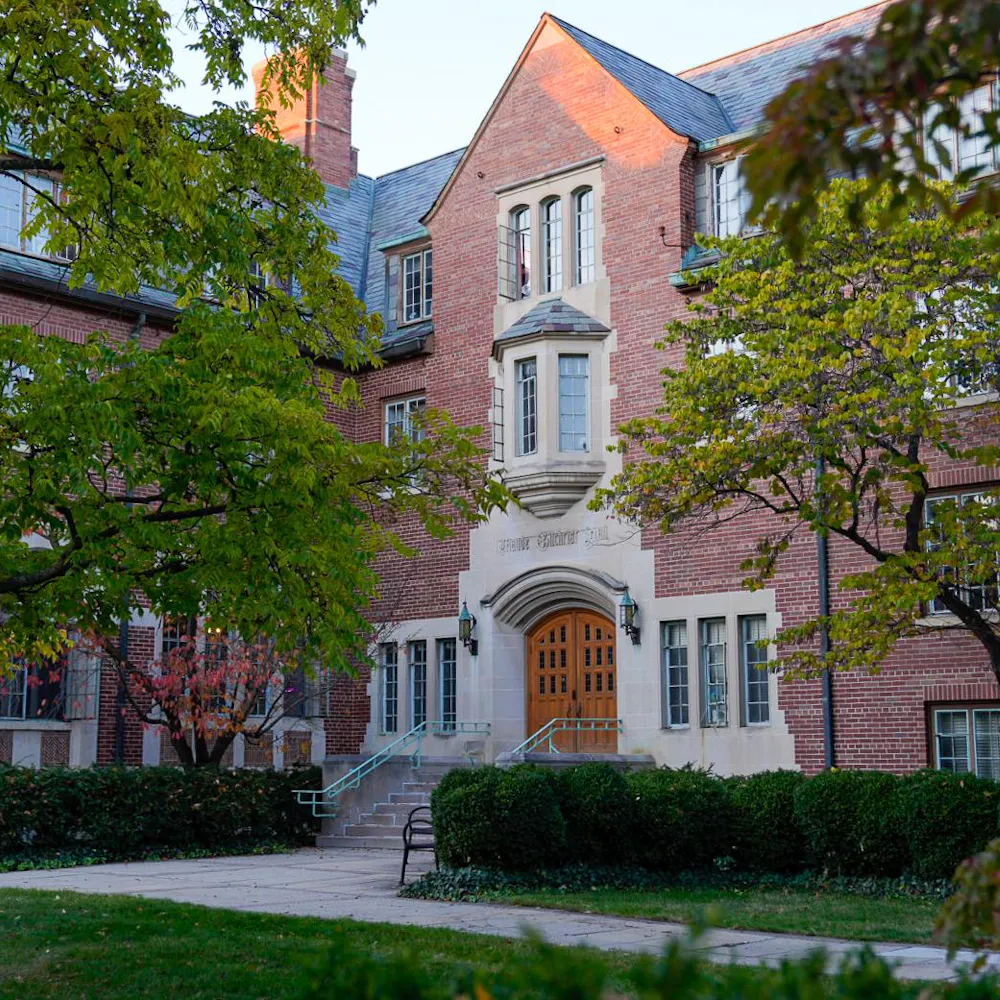
Jeitschko said he visited Berkey Hall last month. After a meeting in the area, he decided to spend some time in the reflection rooms that were built in the part of the first floor where much of the violence took place.
He watched as students went about their days, he said, realizing that most of them, or maybe all of them, were not at MSU when the shooting happened.
An untrained observer, he thought, may not know that anything had happened here —that the space had seen such violence, that it had been deliberately redesigned and carefully reopened afterward. Nothing about it is frivolous, he said, and there’s nothing “that ignores what happened.” But, on that day, it may have looked like any other hallway, in any other building, on any other campus.
For him, though, the space means more. It was solemn, he said: “If you do know what it is, you would see that it’s a special place.”
Discussion
Share and discuss “On third anniversary of shooting, questions linger over future memorializing” on social media.