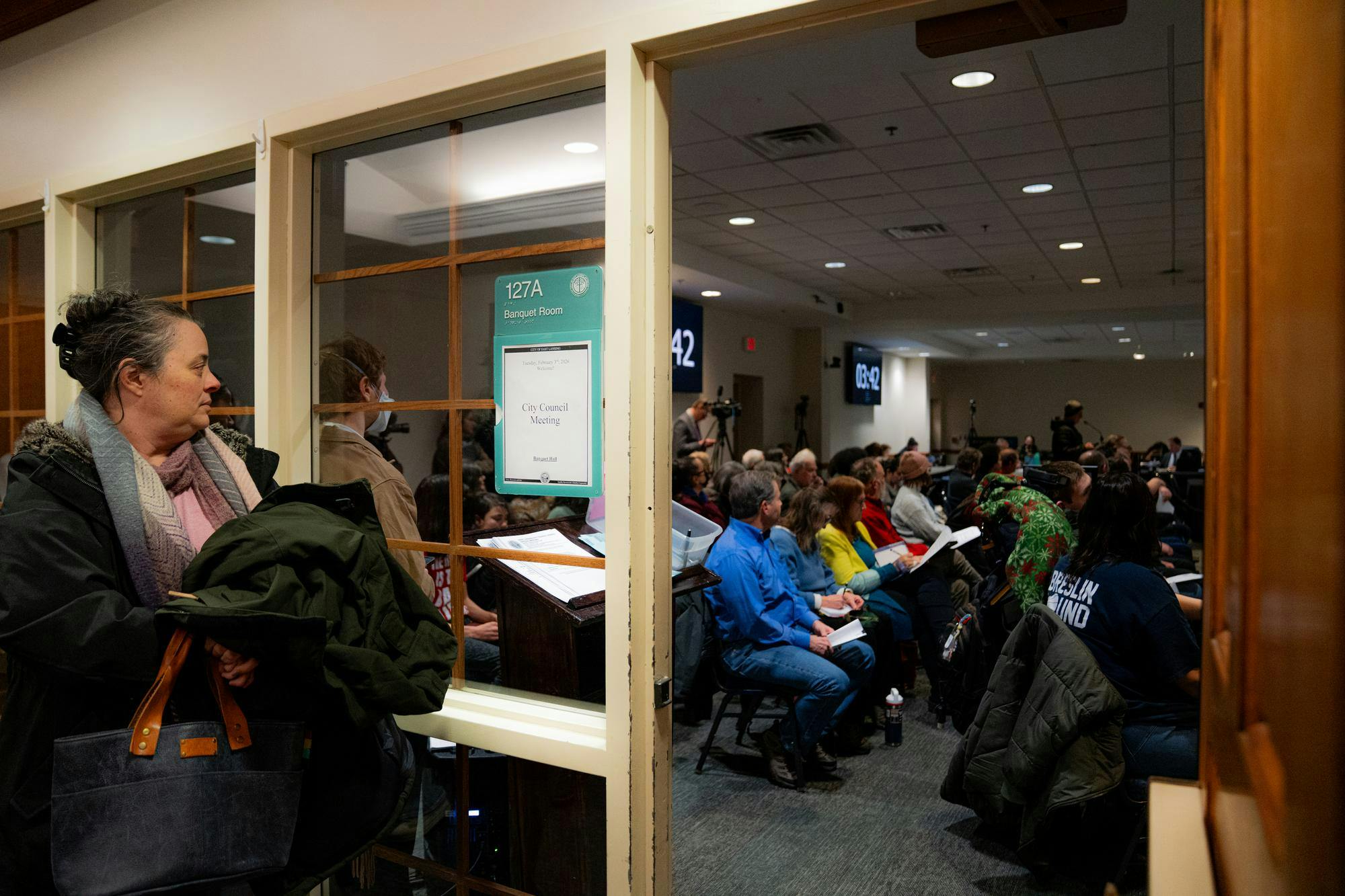
Attendees listen to the council meeting at the East Lansing Hannah Community Center in East Lansing on Feb. 4, 2026.
The East Lansing City Council postponed voting on an ordinance that would prohibit camping on public property following pushback from homelessness advocates at the council's meeting on Tuesday.
Camping on private or commercial property is already banned in the city of East Lansing. The proposed ban on camping in public spaces would prohibit anyone from using bedding, sleeping bags, or other materials with the intention of setting up a temporary living space in alleys, parks, and other public areas.
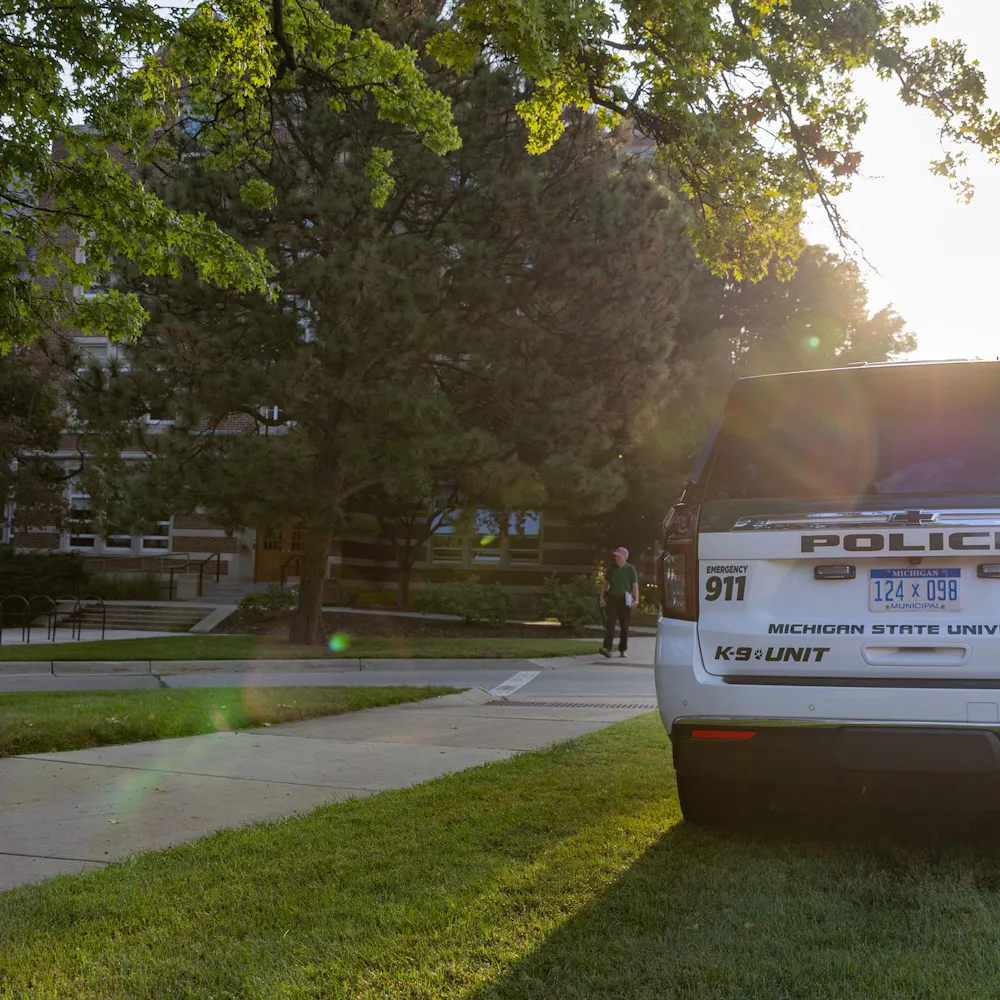
The policy change was introduced at a city council meeting on Dec. 9, 2025, as part of East Lansing Police Chief Jen Brown’s proposed solutions for taming violence downtown following unlawful pepper spray and Taser usage by city police officers during MSU’s Welcome Week. Those proposed solutions have been criticized by community members who say they intentionally target impoverished Black and brown East Lansing residents, particularly after the police chief defended the actions of the offending police officers in an October interview with WLNS.
Those proposed policies, developed with Community and Economic Development Director Heather Pope, eventually became Ordinance 1566 — although some advocates during the meeting referred to the policy as Ordinance 1560, an earlier iteration of the amendment.
If found in violation of the ordinance, individuals could be fined up to $25 for first-time offenses during a twelve-month period and charged with a civil infraction. For second or repeat offenses, individuals may be charged with a misdemeanor and face imprisonment of up to 30 days with fines no more than $100. The ordinance states it will only be enforced against homeless individuals after a police officer has made efforts to place the individual in a shelter.
East Lansing currently has no shelters within city limits that allow for long-term stays. Advocates at the meeting also noted that shelters in Lansing are all at capacity.
“Where, precisely, are unhoused people supposed to go inside East Lansing?” Khadja Erickson, the executive director of the Mid-Michigan Resource Center, asked the council on Tuesday.
Others during public comment echoed her concerns, claiming that the ordinance would result in homeless people being pushed out of East Lansing.
Amendments to a second ordinance, Ordinance 1565, were also introduced on Tuesday, aiming to restrict loitering in city-owned parking structures. Individuals in parking spaces that are not paying for parking tickets and walking to and from their vehicles would be faced with a municipal civil infraction.
“This ordinance authorizes punishment for people who have no lawful place to exist,” Erickson said.
The Michigan Coalition Against Homelessness, the Michigan ACLU, and the National Homelessness Law Center sent an eight-page letter denouncing the proposed legislation to the city council on Jan. 30, arguing that Ordinance 1565 is unconstitutional under state and federal law.
“All of us may linger publicly,” the letter read. “But for most, the consequence is a simple request to move, not legal penalties. Our unhoused neighbors deserve the same grace.”
The letter also criticized the ordinance’s working definition of loitering, calling it intentionally vague.
The ordinance currently defines loitering as the act of “remain(ing) in a place for no obvious reason or a reason other than the purpose for which the place exists.”
For urban planning junior Kalyn Woznicki, who condemned the policy during her public comment, the lack of clarity over the ordinance’s usage of loitering also poses an issue for young people, including MSU students. Whether someone has the money to spend downtown or not, young people are constantly loitering in the area.
“Loitering is one of young people's favorite hobbies (…) banning loitering kind of takes away the purpose of a downtown,” Woznicki said after the meeting.
During the meeting, councilmember Mark Meadows acknowledged the lack of resources available for homeless people in East Lansing.
"I think that's pretty obvious to anybody who's actually looked at this issue," Meadows said. "Where are people supposed to go? We don't have a particular answer for that."
City Manager Robert Belleman suggested a meeting between city representatives and representatives from the Michigan Coalition Against Homelessness, the Michigan ACLU, and the National Homelessness Law Center before the city council's next meeting on Feb. 17.
Support student media!
Please consider donating to The State News and help fund the future of journalism.
"Based on a lot of the feedback we’ve received tonight, I think there’s opportunity to sit down, learn a little more, and make sure our ordinances are responsive to those concerns,” Belleman said.
Mayor Pro Tem Chuck Grigsby and councilmember Kerry Ebersole Singh will act as representatives for city council in the upcoming meeting.
The ordinances will be revisited at the next regularly scheduled city council meeting on Feb. 17.
Discussion
Share and discuss “City council delays vote on controversial public camping ban” on social media.