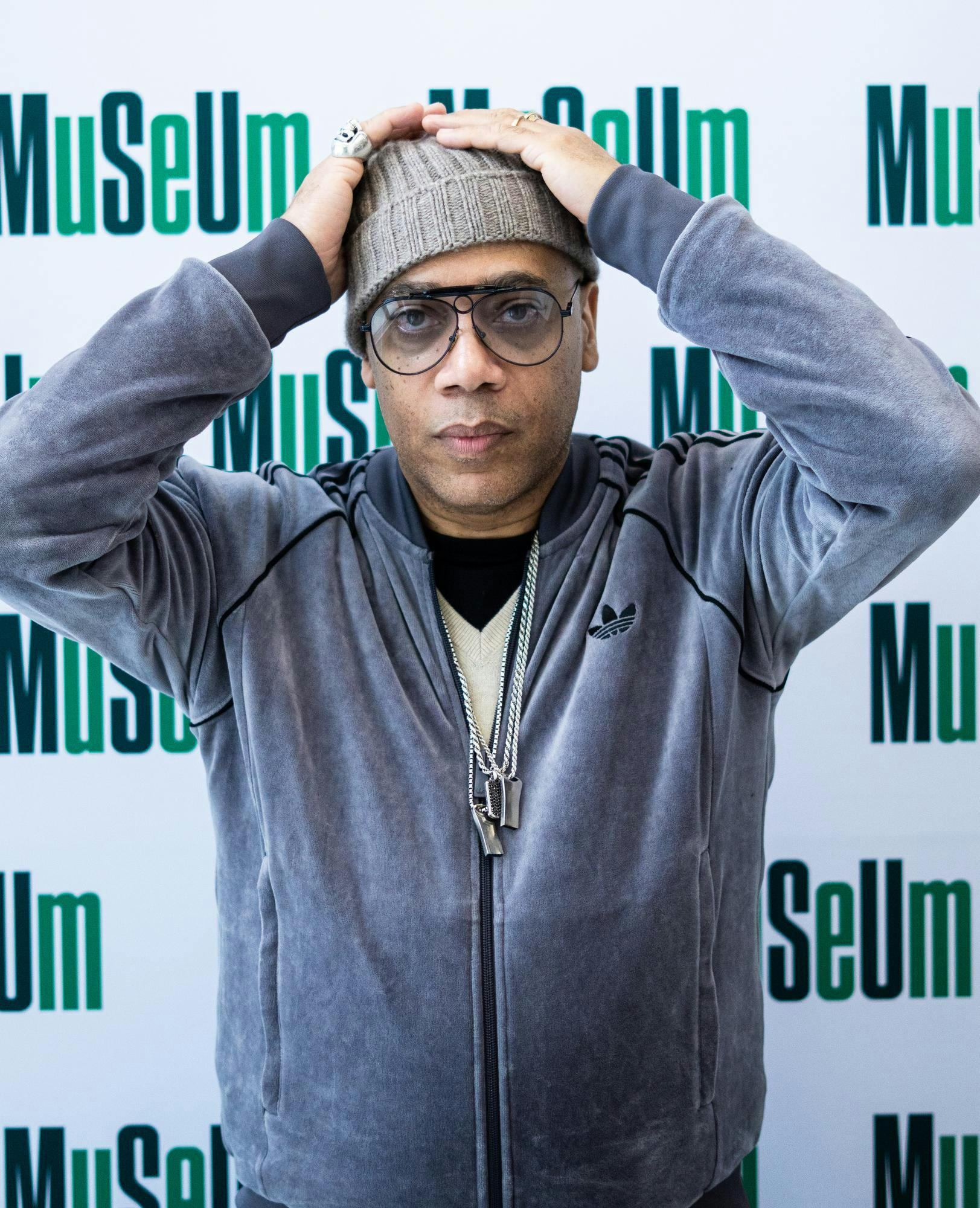
From mid-January to April, world-renowned Detroit DJ, producer and techno innovator Carl Craig will participate in the Michigan State University Federal Credit Union (MSUFCU) Arts Power Up Artist-in-Residence program.
Hosted by the MSU Museum’s CoLab Studio, in collaboration with the Facility for Rare Isotope Beams (FRIB) and sponsored by MSUFCU, the program aims to connect artists, researchers and students together.
Director of MSU Museum Devon Akmon said the program focuses on "bridging the arts and the sciences."
"The MSUFCU Arts Power Up Residency is really about bringing together disciplines to explore new ideas and new ways of working together — thinking about bridging the arts and the sciences, and really in different ways," Akmon said. "This isn't also just about the culmination of a wonderful work of art at the end, although, of course, that's what happens. It's really about challenging our academic community to come together and explore things in new ways."
Similarly, creative director of the CoLab Studio Mark Sullivan said the program was meant to be "interdisciplinary."
"One of the reasons that we focused on interdisciplinarity was that we wanted to do two things. One, we wanted to pull people in the arts into meaningful and productive collaboration with scientists and technologists. We also wanted to pull the scientists and technologists across their scientific orientation into working with artists and demonstrate to the scientists that art can contribute not just in symbolic or metaphorical ways to their disciplines, but actually spur scientific knowledge and research. At the same time, we wanted to demonstrate to the artists that science wasn't this technical, dry thing that didn't really have anything to do with meaningful artistic expression, but could actually reveal exciting and creative approaches that require art to bring it to life, and we wanted to do that across the campus," Sullivan said. "We wanted to create a culture on campus where art-science collaboration could thrive and expand and prosper."
This residency, Akmon said, is the third residency the MSU Museum has been a part of.
The first two residencies involved creating an open call to find residents to participate in the program. However, Akmon said this time around, Craig was invited to be a resident, based on the previous collaborations he had with the MSU Museum.
"With this particular residency with Carl Craig, we had been doing some work with Carl now for about two years. We first did a presentation with him at WKAR — I think it was in February of 2024, during Black History Month — and that went over really well, having this wonderful Detroit icon of music coming to campus," Akmon said. "And then we did a whole exhibition last year on the rise of techno in Detroit, and Carl again engaged with us through that. So we began to immediately explore the possibilities of the work Carl had done in the past and his expression of interest in MSU. In this case, we actually just worked directly with the artist. We said, 'Here's a great person who's interested, we'd like to work together.'"
This collaboration with Craig through the residency program, Sullivan said, benefits the MSU Museum in different ways.
"For the museum, there are actually several ways it's beneficial, because we've been emphasizing that the museum is actually serving the university community. We don't have students and we don't have a curriculum, but we do have exhibitions, and we also have items in our collection that could tie into many different aspects of the curriculum and students," Sullivan said. "And also, we're working really hard to make the museum part of what some people call a third space, which is a safe place for students to talk and encounter things and engage in activity that gets them excited about different things. So we see ourselves as a really important catalyst for a lot of things that go on in departments …Having Carl in this residency also allows us to coordinate programs but touch on classes, and that broadens the reach of activities that we want to sponsor."
For Craig, being selected for the program is something that he still is getting accustomed to.
"I'm still trying to get the grips with it myself. My world has been outside of school for so long because my school — I always say, I come from the school of hard knocks. Like, everybody's dad says, 'What's good, you go to the school of hard knocks? Get out of here, kid," but it is — my school has been on the road for the last 30 years. So to come into a situation like this, where it's, you know, an established program, it's something that I have to get used to," Craig said. "I'm always up for a challenge, and I'm looking forward to the final result, but again, it's the honeymoon phase, and it's an established program, and I'm trying to get into their groove, so that what my final project is going to be, they can walk in and say, 'Yeah, that's FRIB right there,' you know?"
Although the program is still in the beginning stages, Craig said he believes the program will benefit him in many ways.
"I am always up for an adventure, and not only with the relationships that are going to be built between FRIB and other departments here, and then maybe even projects that include students, which would be great," Craig said. "The benefits will, to me — it will be when the project is done that the relationships are there, that I've done something that I've never done before, and I'll have a product that, a project that, you know, won't be a three-years-and-done or three-months-and-done thing; it'll be something that I hope will be able to keep in rotation for years."
During his time at MSU, Craig said he hopes to help those in the community that seek his expertise.
"I think the benefit is mainly my experience," Craig said. "My experience that I hope to make available to anyone who has questions. So, you know, if there's somebody who wants to be a DJ — in a music program, or in an engineering program, or something — and they might want to be a DJ and need real-life experiences explained to them, I'm here. I have an office at FRIB."
By the end of Craig’s residency program, Akmon said he hopes the MSU Museum will help bring "disciplines together."
"We are a museum whose mission is about interdisciplinary. So we're not a science museum, we're not an art museum, we're not a cultural museum, we're about bringing disciplines together around big ideas. And when we do exhibitions like that here on campus, or projects like this, it hopefully will inspire our campus to think creatively about how we can address big problems and big issues through an interdisciplinary lens," Akmon said. "That's kind of the beauty I think, through this work."
Additionally, Akmon said collaborating with the FRIB will benefit MSU overall.
Support student media!
Please consider donating to The State News and help fund the future of journalism.
"But you know, having this world-renowned facility here on campus and this residency, that's part of how we envision building this residency. Through these really strong partnerships and really positioning MSU as a great place for global talent to come and interact with our faculty and our students," Akmon said. "So the residency is very young as I mentioned, this is only our third time participating in it, but hopefully with time, it will continue to grow and have a huge impact on our campus community."
Sullivan said he hopes the result of the residency program will extend far beyond the present.
"One of them is that we hope there will be some momentum that carries on past the time of the residency, and that other people might reach out to us and find ways to collaborate and give whatever comes out of the residency a longer life. So there's not just here in vain once and then forgotten," Sullivan said. "The other one is to kind of catalyze future residency activity by showing faculty and students what makes this residency distinctive and what it could offer their programs in the future ... and also to show them that collaborating on it might be challenging, but it's also worthwhile."
Find out more about Craig and the residency program here.
Discussion
Share and discuss “Carl Craig selected for MSUFCU Arts Power Up Artist-in-Residence program” on social media.