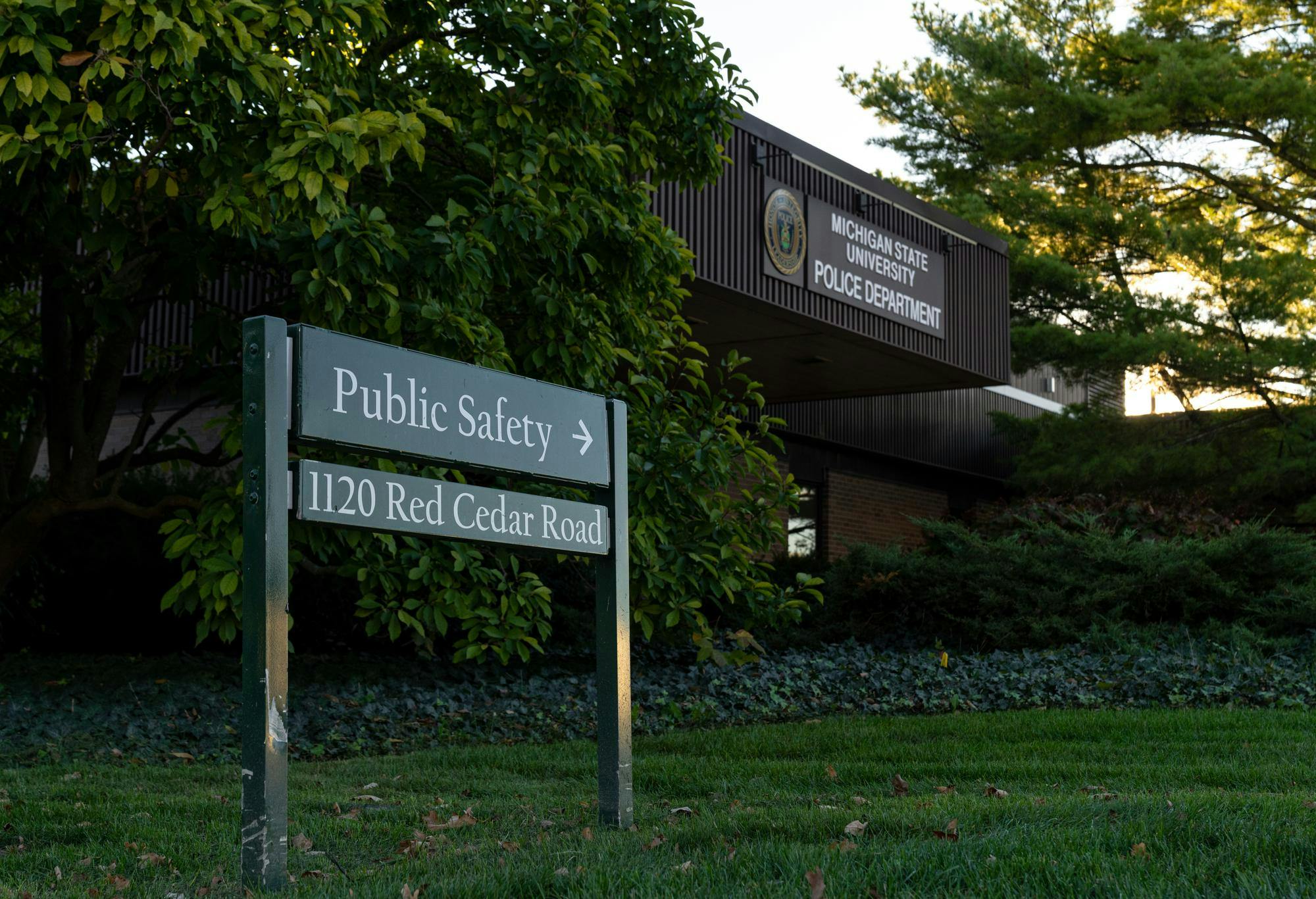
A review of last week’s accidental emergency notification, which incited panic across the Michigan State University community, has yet to be completed. But the MSU Department of Police and Public Safety (DPPS) is pretty sure what went wrong.
According to department officials, the human error which resulted in students, staff, faculty and parents receiving the notification involved a Security and Operations Center employee who, during a routine test, accidentally clicked the wrong button.
The blunder resulted in thousands receiving an emergency notification warning of an “active violence incident” just days before the third anniversary of the Feb. 13, 2023, campus shooting. Confusion and anger was exacerbated due to some alert recipients having the word “drill” omitted from their notification.
Many also received contradictory signals during the incident. MSU sent out a correction message stating the alert was sent in “error,” but there were some who received phone call and email alerts even after the correction was dispatched.
On Thursday, The State News spoke with multiple DPPS officials to learn how exactly the situation unfolded, and better understand the process behind MSU’s emergency notifications.
MSU’s emergency notification system operates through Everbridge, a mass notification software that is used internationally. DPPS Chief of Police Mike Yankowski explained that the software contains three different “modes” for delivering an alert.
The first, Yankowski said, is the “live messaging” mode which is used to alert the public of an active threat, as well as during semesterly tests of the system. Last week's incident involved the two other modes present in the software: “Exercise mode,” which is reserved for drills, and a testing mode.
DPPS emergency manager Natisha Foster said that when a notification is sent out via the testing mode, that message is only delivered to a select group of people. This is not the case with the software’s exercise option, which relays messages to its entire list of contacts.
During an internal test of the emergency notification software, which the department conducts once a month, an employee at the security center had both the drill and testing modes open on two separate screens, Yankowski said.
That employee, he said, “accidentally hit the send button in the exercise mode instead of the test mode.”
After the department discovered the error, the security center sent out a message within two minutes indicating that the first was an error, he added.
“We apologize, because we understand the effects of what that notification means for everyone,” Yankowski said. “It activated a lot of emotions for people.”
Moving forward, DPPS will not be using the exercise mode in any testing scenarios, Foster said.
“We've turned off the exercise mode in the system,” Yankowski added.
Regarding the inconsistencies in timing, with some receiving the correction messages later than others, Foster said the notification software has to send messages to over 85,000 contacts across different providers and locations — which creates a slight delay in execution.
“It's not instantaneous,” Foster said. “It does take a few seconds to get through all of the cell phone providers and through all of the various Wi-Fi points. So there is a slight delay based on what's happening downstream with the outside carriers.”
When the accidental notification was sent out, some recipients had the word “drill” omitted from their message. Although DPPS has not pinned down exactly why that was the case, they have concluded that those who had signed up for MSU’s Nixle channel, an opt-in feature, had received the notification without the “drill” portion present.
“We don't have that answer yet, but it's in progress to try and troubleshoot why that's happened,” Yankowski said.
All current students, staff and faculty automatically have their MSU emails and phone numbers enrolled into the university’s standard notification system. Foster explained that Nixle is an optional channel that anyone can sign up for regardless if they’re associated with MSU. This channel, she said, only dispatches emergency notifications.
In its testing, DPPS have found the most effective medium to deliver emergency notifications is the SafeMSU application, where users can opt-in for push notifications. Foster said DPPS is also working to implement this feature in its timely warnings and community awareness dispatches as well.
Support student media!
Please consider donating to The State News and help fund the future of journalism.
Deputy Chief Chris Rozman said the SafeMSU application is the most effective way to communicate these alerts due to them not having to use a third party, either a cell phone provider or email system which DPPS “have no control over.”
Discussion
Share and discuss “Campus police chief breaks down false active violence alert ” on social media.