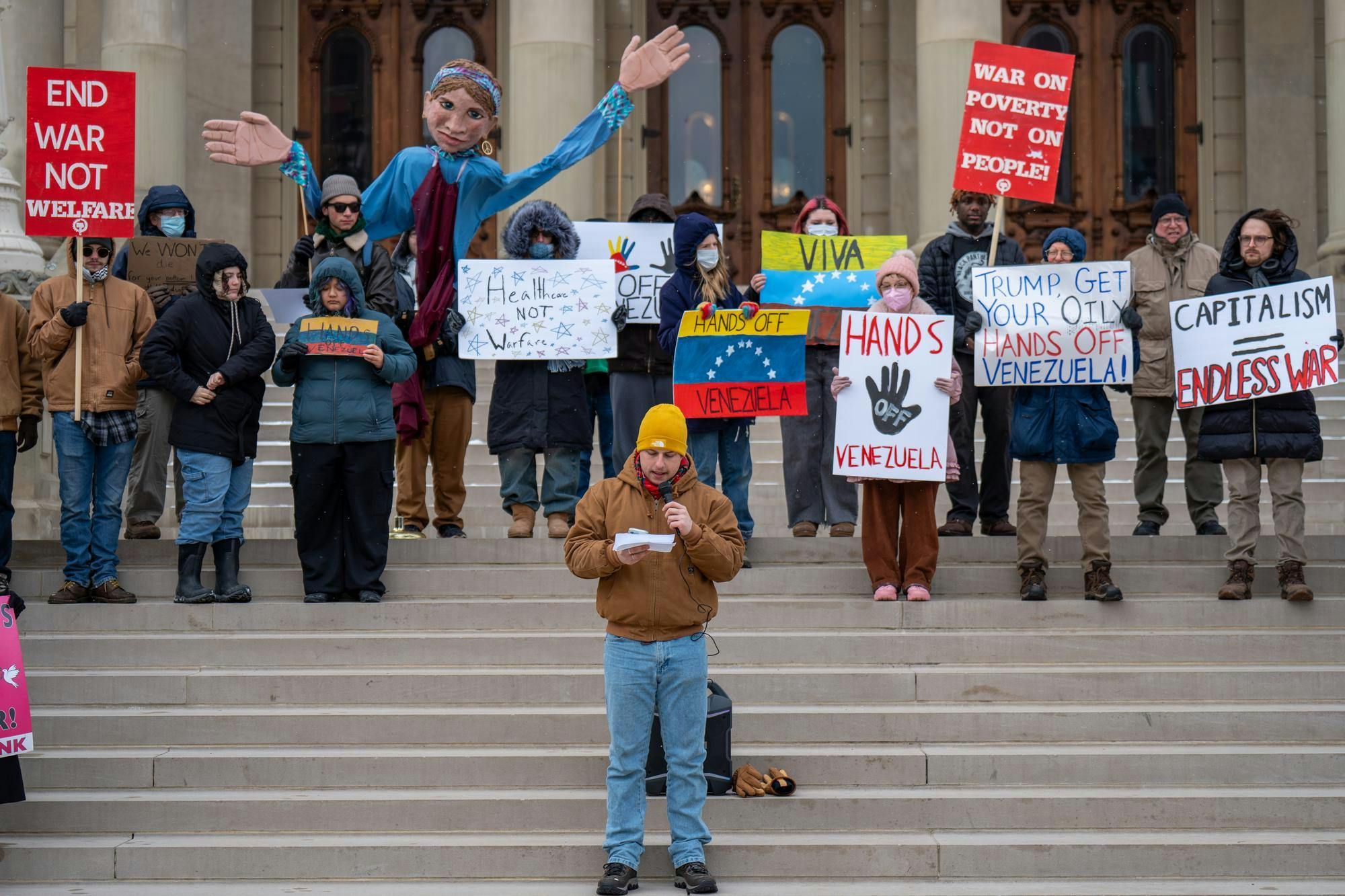
Michigan State student Eli Folts speaks at the Hands off Venezuela protest at the Lansing Capitol building in Lansing, Michigan on Sunday, Jan. 18, 2026.
Roughly two dozen Michigan State University students, alongside Lansing activists, gathered on the steps of the Michigan State Capitol on Sunday to protest the capture of Venezuelan President Nicolas Maduro by the United States.
The extradition of the Latin American leader to the U.S., which was preceded by military strikes that are estimated to have killed roughly 100 people, according to the Venezuelan government, has drawn criticism from international and domestic actors who have likened the operation to a kidnapping.
Others, including pockets of Venezuelan immigrants living in the U.S., have celebrated the removal of a leader who relied on authoritarian tactics during his 12 years in power.
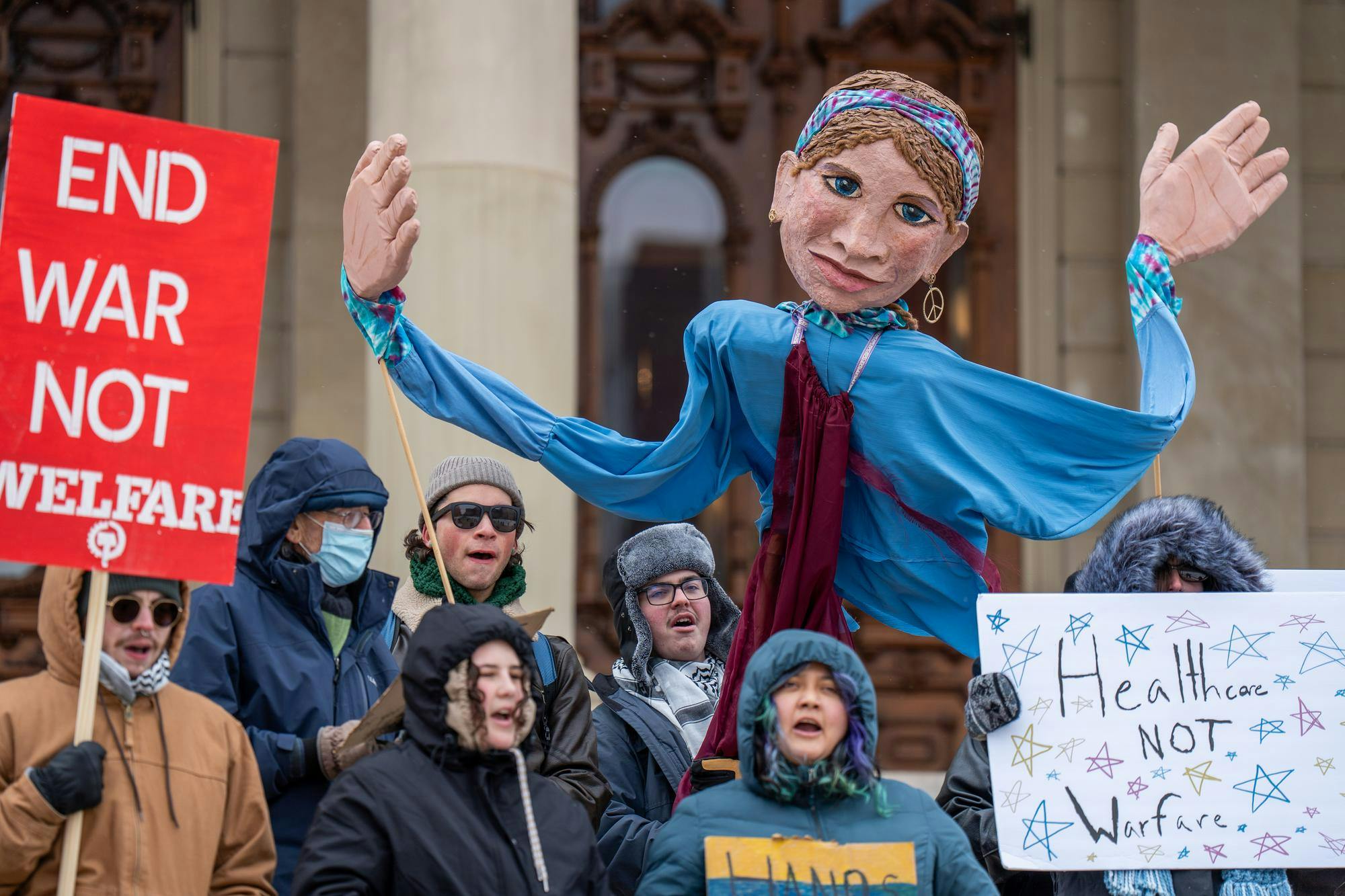
Protestors at the Capitol held signs that read "HANDS OFF VENEZUELA" and "PEACE NOT WAR" during the roughly two-hour-long demonstration.
Social relations and policy senior Henry Jerred recalled how the shock of learning about Maduro's capture quickly turned to outrage. Jerred, a coordinator with the climate change-focused activist group Sunrise MSU, said the protest was organized with several campus- and Lansing-based leftist groups in the days following the military operation.
Jerred called the notion that the U.S. can charge a foreign leader with domestic charges, such as illegally possessing machine guns, and indict them in an American courtroom "ridiculous."
The U.S. covertly and overtly interfered in Latin American affairs to advance its own interests throughout the latter half of the twentieth century, including the capture of Panamanian leader Manuel Noriega in 1990. Protestors on Sunday noted how the capture of Maduro was aligned with, and in other ways disrupted, that historical precedent.
“It was shocking to me because of how blatant it was,” secondary social studies education senior Jacinta Henry said of Maduro’s capture. “Usually, the U.S. is always doing these kinds of things. But this time, the administration was not trying to hide the fact that it was just to steal oil.”
Henry is also a co-chair of CodePINK, a Lansing-based advocacy group that describes itself as a pacifist, anti-war organization.
“It's clear that we don't care about protecting people's lives,” Henry said. “We just want to take their resources.”
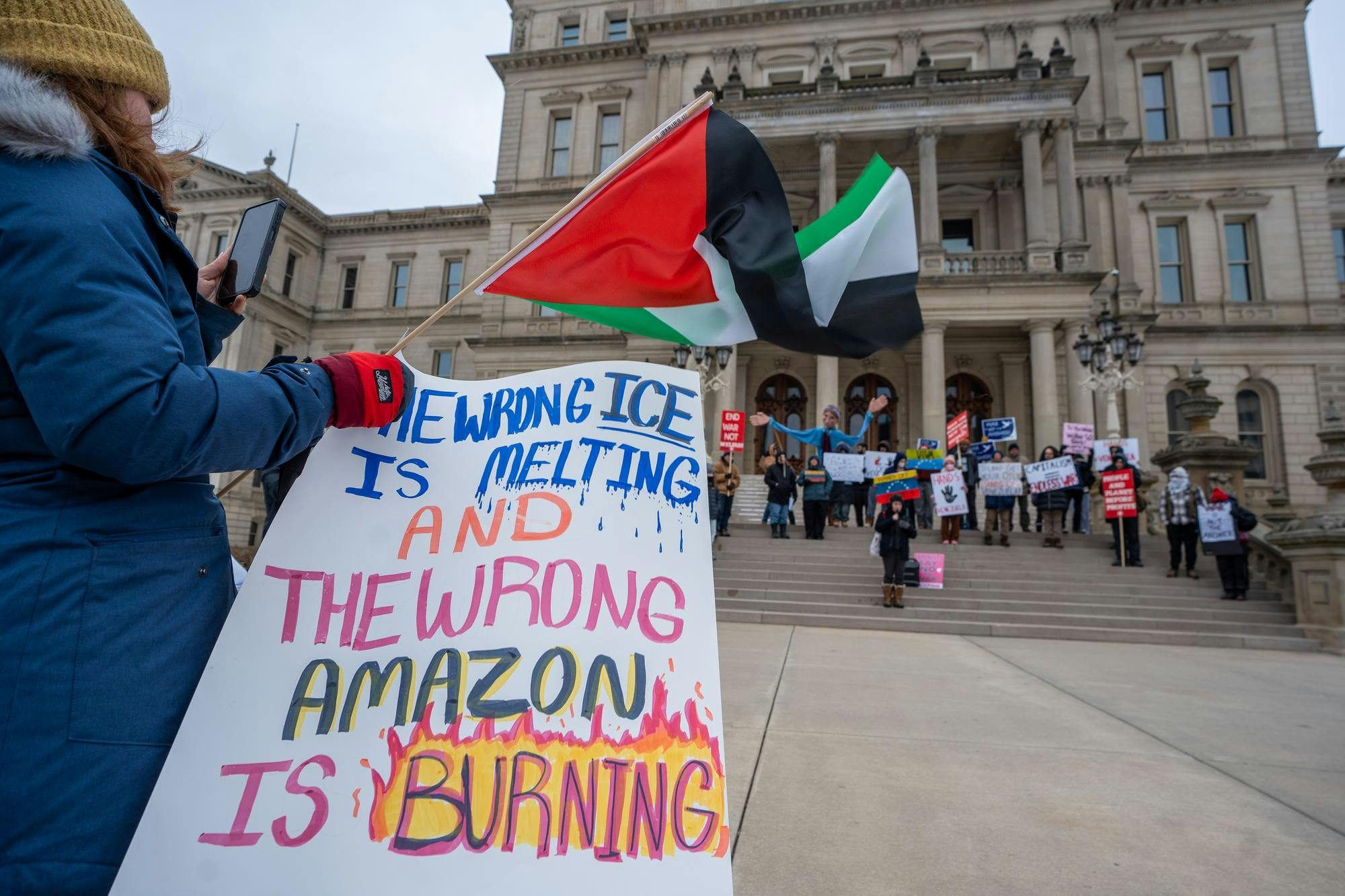
Some protestors linked the capture of Maduro by the U.S. to other political struggles, domestic and abroad, namely the ramping up of immigration enforcement in large cities and the Israel-Hamas War.
“The U.S. administration that separates families, criminalizes their existence, deports them, and funds bombs that drop on them, whether they are Venezuelan, Somali or Palestinians, is not invested in their liberty,” said Anna Martinez-Hume, an MSU alum and co-chair of the Lansing-area Peace Education Center.
Former MSU student Eli Folts, reading from a joint statement signed by the protest organizers, said the operation in Venezuela is "part of the systemic war on socialist governments in the hemisphere, mirroring domestic fascist tendencies."
In the weeks since the attack, Trump administration officials have said the U.S. will try to coerce cooperation from the Venezuelan government, rather than directly control the country. The U.S. Senate rejected a resolution on Wednesday, Jan. 14, that would have limited the president's ability to pursue future attacks on Venezuela.
“When we stand with marginalized people in the U.S., we're also standing with marginalized people around the world, and vice versa,” Jerred said. “It's really all one struggle.”
Support student media!
Please consider donating to The State News and help fund the future of journalism.