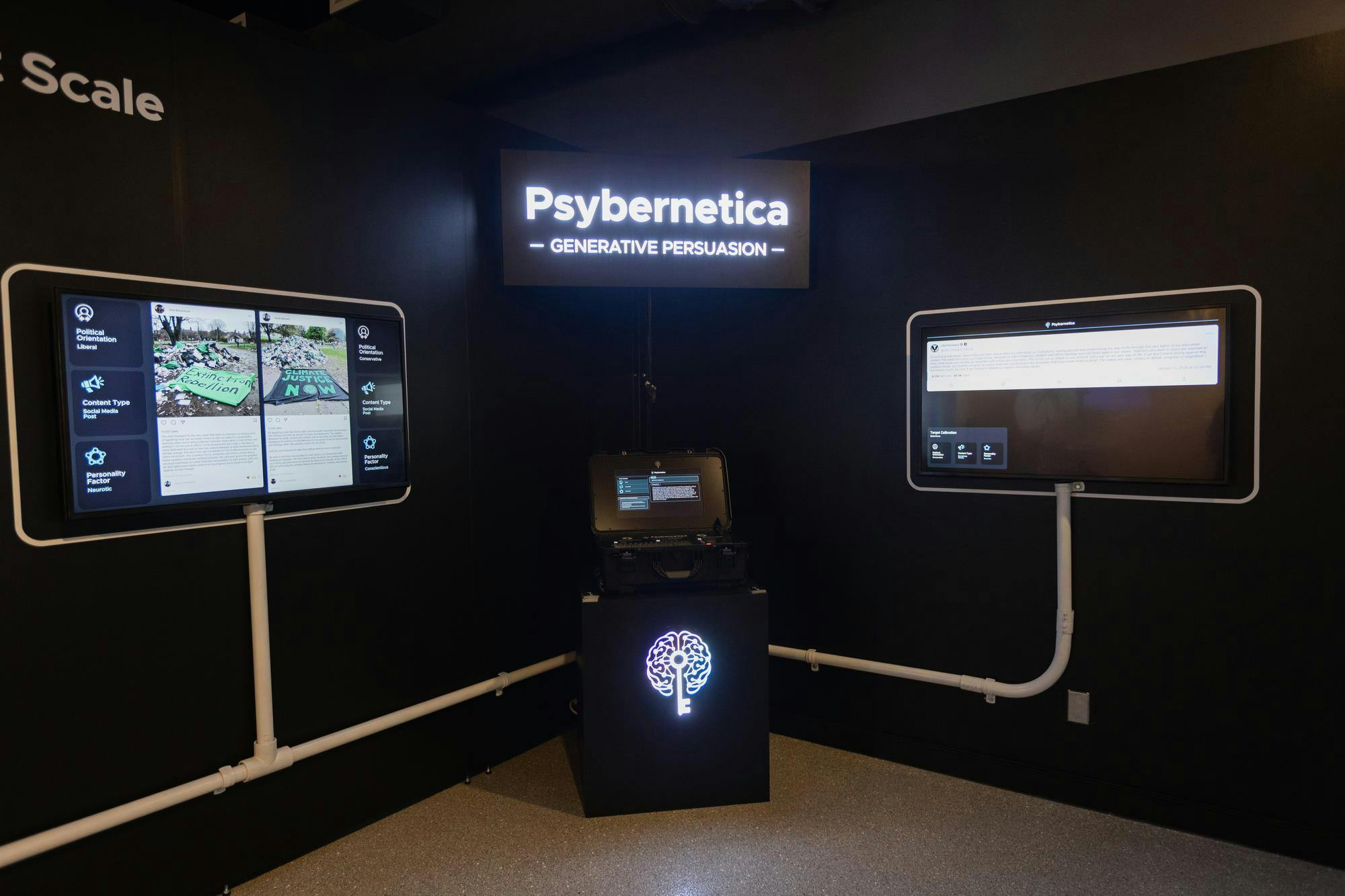
Michigan State University's new museum exhibit, Blurred Realities, as the museum re-opened in East Lansing, MI on Jan. 14, 2026.
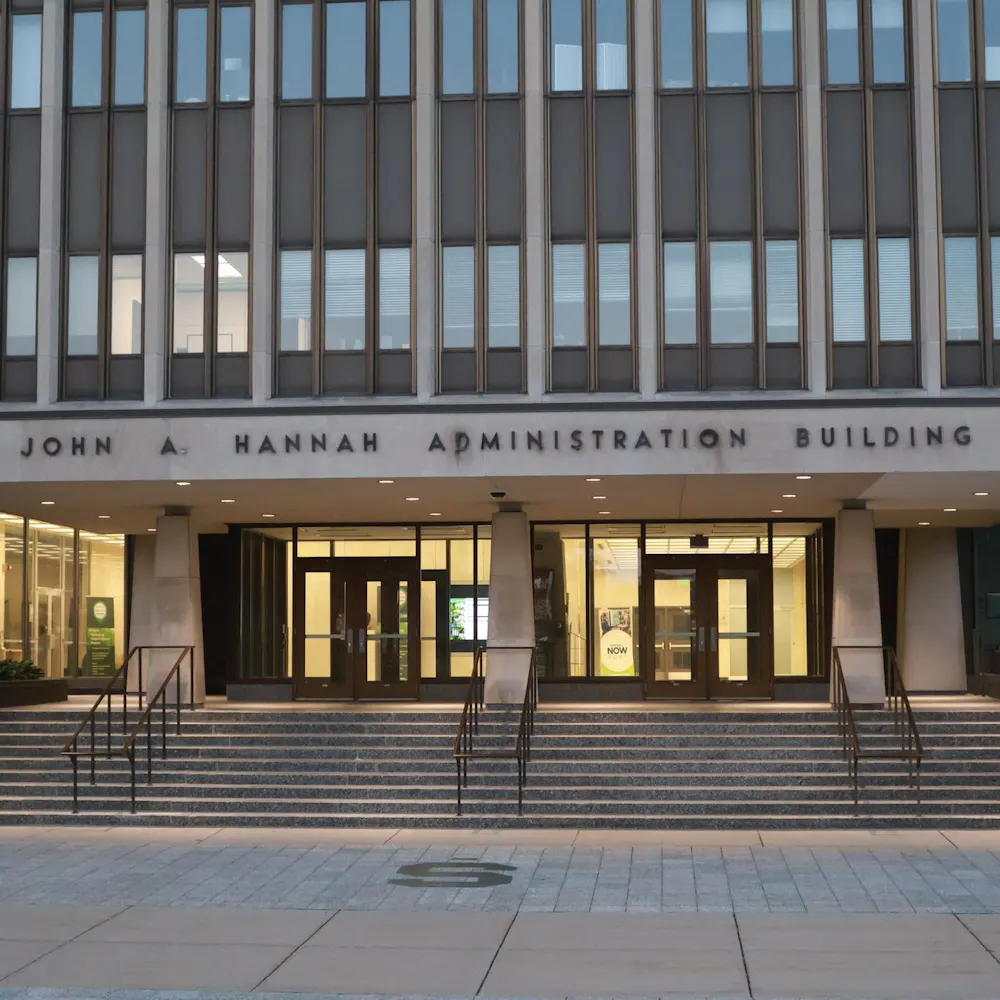
On Jan. 14, the MSU Museum opened its doors for the first time in 18 months after undergoing renovations. Founded in 1857, the museum had a mission of inspiring curiosity and connecting the university to the wider world. In its grand reopening, a new exhibit called "Blurred Realities" invites visitors to explore misinformation through various lenses.
The exhibit is part of the museum’s innovation unit, CoLab. With eight displays featured, it is the result of an open call in which 241 submissions from 32 countries were received. Its goal is to demonstrate how our perception of the truth can be altered, primarily focusing on different manifestations and implementations of artificial intelligence.
"I hope this causes (visitors) to think more critically about information," MSU Museum director of marketing and communications Stephanie Palagyi said. "You should not just take everything at face value."
Palagyi said that many people walk through museums – and life – with simple glances, accepting what they see as fact. However, upon closer inspection, guests to Blurred Realities’s "Museum of Alternative History" can expect to see some things that don’t entirely line up: butterflies with corporate logos on their wings, Civil War era photos of contemporary figures, vacation photos disrupted by atomic bombs and more.
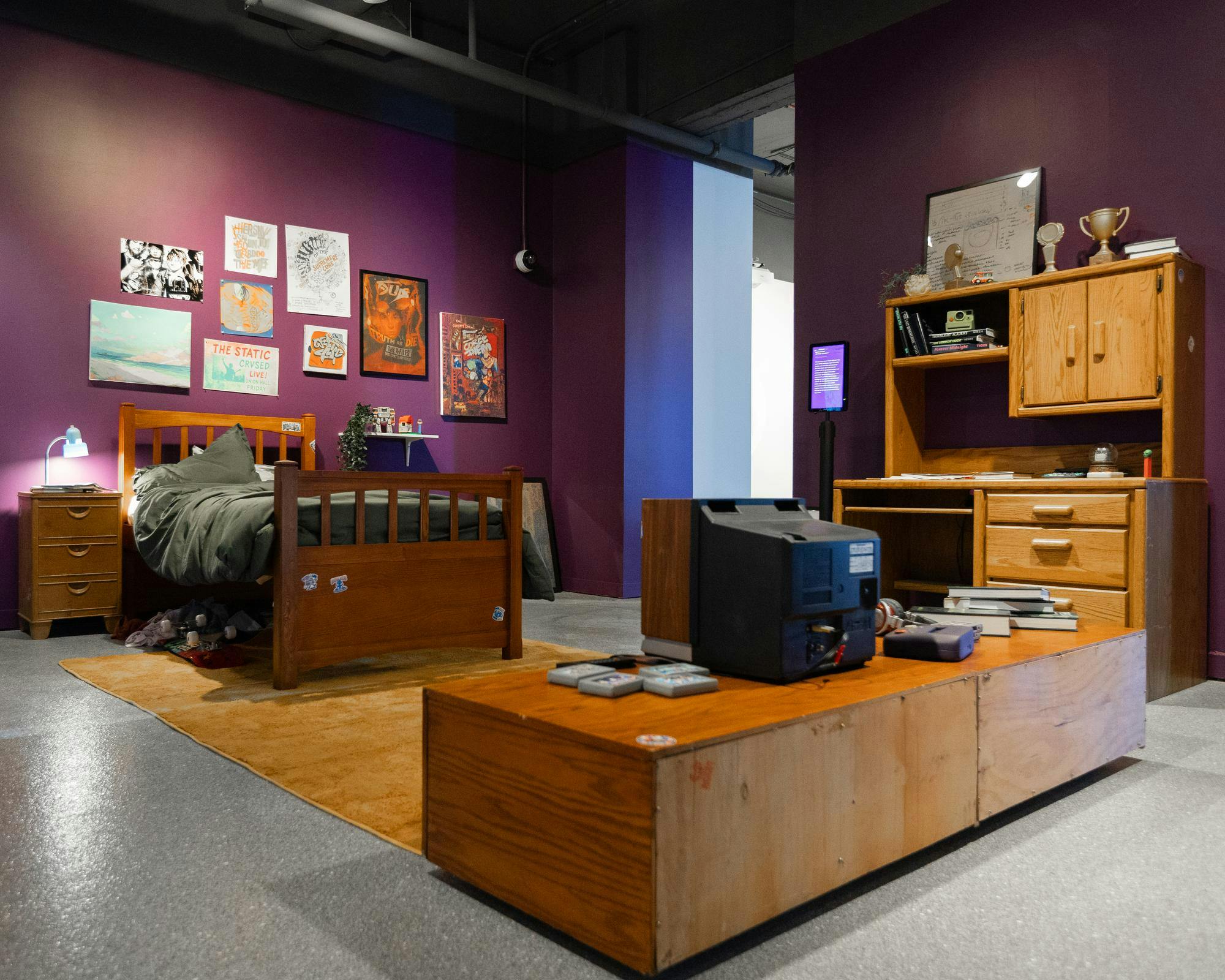
Additionally, "Synthetic Nostalgia: Memory, Myth, and Machine" examines "the intersection between AI and memory," as CoLab’s education and learning manager Caroline White put it. Set up like a typical teenage bedroom, the display includes books, technology and artwork that may have a retro feel but never truly existed and are ridden with errors.
"I think a lot of people come to this space and think, 'oh I recognize this object, I must’ve had this in my childhood," White said. "But then you look a little bit closer and something isn’t quite right because everything in here was created with artificial intelligence."
Deception is nothing new, though. "Terram in Aspectu" showcases writings from early explorers on sightings of "phantom islands," or islands that were reported as existing but were actually fictitious. Accompanying these reports are AI renderings of what these islands could have looked like and their supposed coordinates.
"Different tools and technologies have always been used to fabricate," White said.
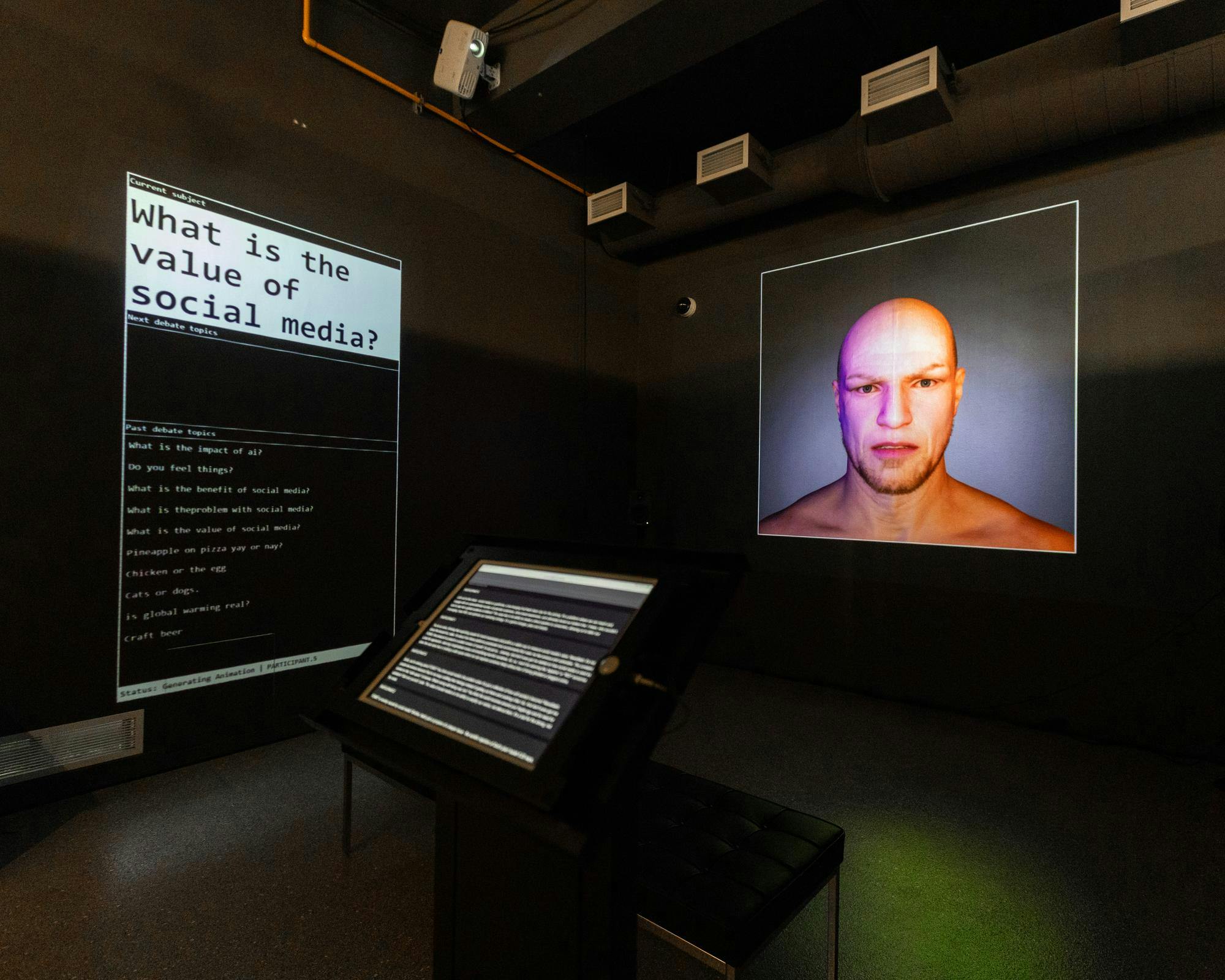
Much of "Blurred Realities" is interactive, relying upon user experience to fully unfold. "Whispers", for instance, instructs users to input any debate topic, ranging from dogs versus cats to arguments about serious world issues. The output is a conversation between five AI characters, all trained on data from 150 online influencers with varying views. White said that this can help to combat the echo chambers that are often created on social media.
"Our online spaces are very much curated to what the algorithm knows we like," White said. "This pulls narratives out of different filtered bubbles."
CoLab’s creative director Mark Sullivan called the exhibit "timely." Sullivan wanted the exhibit to look at the reality and the potential of technological advancements, encouraging people to understand and engage with AI while still being cautious about its influence.
"Some of the things (the exhibit) focuses on and emphasizes are thought of as dangerous and negative," Sullivan said. "We hope to show people ways that they could reduce the danger and become more critically engaged with them as a way of transforming them into something less destructive."
Sullivan said that the progression of AI is unpreventable. By showcasing its actuality on a college campus, Sullivan hopes that students can be inspired by the possibilities in front of them on this new, mostly uncharted path.
"The people who are going to be the most adversely affected and the people who could play a major role in creating a more positive, beneficial form of AI are today’s college students," Sullivan said. "Figuring out how to get AI to help with major problems in the world is an important thing."
"Blurred Realities" will remain on display at the MSU Museum until July 18. For those wishing to visit, the museum is open Tuesday through Saturday, 10 a.m. to 5 p.m. Registration is required, although admission is free.
Support student media!
Please consider donating to The State News and help fund the future of journalism.