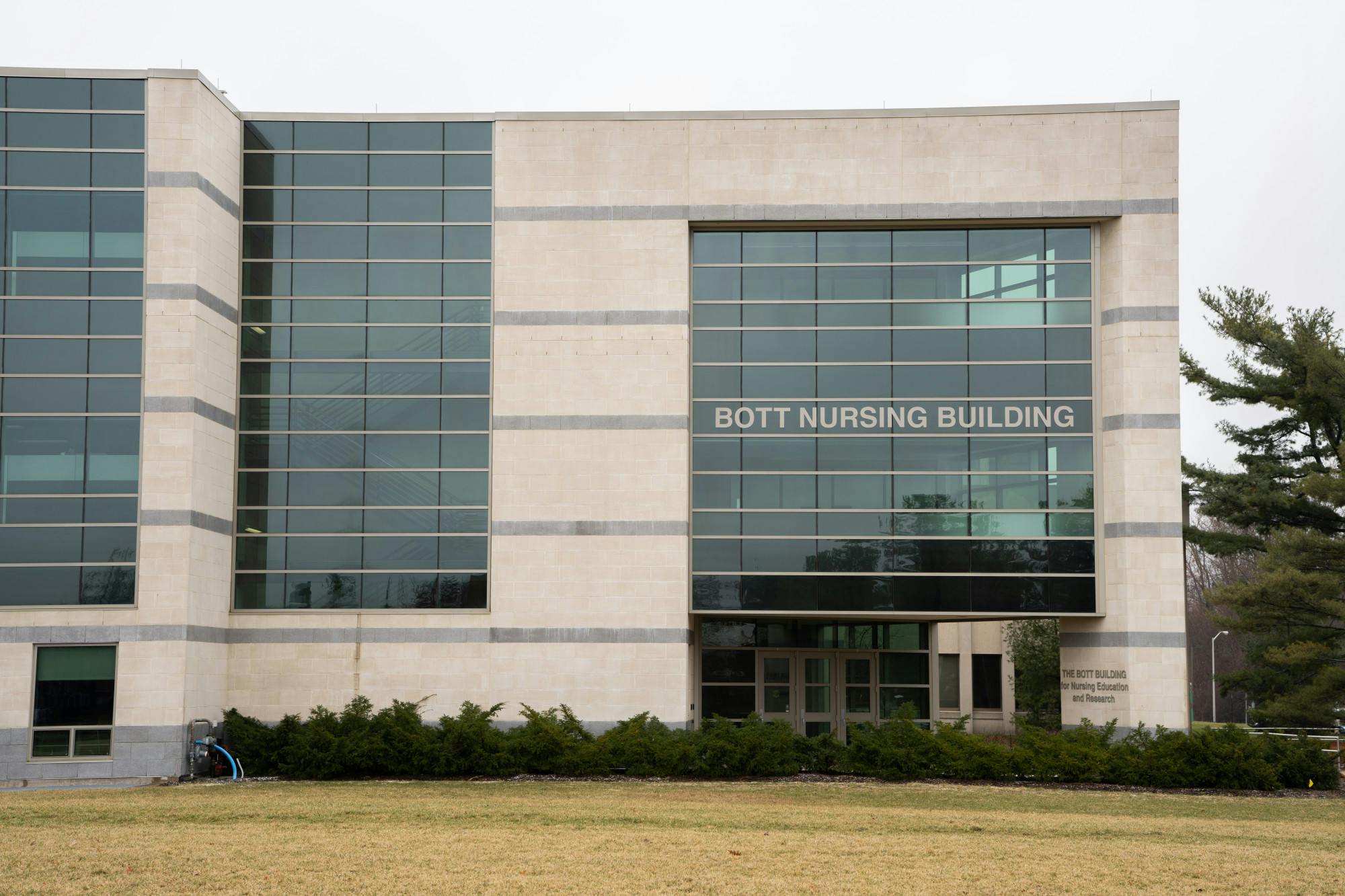
This year, Michigan State University’s College of Nursing celebrates its 75th anniversary, a milestone deserving both celebration and serious reflection. With over 9,500 graduates since 1950 and more than 7,300 living alumni, nearly three-quarters still in Michigan, the college has shaped healthcare and leadership across the state and beyond.
But in the midst of this historic moment, the independent future of the college is again in question. The university’s proposal to fold the College of Nursing into a new College of Health Sciences is not a routine administrative update. It carries real risks for the identity, influence, and effectiveness that have defined nursing at MSU for decades.
This decision deserves careful consideration, informed by history, peer practice, and the realities of community and professional impact.
In the early 1980s, a fiscal crisis led university leaders to consider eliminating the college soon after its elevation from school to college status. The response was immediate and passionate: students marched, faculty and alumni spoke out, and advocacy preserved the college’s autonomy. For those who lived through it, the fight was about respect and credibility. Alumni and faculty recall that autonomy made it possible to secure grants, publish research, and lead innovation in ways that would be difficult within a larger administrative framework.
That legacy continues. In the past five years alone, MSU's College of Nursing has led or co-led numerous community-engaged projects statewide, partnering with health systems, rural daycares, Head Start centers, and state agencies. The NIH-funded "Eat My ABCs" project delivered a healthy eating program in 26 rural daycares, improving nutrition and weight among 400 preschoolers. Another $5.8 million NIH grant brought mindfulness and nutrition interventions to 50 Head Start centers, reaching children and families statewide. Clinically, the Family Medicine Nurse Practitioner Clinic reduced wait times from 45 to 9 days while serving more than 80 patients daily.
Students and faculty have also staffed mass vaccine clinics and health fairs, delivered behavioral health rotations at community agencies and provided foot care for East Lansing seniors. The Henry Ford + MSU partnership doubled Detroit’s Accelerated BSN seats and established a new clinical model. These efforts demonstrate how independent status empowers the college to innovate and respond quickly to changing health needs, serving both Michigan’s most rural communities and its largest cities.
Many Big Ten universities maintain prominent, named academic units dedicated to nursing, either as a college or school of nursing. University of Iowa and Ohio State both have a college of nursing; Penn State and the University of Illinois Chicago also operate fully independent colleges. Peers such as the University of Michigan, Indiana University, and University of Minnesota have nursing schools with major leadership roles.
If MSU merges the CON into a broader health professions unit, it risks diluting nursing identity and influence. Conversely, maintaining college status signals to students, faculty, and partners that nursing remains an institutional priority with resources and authority to advance education, practice, and research.
A striking gap in this process is the lack of substantive engagement with the broader public – the very communities our graduates serve and whose trust MSU’s reputation relies on. Internal communication has occurred, but conversations often stop at campus borders. Patients, families and community partners have not been fully invited to share their views even though they are the ultimate shareholders.
Public perception matters. How MSU chooses to value or diminish its college of nursing will shape campus morale and the confidence of health systems, clinics, and Michigan’s citizens. At a time when trust in institutions is hard to earn, reputation is built not just through internal dialogue but also by listening to and honoring the wider community. Progress means making these voices central, rather than an afterthought.
75 years is more than an anniversary; it is a living record of resilience, leadership, and service. As MSU looks to the future, let’s remember what previous generations of students, faculty, and nurses fought to protect. Interprofessional collaboration can be powerful, but only when built with respect for the identity and expertise of each discipline.
The College of Nursing has earned its place at the forefront of Michigan State’s health mission. In this milestone year, let us ensure that our legacy is not just remembered but is safeguarded for the generations to come.
Joshua Winowiecki, DNP, APRN, ACCNS-AG, CCRN, TCRN, CNE is an assistant professor and clinical nurse specialist at the Michigan State University College of Nursing, where he also serves as the Director for the Center for Practice Transformation. He is the recipient of the 2025 College of Nursing Alumni Recent Graduate Achievement Award.
Support student media!
Please consider donating to The State News and help fund the future of journalism.
Discussion
Share and discuss “GUEST COMMENTARY: College of Nursing deserves a future as bold as its past” on social media.